
The State of Butane Soldering in 2026: VersaTip vs. VersaFlame
While USB-C PD smart irons have dominated the benchtop market in recent years, the Dremel soldering tool lineup—specifically the VersaTip 2000 and the VersaFlame 2200—remains an indispensable asset for field technicians, automotive electricians, and off-grid DIYers. Without the need for a power outlet or a lithium battery that degrades over time, butane-powered irons offer unmatched runtime and portability. However, because they rely on catalytic chemistry rather than resistive heating elements, troubleshooting a Dremel butane iron requires a fundamentally different approach than fixing a standard electric station.
As of 2026, the Dremel VersaTip 2000 retails for approximately $55, while the larger VersaFlame 2200 (which functions primarily as a torch but accepts soldering attachments) sits around $65. Despite their reliability, users frequently encounter issues related to fuel purity, catalytic mesh degradation, and vapor lock. This comprehensive FAQ and troubleshooting matrix will help you diagnose and resolve these issues, ensuring your cordless setup meets the rigorous demands of modern electrical repair.
How Catalytic Soldering Tips Actually Work
To troubleshoot a Dremel soldering tool effectively, you must understand its heating mechanism. The VersaTip does not use a traditional heating coil. Instead, the soldering tip (such as the Dremel 201 or 202 models) contains a small ceramic core coated in a platinum or palladium catalyst. When butane vapor passes through this mesh and is initially ignited, it triggers an exothermic catalytic reaction. Once the tip reaches operating temperature (typically between 350°C and 450°C for soldering), the flame is extinguished, and the catalytic reaction sustains the heat without an open flame.
Critical Expertise Note: If you use standard, unrefined butane (often sold in cheap multi-packs at hardware stores), the hydrocarbon oils and impurities will permanently coat the platinum mesh. This 'poisons' the catalyst, preventing the exothermic reaction and leaving you with a cold tip. Always use 5x or higher refined butane (e.g., Zippo Premium or Colibri) to protect your $14 replacement tips.
Dremel Soldering Tool Troubleshooting Matrix
Below is a diagnostic matrix for the most common failure modes encountered with the VersaTip 2000 and VersaFlame 2200.
| Symptom | Probable Cause | Technical Solution |
|---|---|---|
| Igniter clicks, but no flame or heat | Vapor lock or empty tank | Purge the tank of trapped air using a small flathead screwdriver on the fill valve, then refill upside down. |
| Flame ignites but tip stays cold | Poisoned catalytic mesh | Replace the soldering tip. The catalyst is permanently fouled by unrefined butane oils. |
| Flame is yellow and sputtering | Clogged burner jet or low fuel | Adjust the flame dial to '+'. If issue persists, use compressed air to clear the burner jet of dust. |
| Tool leaks gas from the fill valve | Degraded O-ring or overfilling | Do not overfill. Stop filling when butane begins to back-spray. If leaking persists, replace the fill valve O-ring. |
| Tip oxidizes (turns black) instantly | Flame setting too high | Reduce the flame adjustment dial. Excess unburnt butane and excessive heat will destroy the iron plating on the tip. |
Frequently Asked Questions (FAQ)
Can I use a Dremel soldering tool for delicate PCB electronics?
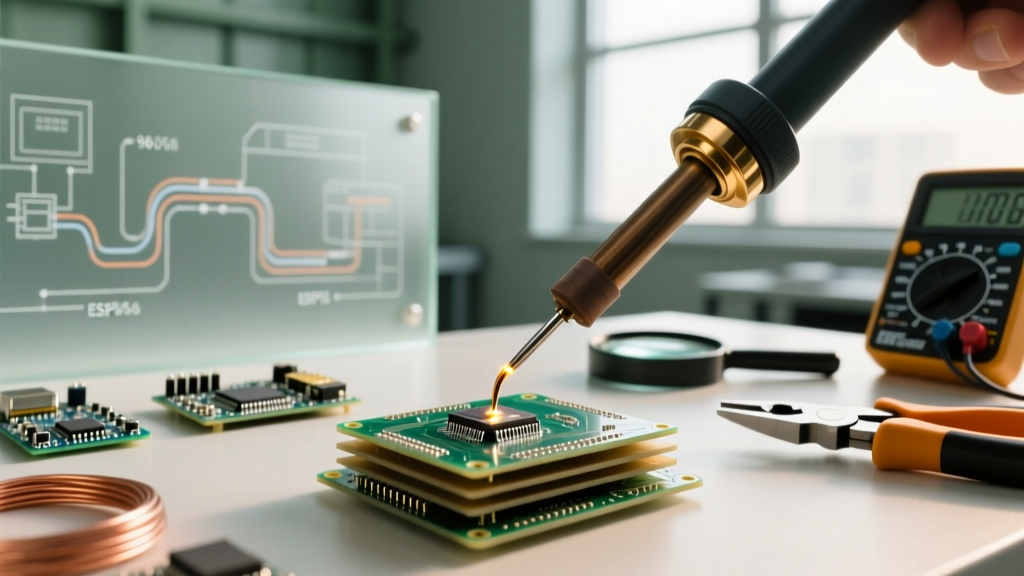
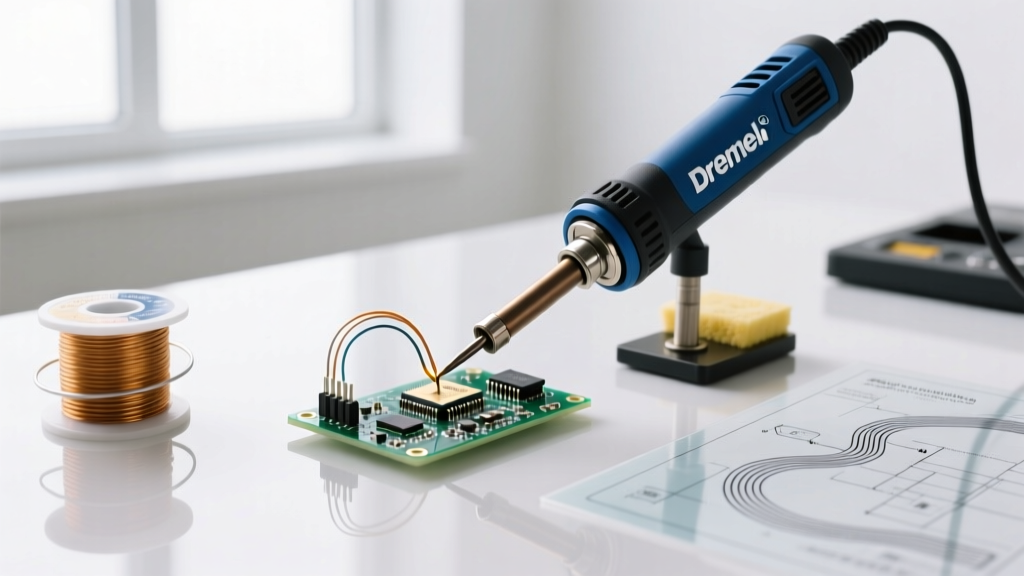
Yes, but with significant caveats. The Dremel VersaTip 2000 is capable of soldering standard through-hole components and larger SMD pads. However, because butane irons lack the active, closed-loop temperature control found in modern smart irons, you are entirely responsible for thermal management. According to the IPC J-STD-001 standards for soldered electrical assemblies, excessive dwell time or thermal shock can delaminate PCB traces. When using a Dremel tool on a PCB, keep the flame adjustment on the lower-middle setting, use high-quality flux to accelerate wetting, and limit your dwell time to under 3 seconds per joint. For ultra-fine 0402 SMD components, a temperature-controlled electric iron is strongly recommended over any butane alternative.
How long does a full butane tank last on the VersaTip 2000?
The VersaTip 2000 holds approximately 13ml of liquid butane. On a medium soldering setting, this provides roughly 45 to 60 minutes of continuous runtime. If you are using the open flame attachment for heat-shrink tubing or wire burning, the runtime drops to about 30 minutes. In real-world field scenarios where the tool is ignited, used for a few joints, and turned off, a single fill can easily last through a full 8-hour workday. The VersaFlame 2200 has a larger 22ml tank, offering nearly double the runtime but at the cost of a heavier, bulkier form factor.
Why is my soldering tip turning black and refusing to tin?
This is a classic case of thermal oxidation. The Dremel 201 soldering tip is iron-plated to resist solder erosion. If you leave the flame adjustment dialed to the maximum '+' setting, the tip temperature will exceed 500°C. At this threshold, the flux core in your solder burns instantly into a carbonized crust, and the iron plating oxidizes, turning black. Once oxidized, solder will not wet the surface. Never file or sand a blackened Dremel tip; doing so will expose the underlying copper core, which will rapidly dissolve into the solder and ruin the tip. Instead, use a brass wire sponge and a generous application of tip tinner (a mixture of aggressive flux and solder powder) to chemically reduce the oxidation.
Step-by-Step: Purging and Refilling Your Dremel Butane Iron
The most common reason a Dremel soldering tool fails to ignite after a refill is 'vapor lock.' As you use the tool, liquid butane is depleted, and the empty space fills with air and butane vapor. If you try to refill the tank without purging this pressure, the new liquid butane cannot enter. Follow this exact procedure to ensure a proper fill:
- Cool Down Completely: Ensure the tool is turned off and has cooled to room temperature. Never purge or refill a hot tool.
- Set to Minimum: Rotate the flame adjustment dial to the '-' (minimum) position. This opens the internal valve pathway.
- Purge the Tank: Turn the tool upside down. Using a small flathead screwdriver or a dedicated butane purge tool, press down on the fill valve. You will hear a hissing sound as trapped air and vapor escape. Continue pressing until the hissing stops completely.
- Prepare the Fuel: Shake your can of 5x refined butane vigorously for 5 seconds. This ensures the propellant and fuel are properly mixed.
- Refill Upside Down: Keep the Dremel tool upside down. Press the butane can nozzle straight down into the fill valve. Press firmly for 5 to 7 seconds. Do not overfill; if liquid butane sprays back out of the valve, the tank is full.
- Thermal Stabilization: Wait at least 3 minutes before igniting. Liquid butane absorbs heat from its surroundings as it vaporizes, making the tool extremely cold. Allowing it to reach room temperature ensures proper vapor pressure for ignition.
- Ignite and Adjust: Turn the dial to the '+' position, press the igniter, and then dial it back to your desired soldering temperature.
Maintenance and Storage Best Practices
To maximize the lifespan of your Dremel soldering tool, proper storage is critical. If you plan to store the VersaTip or VersaFlame for more than three months, do not leave it fully pressurized. The internal rubber gaskets and O-rings can deform under constant pressure, leading to slow micro-leaks. Run the tool until it naturally extinguishes due to fuel depletion, or purge the remaining gas before placing it in its storage case. Furthermore, always store the tool with the flame adjustment dial set to the '-' position to relieve tension on the internal flow valve. For more detailed schematics and warranty support, you can always refer to the official Dremel support portal.
When to Replace the Catalytic Tip
Even with perfect maintenance and highly refined butane, catalytic tips are consumable items. The platinum mesh slowly degrades over hundreds of heating cycles. You will know it is time to purchase a replacement Dremel 201 or 202 tip when:
- The tool takes longer than 30 seconds to transition from an open flame to a flameless catalytic glow.
- The tip struggles to maintain heat when applied to large thermal mass joints (like thick gauge automotive wires), even on the highest setting.
- You notice a physical tearing or crumbling of the ceramic mesh visible through the tip's ventilation holes.
By understanding the unique chemistry and mechanical requirements of butane-powered irons, you can maintain a reliable, off-grid soldering setup that will serve you well in any environment.