
The Hidden Cost of Thermal Shock in Soldering
In the modern electronics workbench, soldering tip longevity is a direct function of thermal management and oxidation control. As the industry continues its aggressive shift toward lead-free alloys like SAC305 and newer low-temperature variants in 2026, tip degradation has accelerated. Higher operating temperatures (often exceeding 350°C) mean that oxidation forms rapidly, requiring frequent cleaning. However, the method you choose to clean your tip dictates whether it lasts for six months or six days. The debate between the traditional wet cellulose sponge and the soldering brass sponge is not just a matter of preference; it is a metallurgical decision that impacts your equipment's lifecycle and your solder joint quality.
The Anatomy of a Modern Soldering Tip
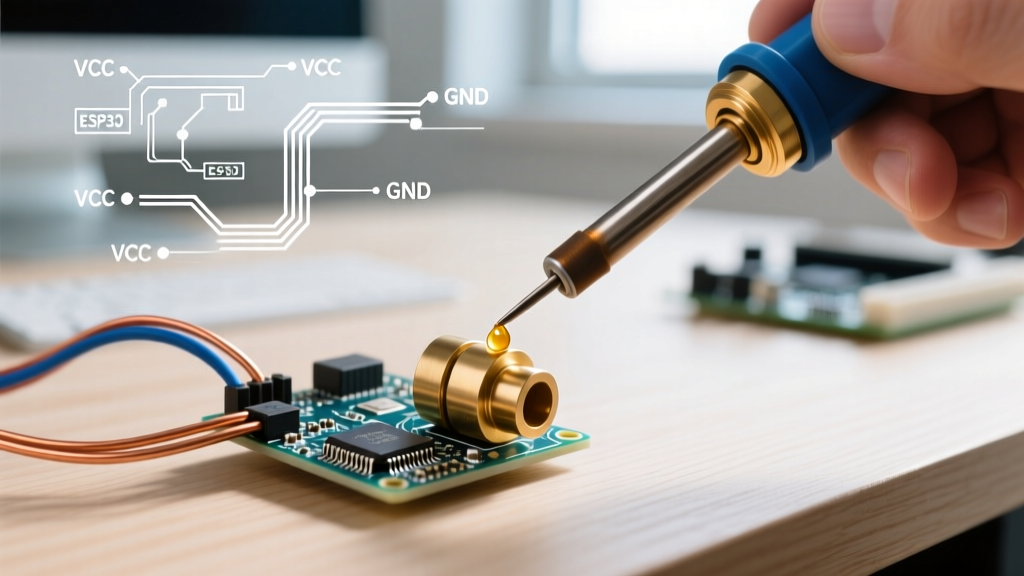
To understand why cleaning methods matter, you must understand the tip's construction. A high-quality soldering tip (such as those from Hakko, Weller, or JBC) is not a solid piece of metal. It features a complex multi-layer architecture:
- Copper Core: Provides rapid heat transfer from the heating element to the workpiece.
- Iron Plating: A microscopic layer (typically 100 to 200 µm thick) that protects the soft copper from dissolving into the molten solder.
- Chrome Layer: Applied to the non-working areas to prevent solder from wetting and creeping up the shaft.
- Tinned Working Area: The exposed iron plating at the very tip, pre-coated with solder to ensure immediate wetting.
- Hakko 599B Tip Cleaner: The industry standard. Features a spring-loaded brass coil and a built-in scraper edge for stubborn debris. Retail Price: ~$14.50.
- Weller WDC2 Dry Tip Cleaner: Uses a specialized copper-free brass wool to prevent any copper contamination on sensitive RF boards. Retail Price: ~$18.00.
- Embedded Debris: Over months of use, the brass curls become clogged with carbonized flux and hardened solder dross. The sponge becomes a solid block of abrasive waste. Solution: Replace the brass insert every 6 to 12 months (replacement coils cost around $6.00).
- Flux Carbonization: If you are using high-rosin (RMA) fluxes at high temperatures, a hard black crust can form on the tip that the brass cannot penetrate. Solution: Use a damp cellulose sponge once to break the carbon crust, then immediately switch back to the brass sponge and re-tin.
- Static Sensitivity: In highly sensitive aerospace or medical PCB assembly, dry wiping can generate minor triboelectric static charges. Ensure your brass sponge housing is properly grounded to your ESD mat.
- Pre-Tin Before Wiping: Never wipe a bare, dry tip. Always feed a tiny amount of fresh, flux-cored solder onto the tip before plunging it into the brass sponge. The molten solder acts as a buffer, and the flux helps lift the oxidation.
- The Plunge and Twist: Insert the tip into the Hakko 599B or Weller WDC2 and gently twist it 90 degrees. Do not stab it violently into the base, which can bend the tip shaft.
- Post-Wipe Tinning: Immediately after wiping, apply a fresh coat of solder before placing the iron back in its holder or turning it off. This sacrificial layer of solder will oxidize while sitting idle, protecting the actual iron plating underneath.
- Temperature Management: If you are stepping away for more than 5 minutes, use the sleep/standby function on your station to drop the temperature to 150°C. Continuous 380°C heat will oxidize the tip faster than any sponge can clean it.
The iron plating is the critical vulnerability. While hard, it is brittle. Any mechanical abrasion or severe thermal shock can compromise this 150 µm shield, exposing the copper core to rapid dissolution.
Method 1: The Soldering Brass Sponge (Dry Cleaning)
The soldering brass sponge (often referred to as a brass wire sponge or tip cleaner) consists of tightly coiled brass shavings housed in a metal or heat-resistant resin base.
Why Brass? The Metallurgical Advantage
Brass is an alloy of copper and zinc with a Mohs hardness of approximately 3.5. The iron plating on your soldering tip has a Mohs hardness of roughly 4.5 to 5.0. Because the brass is softer than the iron plating, plunging and twisting the hot tip into the brass curls effectively shears off oxidized solder and carbonized flux without scratching or gouging the underlying iron layer. Furthermore, because it is a dry cleaning method, the tip experiences zero thermal shock.
Top Product Picks for 2026
Expert Insight: Never use standard steel wool or a stainless steel scouring pad. Steel has a Mohs hardness of 5.5+, which will instantly scratch the iron plating, creating micro-grooves where solder will refuse to wet, permanently ruining the tip.
Method 2: The Traditional Wet Cellulose Sponge
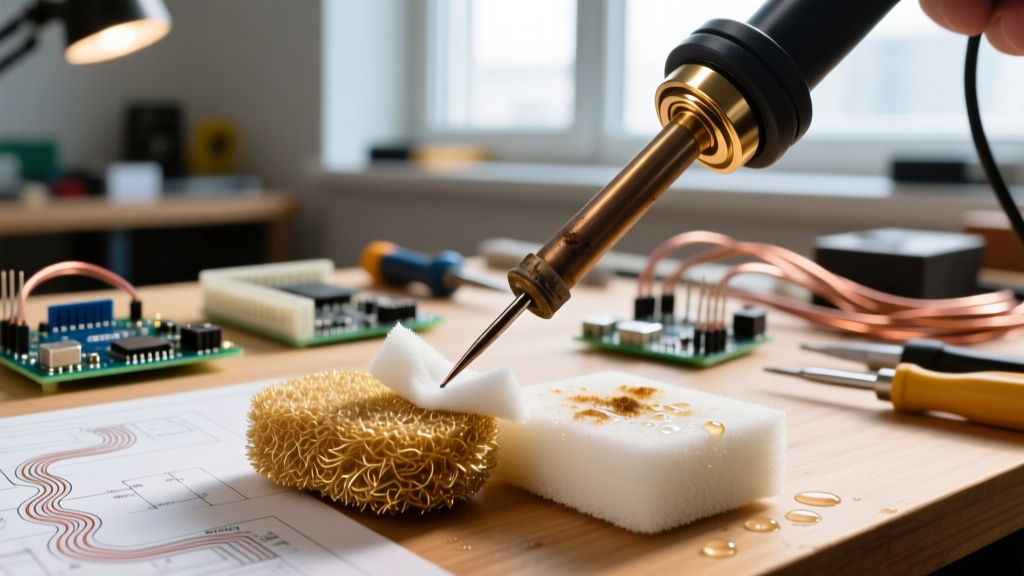
The wet sponge has been the default accessory included with almost every budget and mid-tier soldering station for decades. Made from porous cellulose, it requires saturation with water to function. When the 350°C tip touches the wet sponge, the water rapidly boils, creating a localized steam burst that shocks the oxidation off the tip.
The Thermal Shock Problem
While effective at removing bulk oxidation, the wet sponge inflicts severe thermal fatigue on the tip. Dropping a 350°C tip into a 25°C wet sponge creates an instantaneous 325°C temperature delta. Because the iron plating and the copper core expand and contract at different rates (different coefficients of thermal expansion), this rapid quenching causes microscopic stress fractures in the iron layer. Over hundreds of cycles, these micro-fractures propagate, allowing molten solder to reach the copper core. Once the copper is exposed, the tip will develop a concave "pit" and be rendered useless within weeks.
Additionally, if you use tap water instead of distilled water, the calcium and magnesium minerals will bake onto the hot iron plating, creating an insulating layer of scale that ruins heat transfer.
Method 3: Chemical Tip Cleaners (Tip Tinner)
For severely oxidized tips where neither brass nor wet sponges work, chemical tip cleaners (like Kester 24-NC Tip Tinner) are the last resort. These are aggressive paste compounds containing solder powder and mild acids. You dip the hot tip into the paste, which chemically strips the oxidation and immediately re-tins the surface in one step. Cost: ~$9.00 per tin. This should only be used for restoration, not daily maintenance, as the acidic flux residues can be corrosive if not wiped off properly afterward.
Head-to-Head Comparison Matrix
| Feature | Soldering Brass Sponge | Wet Cellulose Sponge | Chemical Tip Tinner |
|---|---|---|---|
| Thermal Shock Risk | None (Dry Method) | High (Rapid Quenching) | Low (Paste buffers heat) |
| Abrasion Risk | None (Softer than Iron) | None | Low (Mild abrasives) |
| Mess Factor | Low (Contains splatter) | High (Boiling water splatter) | High (Acidic smoke/residue) |
| Ideal Use Case | Daily / Continuous Cleaning | Heavy bulk oxidation (rare) | Restoring dead/pitted tips |
| Impact on Tip Lifespan | Extends significantly | Reduces (Micro-fractures) | Restores temporarily |
Real-World Failure Modes: When Brass Sponges Fail
While the soldering brass sponge is the superior daily method, it is not without edge cases. If you notice your brass sponge leaving scratches or failing to clean, consider these failure modes:
The 2026 Expert Maintenance Protocol
To maximize the lifespan of your $15 to $50 specialty soldering tips, follow this exact operational sequence, aligning with best practices recommended by industry leaders and detailed in resources like the Adafruit Guide to Excellent Soldering:
Frequently Asked Questions
Can I use a brass sponge with lead-free solder?
Yes, absolutely. Lead-free alloys (like SAC305) require higher temperatures (340°C - 380°C), which makes the thermal shock of a wet sponge even more destructive. The brass sponge is the mandatory standard for lead-free assembly environments to prevent immediate thermal fatigue on the iron plating.
Why is my brass sponge turning black and sticky?
This is a buildup of burnt flux residue (carbonization) and oxidized tin. It is normal. You can attempt to clean the brass coil by washing it in warm soapy water and letting it dry completely, but replacing the coil insert annually is the most efficient approach for professional results.
Does the soldering brass sponge work for desoldering wicks?
No. The brass sponge is designed exclusively for cleaning soldering iron tips. To clean desoldering wicks or remove solder from pads, you should use a vacuum desoldering pump or specialized chemical solvents, as outlined in advanced rework tutorials like those found on SparkFun's Soldering Guides.
Final Verdict
The verdict is clear: the soldering brass sponge is the undisputed champion of daily tip maintenance. By eliminating the destructive thermal shock of wet cellulose sponges and leveraging the favorable Mohs hardness of brass alloys, you protect the microscopic iron plating that dictates your tip's lifespan. Investing $15 in a Hakko 599B or Weller WDC2 today will easily save you hundreds of dollars in replacement tips over the next few years, while ensuring your solder joints remain consistently pristine.