
The Quest to Make Soldering Easy: From Blacksmithing to Microchips
For decades, the phrase 'soldering easy' was an oxymoron. Joining two metals using a filler alloy required an intimate understanding of thermal mass, metallurgy, and chemical fluxes. Early electronics hobbyists and plumbers alike battled unpredictable temperatures, oxidized copper bits, and toxic fumes. However, looking at the DIY electronics landscape in 2026, the barrier to entry has practically vanished. Today, a teenager with a $30 USB-C smart iron and a spool of advanced rosin-core wire can achieve IPC-compliant joints on a 0402 surface-mount component.
How did we get here? The evolution of making soldering easy is not just a story of better heaters; it is a convergence of microcontroller economics, power delivery standards, and advanced chemical engineering. Let us trace the historical timeline that transformed a hazardous trade into an accessible, beginner-friendly skill.
The Dark Ages: Blowlamps and Acid Flux (Pre-1970s)
Before the advent of modern electronics, soldering was primarily a mechanical and plumbing trade. Artisans used heavy copper 'hatchets' heated in charcoal forges or over open blowlamps. Temperature control was entirely visual and tactile—judging the heat of the iron by how quickly it melted a chunk of sal ammoniac or rosin on the tip.
- The Flux Problem: Early fluxes were highly corrosive acid pastes (zinc chloride). While they stripped oxidation rapidly, they caused severe long-term galvanic corrosion if not meticulously cleaned.
- Thermal Shock: Applying a 400°C copper hatchet to early bakelite boards or primitive phenolic resins often resulted in instant delamination and destroyed components.
During this era, achieving a reliable electrical joint was an artisan's craft. The concept of 'soldering easy' simply did not exist in the manual.
The Analog Golden Age and the Eutectic Crutch (1980s–2000s)
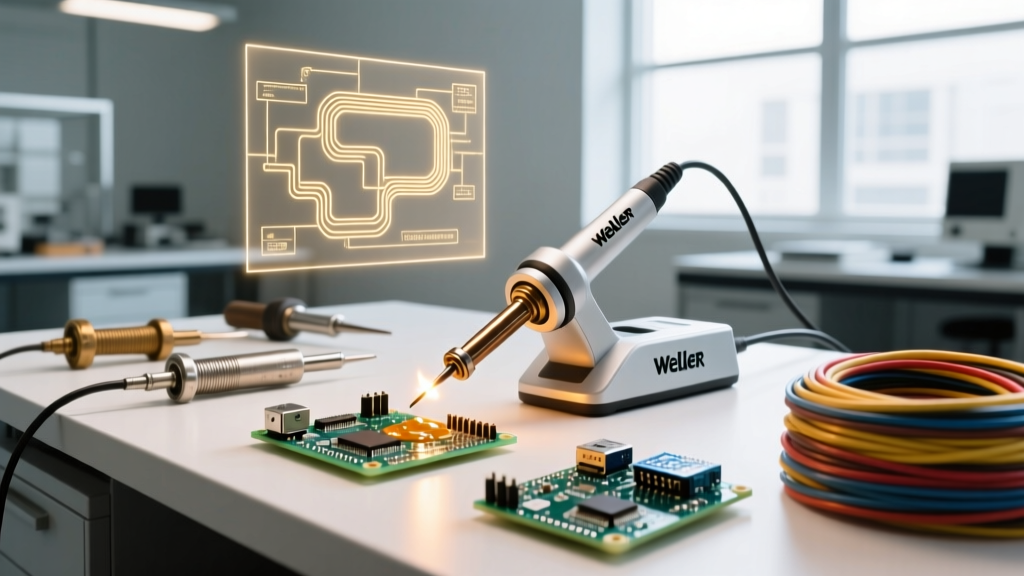
The mass production of consumer electronics demanded standardization. The introduction of the Weller Magnastat and later the Hakko 936 analog stations brought magnetic thermostat controls to the workbench. But the true secret that made analog soldering easy was the widespread use of Sn63/Pb37 (Tin/Lead) eutectic solder.
'The eutectic nature of 63/37 solder meant it transitioned directly from solid to liquid at exactly 183°C, with no plastic (semi-solid) phase. This eliminated cold joints caused by micro-movements during cooling, effectively acting as a metallurgical safety net for beginners.' — Historical Metallurgy Archives
Hobbyists in the 1990s could rely on cheap, unregulated 40W irons from hardware stores because the low melting point and high wetting action of leaded solder compensated for poor thermal recovery. However, the reliance on lead was building toward an inevitable environmental reckoning.
The RoHS Shock: When Soldering Got Hard Again (2006–2014)
The European Union's Restriction of Hazardous Substances (RoHS) directive forced the industry to abandon lead. The standard replacement, SAC305 (Sn96.5/Ag3.0/Cu0.5), fundamentally broke the hobbyist experience.
The Engineering Hurdles of Lead-Free
| Property | Sn63/Pb37 (Leaded) | SAC305 (Lead-Free) | Impact on Hobbyist |
|---|---|---|---|
| Melting Point | 183°C (Eutectic) | 217°C - 220°C | Required higher iron temps, risking pad lift. |
| Wetting Action | Excellent, flows instantly | Poor, high surface tension | Resulted in dull, grainy, or 'cold' looking joints. |
| Tip Oxidation | Moderate | Severe at 350°C+ | Tips burned out in weeks instead of years. |
For nearly a decade, the transition made electronics assembly frustrating. Cheap analog irons could not recover their heat fast enough when touching large ground planes, leading to the infamous 'cold joint' where the solder balls up and refuses to flow. The industry had to innovate to make soldering easy once more.
The Smart Iron Renaissance (2015–2026)
The paradigm shifted dramatically with the miniaturization of ARM and RISC-V microcontrollers, coupled with the advent of USB-C Power Delivery (PD). Companies like Miniware (with the TS100 and later the TS101) and Pine64 (with the Pinecil) bypassed heavy analog transformers entirely.
How PID Control Changed the Game
Modern smart irons sample the tip temperature up to 20 times per second using a PID (Proportional-Integral-Derivative) algorithm. When you touch a cold copper pad on a PCB, the microcontroller detects the millivolt drop in the thermocouple and instantly pulses the heating element at 100% duty cycle.
- Heat-Up Time: Dropped from 90 seconds (analog) to under 4 seconds (Pinecil V2 at 100W).
- Sleep Modes: Built-in accelerometers detect when the iron is set down, dropping the temperature to 150°C to prevent tip oxidation, then instantly waking upon touch.
- Power Source: A $35 Anker GaN laptop charger can now power a professional-grade station, eliminating the need for bulky 120V/240V AC bases.
Modern Flux Chemistry: The Unsung Hero
Hardware is only half the battle; chemistry is the other. According to IPC standard guidelines, flux is required to remove metal oxides and prevent re-oxidation during heating. Modern no-clean flux formulations have made soldering easy by eliminating the need for harsh solvents like isopropyl alcohol or CFCs.
In 2026, hobbyists have access to advanced halide-free, no-clean rosin fluxes (such as Amtech NC-559-V2-TF or Chip Quik NC191). These fluxes feature a wide activation temperature window, meaning they become chemically active right as the solder melts, ensuring perfect wetting even on slightly tarnished vintage PCB pads. Furthermore, the introduction of Bismuth-based low-temperature alloys (like Sn42/Bi58, melting at 138°C) allows beginners to safely rework heat-sensitive components without the risk of melting plastic connectors or delaminating multi-layer boards.
2026 Buyer's Matrix: Choosing Your 'Easy Soldering' Setup
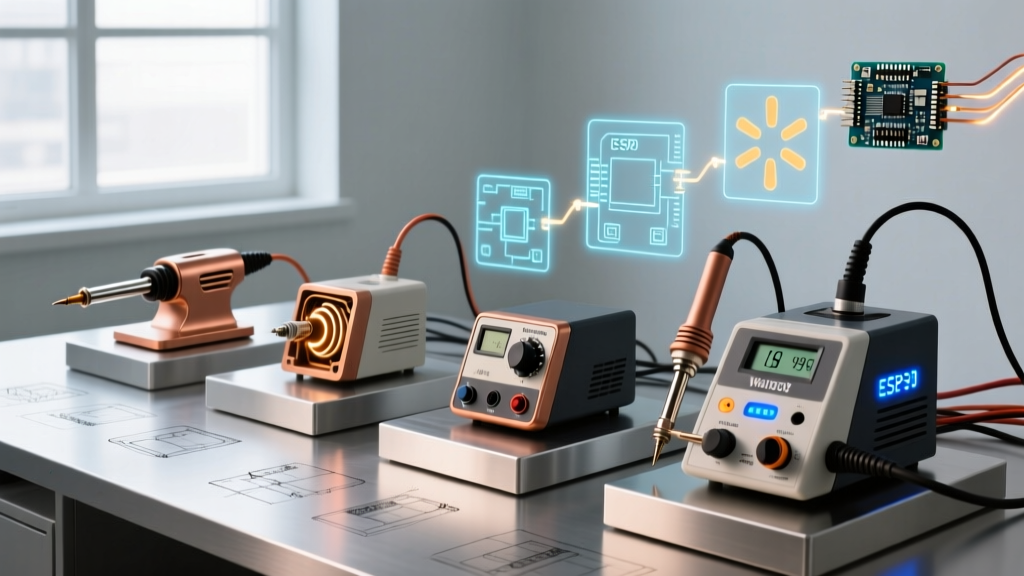
If you are entering the hobby or upgrading your bench, the market is segmented by power delivery and thermal mass requirements. Here is a data-driven breakdown of the best tools to ensure a frictionless experience.
| Model | Architecture | Max Power | Best Use Case | Est. Price (2026) |
|---|---|---|---|---|
| Pine64 Pinecil V2 | RISC-V (BL706) | 100W (PD3.0) | General THT, basic SMD, portable kits. | $28.00 |
| Miniware TS101 | ARM Cortex-M0+ | 100W (PD3.0/QC) | High-precision SMD, rapid tip swaps. | $55.00 |
| Weller WE1010NA | Proprietary Digital | 70W (AC Mains) | Heavy daily bench use, thick ground planes. | $115.00 |
| Aixun T3A | Smart PID w/ Screen | 200W (GaN Base) | Thermal-heavy work, multilayer PCBs, aluminum cores. | $89.00 |
Pro-Tip: Matching Tip Mass to the Joint
The most common reason beginners fail to find 'soldering easy' is using the wrong tip geometry. A fine-point 'I' tip possesses too little thermal mass for a large through-hole capacitor lead. The joint acts as a heat sink, pulling energy away faster than the iron can supply it, resulting in a cold joint. The Golden Rule: Always use the largest, widest tip (like a 'K' knife or 'C' bevel) that physically fits the pad. Thermal transfer is dictated by surface area contact, not just the temperature dial.
Conclusion: The Democratization of Electronics Repair
The journey from charcoal-heated copper hatchets to RISC-V powered, USB-C smart irons represents one of the greatest triumphs of modern DIY tooling. By offloading thermal management to microcontrollers and leveraging advanced no-clean flux chemistries, the industry has successfully lowered the skill floor. Today, whether you are repairing a vintage 1980s amplifier or assembling a custom mechanical keyboard, the right combination of a PD-powered smart iron and high-quality eutectic or low-temp solder guarantees that soldering easy is no longer just a marketing promise—it is an engineering reality.
For further reading on industry standards and historical metallurgy, refer to the Kester solder archives and the IPC historical documentation.