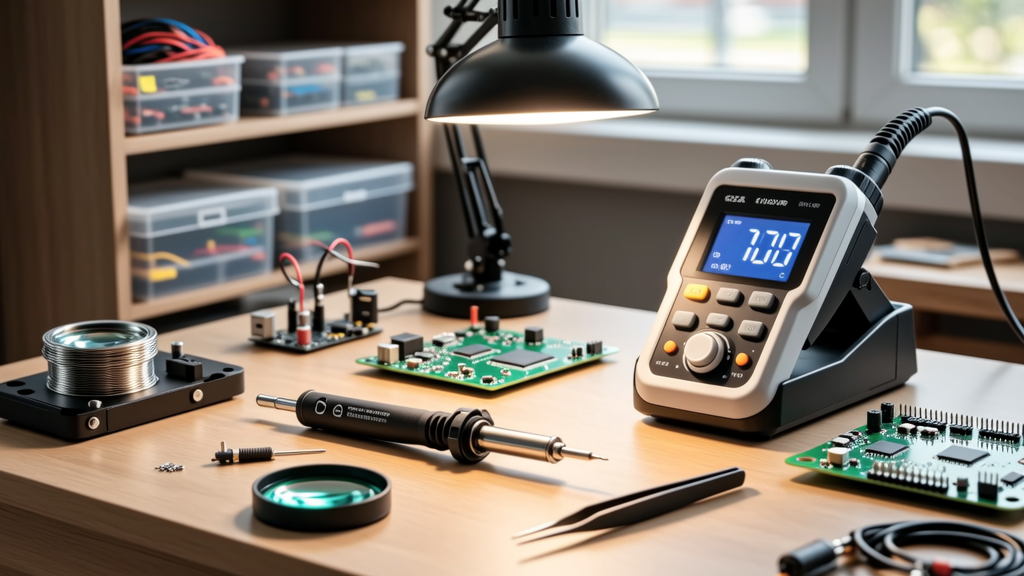

When assembling a professional or high-end DIY workbench in 2026, the soldering iron gets all the glory, but the soldering stand is the unsung hero of tip longevity and workshop safety. With the explosion of USB-C smart irons and high-wattage JBC clones, the stand ecosystem has evolved far beyond the simple bent-wire loops of the past.
To cut through the marketing noise, we convened a panel of three experts: an IPC-certified master instructor, a high-volume smartphone repair shop owner, and a field-deployable military avionics technician. Here is their definitive 2026 roundup on the best soldering stands, failure modes to avoid, and the physics of tip degradation.
Why a $20 Soldering Stand Can Save a $200 Iron
According to the IPC-J-STD-001 standard for soldered electrical assemblies, proper tool maintenance and ESD (Electrostatic Discharge) grounding are non-negotiable for Class 3 electronics. A subpar soldering stand introduces three critical failure points:
- Thermal Shock: Resting a 400°C tip against a thin, unshielded metal wire can draw heat unevenly, causing micro-fractures in the tip's iron plating.
- ESD Vulnerability: Cheap, ungrounded wire-loop stands fail to dissipate static buildup from the iron's cord, risking catastrophic damage to bare CMOS chips.
- Tipping Hazards: Heavy silicone cords on modern 100W+ stations can easily drag a lightweight stand off the bench, resulting in severe burns or fires.
Expert Comparison Matrix: Top Soldering Stands for 2026
| Model | Best For | Price Range | Key Feature | ESD Safe? |
|---|---|---|---|---|
| Hakko 602 | Heavy Bench Use | $25 - $32 | Cast-iron base, 599B brass wool | Yes (with ground wire) |
| Weller WDH10T | Safety & Auto-Sleep | $80 - $95 | Reed switch auto-off | Yes |
| Pine64 Smart Stand | USB-C / Field Techs | $12 - $18 | Magnetic alignment, silicone | No |
| Quad Hands Workstation | Complex PCB Holding | $65 - $85 | 4 flexible arms, alligator clips | N/A (Board Holder) |
Deep Dive: The Experts' Top Stand Selections
1. The Undisputed Workhorse: Hakko 602 & 603
For traditional bench setups, our panel unanimously recommended the Hakko 602 (and its lighter sibling, the 603). Priced between $25 and $32, the 602 features a heavy, stamped steel base that refuses to tip, even when yanked by the stiff cord of a Hakko FX-951 station.
'The 602's inclusion of the 599B brass wool sponge is a game-changer. Unlike cellulose sponges, brass wool doesn't drop the tip temperature by 150°C upon contact, which prevents the thermal shock that leads to pitted, oxidized tips.' — Marcus T., IPC Master Instructor
Edge Case / Failure Mode: The plastic sponge tray on older Hakko models was prone to cracking if exposed to liquid flux cleaners. The 2026 revisions use a more resilient high-temp polymer, but you must still avoid submerging the entire plastic tray in isopropyl alcohol.
2. The Auto-Off Safety Standard: Weller WDH10T
If your workflow involves frequent interruptions, the Weller WDH10T ($80–$95) is mandatory. This stand integrates a magnetic reed switch that communicates with Weller's WX and WXD series stations. When the iron is holstered, the station instantly drops the tip to a 150°C (302°F) sleep mode.
This feature alone extends tip lifespan by up to 60% by halting the oxidation process that accelerates above 350°C. Furthermore, as noted by Princeton University's EHS soldering safety guidelines, auto-sleeping irons drastically reduce the risk of unattended bench fires and lower ambient VOC off-gassing from nearby flux containers.
Edge Case / Failure Mode: The reed switch is positioned specifically for Weller's RT and XDS tip geometries. If you use a third-party adapter or a non-magnetic iron shaft, the auto-sleep feature will fail silently, leaving your iron at full temperature.
3. The Field Tech's Choice: Pine64 Smart Stand
With the dominance of the Pinecil V2 and FNIRSI HS-01 in the portable repair space, traditional heavy stands are obsolete for field techs. The official Pine64 Silicone Stand ($12–$18) uses a high-temp, injection-molded silicone cradle with an integrated metal coil.
It weighs just 45 grams and features magnetic alignment points to keep the Pinecil secure during transit in a Pelican case. However, because it lacks a weighted base, our experts warn that it must be used on a high-friction silicone mat to prevent sliding.
4. The Board Holder: Quad Hands Workstation & PanaVise
While not an iron holder, no expert roundup on soldering stations is complete without addressing the workpiece stand. The Quad Hands Workstation ($65–$85) utilizes four flexible, loc-line style arms with alligator clips. It allows technicians to suspend a PCB in mid-air, providing unobstructed access to both the top and bottom layers simultaneously.
For heavier chassis work, the PanaVise Model 201 ($35–$45) remains the gold standard. Its neoprene jaws grip delicate connectors without marring the plastic housings, a critical requirement when repairing modern automotive ECUs and drone flight controllers.
The Great Debate: Brass Wool vs. Cellulose Sponge
A major focus of our expert roundup was tip cleaning methodology, which is intrinsically tied to your soldering stand's accessories.
- Cellulose Sponges: Must be dampened with distilled water. The Adafruit Guide to Excellent Soldering explicitly warns that a soaking wet sponge causes severe thermal shock. Rule of thumb: Squeeze the sponge until exactly zero drops fall.
- Brass Wool (e.g., Hakko 599B): Uses a coiled brass ribbon to scrape off oxidized solder without dropping the tip's core temperature. It is vastly superior for lead-free SAC305 alloys, which require higher baseline temperatures (360°C+).
Critical Edge Cases & Stand Failure Modes
Our repair shop expert highlighted three common ways soldering stands fail in high-volume environments:
- Silicone Melting on Cheap Clones: Many $8 generic stands claim to use 'heat-resistant silicone,' but they begin to outgas and melt when exposed to 450°C chisel tips for more than 30 seconds. Always verify the silicone is rated for at least 300°C continuous.
- Spring Tension Fatigue: Stands relying on a single tension spring to grip the iron barrel will eventually warp. By month six, the iron slides through the grip, resting the hot ceramic heater directly against the plastic base.
- Ground Wire Detachment: ESD-safe stands feature a grounding lug. In busy shops, this lug is often left unconnected to the bench's common point ground, rendering the ESD protection useless and risking latent defects in sensitive RF modules.
Expert FAQ
Can I use a 3D-printed soldering stand?
Only if printed in high-temp materials like Polycarbonate (PC) or Ultem (PEI). Standard PLA will deform at 60°C, and PETG will soften around 80°C. Ambient heat radiating from a resting iron can easily exceed these thresholds, causing the stand to collapse.
Do I need a 'third hand' stand if I have a good iron holder?
They serve different purposes. Your iron holder manages the heat source safely. A 'third hand' (like the Quad Hands or PanaVise PCB holder) secures the workpiece. For 2026 SMD rework and 0402 component placement, a dedicated board holder with a heat-sink base is considered essential by master technicians.