
The Core Dilemma: Prototyping vs. Production
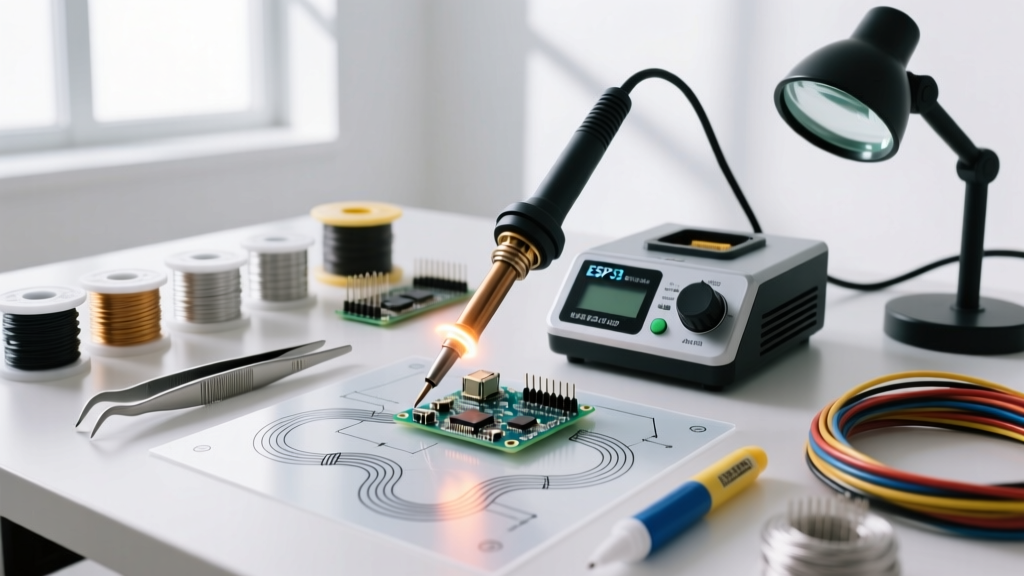
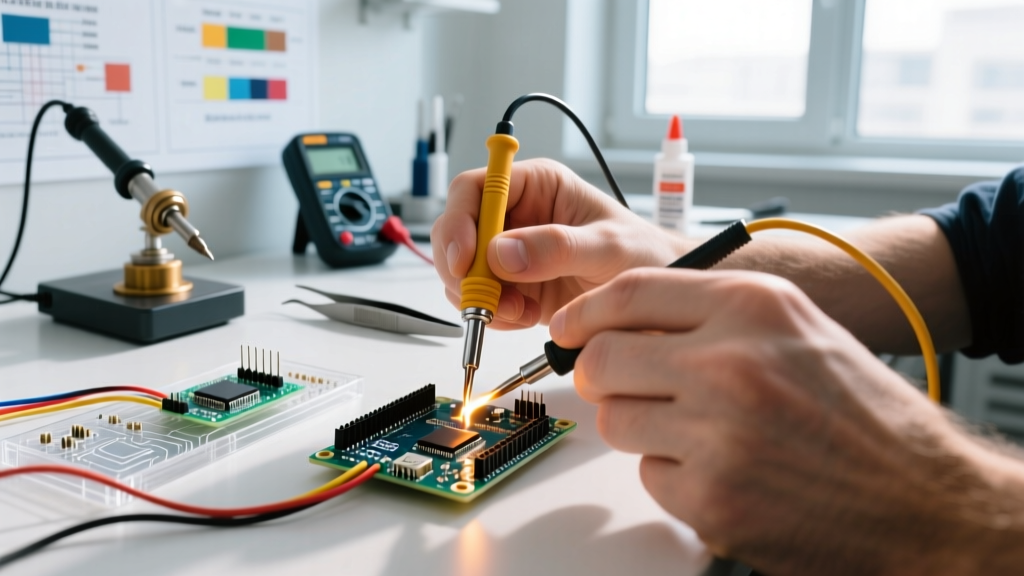
Transitioning from a breadboard prototype to a permanent soldered board is a critical milestone in any electronics project. In 2026, makers and hardware startups face a nuanced decision: should you hand-solder the PCB in-house, or outsource to a Printed Circuit Board Assembly (PCBA) service? The answer is rarely black and white. It depends on a complex interplay of component pitch, production volume, available tooling, and reliability requirements.
This decision framework provides a structured, data-driven approach to help you choose the optimal assembly method for your specific project parameters, eliminating guesswork and preventing costly manufacturing errors.
Phase 1: The 2026 Cost Break-Even Matrix
The most common trap for engineers is underestimating the true cost of hand-soldering. While the monetary cost of solder wire and flux is low, the labor cost and opportunity cost are substantial. Conversely, PCBA services have high fixed setup costs but incredibly low marginal costs per unit.
The following matrix models the costs based on a moderately complex 4-layer board with 150 surface-mount device (SMD) pads and 20 through-hole components, assuming an in-house engineering labor rate of $60/hour.
| Quantity | Hand-Solder Cost (Labor + Materials) | PCBA Service Cost (Setup + Per Board) | Break-Even Verdict |
|---|---|---|---|
| 1 Unit | $180 (3 hrs labor + $10 materials) | $65 ($45 setup + $20 shipping) | PCBA Wins (if lead time allows) |
| 5 Units | $900 (15 hrs labor) | $85 ($45 setup + $8/board) | PCBA Wins (Massive savings) |
| 10 Units | $1,800 (30 hrs labor) | $125 ($45 setup + $8/board) | PCBA Wins |
| 50 Units | $9,000 (150 hrs labor) | $450 ($50 setup + $8/board) | PCBA Wins (Hand-solder is unviable) |
Industry Insight: In 2026, economic PCBA tiers from major fabricators have driven setup fees down to $8–$15 for standard SMT assembly. Unless you are assembling a single, massive through-hole board with zero SMD components, outsourcing almost always yields a better financial return on your time.
Phase 2: Component Pitch & Package Constraints
Your bill of materials (BOM) dictates physical assembly limits. Hand-soldering is highly dependent on the operator's skill, magnification equipment, and iron tip geometry. According to the NASA-STD-8739.3 workmanship guidelines, specific solder joint geometries require precise wetting angles that become physically impossible to achieve with a manual iron at micro-scales.
Hand-Soldering Viability by Package
- Through-Hole & Large SMD (1206, 0805): Highly viable. A standard 65W station (e.g., Hakko FX-888D or Pinecil V2) with a 2.4mm chisel tip handles these effortlessly.
- 0603 & 0402 Passives: Viable with a microscope and micro-pencil tip (e.g., 0.4mm conical). Expect a 15% rework rate for 0402 components due to tombstoning if pad thermal relief is poorly designed.
- 0201 & 01005 Passives: Not recommended. These measure just 0.6mm x 0.3mm. Manual placement and soldering yield unacceptable defect rates outside of highly controlled lab environments.
- QFN & LGA (Leadless Packages): Difficult. Requires hot-air rework stations (e.g., Quick 861DW) and precise stencil-applied solder paste. Hand-soldering the thermal pad underneath is nearly impossible without specialized pre-heaters.
- BGA (Ball Grid Array): Strictly PCBA. BGA requires automated pick-and-place, reflow ovens, and X-ray inspection to verify hidden solder sphere coalescence.
Phase 3: Tooling, Stencils, and Hidden Overhead
If you decide to hand-solder or run a small in-house reflow process, you must account for tooling overhead. For SMD components, using liquid flux and dragging solder is inefficient for high pin-count ICs (like a 144-pin STM32 microcontroller). You need a stainless steel stencil and solder paste.
The In-House Reflow Cost Breakdown
- FR4 Stencil: $15–$25 (often bundled with bare PCB fabrication).
- Solder Paste: A 35g syringe of Type 4 (T4) no-clean paste, such as Chip Quik SMD291AX10, costs roughly $32. Paste has a strict shelf life and requires refrigeration.
- Reflow Equipment: A modified toaster oven is unreliable for lead-free profiles (which require peak temperatures of 245°C–250°C). A dedicated benchtop reflow oven like the T-962A costs ~$250 but requires firmware modding to fix its baked-in thermal profiles.
If your project only requires 5 boards, spending $300+ on stencils, paste, and oven infrastructure destroys your ROI. PCBA services utilize automated stencil printers and multi-zone convection reflow ovens, amortizing these costs across thousands of daily orders.
Phase 4: Quality Standards & Failure Modes
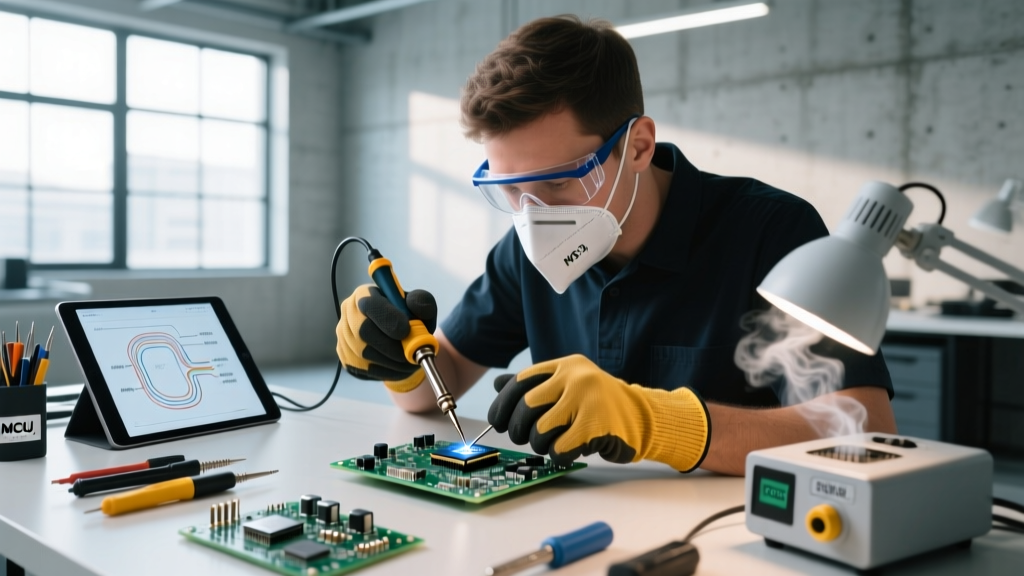
When designing a soldered board for commercial deployment, reliability is paramount. The IPC-A-610 standard defines three classes of electronic assemblies. Class 2 (Dedicated Service) is standard for consumer electronics, while Class 3 (High-Performance) is mandatory for medical, aerospace, and automotive applications.
Common Hand-Soldering Failure Modes
- Cold Joints: Caused by insufficient heat transfer or moving the component before the solder solidifies. Results in high electrical resistance and mechanical fragility.
- Solder Bridges: Excess solder or inadequate flux between fine-pitch pins (e.g., 0.5mm pitch TQFP packages). Requires desoldering braid (wick) to fix, which risks lifting PCB pads.
- Thermal Damage: Prolonged iron contact delaminates the FR4 substrate or destroys sensitive silicon dies. MOSFETs and LEDs are particularly susceptible to ESD and thermal overstress during manual soldering.
- Moisture Sensitivity (MSL): Components rated MSL 3 or higher must be baked before reflow to prevent the 'popcorn effect' (internal steam explosion). Hand-soldering bypasses controlled baking protocols, risking latent micro-cracks.
Phase 5: Component Sourcing & Supply Chain Realities
A major hidden advantage of using a PCBA service in 2026 is component sourcing. Services like JLCPCB and PCBWay maintain massive in-house inventories of common passives, ICs, and connectors. By utilizing their 'basic parts' library, you avoid the minimum order quantities (MOQs) and shipping delays associated with sourcing from distributors like Digi-Key or Mouser.
For specialized or obsolete components, utilizing an aggregator like Octopart is essential to verify global stock levels before committing to a PCBA run. If a critical IC is out of stock globally, a PCBA service will halt your order, whereas hand-soldering allows you to scavenge parts from donor boards or grey-market brokers for low-volume prototyping.
The Final Decision Logic Gate
Use this step-by-step logic flow to finalize your assembly strategy:
- Does the board contain BGA, 0201 passives, or dense 0.4mm pitch BGAs?
- YES: Stop. Use a PCBA service. Hand-soldering is not viable.
- NO: Proceed to Step 2.
- Is the production volume greater than 10 units?
- YES: Use a PCBA service. The labor savings and consistency guarantees outweigh any upfront setup fees.
- NO: Proceed to Step 3.
- Do you require IPC Class 3 compliance for mission-critical reliability?
- YES: Use a certified PCBA house with automated optical inspection (AOI).
- NO: Proceed to Step 4.
- Is the board a rapid, same-day hardware hack or a heavily modified legacy repair?
- YES: Hand-solder. The 3-day to 7-day lead time of PCBA (including shipping) will bottleneck your iterative testing.
- NO: Default to PCBA for superior finish and time savings.
Summary
Choosing the right path for your soldered board ultimately hinges on respecting the limits of manual dexterity and the economics of scale. While hand-soldering remains an indispensable skill for debugging, rework, and ultra-fast iterative prototyping, the 2026 landscape of low-cost, high-speed PCBA services makes outsourcing the default choice for almost all functional prototypes and production runs. Evaluate your BOM, calculate your true hourly labor rate, and let the data drive your manufacturing decision.