
The DIY Dilemma: Household Appliances on the Workbench
In the world of electronics repair and DIY prototyping, improvisation is often praised. However, attempting hair dryer soldering with air crosses the line from clever hack to severe safety and reliability hazard. While social media tutorials occasionally showcase household hair dryers being used to shrink tubing or attempt surface-mount rework, the thermal and electrical realities of 2026 make this practice highly discouraged for anything beyond specialized, low-temperature edge cases.
As a core tenet of modern electronics workmanship, matching the tool to the thermal profile of the component is non-negotiable. Using a consumer-grade appliance designed for human hair on delicate printed circuit boards (PCBs) introduces catastrophic risks ranging from Electrostatic Discharge (ESD) to lethal electrical shock. This guide breaks down the exact physics, safety hazards, and professional alternatives you need to know.
Thermal Matrix: Hair Dryers vs. Solder Alloys
To understand why hair dryer soldering with air is generally a physical impossibility for standard electronics, we must look at the thermal output of consumer appliances versus the melting points of common solder alloys. A standard 1875W consumer hair dryer (such as popular models from Conair or Revlon) maxes out at approximately 200°F (93°C) on its highest heat setting. High-end models like the Dyson Supersonic cap out around 212°F (100°C) to prevent hair damage.
| Solder Alloy / Material | Melting / Activation Point | Hair Dryer Capability | Result of Attempted Rework |
|---|---|---|---|
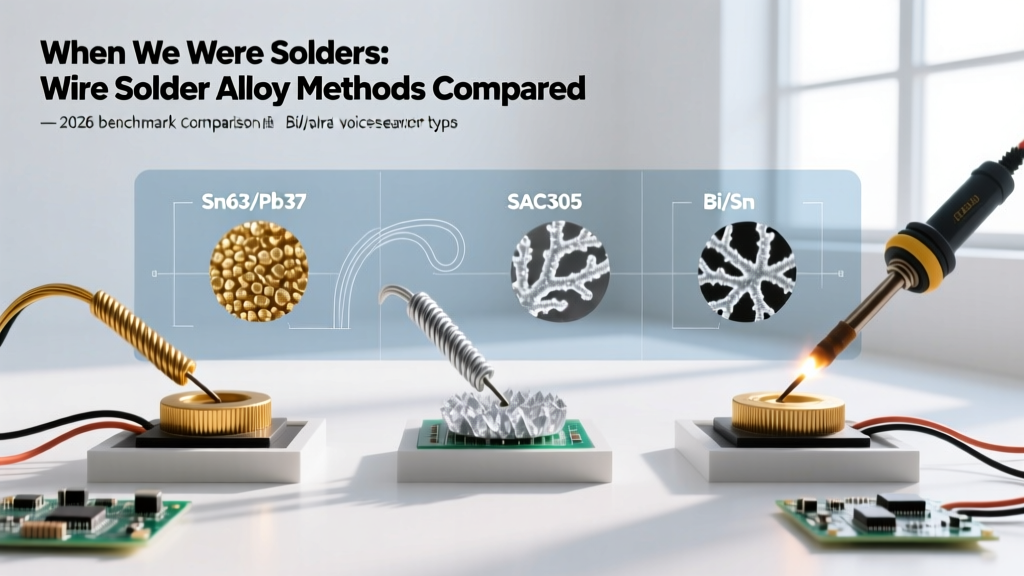
| Sn63/Pb37 (Standard Leaded) | 183°C (361°F) | Impossible | Component cooks; PCB delaminates before solder melts. |
| SAC305 (Lead-Free) | 217°C (422°F) | Impossible | Severe thermal damage; flux burns; board warps. |
| Chip Quik SMD4300AX10 (Bismuth) | 58°C (136°F) | Possible | Solder melts, but ESD and shock risks remain high. |
| Polyolefin Heat Shrink Tubing | 90°C - 120°C (194°F - 248°F) | Marginally Possible | Slow shrink; uneven heating; risk of melting adjacent plastics. |
The Bismuth Loophole: When Hair Dryer Soldering With Air Actually Works
There is one specific scenario where hair dryer soldering with air is physically viable: desoldering or reworking components using low-temperature Bismuth-based alloys. Alloys like Field's Metal or specialized desoldering wicks infused with Bismuth (e.g., Chip Quik SMD4300AX10) melt at roughly 58°C to 70°C (136°F to 158°F). Because a hair dryer can easily exceed 90°C, it can liquefy these specific alloys.
However, just because the physics allow it does not mean it is safe or advisable. Bismuth solder is notoriously brittle and prone to tin-bismuth joint failure under mechanical stress. Furthermore, using a hair dryer to achieve this introduces severe secondary hazards that compromise both the operator and the surrounding electronics.
Critical Safety Hazards of Household Air Tools
When evaluating safety best practices, we must look beyond simple temperature metrics. The Occupational Safety and Health Administration (OSHA) strictly outlines the dangers of using non-isolated, consumer-grade electrical tools in environments where grounding and moisture are variables. Here are the three primary hazards of using a hair dryer on the workbench.
1. Severe Electrostatic Discharge (ESD) Generation
Consumer hair dryers utilize universal AC motors and high-speed plastic impellers. As dry air is forced rapidly through the plastic nozzle and over the motor brushes, it generates massive amounts of static electricity. According to the ESD Association, ungrounded air streams can generate electrostatic fields exceeding 10,000 volts. Blowing this highly charged air across a PCB populated with CMOS chips, MOSFETs, or microcontrollers will almost certainly cause latent or immediate ESD failure, destroying the very components you are trying to save.
2. Mains Isolation and Electrocution Risks
Professional hot air rework stations feature isolated, grounded heating elements and ESD-safe hoses. A hair dryer is a Class II (double-insulated) appliance designed for bathroom use, not for a grounded metal workbench. If the hair dryer's plastic casing cracks, or if moisture from a nearby flux cleaner bridges a gap, the operator is at risk of a 120V/230V mains shock. Furthermore, the nozzle of a hair dryer can easily melt if left resting on a heat-resistant mat, exposing live internal wiring.
3. Thermal Soaking and PCB Delamination
Because a hair dryer cannot reach the 220°C+ required for rapid SAC305 reflow, users often compensate by holding the dryer millimeters from the board for extended periods (5 to 10 minutes). This causes "thermal soaking." Standard FR-4 PCB material has a Glass Transition Temperature (Tg) of around 130°C to 140°C. Prolonged exposure to 95°C air, combined with localized hot spots from the dryer's heating coils, will cause the epoxy resin to soften, leading to pad lifting, via barrel cracking, and catastrophic board delamination. Adherence to IPC rework standards requires precise thermal profiling, which a hair dryer cannot provide.
The 2026 Buyer’s Guide: Proper Hot Air Rework Stations
If you are attempting hair dryer soldering with air because you lack the budget for a proper station, it is time to reassess your tooling. The market in 2026 offers highly capable, ESD-safe hot air rework stations that eliminate the guesswork and danger.
- Quick 861DW ($260 - $290): The undisputed king of the mid-range workbench. It offers 1000W of heating power, precise digital temperature control from 100°C to 500°C, and an ESD-safe, grounded handpiece. It reaches reflow temperatures in seconds, preventing thermal soaking.
- Hakko FR-810B ($1,800+): For professional BGA rework and production environments. This pre-heater and hot air combo ensures uniform thermal distribution across multi-layer boards, completely eliminating the risk of pad lifting.
- Yihua 858D ($45 - $60): The absolute budget entry-point. While it lacks the advanced thermal recovery of the Quick 861DW, it provides isolated, ESD-safe air delivery up to 700°C, making it infinitely safer and more effective than a household hair dryer.
Emergency Field Protocols (If You Have No Alternative)
If you are in a remote field repair scenario and absolutely must use a hair dryer for large-gauge heat shrink tubing (never for IC desoldering), follow these strict safety protocols:
- Distance and Movement: Never hold the nozzle closer than 4 inches (10 cm) from the workpiece. Keep the dryer in constant, sweeping motion to prevent localized thermal soaking.
- ESD Mitigation: Ensure the PCB is resting on a grounded ESD mat. If possible, lightly mist the surrounding air (not the board) with an anti-static spray to increase humidity and dissipate surface charges generated by the air stream.
- Power Isolation: Plug the hair dryer into a GFCI (Ground Fault Circuit Interrupter) outlet to protect against lethal shock in the event of an internal appliance failure.
- Cool Down: Hair dryer heating elements remain dangerously hot long after being turned off. Place the tool on a non-flammable, heat-resistant ceramic surface immediately after use.
Final Verdict
Hair dryer soldering with air is a dangerous misconception born from a misunderstanding of thermal dynamics. While it can technically melt low-temperature Bismuth alloys or slowly shrink thick tubing, the severe risks of ESD component destruction, PCB delamination, and mains electrical shock far outweigh any temporary convenience. Invest in a dedicated, ESD-safe hot air rework station to protect both your life and your electronics.