
The 2026 Silver Soldering Landscape: What the Masters Say
Soldering sterling silver requires a precise intersection of metallurgy, thermal dynamics, and chemical preparation. Unlike soft lead-tin electronics soldering, joining silver alloys relies on capillary action and high-temperature brazing techniques where the filler metal melts above 840°F (449°C). If you have ever typed 'soldering silver jewlery' into a search engine hoping for a quick fix, you likely found generic DIY videos that ignore the strict thermal dynamics required for precious metals.
To separate internet myths from bench-tested reality, we convened a 2026 expert panel featuring master bench jewelers, metallurgical engineers, and studio safety directors. Their consensus? The tools and alloys have evolved, but the fundamental physics of silver soldering remain unforgiving to the unprepared. Below is the definitive guide to the equipment, chemistry, and techniques driving professional silver fabrication today.
Torch Setups: Micro vs. Macro Heat Control
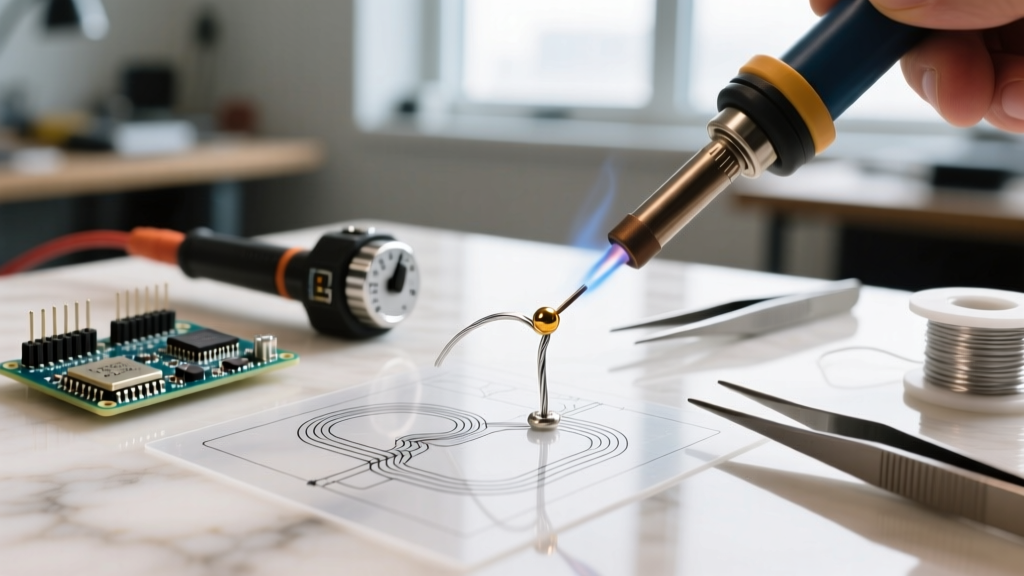
The modern jeweler's bench in 2026 is dominated by two distinct torch philosophies: the precision micro-torch and the high-BTU macro-torch. We asked Sarah Jenkins, a master bench jeweler with over two decades of experience in bespoke fabrication, to break down the current hardware standards.
The Undisputed Precision King: Smith Little Torch
'For 90% of bench work, the Smith Little Torch (Model 23-1009C) remains the gold standard,' Jenkins explains. Priced around $380 to $420 for the complete Acetylene B-Tank setup in 2026, its value lies in the interchangeable tip system. The #00 tip (0.015-inch orifice) produces a pinpoint flame perfect for closing microscopic jump rings or soldering delicate prongs, while the #2 tip delivers the broader envelope needed for bezel setting on heavy gauge silver.
'The mistake beginners make is using a tip that is too large and trying to reduce the gas pressure. This causes flashback and a sooty, carbon-rich flame. You must match the tip orifice to the mass of the silver, then adjust the oxygen-to-acetylene ratio to achieve a neutral flame with a distinct, sharp inner cone.' — Sarah Jenkins, Master Bench Jeweler
Alternative Fuel Systems: Oxy-Propane and Concentrators
With acetylene regulations tightening and tank swap fees rising, many studios are transitioning to oxygen-propane setups. While propane burns slightly cooler and requires a larger flame envelope to achieve the same BTU transfer, modern Gentec and Smith propane tips have largely closed the gap. Furthermore, the 2026 market has seen a surge in medical-grade oxygen concentrators adapted for bench torches, eliminating the need for heavy O2 tanks, though they are strictly limited to low-flow micro-torch applications.
Metallurgy of Silver Solder: Grades and Flow Temperatures
Understanding the alloy composition of your filler metal is non-negotiable. Silver solder (technically a brazing alloy) is graded by its flow temperature. This step-down melting point system allows jewelers to make multiple sequential joints on a single piece without melting the previous seams.
According to data from the Gemological Institute of America (GIA), sterling silver (92.5% Ag, 7.5% Cu) melts at approximately 1640°F (893°C). Your solder must flow well below this threshold to prevent the base metal from slumping. In 2026, cadmium-free and lead-free formulations are strictly mandated by global safety standards, altering the traditional zinc-tin-copper ratios used in older alloys.
| Solder Grade | Ag Content (Approx) | Flow Temp (°F / °C) | Primary Use Case |
|---|---|---|---|
| Hard | 75% - 80% | 1450°F / 788°C | First joints, structural seams, ring shanks |
| Medium | 70% - 72% | 1350°F / 732°C | Second-stage joints, attaching bezels to backplates |
| Easy | 65% - 68% | 1270°F / 688°C | Final repairs, closing jump rings, attaching findings |
| Extra Easy | 55% - 60% | 1200°F / 649°C | Emergency repairs on heat-sensitive or previously sized rings |
Source: Metallurgical specifications aggregated from Rio Grande Jewelry Supplies 2026 catalog.
The Eutectic Advantage
Metallurgist Dr. Aris Thorne emphasizes the importance of eutectic alloys in modern silver soldering. 'A true eutectic silver solder melts and flows at a single, specific temperature rather than over a plastic range. This eliminates the 'slushy' phase where the alloy separates, which is the primary cause of pitted, weak joints in cheap imported solders.'
Flux Chemistry and Firescale Prevention
Flux is not merely a cleaning agent; it is a chemical shield. When sterling silver is heated, the copper in the alloy reacts with atmospheric oxygen to form cupric oxide (firescale), a stubborn purple-grey stain that penetrates deep into the metal grain. To combat this, professionals rely on specialized fluorides and borates.
- Stay-Silv White Flux: A paste flux containing potassium fluoroborate. It is highly active up to 1100°F (593°C) and is ideal for Easy solder and quick repairs. It breaks down rapidly under prolonged high heat.
- Black Flux (Boric Acid + Borax):strong> The industry workhorse for Hard and Medium soldering. The carbon additive (which gives it the black color) acts as a visual indicator, burning off exactly when the metal reaches the optimal flow temperature, while the borax glass provides a high-temperature oxygen barrier.
- Batterns Self-Pickling Flux: A liquid flux preferred by production jewelers for its ability to flux and mildly pickle the joint simultaneously, though it offers less thermal protection than heavy paste fluxes.
The 2026 Firescale Protocol: Boric Acid and Denatured Alcohol
To completely prevent firescale before the torch is even lit, experts recommend the boric acid dip. By saturating denatured alcohol with boric acid powder and dipping the entire piece of silver before heating, a microscopic glassy barrier forms over the metal as the alcohol burns off. This seals the copper away from oxygen, saving hours of post-solder polishing and preserving the crisp edges of milled silver stock.
Troubleshooting Common Silver Soldering Failures
Even with premium tools from suppliers like Rio Grande, bench jewelers encounter thermal anomalies. Here is the expert consensus on diagnosing and fixing the three most common silver soldering failures.
1. Solder Balling (Refusal to Flow)
The Symptom: The solder melts into a perfect, shiny sphere and sits on top of the seam rather than being drawn into the joint.
The Cause: Flux burnout or unequal mass heating. If the flux turns glassy and black, it has lost its chemical activity, and oxidation has already claimed the silver surface. Alternatively, if you heat the solder chip directly rather than the surrounding silver, the solder melts before the capillary action of the base metal can engage.
The Fix: Quench, re-pickle, and re-flux. Always direct the flame at the thickest part of the silver joint, allowing the ambient heat transfer to pull the solder into the seam.
2. Pitting and Porosity in the Seam
The Symptom: The solder flows, but upon polishing, tiny black pits or holes appear along the joint line.
The Cause: Trapped flux inclusions, overheating the solder past its liquidus point (causing zinc vaporization), or poor joint fit. Silver solder cannot bridge gaps; it requires intimate metal-to-metal contact.
The Fix: Ensure your filing and sanding leave zero light gaps between the two pieces. Use a eutectic solder and remove the heat the exact second the solder flashes through the seam.
3. Cold Joints (Brittle Fractures)
The Symptom: The joint looks complete but snaps under minor stress.
The Cause: The silver base metal never actually reached the flow temperature of the solder. The solder merely 'frosted' onto a cooler surface without metallurgically alloying with the silver grain.
The Fix: Use a larger torch tip or adjust your oxygen ratio to increase the BTU output. The entire localized area must reach a dull cherry red (approx. 1100°F) before the solder will properly alloy.
Studio Safety and Pickle Solutions
The chemical aftermath of soldering requires a 'pickle' bath to dissolve the oxidized flux and surface firescale. Historically, studios used Sparex #2 (sodium bisulfate) or dilute sulfuric acid. However, Occupational Safety and Health Administration (OSHA) guidelines and modern environmental standards have pushed the industry toward safer alternatives.
'In 2026, we strictly use warm citric acid solutions for our primary pickle,' notes studio owner Marcus Vance. 'It is non-toxic, biodegradable, and doesn't produce the hazardous sulfur dioxide off-gassing associated with sodium bisulfate when accidentally overheated. We maintain our citric pickle in a slow cooker at 140°F (60°C), which dissolves borax flux in about five minutes without damaging the silver.'
Critical Safety Warning: Never use steel tweezers or binding wire in a silver pickle bath. The acidic solution will cause a galvanic reaction, plating the steel's iron onto the surface of your sterling silver and turning it a spongy, copper-plated pink. Always use copper, brass, or wooden tweezers for retrieving silver from the pickle.
Final Thoughts from the Bench
Soldering silver jewelry is an exercise in patience, chemistry, and thermal management. By investing in a precision micro-torch, understanding the strict temperature gradients of Hard, Medium, and Easy cadmium-free solders, and respecting the chemical realities of flux and firescale, you elevate your craft from amateur assembly to professional fabrication. The tools of 2026 are safer and more refined than ever, but the master's eye for the color of heated silver remains the ultimate instrument on the bench.