
The 'Cold Heat' Myth vs. Thermodynamic Reality
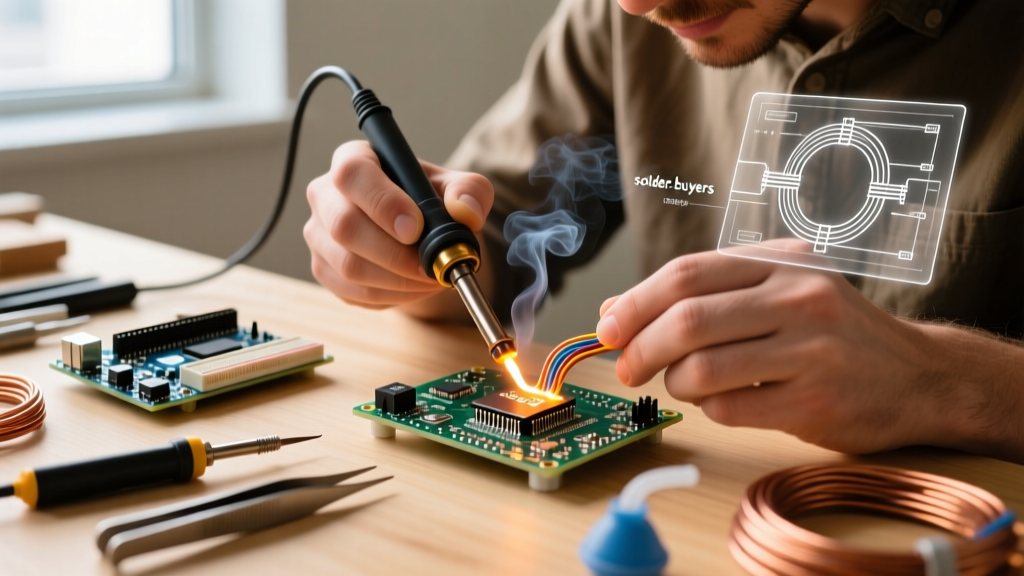
If you have spent any time browsing electronics forums or watching late-night tool infomercials, you have likely encountered the cold heat soldering tool. Originally marketed as a revolutionary device that could melt solder instantly while remaining cool to the touch, the 'ColdHeat' brand became synonymous with low-temperature soldering pens. But as any seasoned electrical engineer will tell you, thermodynamics cannot be cheated. The tip of these tools absolutely gets hot; the 'magic' lies entirely in the specialized solder alloy they use.
Rather than a technological breakthrough in heating elements, the cold heat soldering tool relies on Bismuth-based solder alloys (typically 58% Bismuth and 42% Tin). This specific metallurgical combination drops the melting point from the standard 183°C (361°F) of leaded solder down to a mere 138°C (280°F). Because the melting point is so low, the tool's heating element doesn't need to reach extreme temperatures, allowing the outer casing to remain relatively cool and reducing the risk of burning heat-sensitive components.
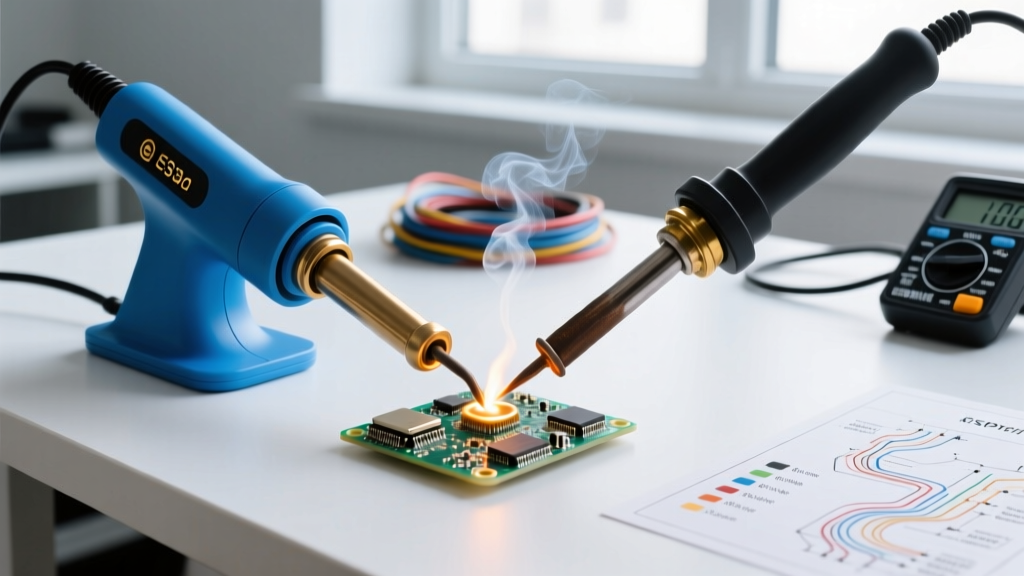
But is this method actually viable for modern DIY electronics, prototyping, or repairs in 2026? To answer this, we must compare the cold heat method directly against traditional soldering techniques and conductive adhesives.
Method Comparison Matrix
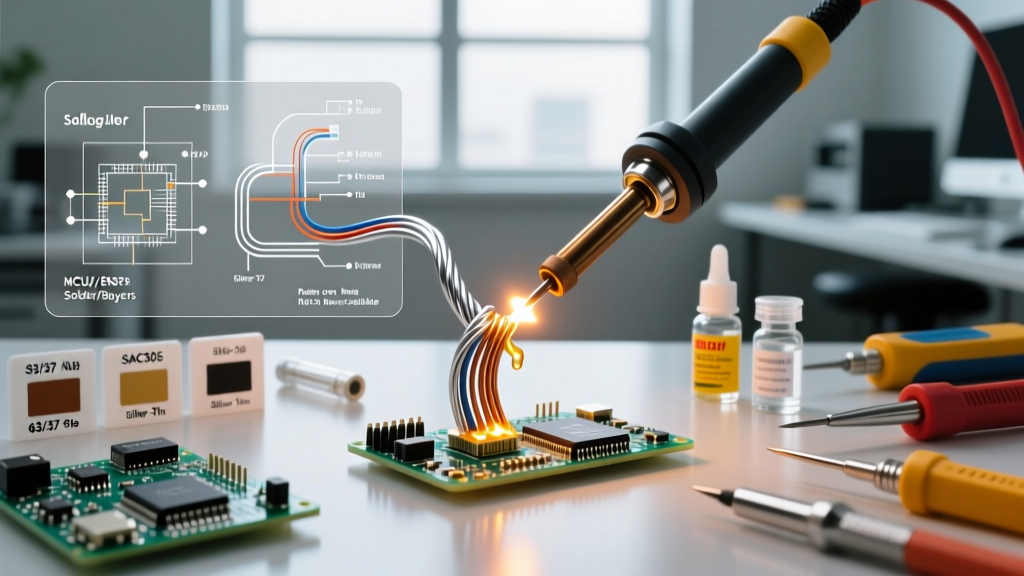
The table below breaks down the core differences between the low-temperature 'cold heat' method, traditional eutectic soldering, modern lead-free standards, and conductive epoxies.
| Method / Alloy | Melting Point | Shear Strength | Typical Tool Cost | Reliability (IPC Class) |
|---|---|---|---|---|
| Cold Heat (Bi58/Sn42) | 138°C (280°F) | Low (Brittle) | $30 - $60 | Class 1 Only (Consumer) |
| Traditional Leaded (Sn60/Pb40) | 183°C (361°F) | High | $50 - $150 | Class 2 & 3 |
| Lead-Free (SAC305) | 217°C (422°F) | Very High | $100 - $300 | Class 3 (High-Reliability) |
| Conductive Epoxy | Cures at RT / 60°C | Very Low | $15 - $40 | Prototyping Only |
Deep Dive: Metallurgy and the 'Brittle Joint' Failure Mode
To understand why the cold heat soldering tool is not the universal replacement it claims to be, we have to look at the metallurgy of Bismuth. According to data published by Indium Corporation, a leading global supplier of solder materials, Bismuth-Tin alloys exhibit excellent wetting properties but suffer from severe mechanical brittleness.
The CTE Mismatch Problem
In any printed circuit board (PCB) assembly, the silicon component, the copper pad, and the FR4 fiberglass substrate all expand and contract at different rates when heated. This is known as the Coefficient of Thermal Expansion (CTE) mismatch. Traditional Sn60/Pb40 solder is relatively malleable; it acts as a mechanical shock absorber, flexing slightly to accommodate these microscopic movements.
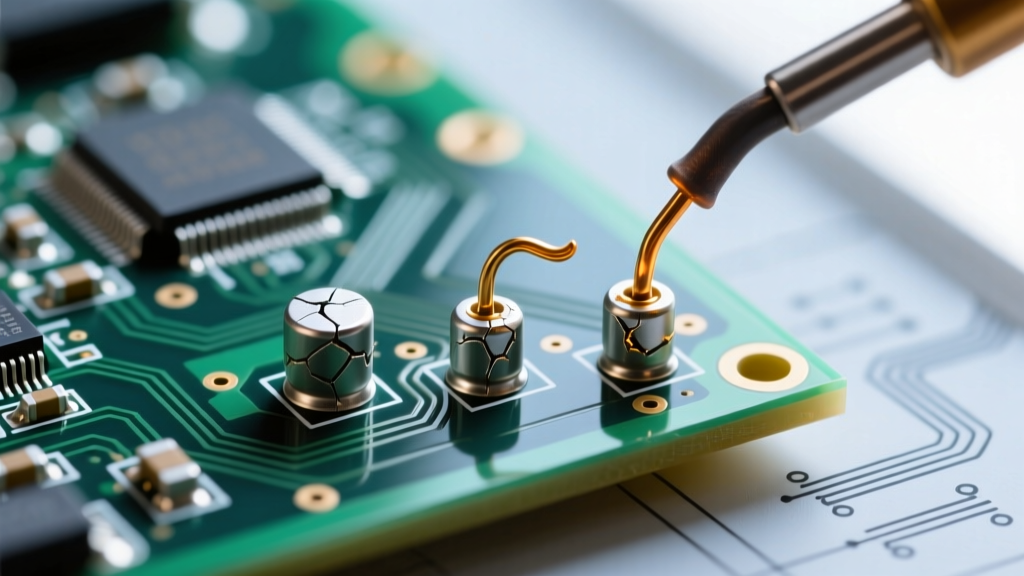
Bismuth-based solder does not flex. It forms large, rigid intermetallic compounds (IMCs). When subjected to thermal cycling (turning the device on and off) or mechanical shock (dropping the device), the rigid bismuth joint cannot absorb the stress. Instead of bending, it fractures. This catastrophic failure mode is exactly why IPC J-STD-001 standards heavily restrict or outright ban Bismuth-based solders in Class 3 high-reliability assemblies, such as aerospace, automotive, and medical life-support devices.
CRITICAL WARNING: The 96°C Ternary Alloy Trap
Never mix Bismuth-based 'cold heat' solder with traditional Lead-based (Sn/Pb) solder. If the two alloys cross-contaminate, they form a Tin-Lead-Bismuth ternary eutectic. This new alloy has a melting point of just 96°C (204°F). A joint contaminated this way will literally melt and fail if left inside a hot car on a summer day or placed near a warm power supply.
Modern Alternatives to the Original Cold Heat Kit
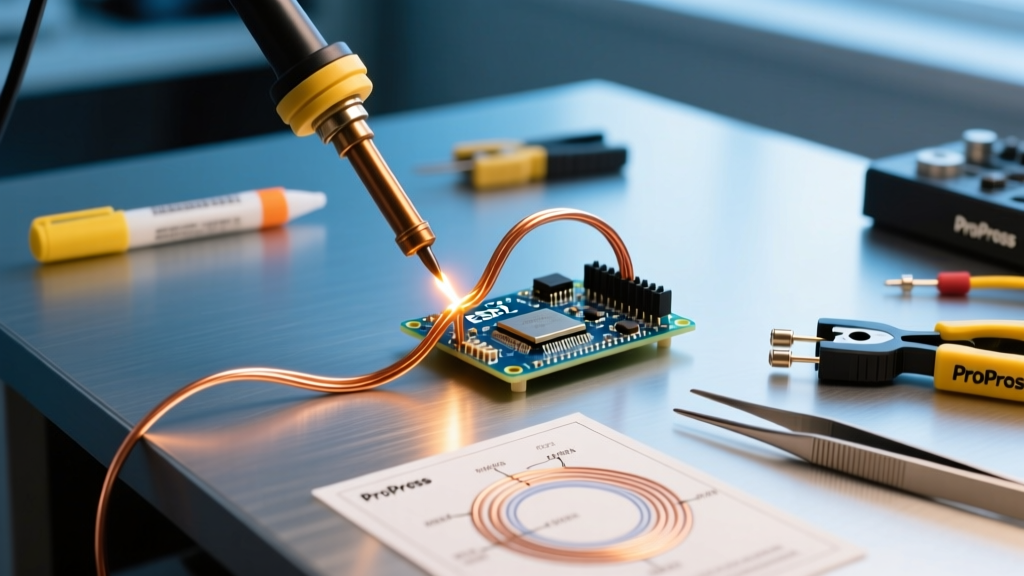
The original battery-powered Cold Heat pens featured a split tip that completed an electrical circuit through the workpiece to generate localized heat. While novel, these tips were notoriously fragile, prone to snapping, and offered terrible thermal recovery. If you want to utilize the 138°C low-temperature soldering method today, you should abandon the gimmick pens and use a modern, PID-controlled smart iron.
The 2026 Optimal Low-Temp Setup
For under $50, you can build a low-temperature soldering setup that outperforms the original Cold Heat tool in every measurable metric:
- The Iron: The Pinecil V2 by Pine64. Powered by a RISC-V chip, it supports USB-C PD 3.0 and offers precise, programmable temperature control. Set the profile to 160°C for Bi/Sn solder.
- The Solder: Chip Quik SMD4300Bi or Kester Sn42/Bi58 wire (0.8mm diameter). Expect to pay around $18 to $25 for a 100g spool.
- The Flux: Use a no-clean, low-solids tacky flux (like Amtech NC-559) to ensure wetting at lower temperatures, as low-temp alloys do not flow as aggressively as leaded solder.
When to Actually Use a Low-Temperature Soldering Method
Despite its mechanical limitations, the cold heat soldering method is not useless. It is a highly specialized technique that solves specific thermal problems. You should reach for your Bi/Sn solder and low-temp iron profile in the following scenarios:
- Heat-Sensitive Components: Certain multi-layer ceramic capacitors (MLCCs) and piezoelectric buzzers will crack or depolarize if exposed to temperatures above 200°C. Low-temp solder eliminates this risk.
- Flex PCBs and RFID Tags: Polyimide and PET flex substrates can warp, blister, or melt under a standard 350°C iron tip. A 150°C tip keeps the substrate intact.
- Vintage Electronics Restoration: When repairing vintage 1970s audio gear or early computers, the original phenolic or single-sided fiberglass boards are highly susceptible to pad lifting. Lowering the thermal load preserves these fragile, irreplaceable pads.
- Step-Soldering (Hierarchical Soldering): In complex RF shielding or multi-stage assembly, technicians use Bi/Sn solder for the final components so they don't accidentally re-melt the SAC305 or Sn/Pb joints they already placed earlier in the build.
Final Verdict for DIYers and Technicians
The cold heat soldering tool, as marketed in its original infomercial form, is a novelty item that prioritizes gimmicks over metallurgical reality. However, the underlying method—low-temperature Bismuth-Tin soldering—is a vital technique in the modern electronics workbench.
For general-purpose DIY, Arduino prototyping, and standard wiring, stick to a traditional temperature-controlled iron and Sn60/Pb40 (or SAC305 if RoHS compliance is required). The joints will be mechanically robust, and the solder will flow beautifully. But keep a small spool of Sn42/Bi58 and a smart iron like the Pinecil V2 in your arsenal. When you inevitably encounter a heat-sensitive flex cable or a fragile vintage PCB, that low-temperature method will save the day where a traditional hot iron would cause irreversible damage.