
The Legacy of the "Silver Soldered" Mark
When collectors, antique dealers, and restoration experts encounter vintage holloware, few hallmarks carry as much weight regarding durability as the international silver company silver soldered stamp. Founded in 1898, the International Silver Company (ISC) became the premier manufacturer of commercial and domestic silverware in the United States. For their heavy-duty hotel and railway lines, ISC utilized hard silver soldering (silver brazing) rather than soft lead-tin soldering to assemble spouts, handles, and hinges.
Understanding the metallurgical reality behind this mark is critical for modern DIYers and professional restorers. Attempting to repair an ISC silver-soldered teapot or coffee urn with standard electronics solder or soft plumbing solder will result in catastrophic joint failure under thermal stress. This comprehensive guide breaks down the historical alloys, modern replacement materials, and the precise thermal protocols required to restore these heirloom pieces in 2026.
What the Mark Actually Means
The phrase "Silver Soldered" on an ISC piece does not mean the item is solid silver, nor does it refer to soft solder. It indicates that the joints were brazed using a hard silver alloy with a melting point typically exceeding 1,150°F (620°C). This was a mark of commercial superiority. Soft solder (melting around 360°F to 450°F) would easily fail when subjected to the industrial dishwashers and constant boiling water of early 20th-century hotel service. By using silver brazing alloys, ISC ensured that the structural integrity of the brass or nickel-silver base metal was permanently fused.
Metallurgical Breakdown: Historical vs. Modern Alloys
To successfully repair an international silver company silver soldered joint, you must understand what you are melting. Early 20th-century silver solders heavily relied on cadmium to lower the melting point and improve flow. Today, cadmium is recognized as a severe health hazard and is banned in most modern brazing alloys due to toxic fume generation. Modern restorers must use cadmium-free alternatives that match the flow characteristics and capillary action of the original alloys without compromising safety.
| Alloy Designation | Composition (Approx.) | Melting Range (°F) | Application in ISC Repair |
|---|---|---|---|
| Vintage ISC Hard Solder | 45% Ag, 30% Cu, 25% Zn/Cd | 1,200 - 1,350°F | Original factory joints (do not replicate due to Cd toxicity) |
| Harris Stay-Silv 15 | 15% Ag, 80% Cu, 5% Zn | 1,225 - 1,425°F | Excellent for heavy structural joints on brass/nickel-silver bases |
| Lucas-Milhaupt Braze 65 | 65% Ag, 20% Cu, 15% Zn | 1,240 - 1,325°F | Premium color match for visible joints near silver plating |
| Sil-Fos 15 (Phos-Copper) | 15% Ag, 80% Cu, 5% P | 1,190 - 1,475°F | Self-fluxing on copper, but requires flux on ISC nickel-silver bases |
For a deep dive into the capillary mechanics of these alloys, the Lucas-Milhaupt brazing fundamentals guide provides excellent metallurgical diagrams on how silver alloys wick into ferrous and non-ferrous joints.
Step-by-Step Restoration Protocol for ISC Holloware
Repairing a cracked spout or a detached handle on a silver-plated ISC piece requires immense heat control. The base metal is usually nickel silver (a copper-nickel-zinc alloy containing no actual silver) or brass, plated with a microscopic layer of pure silver. Excessive heat will blister the plating or melt the base metal.
Phase 1: Joint Preparation and Fitment
- Mechanical Cleaning: Remove all oxidation, old polish, and lacquer from the joint area using a fiberglass scratch brush. Avoid sandpaper, which embeds silica grit into the softer base metals and prevents alloy wetting.
- Clearance Verification: Silver brazing relies on capillary action. The optimal joint clearance for Stay-Silv 15 is between 0.002 and 0.005 inches. If the handle tang is loose in the socket, the alloy will pool rather than wick.
- Thermal Sink Application: Pack the inside of the holloware with damp sand or use thermal paste to draw heat away from the opposite side of the joint, protecting the interior silver plating.
Phase 2: Fluxing and Heating
Standard white brazing flux breaks down at around 1,100°F, which is too low for most silver-bearing repair alloys. You must use a boron-modified black flux (such as Stay-Silv Black Flux), which remains active up to 1,600°F. According to the Silver Institute, proper fluxing is the only way to prevent copper oxides from blocking the capillary draw of the silver alloy.
- Apply the black flux paste generously to both the male and female joint surfaces.
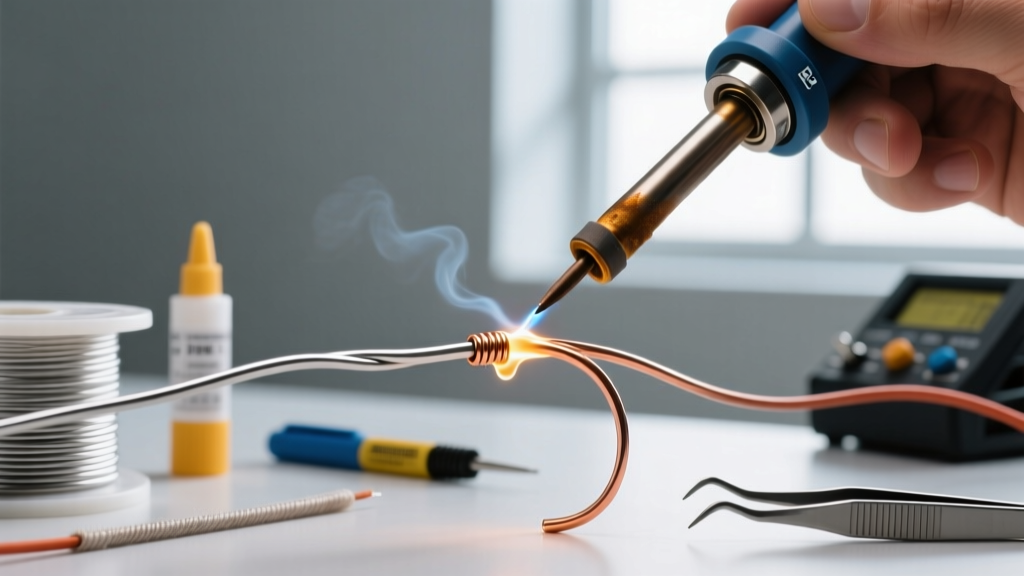
- Ignite your oxy-acetylene or oxy-propane torch. A Smith Mini-Torch with a #0 or #1 Smith tip is ideal for precise heat control.
- Use a soft, sweeping carburizing flame. Never hold the inner blue cone directly on the silver plating.
- Heat the base metal adjacent to the joint, not the filler rod. When the base metal reaches approximately 1,250°F, touch the Stay-Silv 15 wire to the joint edge. If it melts and instantly wicks into the seam, the temperature is correct.
Phase 3: Quenching and Pickling
Once the alloy flashes and flows through the joint, remove the heat immediately. Allow the piece to air cool until the red glow fades, then quench in water to pop off the glassy flux residue. Submerge the piece in a warm pickle solution (Sparex #2 or a 10% citric acid bath) at 140°F for 20 minutes to dissolve any remaining copper oxides without etching the pure silver plate.
Critical Failure Modes in Vintage Silver Repair
When working with the international silver company silver soldered lineage, restorers frequently encounter three specific failure modes:
- Base Metal Melt-Through: Nickel silver has a solidus temperature around 1,600°F, but thin-gauge hotel ware can warp or melt at lower temperatures if heat is localized. Always keep the torch moving.
- Silver Plate Blistering: If heat is applied too rapidly, microscopic moisture or air trapped between the silver electroplate and the brass base will expand, causing the silver layer to bubble and peel away irreversibly.
- Flux Inclusions: If the joint is heated unevenly, the flux can become trapped inside the capillary space, creating a brittle, glassy void that will snap under mechanical stress.
2026 Equipment and Material Cost Guide
Restoration Budgeting Insight: As of early 2026, the spot price of silver continues to influence the cost of brazing alloys. A 1-ounce coil of 65% silver brazing wire (Braze 65) now averages between $75 and $95 USD. For hobbyists restoring a single ISC coffee pot, a cadmium-free 15% silver alloy (Stay-Silv 15) remains the most cost-effective choice at approximately $25 per ounce, offering more than enough tensile strength for holloware handles and spouts.
Expert FAQ on ISC Silver Soldered Pieces
Can I use a butane micro-torch for these repairs?
While butane micro-torches can reach 2,400°F in theory, they lack the thermal mass and BTU output required to heat a heavy brass or nickel-silver ISC teapot body evenly. By the time the joint reaches 1,250°F, you risk localized overheating and plating damage. Oxy-propane or oxy-acetylene setups are strictly recommended for holloware.
How do I verify if a piece is actually silver soldered?
Look for the stamp on the underside or near the handle tang. For a comprehensive database of ISC hallmarks, including variations used between 1898 and the 1980s, consult the 925-1000 American Silver Marks archive. If a joint appears grey and melts under a standard soldering iron, it has been improperly repaired with soft solder in the past and must be entirely cleaned out before silver brazing.
Will the silver brazing alloy match the color of the silver plate?
No. Silver brazing alloys contain high amounts of copper and zinc, which will appear brass-colored or yellowish after pickling. For visible joints, restorers typically use a localized silver plating pen or electro-deposition bath to flash a layer of pure silver over the repaired seam, restoring the uniform aesthetic of the ISC holloware.