
The True Economics of Hard Soldering in 2026
Hard soldering, formally classified under the American Welding Society (AWS) A5.8 standard as brazing or silver soldering, relies on filler metals that melt above 450°C (842°F). Unlike soft soldering, which uses tin-lead or SAC305 alloys to create superficial mechanical bonds, hard soldering creates deep metallurgical bonds via capillary action. These joints can withstand extreme pressures (up to 4,000 PSI in HVAC/R systems) and high structural loads. However, this premium performance carries a premium price tag. In 2026, with the global silver spot market experiencing sustained volatility and strict EPA Section 608 leak-rate regulations mandating stronger joints in commercial refrigeration, understanding the exact cost per joint is critical for fabricators, plumbers, and HVAC technicians.
This cost analysis breaks down the material, equipment, and operational expenses of hard soldering, providing a data-driven framework to determine when the investment in silver-bearing alloys and oxy-fuel setups yields a positive return on investment (ROI) compared to traditional soft soldering.
Filler Metal Cost Matrix: Silver vs. Copper-Phosphorus
The most significant variable in hard soldering is the filler metal. Alloys are broadly categorized into BCuP (Copper-Phosphorus with trace silver) and BAg (Silver-bearing with zinc/cadmium/nickel). Because silver is a precious metal tied to global commodities markets, the 2026 pricing for BAg alloys has surged, making strategic alloy selection a primary cost-control measure.
| AWS Class | Brand Example | Ag Content | Melting Range (°F) | 2026 Est. Price |
|---|---|---|---|---|
| BCuP-3 | Lucas-Milhaupt Sil-Fos 5 | 5% | 1190 - 1495 | $165 / lb |
| BCuP-5 | Harris Sil-Fos 15 | 15% | 1190 - 1475 | $285 / lb |
| BAg-1 | Harris Stay-Silv 15 | 15% (High Cu/Zn) | 1145 - 1205 | $310 / lb |
| BAg-24 | Lucas-Milhaupt Easy-Flo 3 | 50% | 1175 - 1290 | $640 / lb |
Strategic Alloy Selection and Joint Clearance
To minimize costs, technicians must match the alloy to the base metal. BCuP alloys (like Sil-Fos) contain phosphorus, which acts as a self-fluxing agent on pure copper. This eliminates the need for separate flux when joining copper-to-copper, saving roughly $0.05 to $0.10 per joint in chemical costs. However, BCuP alloys must never be used on ferrous metals or nickel alloys, as the phosphorus forms brittle iron/nickel phosphide intermetallic compounds at the joint interface, leading to catastrophic failure under vibration.
For copper-to-steel or stainless-steel joints, BAg alloys (like Stay-Silv 15) are mandatory. Furthermore, hard soldering relies entirely on capillary action. According to Lucas-Milhaupt brazing fundamentals, optimal joint clearance for silver-based filler metals is between 0.001 and 0.005 inches at the brazing temperature. If a fabricator machines a joint too loose (e.g., 0.010 inches), the expensive silver alloy will drain out of the joint, resulting in a weak bond and wasted material.
Equipment and Consumable Overhead
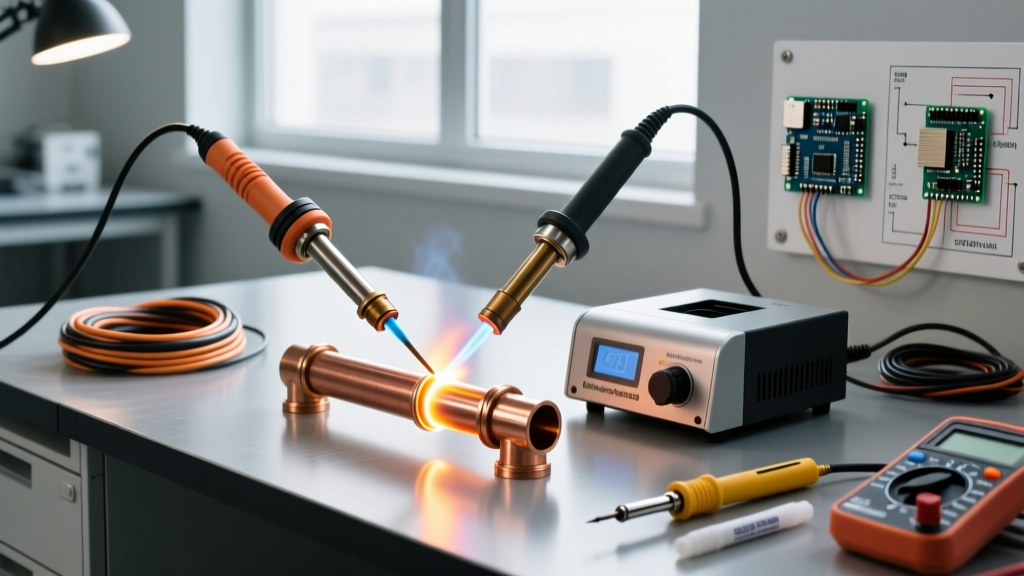
Soft soldering can be accomplished with a $60 butane torch or a $150 TS8000 MAPP gas setup. Hard soldering requires significantly higher thermal input, necessitating specialized oxy-fuel rigs or high-frequency induction heaters.
Torch Rigs and Gas Burn Rates
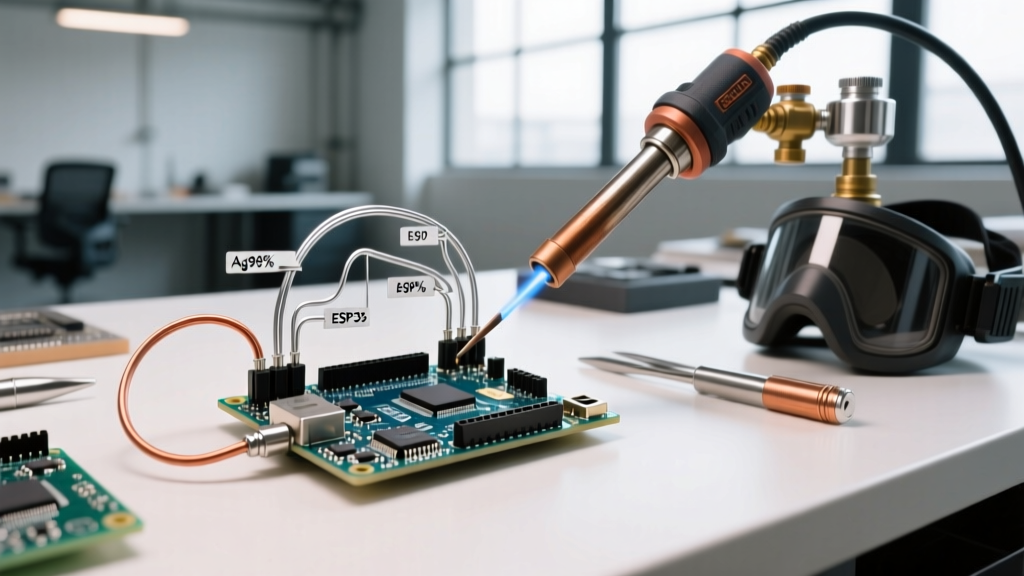
- Oxy-Acetylene (e.g., Victor Journeyman 315): The industry standard for heavy hard soldering. Acetylene burns at 3,100°C (5,600°F) with oxygen, providing the rapid heat concentration needed to braze thick copper manifolds without overheating the entire assembly. Cost: Torch outfit (~$350), B-size Acetylene tank lease (~$150/year), K-size Oxygen tank lease (~$120/year). Gas refills cost roughly $250 for Acetylene and $45 for Oxygen.
- Oxy-Propane (e.g., Smith AW1A Mini-Torch): Propane burns cooler (2,800°C) but releases more total BTUs per cubic foot. It is highly cost-effective for high-volume, smaller-diameter tubing (under 1/2 inch). Cost: Torch outfit (~$220), Propane tank (owned, ~$50 swap). Operational gas costs are 60% lower than acetylene, but heat-up time on thick masses increases by roughly 30%, impacting labor costs.
Flux and Chemical Pickling
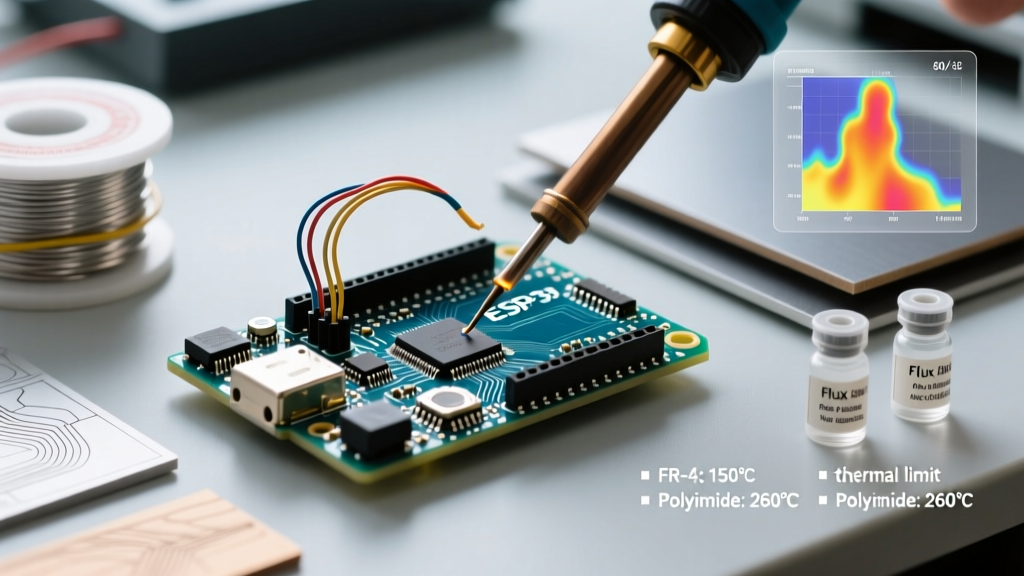
When using BAg alloys or joining dissimilar metals, a specialized brazing flux is required to dissolve cuprous oxide and prevent fire scale. Harris Products Group formulates their Stay-Silv White Flux using potassium fluoborate and boric acid, which becomes active at 1,050°F. A 1-pound jar costs approximately $28 and yields roughly 500 joints, equating to $0.056 per joint. Post-braze, the glass-like flux residue must be removed via mechanical wire brushing or chemical pickling (using a 10% sulfuric acid bath or commercial pickling pastes), adding an estimated $0.15 per joint in labor and chemical disposal compliance.
Operational Cost Matrix: Hard Soldering vs. Soft Soldering
When bidding on commercial contracts, fabricators must weigh the material premium of hard soldering against the labor and warranty risks of soft soldering. The following matrix compares a standard 3/4-inch copper pipe joint in a high-pressure commercial chiller application.
| Metric | Soft Soldering (95/5 Sn/Sb) | Hard Soldering (Sil-Fos 5) |
|---|---|---|
| Material Cost per Joint | $0.45 | $2.85 |
| Flux Cost per Joint | $0.05 (Tinning flux) | $0.00 (Self-fluxing on Cu) |
| Joint Prep & Heat Time | 45 seconds | 90 - 120 seconds |
| Max Operating Pressure | 150 PSI (at 150°F) | 4,000+ PSI (at 300°F) |
| Warranty Risk / Rework | High (Creep failure under thermal cycling) | Negligible (Metallurgical bond) |
Hidden Costs: Failure Modes and Edge Cases
The true cost of hard soldering is often revealed in failure analysis. While the joints are inherently stronger, the process is less forgiving than soft soldering. Two primary edge cases drive up operational costs:
- Flux Inclusions and Voiding: If the joint is not heated uniformly, the flux can become trapped inside the capillary space, creating a void. Under ultrasonic testing (common in aerospace and medical gas lines), this joint will fail inspection, requiring the entire $500 manifold to be cut out and scrapped.
- Thermal Distortion and Fire Scale: The extreme heat required to melt BAg-24 (50% silver) can easily anneal work-hardened copper or warp thin-walled stainless steel. Fabricators must use heat sinks (wet rags or thermal paste) and strictly control flame dwell time. Overheating causes heavy fire scale (black copper oxide) that flakes off inside the pipe, potentially destroying a $3,000 TXV (Thermostatic Expansion Valve) downstream.
Expert Pro-Tip: Nitrogen Purging
To eliminate internal oxidation (fire scale) during hard soldering, technicians must flow dry nitrogen through the tubing at a rate of 1 to 2 CFH (Cubic Feet per Hour) while heating. While a cylinder of dry nitrogen costs only $35 to lease and $40 to refill, the regulator setup and flow-meter calibration add 3 minutes of setup time per joint. However, this prevents internal scale, eliminating the need for post-braze chemical flushing and saving hundreds of dollars in system contamination risks.
Conclusion: When is the Premium Justified?
Hard soldering is not a universal replacement for soft soldering; it is a specialized metallurgical process reserved for high-stakes environments. In 2026, the material cost per joint for hard soldering is roughly 600% to 800% higher than soft soldering, and the equipment overhead requires a minimum $800 initial investment for a safe, compliant oxy-fuel rig. However, when factoring in the 2026 EPA leak-rate mandates for commercial HVAC, the structural demands of high-vibration compressor lines, and the catastrophic cost of warranty callbacks on pressurized systems, the ROI of silver-bearing hard soldering is undeniable. Fabricators who master joint clearance tolerances and strategic BCuP/BAg alloy selection will maintain high margins while delivering joints that outlast the base metals themselves.