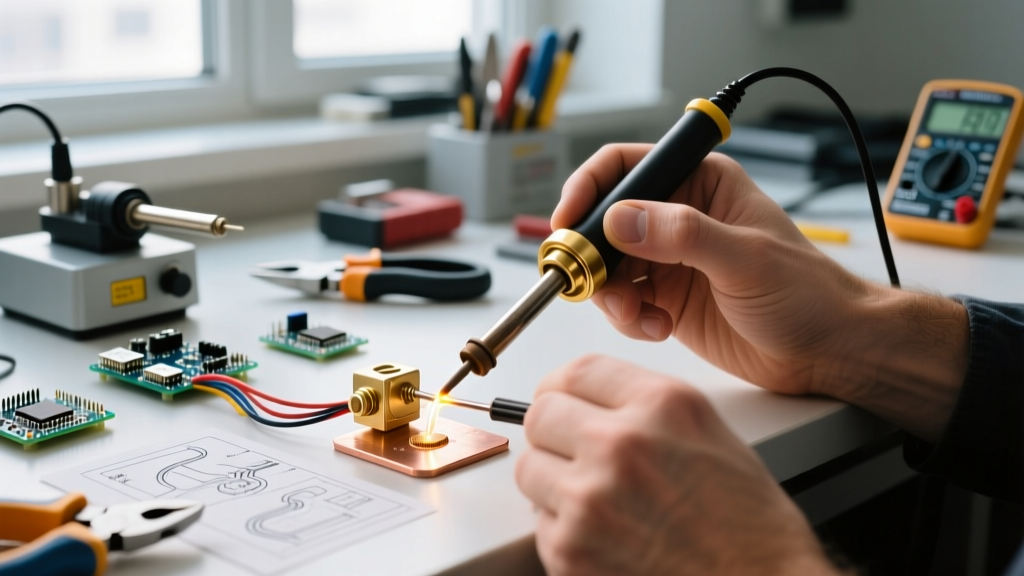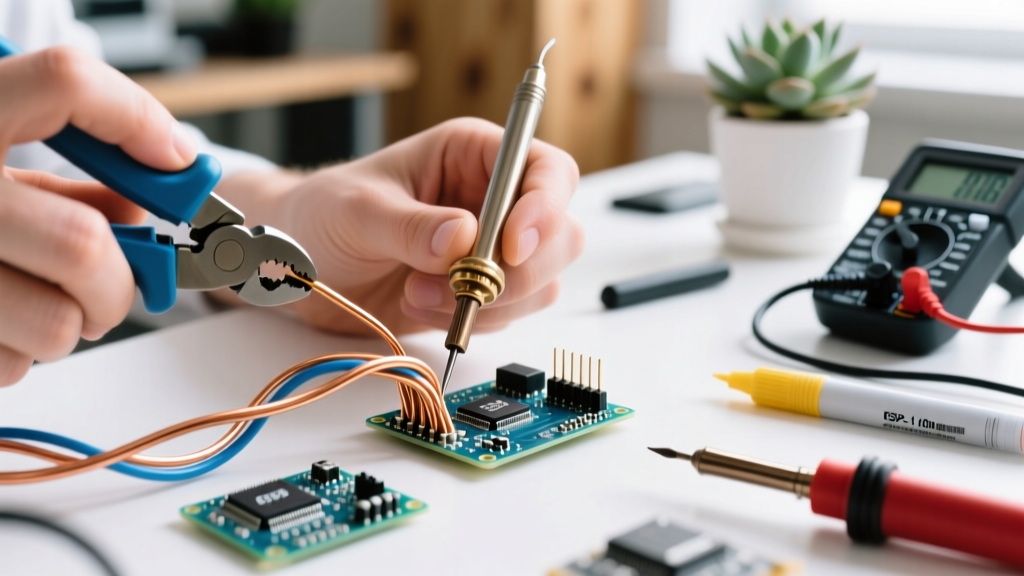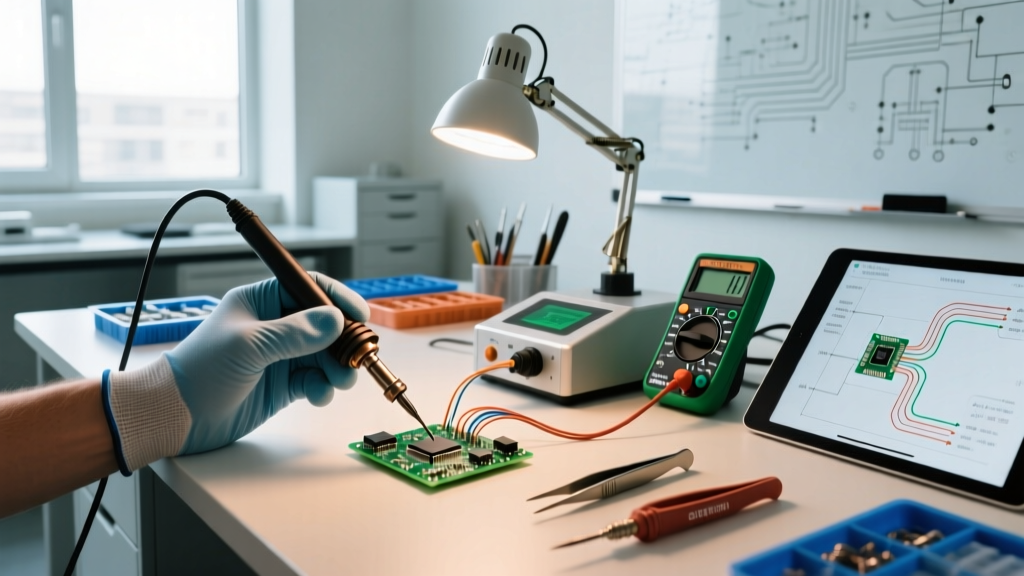

The True Cost of Skipping Formal Soldering Training
In the modern electronics landscape of 2026, the margin for error in hand soldering has effectively vanished. With the industry-wide adoption of 01005 and 008004 metric surface-mount components, and the thermal complexities of lead-free SAC305 and SAC405 alloys, relying solely on YouTube tutorials is a liability. A single cold solder joint or pad lift on a high-density interconnect (HDI) board can result in catastrophic field failures, especially in automotive and aerospace applications.
Whether you are a DIY maker looking to transition from through-hole to surface-mount technology (SMT), or a production technician needing to meet stringent aerospace standards, enrolling in structured soldering classes is the most reliable way to build muscle memory and theoretical understanding. However, not all training programs are created equal. This comprehensive guide breaks down the tiers of soldering training, curriculum requirements, and certification pathways to help you invest your time and money wisely.
The 3 Tiers of Soldering Classes Available Today
Soldering education is generally segmented into three distinct tiers, each catering to different skill levels, budgets, and professional requirements.
Tier 1: Hobbyist and Maker Workshops ($20 - $150)
These classes are typically hosted by local makerspaces, community centers, or online platforms like Udemy and Skillshare. They focus on fundamental through-hole soldering, basic wire tinning, and introductory SMD work (down to 0805 or 0603 components).
- Target Audience: Hobbyists, Arduino/Raspberry Pi enthusiasts, and students.
- Equipment Used: Entry-level stations like the Pine64 Pinecil V2 or Hakko FX-888D.
- Limitations: Rarely covers advanced rework, BGA (Ball Grid Array) profiling, or formal inspection standards. Instructors may lack formal IPC certification.
Tier 2: Vocational and Community College Modules ($300 - $800)
Offered as part of broader electronics technology or mechatronics degrees, these semester-long or intensive short-courses bridge the gap between hobbyist and professional. They introduce mixed-technology assemblies, basic conformal coating, and introductory desoldering techniques using hot air and vacuum tweezers.
- Target Audience: Engineering students, junior technicians, and repair shop employees.
- Equipment Used: Mid-tier industry standards like the Hakko FX-951 or Weller WXP120.
- Advantages: Hands-on lab time with microscopes and a structured introduction to reading schematics and Bill of Materials (BOM) for assembly.
Tier 3: IPC-Certified Professional Training ($1,500 - $2,800)
These are intensive, multi-day boot camps taught by Certified IPC Trainers (CITs) at accredited training centers. They are strictly aligned with IPC standards and are mandatory for technicians working in medical, military, and aerospace sectors.
- Target Audience: Quality assurance inspectors, aerospace technicians, and senior rework specialists.
- Equipment Used: High-end, fast-recovery stations like the JBC CD-2BQE or Metcal MX-5200, alongside advanced X-ray and AOI (Automated Optical Inspection) tools.
- Outcomes: Leads to globally recognized CIS (Certified IPC Specialist) credentials.
Curriculum Audit: What Your Syllabus Must Include
Before paying for any intermediate or advanced soldering class, request the syllabus. A reputable program must go far beyond simply melting solder. Ensure the curriculum explicitly covers the following technical pillars:
"A technician who doesn't understand flux chemistry and intermetallic compound (IMC) formation is just gluing metal together. True soldering is a controlled metallurgical process." — Senior IPC Master Trainer
1. Flux Chemistry and Activation
The class must differentiate between ROL0 (No-Clean), ROL1, and water-soluble fluxes. You should learn the exact activation temperatures of these fluxes and why applying heat too quickly before flux activation leads to poor wetting and solder balling.
2. Thermal Profiling and Dwell Time
Excessive dwell time (keeping the iron on the pad for more than 2-3 seconds) causes copper pad delamination and destroys the internal structure of multilayer ceramic capacitors (MLCCs). Look for courses that teach thermal management, including when to use chisel vs. conical tips, and how to leverage the thermal recovery rates of advanced JBC cartridge systems.
3. Intermetallic Compound (IMC) Formation
A high-quality class will explain the science of the IMC layer—the actual metallurgical bond between the copper pad and the tin in the solder. Understanding that a thick IMC layer (caused by excessive heat or prolonged rework) results in a brittle, fragile joint is critical for high-reliability soldering.
Online vs. In-Person Soldering Classes
While theoretical knowledge can be acquired online, soldering is inherently a tactile skill. The table below compares the effectiveness of different learning modalities for electronics training in 2026.
| Feature | Pre-Recorded Online Video | Live Virtual Labs | In-Person Vocational / IPC |
|---|---|---|---|
| Cost Range | $20 - $100 | $200 - $500 | $400 - $2,800+ |
| Instructor Feedback | None | Delayed (via camera) | Immediate, tactile correction |
| Equipment Provided | No (Must supply own) | No (Must supply own) | Yes (Industrial grade) |
| Best For | Basic theory & safety | Intermediate SMD troubleshooting | Certification & complex rework |
The Verdict: If you are pursuing IPC certification or need to learn BGA rework and micro-soldering under a microscope, in-person training is non-negotiable. The subtle angles of iron placement and the physical feedback of wetting cannot be transmitted through a webcam.
Navigating IPC Certifications: J-STD-001 and IPC-A-610
For professionals, the gold standard of soldering education is governed by the Association Connecting Electronics Industries (IPC). When evaluating professional IPC training and certification programs, you will encounter two primary documents:
- IPC J-STD-001 (Requirements for Soldered Electrical and Electronic Assemblies): This is the process standard. It dictates how to solder, including wire preparation, terminal connections, and the exact soldering iron temperatures required for different mass components.
- IPC-A-610 (Acceptability of Electronic Assemblies): This is the visual inspection standard. It teaches you how to identify target conditions versus defects across Class 1 (General), Class 2 (Dedicated Service), and Class 3 (High Performance) products.
A comprehensive professional soldering class will often combine these into a 4-to-5-day CIS (Certified IPC Specialist) boot camp. Passing the practical and written exams grants you a certification valid for two years, which is highly sought after by defense contractors and medical device manufacturers.
Safety and Fume Extraction Standards in Training Facilities
A critical, often overlooked aspect of choosing a soldering class is evaluating the facility's safety infrastructure. Soldering generates colophony-based fumes and, if using leaded alloys (like Sn63/Pb37 for aerospace or legacy repair), poses heavy metal exposure risks.
According to OSHA guidelines on lead exposure, proper ventilation and hygiene protocols are legally required in professional environments. When touring a potential training center, look for:
- Source-Capture Extraction: Every soldering station should have a dedicated fume extractor (e.g., BOFA AD350 or Hakko FA-430) with HEPA and activated carbon filters positioned within 6 inches of the solder joint.
- Lead Hygiene Protocols: If the class handles leaded solder, the facility must enforce strict hand-washing protocols and prohibit food or drink in the lab area.
- ESD Protection: The lab should feature grounded ESD mats, wrist straps, and ionizing blowers to protect sensitive MOSFETs and microcontrollers from electrostatic discharge during handling.
Aerospace and High-Reliability Addendums
If your goal is to work in the space or aviation sector, standard IPC classes may not be enough. You should look for training centers that also incorporate NASA Electronic Parts and Packaging (NEPP) standards, specifically NASA-STD-8739.3. This standard enforces even stricter requirements on solder fillet shapes, wetting angles, and the prohibition of certain cleaning solvents that could outgas in a vacuum environment.
Final Action Plan: Which Path Should You Take?
To maximize your ROI on soldering education, follow this decision framework:
- The Maker: Start with a $50 online course to learn basic safety, tip tinning, and through-hole techniques. Buy a Pinecil V2 and practice on cheap DIY clock kits.
- The Repair Technician: Enroll in a local vocational micro-soldering workshop ($400-$600) that provides microscope time. Focus heavily on desoldering, pad jumping, and 0402 component placement.
- The Professional Engineer/Manufacturer: Bypass hobbyist courses entirely. Contact an accredited IPC training center and register for the J-STD-001 CIS course. Ensure your employer sponsors the $2,000+ tuition, as this certification will permanently elevate your career trajectory in hardware manufacturing.
By carefully auditing the curriculum, equipment, and safety standards of your chosen program, you will transition from guessing with a hot iron to executing precise, reliable, and inspectable metallurgical bonds.