
The Hidden Dangers of Eyewear Micro-Soldering
Eyeglass frame repair soldering is a highly specialized micro-joining discipline that bridges the gap between electronics work and jewelry fabrication. Unlike standard PCB soldering, repairing eyewear hinges, nose bridges, and temple joints requires joining 3D structural metals like Monel, stainless steel, nickel silver, and titanium. As of 2026, the DIY and independent repair market has seen a surge in micro-soldering stations capable of these tasks. However, the safety best practices for eyeglass frame repair soldering are frequently overlooked by hobbyists transitioning from electronics.
The risks are threefold: severe thermal damage to expensive optical coatings, inhalation of highly corrosive acid flux fumes, and potential chemical burns from heavy metal salts. This guide details the exact safety protocols, thermal management techniques, and chemical handling procedures required to perform eyewear repairs safely and effectively.
Thermal Management: Protecting Lenses and Skin
The most immediate physical hazard in eyeglass frame repair soldering is uncontrolled heat transfer. Modern optical lenses are incredibly sensitive to thermal shock and sustained heat. Polycarbonate lenses have a glass transition temperature of roughly 147°C (296°F), while standard CR-39 plastic lenses begin to warp and craze at temperatures as low as 100°C (212°F). High-index plastics are similarly vulnerable.
Conversely, achieving a proper metallurgical bond on a stainless steel or nickel silver hinge requires a soldering iron tip temperature between 380°C and 420°C (716°F - 788°F). This massive thermal delta means heat will rapidly wick through the metal frame and into the lens groove, melting the lens or destroying anti-reflective (AR) coatings, which typically fail at around 65°C (149°F).
Mandatory Heat Sinking Techniques
- Aluminum Heat Sink Clips: Always place cross-locking aluminum tweezers or specialized IC heat sinks between the solder joint and the lens rim. Aluminum's high thermal conductivity draws heat away from the optical zone.
- Thermal Paste Application: Apply a generous dab of non-silicone thermal compound (such as Novus or generic CPU thermal paste) to the frame rim near the joint. This creates a thermal bridge to your heat sink clips.
- Wet Paper Towel Wraps: For repairs near the temple tips or acetate frame inserts, wrap the surrounding area in water-soaked lint-free wipes. The phase change of water evaporating absorbs excess ambient heat, keeping the acetate below its 160°C melting point.
Chemical Hazards: Flux Toxicity and Fume Extraction
Standard rosin-core (RMA) solder used in electronics will not wet the structural alloys used in eyewear. Eyeglass frame repair soldering demands aggressive, acid-based fluxes—most commonly zinc chloride solutions (like Stay-Clean liquid flux) or specialized phosphoric acid pastes. When heated to 400°C, these fluxes vaporize into highly corrosive and toxic fumes.
According to the NIH PubChem database on Zinc Chloride, inhalation of zinc chloride fumes can cause severe respiratory tract irritation, chemical pneumonitis, and long-term pulmonary damage. Furthermore, the particulate matter generated during the soldering of nickel silver frames contains airborne nickel, a known contact allergen and respiratory sensitizer.
Expert Warning: Never perform eyeglass frame repair soldering in a stagnant room. Relying on a standard desk fan to blow fumes away is a critical safety violation, as it merely disperses toxic zinc and nickel particulates across your workspace and into your breathing zone.
Essential Fume Extraction Gear for 2026
Proper source-capture extraction is non-negotiable. Below is a comparison of industry-standard fume extractors suitable for the high-volume acid fluxes used in eyewear repair.
| Extractor Model | Filtration Type | Airflow (CFM) | Best For | Approx. Cost (2026) |
|---|---|---|---|---|
| Hakko FA-400 | Activated Carbon Mat | 34 CFM | Light hobby repairs, occasional hinge fixes | $65 - $80 |
| Weller WSA350S | HEPA + Carbon Canister | 53 CFM | Professional daily optical repair, heavy flux | $120 - $140 |
| Sentry Air Systems SS-300 | Multi-stage Chemical/HEPA | 70+ CFM | High-volume commercial optical labs | $850+ |
For independent repair technicians, the Weller WSA350S offers the best balance of HEPA particulate capture and chemical gas adsorption required for zinc chloride fumes. For detailed specifications on entry-level extraction, refer to the Hakko FA-400 Smoke Absorber specifications.
The Titanium Trap: Why DIY Soldering is a Safety Risk
Many premium eyeglass frames are manufactured from pure titanium or beta-titanium alloys due to their hypoallergenic properties and high strength-to-weight ratio. However, titanium instantly oxidizes when exposed to atmospheric oxygen at soldering temperatures, preventing standard silver-bearing solders from wetting the joint.
To solder titanium, technicians must use highly specialized fluoride-based fluxes. When heated, these fluxes release hydrogen fluoride (HF) gas. HF is exceptionally dangerous; it penetrates skin and tissue, binding with calcium in the bloodstream and causing systemic toxicity and deep tissue necrosis. Due to this extreme chemical hazard, eyeglass frame repair soldering on titanium should be avoided by DIYers and independent techs lacking industrial ventilation. Instead, professional optical labs utilize Nd:YAG laser welders, which fuse titanium in a localized argon-shielded environment without the need for toxic chemical fluxes.
Ergonomics and Microscope Safety
Eyewear hinges are microscopic. A standard temple hinge barrel is often less than 3mm in diameter. Working at this scale requires magnification, but improper lighting and posture introduce secondary safety and health risks.
- Binocular Microscopes: Use a boom-mounted stereo microscope with a 10x to 20x zoom range. Ensure it features a polarizing filter to eliminate the harsh glare from the soldering iron tip and molten solder pool.
- Lighting Hazards: Avoid cheap, high-intensity UV LED ring lights that lack proper diffusion. Prolonged exposure to unshielded blue/UV light can cause photochemical retinal damage. Use warm-white (4000K-5000K) CRI 95+ LED panels positioned at a 45-degree angle to the workpiece.
- Postural Strain: Micro-soldering often leads to severe cervical strain. Position your fume extractor nozzle between you and the workpiece, but ensure your microscope eyepieces are at eye level so you aren't hunching over the toxic fume plume.
Step-by-Step Safe Soldering Workflow
When repairing standard Monel or stainless steel frames, follow this strict safety protocol to ensure structural integrity and personal protection.
- Lens Extraction: Whenever possible, pop the lenses out of the frame. If the frame is a drill-mount or rimless design, apply thermal paste and heat sinks directly to the metal nearest the lens.
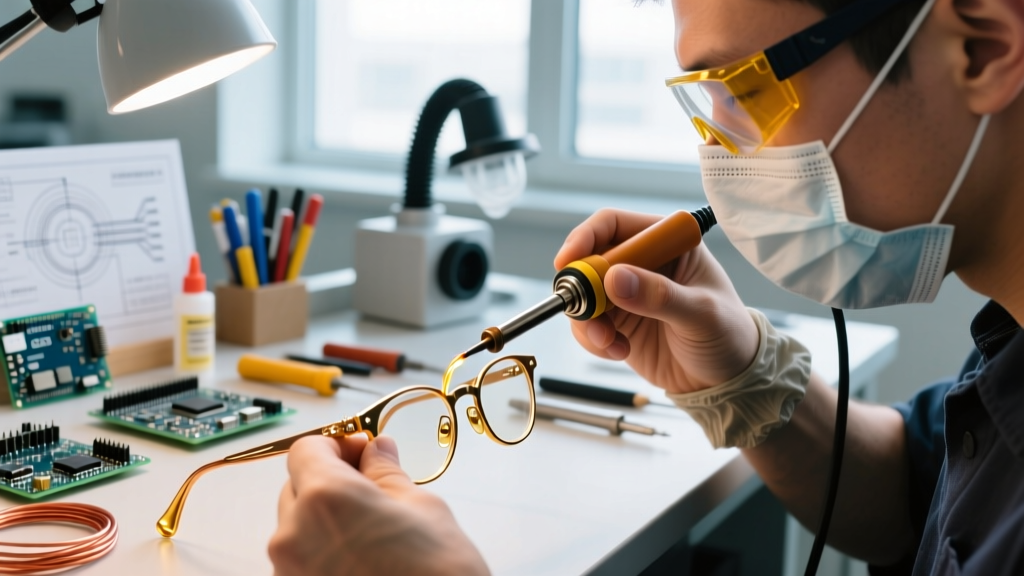
- PPE Donning: Put on ANSI Z87.1+ rated safety glasses to protect against solder splatter and flux pops. The OSHA Eye and Face Protection standards mandate impact-rated lenses for any soldering or brazing operation.
- Surface Preparation: Use a fiberglass scratch pen to remove old plating, oxidation, and skin oils from the hinge barrel. Wipe with 99% isopropyl alcohol.
- Flux and Heat Application: Apply a micro-drop of zinc chloride flux. Use a chisel-tip iron (like the Hakko T18-D12) set to 390°C. Tin both halves of the joint separately before attempting to bridge them.
- Alloy Selection: Use a low-temperature, high-strength silver-bearing alloy like Stay-Brite #8 (melting point ~288°C / 550°F). This provides 40,000 PSI tensile strength, crucial for the mechanical stress placed on eyeglass hinges.
- Neutralization: Acid flux residue will rapidly corrode the frame and cause skin burns to the wearer. Immediately after the joint cools, scrub the area with a baking soda and water solution using a brass wire brush to neutralize the zinc chloride.
Final Thoughts on Optical Micro-Soldering
Eyeglass frame repair soldering is a highly rewarding skill that saves consumers hundreds of dollars in replacement costs. However, the intersection of high thermal energy, aggressive chemical fluxes, and delicate optical materials demands rigorous adherence to safety best practices. By investing in proper HEPA/carbon fume extraction, utilizing thermal management techniques, and strictly avoiding toxic titanium fluxes, you can perform durable, professional-grade eyewear repairs without compromising your health or the integrity of the eyewear.