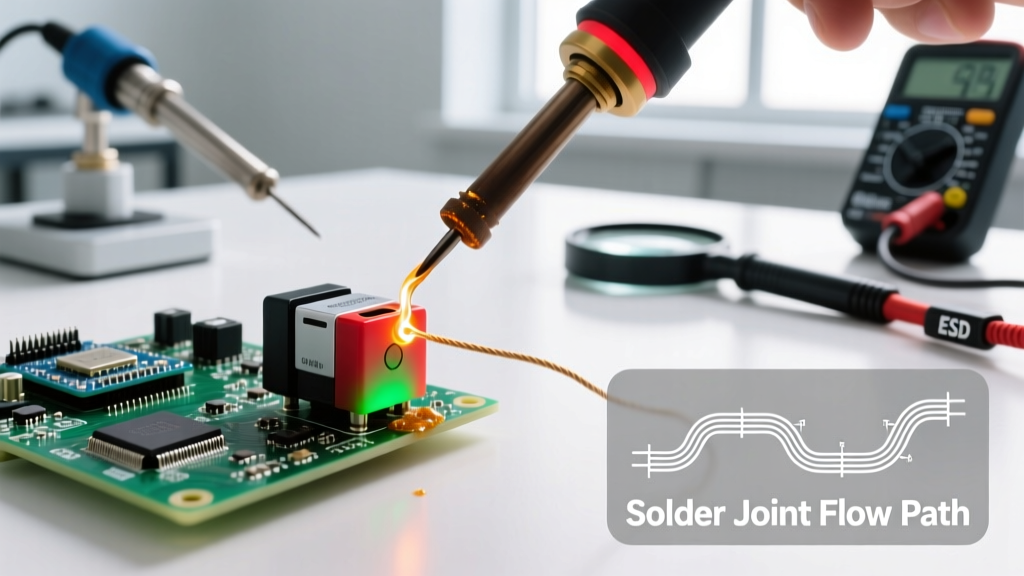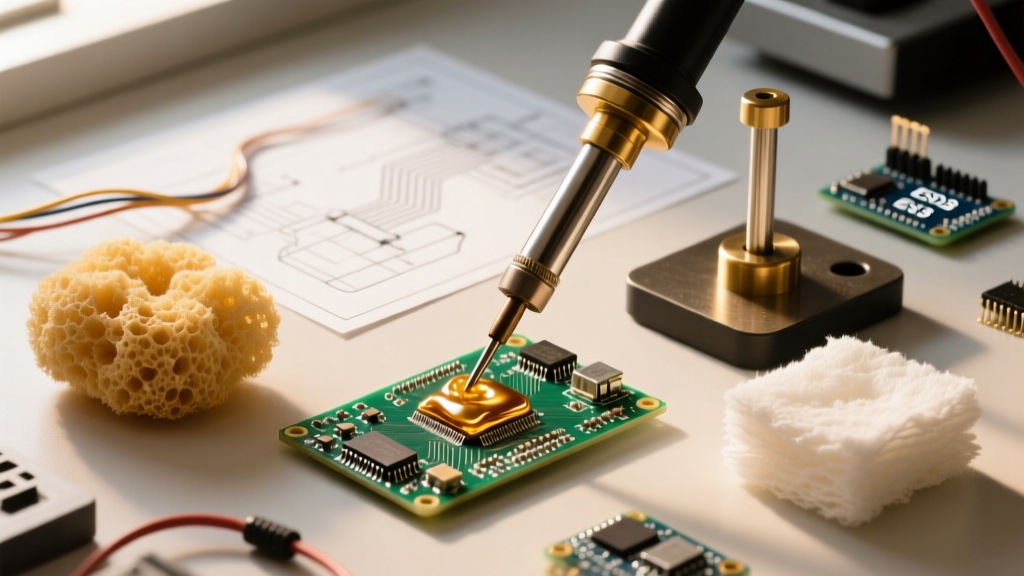

The Hidden Economics of Soldering Tip Maintenance
When building a budget for electronics manufacturing, prototyping, or a dedicated DIY repair lab in 2026, most buyers focus heavily on the upfront cost of the soldering station. However, the true financial drain in any soldering operation lies in the recurring consumables: replacement tips and solder wire (tin). The method you use to clean your tip between joints directly dictates the lifespan of that tip and the amount of wasted solder. The debate between brass wire sponges and traditional wet cellulose sponges is not just a matter of preference; it is a critical variable in your annualized operational costs.
Understanding the metallurgical interaction between cleaning sponges, tin, and soldering iron plating is essential for any lab manager or serious hobbyist looking to minimize waste. A standard soldering tip is not a solid piece of metal; it is a complex, multi-layered component consisting of a copper core, an iron plating layer (typically 100 to 150 microns thick), and a final chrome or nickel coating on the non-working surfaces. When the iron plating is compromised, the molten tin in your solder rapidly dissolves the copper core, destroying the tip. How you wipe your tip determines how quickly that iron plating fails.
Upfront Material Costs: Cellulose vs. Brass
At first glance, cellulose sponges appear to be the undisputed winner in terms of upfront cost. They are cheap, widely available, and often included free in the box with entry-level soldering stations. Brass wire sponges, housed in a metal or high-temperature silicone basin, require a higher initial investment. Below is a breakdown of standard 2026 market pricing for premium OEM cleaning accessories.
| Cleaning Method | OEM Example | Upfront Cost (2026) | Replacement Insert Cost |
|---|---|---|---|
| Wet Cellulose Sponge | Weller WDC2 / Hakko B5099 | $3.50 - $5.00 | $3.50 (Full Replacement) |
| Brass Wire Sponge | Hakko 599B / Weller WDC1 | $12.00 - $16.50 | $6.00 (Coil Only) |
| Silicone Tip Cleaner | Generic Thermoplastic | $8.00 - $11.00 | $4.00 (Pad Only) |
While the brass sponge setup costs roughly $12 more out of the gate, evaluating consumables based solely on day-one pricing is a critical financial error. To understand the real cost, we must analyze thermal shock, tip degradation rates, and tin waste.
Thermal Shock and Tip Degradation: The Real Expense
The primary failure mode for soldering tips is thermal shock, and wet cellulose sponges are the main culprits. According to the Hakko USA Tip Care Guidelines, wiping a 350°C (662°F) tip across a damp cellulose sponge causes an instantaneous surface temperature drop of over 100°C. This rapid contraction creates micro-fractures in the iron plating. Once these microscopic cracks reach the copper core, the flux and molten tin penetrate the barrier.
When molten tin (Sn) contacts copper (Cu), it forms intermetallic compounds (IMCs) and effectively dissolves the copper. This phenomenon, known as tip erosion or leaching, will hollow out a $12 Hakko T18-B tip or a $15 Weller RT4 micro-tip in a matter of days if the technician is an aggressive wiper. In contrast, a brass wire sponge cleans the tip through mechanical friction without dropping the surface temperature more than 10°C to 15°C. The thermal stability preserves the iron plating, extending tip life by a factor of three to five.
Industry Standard Note: The IPC J-STD-001 Soldering Standard emphasizes maintaining stable thermal profiles during assembly. While the standard focuses on the joint, the principles of thermal management extend to tool maintenance. Uncontrolled thermal cycling at the tip degrades heat transfer efficiency, leading to cold solder joints and rework costs.
Annualized Cost Matrix: 10-Station Assembly Line
To visualize the financial impact, consider a small 10-person assembly team working 8-hour shifts, 5 days a week, using lead-free SAC305 solder (which requires higher operating temperatures of 360°C, exacerbating thermal shock).
| Metric | Team A (Cellulose Sponges) | Team B (Brass Sponges) |
|---|---|---|
| Average Tip Lifespan | 3 Weeks | 14 Weeks |
| Tips Used Per Tech/Year | 17.3 Tips | 3.7 Tips |
| Cost Per Tip (Average) | $11.00 | $11.00 |
| Annual Tip Cost (Per Tech) | $190.30 | $40.70 |
| Total Annual Tip Cost (10 Techs) | $1,903.00 | $407.00 |
By investing an extra $120 upfront for brass sponges across 10 stations, Team B saves $1,496.00 in replacement tips alone over a single year. This does not even account for the labor costs associated with the downtime of stopping to change degraded tips or troubleshoot cold joints caused by thermally shocked iron plating.
The Brass Sponge Edge Case: Flux Carbonization
While brass sponges are vastly superior for thermal management, they introduce a different hidden cost if maintained improperly: abrasive flux buildup. As technicians plunge the tip into the brass wire, carbonized rosin flux and oxidized metal particulates become trapped deep within the wire coil. Over several months, this debris hardens into an abrasive mass.
If a technician aggressively twists the tip to clean it, this hardened debris acts like sandpaper, physically scratching the 100-micron iron plating off the tip. A deep scratch exposes the copper core just as effectively as thermal shock. To prevent this, lab managers must implement a strict maintenance schedule. The brass coil insert (e.g., Hakko B2024) must be removed and cleaned with a brass wire brush and isopropyl alcohol every 60 days, or simply replaced. At $6.00 per replacement coil, this is still a fraction of the cost of replacing ruined soldering tips.
Tin (Solder) Consumption and Wiping Mechanics
The cost of the solder wire itself is another variable heavily influenced by your cleaning method. In 2026, with silver prices fluctuating, the cost of premium SAC305 (Tin/Silver/Copper) solder wire remains high, often exceeding $45.00 per 500g spool. Wasting tin is a direct hit to your bottom line.
When using a dry or improperly maintained brass sponge, technicians often find that a single plunge does not remove all the oxidized solder. This leads to 'over-wiping'—repeatedly stabbing and twisting the tip. This mechanical action strips away not just the oxidation, but the pristine, molten tin layer, forcing the technician to apply fresh solder wire just to protect the tip before the next joint. This 'tinning and wiping' loop wastes grams of expensive solder per shift.
Conversely, a properly dampened cellulose sponge provides a smoother wiping surface that can strip oxidation with a single, fluid motion, potentially saving 5% to 8% in raw solder consumption. However, this minor saving in tin is entirely negated by the catastrophic loss in tip life caused by the thermal shock of the water.
The 'Roll and Wipe' Optimization Technique
To minimize both tip wear and tin waste, the NASA Workmanship Standards and modern IPC trainers advocate for a specific mechanical technique that works optimally with brass sponges:
- The Plunge: Insert the tip straight down into the brass wire without twisting.
- The Roll: Gently roll the tip 90 degrees to expose a fresh side to the wire.
- The Withdrawal: Pull the tip out smoothly. The brass wire should scrape off the oxidized flux and dead solder while leaving a microscopically thin layer of pristine tin on the working surface.
- The Re-tin: Immediately apply a tiny dab of fresh solder to the working surface to act as a sacrificial oxidation barrier while the iron sits idle.
Step-by-Step Cost-Optimized Tip Maintenance Protocol
To maximize your ROI on soldering consumables in 2026, implement the following standard operating procedure (SOP) in your workspace:
- Primary Cleaning: Use a high-quality brass wire sponge (Hakko 599B or equivalent) for 95% of all in-process tip cleaning. Never use water.
- Heavy Flux Removal: If working with highly activated fluxes (RA or water-soluble) that rapidly carbonize the brass, keep a secondary, specialized high-temp silicone cleaner on the bench for heavy wiping, reserving the brass for light maintenance.
- End-of-Shift Tinning: Never leave a tip bare. Before powering down the station, melt a large blob of cheap, thick 63/37 leaded solder (or a dedicated 'tip tinner' paste) onto the working surface. This sacrificial layer oxidizes overnight instead of your iron plating. Wipe it off into the brass sponge at the start of the next shift.
- Temperature Discipline: Do not run your station at 400°C to 'compensate' for a thermally shocked tip. If the tip isn't transferring heat, it is internally damaged and must be replaced. Running a damaged tip at max power will burn out the station's ceramic heating element—a $30 to $50 replacement cost.
Final Verdict: Which Setup Saves You Money?
When analyzing the total cost of ownership, the wet cellulose sponge is an obsolete relic for professional environments. The upfront savings of $10 are entirely eclipsed by the accelerated destruction of $12 to $15 precision-machined soldering tips. For any technician, DIY enthusiast, or production manager serious about controlling their 2026 electronics budget, the brass wire sponge is a mandatory investment. By eliminating thermal shock, preserving the iron plating, and reducing machine downtime, the brass sponge pays for itself within the first week of active use.