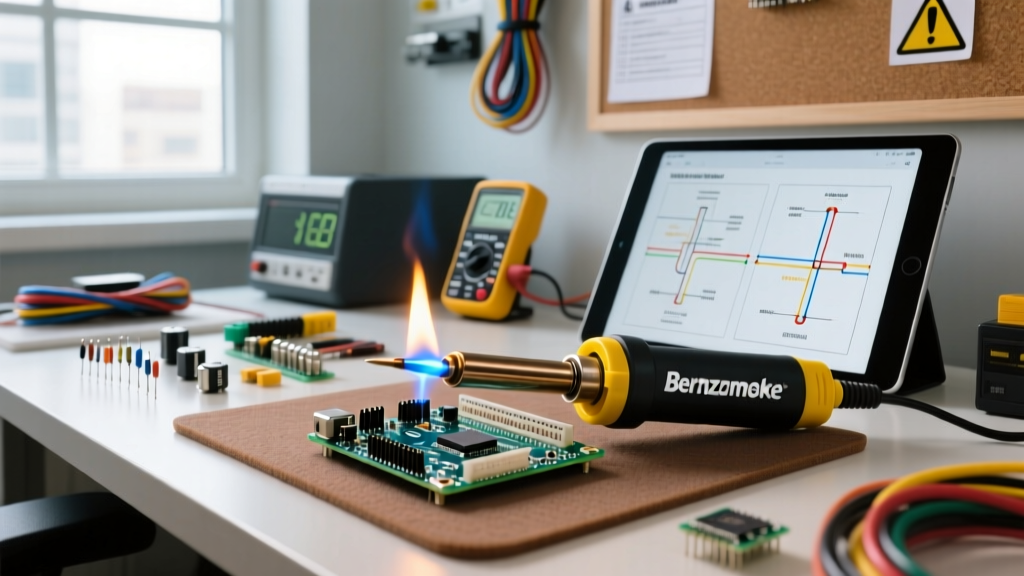

When tackling heavy-gauge electrical terminations, such as 4/0 AWG battery lugs, or joining 1-inch copper pipes in HVAC systems, a standard 60W soldering iron simply cannot deliver the necessary thermal mass. For these high-demand applications, professionals and serious DIYers turn to open-flame solutions. When selecting a heavy-duty soldering torch, Bernzomatic remains the undisputed industry standard. However, operating a high-BTU open flame introduces severe hazards, including severe burns, structural fires, and toxic fume inhalation.
This comprehensive safety guide breaks down the operational mechanics, fuel thermodynamics, and strict safety protocols required to use a Bernzomatic soldering torch safely and effectively in 2026. Whether you are a licensed electrician or an advanced home mechanic, mastering these best practices is non-negotiable.
The Bernzomatic Lineup: Heat Output & Application Matrix
Before striking a spark, you must match the torch model to your specific thermal requirements. Using an overpowered torch on small gauge wire will melt the insulation and destroy the copper strands, while an underpowered torch will result in cold, brittle solder joints.
| Model | Flame Type | Max Temp (MAP-Pro) | 2026 Avg. Price | Best Application |
|---|---|---|---|---|
| TS8000 | Swirl (Concentrated) | 3,600°F (1,982°C) | $55 - $65 | Heavy copper, large lugs, brazing |
| TS4000 | Standard Pencil | 3,450°F (1,899°C) | $35 - $45 | Standard plumbing, 2-6 AWG wire |
| ST2200 | Micro/Pencil | 2,400°F (Butane) | $25 - $30 | Delicate heat shrink, small gauge |
Fuel Thermodynamics: MAP-Pro vs. Propane
The fuel you attach to your Bernzomatic torch head dictates not only your maximum temperature but also your operational safety profile. As of 2026, the two primary disposable cylinder options (14.1 oz) are Propane (blue) and MAP-Pro (yellow).
The Liquid Draw Hazard
Propane cylinders contain liquid propane that vaporizes into gas as it is drawn out. This vaporization process absorbs ambient heat (latent heat of vaporization). If you are soldering a massive thermal sink (like a thick brass valve) and drawing gas rapidly, the cylinder will freeze, dropping internal pressure and causing the flame to sputter or die.
For heavy-duty electrical and plumbing work, MAP-Pro (propadiene-methylacetylene) is vastly superior. It operates at a higher pressure, resists cylinder freezing under heavy draw, and burns approximately 150°F hotter than standard propane, drastically reducing the time the flame must be applied to the workpiece.
Pre-Ignition Safety Protocol (OSHA & NFPA Aligned)
Open-flame soldering falls under the category of 'Hot Work.' According to OSHA's Hot Work guidelines, strict environmental controls must be established before the ignition trigger is pulled.
- The 35-Foot Rule: Based on NFPA 51B standards, all combustible materials (cardboard, solvents, dry wood, insulation) must be moved at least 35 feet away from the soldering point. If they cannot be moved, they must be covered with a rated fiberglass welding blanket.
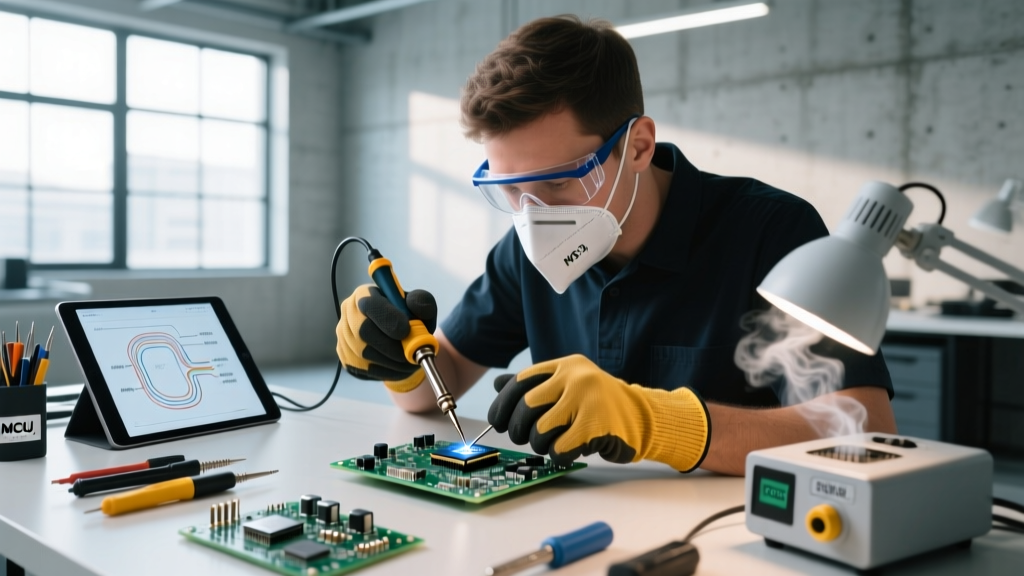
- PPE Requirements: Standard clear safety glasses are insufficient for the intense UV and IR glare of a MAP-Pro swirl flame. Wear ANSI Z87.1 certified safety glasses with a #2 or #3 shade tint. Always wear heavy leather welding gloves; bare hands or thin nitrile gloves offer zero protection against molten solder splash or radiant heat.
- Fume Extraction: Soldering with rosin-core or acid-core flux generates colophony and chemical fumes. The CDC and NIOSH classify these fumes as occupational asthma triggers. Never solder in a confined, unventilated space. Use a localized HEPA/carbon fume extractor or position a high-CFM exhaust fan to pull fumes away from your breathing zone.
Operational Hazards & Troubleshooting Edge Cases
Even with premium equipment, operational anomalies occur. Recognizing and reacting to these failure modes is the hallmark of an expert tradesperson.
1. Flashback (Internal Burning)
Symptom: The flame retreats from the tip and burns inside the brass neck of the torch, accompanied by a sharp hissing or squealing sound and the tip turning cherry red.
Cause: Carbonized flux buildup or debris has partially blocked the tip orifice, disrupting the fuel-to-air ratio and lowering the exit velocity below the flame's burn rate.
Action: Shut off the cylinder valve immediately. Do not attempt to blow it out. Allow the torch to cool completely, then clean the orifice using a brass tip cleaner. Never use a steel needle or wire, as steel is harder than brass and will ream out the orifice, permanently ruining the torch's aerodynamics.
2. Solder Balling and Splattering
Symptom: Molten solder refuses to flow into the joint and instead balls up, occasionally popping and splattering hot metal.
Cause: The workpiece is either not clean (oxidized) or has not reached the proper flow temperature of the solder alloy (typically 360°F - 400°F for lead-free electrical solder). Applying the flame directly to the solder wire instead of the copper workpiece causes this dangerous splatter.
Action: Heat the copper component, not the solder. Touch the solder to the opposite side of the joint; when the copper is hot enough, capillary action will instantly draw the solder into the joint.
Post-Soldering Cool Down & Storage
The danger does not end when the valve is closed. A Bernzomatic TS8000 brass tip retains enough thermal energy to ignite a workbench or melt through a plastic toolbox for up to 15 minutes after use.
- Never set a hot torch down on a combustible surface. Use a dedicated steel torch stand or a firebrick.
- Never quench a hot brass tip in water. The rapid thermal shock will warp the brass and crack the internal ceramic igniter components.
- Storage: Once cooled to ambient temperature, unscrew the torch head from the 14.1 oz cylinder. Leaving the torch pressurized for months degrades the internal Viton O-rings and can lead to slow, undetected gas leaks the next time you open your toolbox.
Frequently Asked Questions
Can I use a Bernzomatic TS8000 for delicate PCB through-hole soldering?
No. The TS8000 outputs over 20,000 BTUs and is designed for massive thermal sinks. Using it on a printed circuit board will instantly delaminate the FR4 fiberglass, lift the copper pads, and destroy surface-mount components. Stick to temperature-controlled soldering stations (like a Hakko FX-888D) for PCB work.
Why does my torch sputter when I tilt it downward to solder a low pipe?
You are likely drawing liquid fuel instead of vapor. Standard 14.1 oz cylinders must remain mostly upright. If you need to solder in a tight, low-clearance space, use a specialized trigger-start torch with a flexible hose and a separate fuel cylinder base, or reposition the workpiece if possible.
How do I safely dispose of a 'half-empty' MAP-Pro cylinder?
Never throw a pressurized cylinder into the trash. Attach the torch head, take the cylinder to a safe outdoor area away from structures, and burn off the remaining fuel until the flame naturally extinguishes. Once completely depressurized, puncture the cylinder (if required by local scrap yard rules) and recycle it as scrap steel.