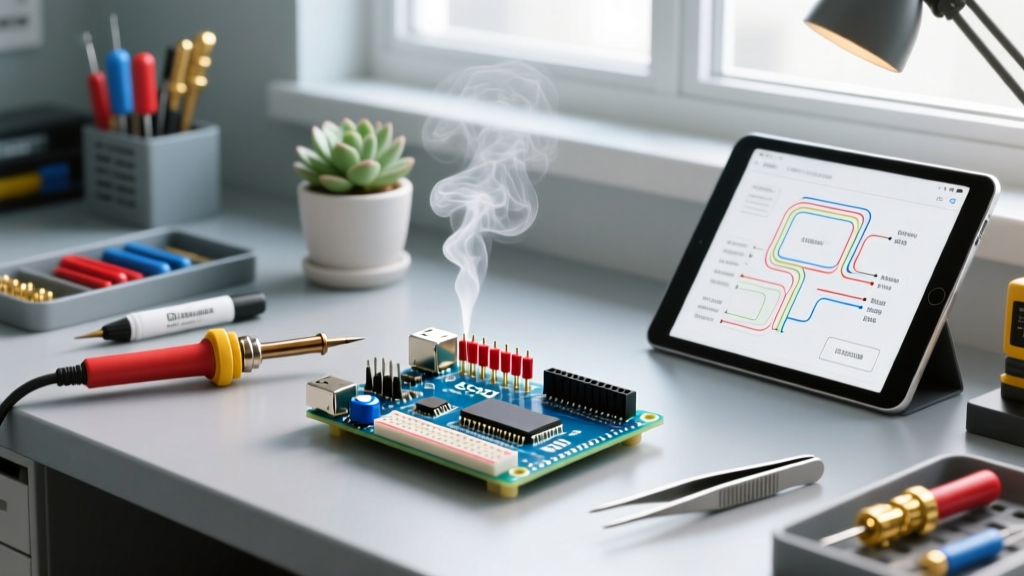

The Core Misconception: Fumes vs. Dust
When hobbyists and professionals ask about lead exposure from soldering, the immediate assumption is that the visible smoke rising from the solder joint contains vaporized lead. From a metallurgical and chemical standpoint, this is fundamentally incorrect. Understanding the phase-change temperatures of your materials is the first step in effective risk mitigation.
Standard eutectic tin-lead solder (Sn63/Pb37) melts at approximately 183°C (361°F). Even lead-free alloys like SAC305 melt around 217°C (422°F). However, lead does not boil and vaporize until it reaches a staggering 1,749°C (3,180°F). Because your soldering iron tip operates between 300°C and 400°C, it is physically impossible for the lead to vaporize into the air you breathe.
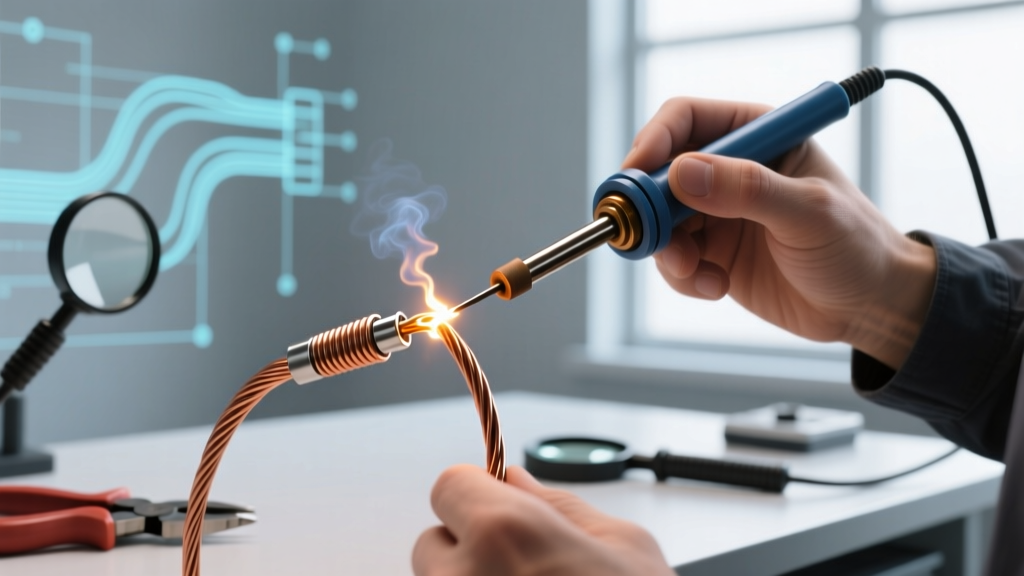
Expert Insight: The 'smoke' you see is actually vaporized flux—typically colophony (rosin) or synthetic resins. While breathing flux fumes is a serious respiratory hazard linked to occupational asthma and contact dermatitis, it is not the vector for lead poisoning. Lead exposure in electronics manufacturing is almost exclusively an ingestion hazard driven by microscopic dust transfer.
FAQ: Lead Exposure From Soldering
Can I get lead poisoning just by breathing soldering smoke?
No. As established, the smoke is flux, not lead. However, you still need a fume extractor. Natural rosin (colophony) is a known respiratory sensitizer. Prolonged inhalation of rosin fumes can cause severe occupational asthma. If you are using synthetic no-clean fluxes, the fumes may contain volatile organic compounds (VOCs) and aldehydes that cause mucosal irritation. You must extract the fumes to protect your lungs, but not specifically to prevent lead poisoning.
How does lead actually enter the body during DIY electronics work?
Lead enters the body via the hand-to-mouth ingestion pathway. When you handle Sn63/Pb37 solder wire, microscopic lead dust and oxidized particles adhere to the ridges of your fingerprints and the keratin of your nails. If you subsequently touch your face, eat a snack, bite your nails, or smoke a cigarette without washing your hands, you ingest the lead dust. The gastrointestinal tract absorbs roughly 10% to 15% of ingested inorganic lead, which then accumulates in your bones and soft tissues over time.
What are the early symptoms of mild lead exposure?
Chronic, low-level lead toxicity is insidious because it mimics general fatigue and stress. Early symptoms include:
- Neurological: Brain fog, difficulty concentrating, mild memory lapses, and irritability.
- Physical: Unexplained fatigue, joint and muscle pain, and frequent tension headaches.
- Gastrointestinal: Intermittent abdominal cramping, constipation, and loss of appetite.
- Peripheral: Early signs of neuropathy, such as tingling in the extremities or a weakened grip strength.
If you work with leaded solder daily and experience these symptoms, request a Blood Lead Level (BLL) test from your physician. As of 2026, the CDC maintains that no safe blood lead level has been identified, though occupational intervention levels typically trigger at 5 µg/dL for adults.
Troubleshooting Your Workspace: Hidden Lead Hazards
Many makers believe their workspace is safe because they do not eat at their desk. However, lead dust is persistent and easily tracked. Conduct this diagnostic audit of your workbench to identify hidden ingestion vectors:
- The Soldering Iron Stand: The coiled metal holder accumulates oxidized lead dust and burnt flux. When you pick up the iron, your fingers brush against this residue.
- The Brass Wire Sponge: While superior to wet cellulose sponges for maintaining tip temperature, brass wool traps heavy metal particulates. If not emptied and cleaned regularly, it becomes a concentrated lead dust bowl.
- Keyboards and Mice: If you type or navigate immediately after handling solder wire, you transfer lead dust to your peripherals. Touching your mouth after using the keyboard completes the ingestion loop.
- Workbench Mats: Silicone or ESD rubber mats develop micro-abrasions that trap lead dust. Standard wiping often just smears this dust into the pores of the mat.
Comparison Matrix: Mitigation Strategies & Gear
Investing in the right safety gear requires understanding what you are actually protecting against. Below is a 2026 buyer’s comparison of common mitigation tools, evaluating their effectiveness against both lead dust and flux fumes.
| Mitigation Method | Target Hazard | Est. Cost (2026) | Effectiveness |
|---|---|---|---|
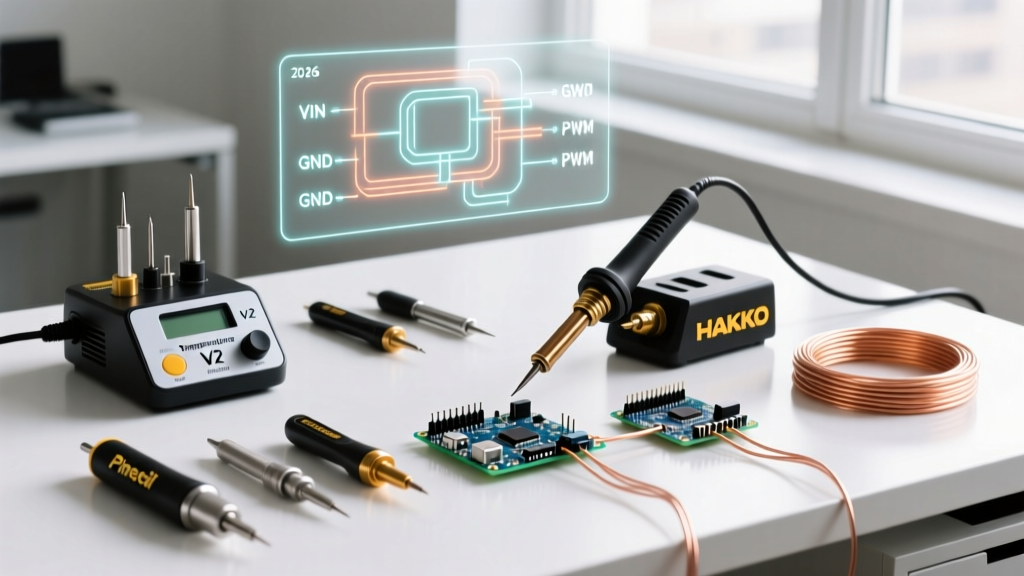
| Hakko FA400-02 Fume Extractor | Flux Fumes / Particulates | $85 - $95 | Moderate (Captures large particulates, limited VOC carbon filtration) |
| BOFA AD Qube 4 Extraction System | Flux Fumes / VOCs / Dust | $1,300 - $1,450 | Exceptional (HEPA + Deep Carbon bed captures 99% of fumes and dust) |
| Standard Nitrile Gloves (4 mil) | Lead Dust Ingestion | $15 / 100 ct | High (Creates a physical barrier, but reduces tactile feedback for fine SMD work) |
| Hyginett Lead Removal Wipes | Lead Dust Ingestion | $25 / 100 ct | Exceptional (Uses chelating agents to bind and lift lead from skin pores) |
| Standard Hand Soap & Water | Lead Dust Ingestion | $5 | Low to Moderate (Often fails to remove lead trapped deep in fingerprint ridges) |
Buyer’s Guide: Choosing Low-Hazard Soldering Materials
If you want to eliminate the risk of lead exposure from soldering entirely, transitioning to lead-free alloys is the most logical step. However, this requires adjusting your technique and equipment expectations.
1. Transitioning to Lead-Free Alloys
Standard SAC305 (96.5% Sn, 3.0% Ag, 0.5% Cu) is the industry standard for lead-free work. Because it melts at 217°C, you must increase your iron’s temperature to roughly 350°C–380°C to achieve proper wetting. This higher heat causes flux to vaporize more aggressively, meaning lead-free soldering actually produces more hazardous flux fumes than leaded soldering. You must upgrade your fume extraction when switching to lead-free.
2. Selecting Safer Flux Chemistries
To reduce respiratory risks, look for synthetic rosin fluxes or low-VOC water-soluble fluxes. Avoid natural colophony (pine rosin) whenever possible, as it contains abietic acid, the primary culprit behind solderer’s asthma. Products labeled as 'Rosin-Free' or 'Synthetic Resin' (e.g., Amtech or ChipQuik no-clean synthetic formulations) offer excellent wetting properties without the severe sensitization risks of natural pine rosin.
Step-by-Step Decontamination Protocol
Proper cleanup is non-negotiable for anyone working with Sn63/Pb37 or Sn60/Pb40 alloys. Follow this three-step protocol at the end of every session to break the hand-to-mouth ingestion chain.
- Source Capture and Dry Cleanup: Never use compressed air to blow off your workbench; this aerosolizes lead dust. Instead, use a HEPA-filtered vacuum with a brush attachment to clean your soldering iron stand, brass sponge housing, and workbench mat.
- Chemical Decontamination: Wipe down your ESD mat and tools using a dedicated lead-removal wipe. Standard household cleaners often fail to break the electrostatic bond between lead oxide and silicone. Wipes containing mild chelating agents (like EDTA-based formulations) chemically bind to the lead ions, lifting them from the surface.
- Personal Hygiene: Remove any nitrile gloves and discard them. Wash your hands using cold water first (hot water opens skin pores, potentially trapping lead dust deeper), followed by a specialized lead-removal soap or wipe. Standard antibacterial soaps are largely ineffective against heavy metal particulates.
Authoritative Standards and Blood Testing
Professional electronics manufacturing environments are governed by strict occupational health guidelines. According to the Occupational Safety and Health Administration (OSHA), the permissible exposure limit (PEL) for airborne lead is 50 micrograms per cubic meter of air (8-hour TWA). However, as established, airborne lead is rarely the issue in hand-soldering; surface contamination is.
For definitive safety protocols, institutions like Princeton University’s Environmental Health and Safety (EHS) mandate strict separation of soldering zones from eating and drinking areas, alongside mandatory handwashing protocols. Furthermore, the Centers for Disease Control and Prevention (CDC) emphasizes that chronic lead accumulation is cumulative and irreversible without medical chelation therapy. If you are a high-volume hobbyist or professional working with leaded solder for more than 20 hours a week, an annual BLL screening is a highly recommended, proactive health investment.
Ultimately, mitigating lead exposure from soldering does not require a hazmat suit. It requires an accurate understanding of the ingestion pathway, disciplined hand hygiene, the use of chelating soaps, and a high-quality fume extractor to handle the very real respiratory dangers of vaporized flux.