
The True Cost of Machine Soldering in 2026
As the electronics manufacturing sector navigates persistent skilled labor shortages and tightening IPC-A-610 Class 3 quality standards, the transition from manual to automated assembly is no longer just a luxury—it is a survival metric. However, evaluating machine soldering requires looking far beyond the initial invoice price of the equipment. A comprehensive cost analysis must account for Capital Expenditure (CapEx), Operational Expenditure (OpEx), hidden consumable drain, and the true cost of rework.
With 2026 labor rates for IPC-certified hand soldering technicians averaging $32 to $48 per hour in North America, the mathematical tipping point for automation has shifted. This guide breaks down the exact financial architecture of wave, selective, and robotic soldering systems to help manufacturing engineers and operations managers calculate a realistic payback period.
Capital Expenditure (CapEx): Equipment Tiers
The entry price for machine soldering varies wildly based on the technology selected. Choosing the wrong tier results in either bottlenecked throughput or massively underutilized assets.
1. Robotic / Cellular Soldering
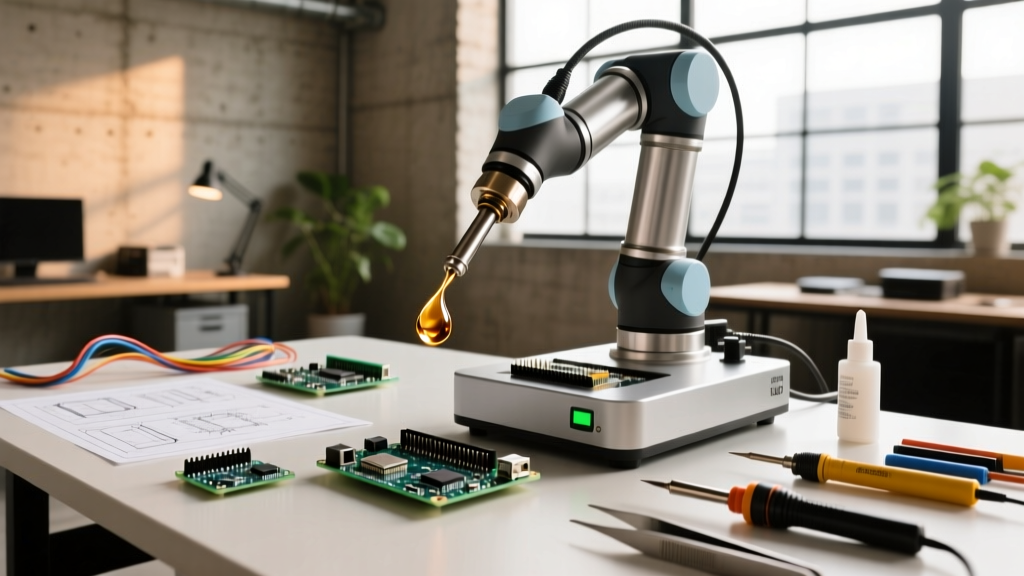
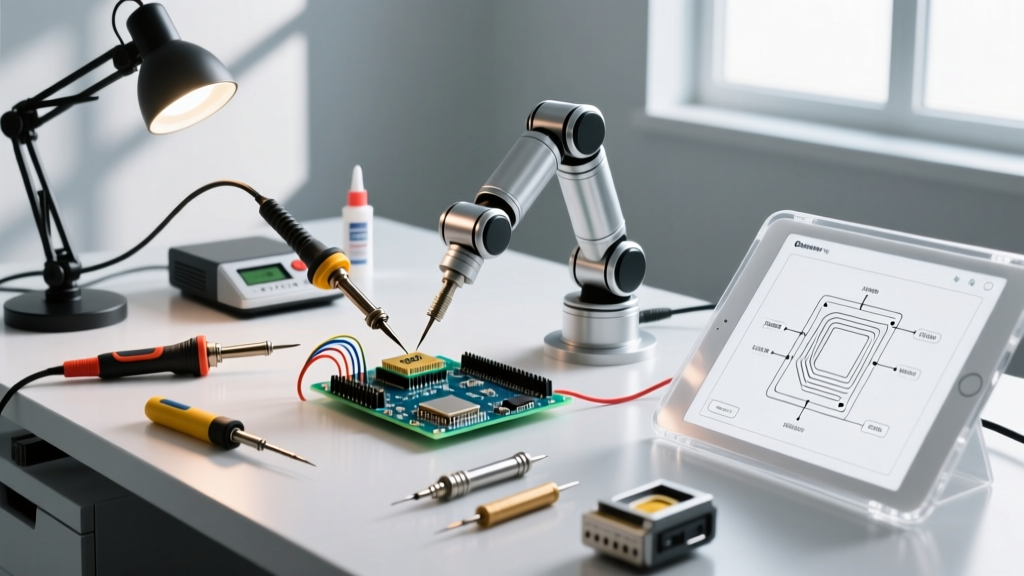
Robotic soldering cells, such as the JBC RMVE or Hakko SE-9000 series, are designed for low-to-medium volume, high-mix environments where through-hole (THT) components are scattered among dense surface-mount layouts.
- CapEx Range: $45,000 – $75,000 per cell.
- Best For: Prototyping, aerospace/defense low-volume runs, and heat-sensitive components requiring precise, localized thermal profiling.
- Limitation: Throughput is inherently slow (measured in seconds per joint, not boards per minute).
2. Selective Soldering Systems
Selective soldering machines (e.g., Nordson SELECT, EBSO EBS 3.2, Pillarhouse) use a programmable mini-wave to target specific THT pads, avoiding surrounding SMD components without the need for complex pallets.
- CapEx Range: $120,000 – $220,000 depending on multi-axis heads and inline fluxing capabilities.
- Best For: Medium-to-high volume, mixed-technology boards (SMT + THT), and automotive/medical PCBA.
- Limitation: Requires rigorous offline programming and thermal profiling.
3. Wave Soldering Systems
Traditional wave soldering (e.g., Electrovert Electra) remains the king of high-volume, predominantly THT boards. Modern 2026 models feature advanced nitrogen inerting and smart dross management.
- CapEx Range: $80,000 – $160,000.
- Best For: High-volume consumer electronics, power supplies, and legacy THT-heavy designs.
- Limitation: High pallet/tooling costs for mixed-technology boards; massive energy and consumable footprint.
Operational Expenditure (OpEx): The Hidden Consumables
The most common failure in machine soldering ROI calculations is underestimating OpEx. The machine itself is just the beginning of the financial commitment.
Solder Alloy and Dross Generation
Lead-free compliance (RoHS) dictates the use of alloys like SAC305 (Tin/Silver/Copper) or SnCuNi (Tin/Copper/Nickel). SAC305 costs approximately $35–$42 per pound, while SnCuNi is cheaper at $18–$24 per pound. However, the true cost lies in dross—the oxidized slag that forms on the surface of the solder pot.
Industry Benchmark: A standard wave soldering machine operating 8 hours a day can generate 15 to 30 lbs of dross weekly. At SAC305 pricing, that is $500 to $1,200 in oxidized material per week. Implementing a mechanical dross reducer or chemical de-oxidizer is mandatory to reclaim 60-70% of this metal.
Nitrogen Infrastructure
Running a selective or wave machine in an ambient air environment leads to excessive dross, poor wetting, and bridging. Inerting the solder environment with Nitrogen (N2) reduces oxygen levels below 50 ppm, virtually eliminating dross and improving hole-fill.
- Liquid Nitrogen (Dewars):strong> $0.25 – $0.40 per cubic meter. High ongoing cost, logistical friction, and boil-off waste.
- On-Site N2 Generators: CapEx of $15,000 – $30,000, but drops the cost to $0.04 – $0.08 per cubic meter. The ROI on an on-site generator typically pays for itself within 9 to 14 months for a 24/5 production schedule.
Maintenance and Nozzle Degradation
In selective soldering, the solder nozzles are constantly exposed to molten alloy and corrosive flux. Standard wettable nozzles cost $150 to $300 each and must be replaced every 400 to 800 operating hours. Furthermore, drop-jet fluxers require weekly solvent purges to prevent clogging, adding 2 hours of maintenance labor per week.
Comparative Cost Matrix: Manual vs. Automated
The following matrix compares the financial and operational profiles of different soldering methods based on 2026 industry averages for a mid-sized PCBA facility running two 8-hour shifts.
| Method | CapEx (USD) | OpEx (Monthly Est.) | Throughput | Primary Cost Driver |
|---|---|---|---|---|
| Manual Hand Soldering | $2,000 (Stations/Tools) | $12,000 - $16,000 (Labor) | 40-80 joints/hr | Skilled Labor & Rework |
| Robotic Cell (JBC/Hakko) | $55,000 | $3,500 (Tips/Wire/Maint.) | 3-5 seconds/joint | Programming & Cycle Time |
| Selective Soldering | $160,000 | $4,500 (Flux/N2/Nozzles) | 60-120 boards/hr | Consumables & Tooling |
| Wave Soldering | $110,000 | $7,000 (Energy/Dross/Pallets) | 150-300 boards/hr | Energy & Dross Reclaim |
ROI Calculation: When Does Automation Pay Off?
According to manufacturing optimization data from the NIST Manufacturing Extension Partnership (MEP), automation ROI should be calculated using the "Total Landed Cost per Board" metric, which includes direct labor, machine depreciation, consumables, and the cost of quality (scrap/rework).
Real-World Scenario: Selective Soldering vs. Hand Soldering
Consider a facility producing a mixed-technology industrial control board with 45 THT connectors. Currently, three IPC-certified operators hand-solder these boards.
- Manual Cost per Board: 45 joints × 1.5 minutes/joint = 67.5 minutes. At $40/hr (fully burdened labor rate), the labor cost is $45.00 per board.
- Selective Machine Cost per Board: Cycle time is 8 minutes per board. One operator can manage two machines. Machine depreciation (5 years) + N2 + Flux + Solder + Labor allocation equals $11.50 per board.
The Savings: $33.50 saved per board. If the facility produces 4,000 boards a month, the monthly savings is $134,000. Against a $160,000 CapEx for the selective soldering machine, the payback period is just 1.2 months. Even factoring in facility prep, ventilation, and N2 generator installation, ROI is achieved in under one quarter.
Edge Cases and Failure Mode Costs
Machine soldering is not a "set it and forget it" solution. Poorly managed automated lines introduce specific failure modes that can obliterate ROI through rework penalties.
Thermal Shock and Component Damage
Selective soldering machines apply intense, localized heat. If the thermal profile is not optimized using profiling tools (e.g., KIC or DATAPAQ), the rapid temperature delta can crack multi-layer ceramic capacitors (MLCCs) or delaminate the PCB substrate. Reworking a damaged MLCC near a dense BGA component can cost $50 to $150 per board in labor and risk scrap.
Solder Bridging and Icicles
In wave and selective soldering, improper flux application or incorrect conveyor speed leads to bridging (shorts between adjacent pins) and icicles (excess solder clinging to leads). While automated optical inspection (AOI) or X-ray will catch these, the rework required to fix them manually defeats the purpose of the automation. Adhering to SMTA guidelines for flux volume and preheat gradients is critical to keeping first-pass yield (FPY) above 98%.
Final Verdict: Aligning Machine Soldering with Production Volume
The decision to invest in machine soldering in 2026 should not be driven by the mere availability of capital, but by the predictability of your production volume and the complexity of your PCBA designs.
- Choose Robotic Soldering if your facility handles high-mix, low-volume (HMLV) aerospace or medical devices where localized thermal control is paramount and pallet costs for wave soldering are unjustifiable.
- Choose Selective Soldering if you are running medium-to-high volume mixed-technology boards. It offers the best balance of flexibility, quality, and OpEx, provided you invest in an on-site nitrogen generator and automated optical inspection.
- Choose Wave Soldering only if your designs are heavily THT, high-volume, and relatively simple. The energy and dross costs make it inefficient for modern, dense SMT-dominant boards.
Ultimately, the most profitable machine soldering implementations are those that treat the equipment as part of a holistic thermal and chemical ecosystem, rigorously managing consumables and leveraging data to drive continuous yield improvement.