
Why Material Compatibility Dictates the Cost of Soldering Rings Together
When evaluating the cost of soldering rings together, most beginners mistakenly focus only on the labor or the heat source. In reality, the true cost driver is material compatibility. Whether you are joining copper busbar rings for a custom DIY high-frequency transformer, resizing a sterling silver band, or repairing a 14k gold connection, the metallurgical properties of the base metals dictate the required solder alloy, the specific flux chemistry, and the necessary torch setup.
As of 2026, fluctuations in precious metal spot prices and the phase-out of cadmium-bearing solders in global markets have shifted the pricing landscape. This guide breaks down the exact costs, material matrices, and thermodynamic requirements for soldering various ring materials, bridging the gap between electrical DIY fabrication and precision metallurgy.
The Metallurgy of Ring Soldering: Solidus vs. Liquidus
To understand pricing, you must understand the thermodynamics of the joint. Soldering (and brazing) relies on a filler metal with a lower melting point than the base metal. The cost increases exponentially when you require a tight differential between the solidus (the temperature where the alloy begins to melt) and the liquidus (the temperature where it is fully fluid) temperatures.
- Capillary Action Requirement: For a strong ring joint, the solder must flow via capillary action into a gap of 0.001 to 0.003 inches. This requires highly specific, expensive eutectic or near-eutectic alloys.
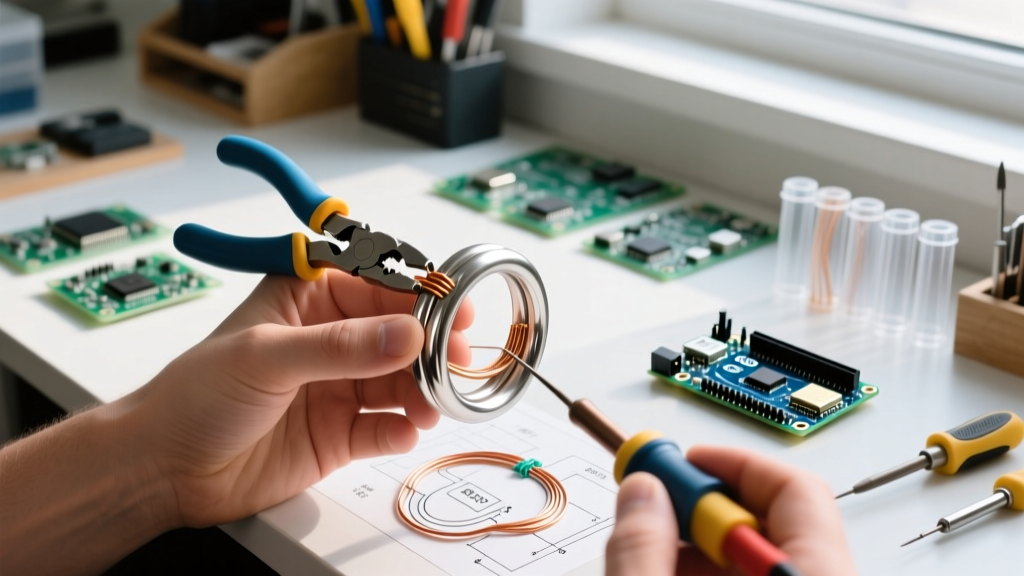
- Step-Soldering: If you are soldering multiple rings together (e.g., a multi-layer copper inductor), you must use 'Hard', 'Medium', and 'Easy' solders sequentially so previous joints do not remelt. Buying three distinct alloy grades triples your consumable costs.
Material Compatibility & Cost Matrix
The table below outlines the specific material compatibilities, required alloys, and associated costs for both professional services and DIY setups in 2026.
| Base Material | Required Solder Alloy | Flux Chemistry | Avg. Professional Cost | DIY Consumable Cost |
|---|---|---|---|---|
| Copper / Brass (Electrical/RF) | Silver-bearing Brazing (e.g., Harris Stay-Silv 15) | White Paste (Boric Acid/Borax) | $25 - $45 | $45 / oz |
| Sterling Silver (Jewelry/Conductive) | Cadmium-Free Silver Solder (Hard/Med/Easy) | Fluoride/Borax Cone | $40 - $75 | $35 / dwt |
| 14k / 18k Gold | Karat-Matched Plumb Gold Solder | PFI (Potassium Fluoride) Flux | $80 - $150 | $65+ / dwt |
| Platinum | 1700°F+ Platinum Solder or Laser Welding | None (Argon purge preferred) | $150 - $300+ | $120 / dwt |
| Titanium / Tungsten | Not Traditionally Solderable | N/A | Laser Weld Only ($200+) | N/A |
Deep Dive: Specific Material Scenarios
1. Copper and Brass Rings (Electrical & DIY Applications)
For electrical engineers and DIYers building custom RF coils, busbars, or shielding rings, copper and brass are the standard. You cannot use standard tin/lead electrical solder for structural ring joints; it lacks the tensile strength and will melt under high-current thermal loads.
The Solution: You must use silver brazing. According to guidelines from the American Welding Society (AWS), a 15% silver alloy (like Harris Stay-Silv 15) provides the necessary conductivity and mechanical strength. The cost of soldering copper rings together is relatively low, but you must factor in the cost of MAPP gas or an Oxy-Acetylene torch setup, as standard butane torches cannot reach the required 1,225°F (663°C) liquidus temperature for thick copper rings.
2. Sterling Silver and Gold (Precision & Jewelry)
When sizing or joining precious metal rings, the solder must match the karat and color of the base metal to pass hallmarking standards and prevent galvanic corrosion. The Gemological Institute of America (GIA) emphasizes that using lower-karat solder on high-karat gold creates a weak, discolored joint that will fail under stress.
The Cost Factor: Gold solders are priced by the pennyweight (dwt). With 2026 gold spot prices remaining elevated, a single dwt of 18k yellow gold plumb solder can exceed $70. Furthermore, gold requires highly active fluoride-based fluxes to dissolve the copper oxides that form instantly at 1,400°F, adding another $15 to $20 to your chemical consumables.
3. The Titanium and Tungsten Edge Case
⚠️ CRITICAL FAILURE MODE: Titanium and Tungsten Carbide rings cannot be soldered or brazed using traditional torch methods. Titanium reacts violently with oxygen and nitrogen at high temperatures, creating a brittle, glass-like oxide layer that prevents filler metal adhesion. If a client or project requires joining these metals, you must outsource to a facility with a pulsed Nd:YAG Laser Welder, pushing the cost well past $200 per joint.
Hidden Costs: Flux, Pickling, and Finishing
The cost of soldering rings together extends far beyond the metal alloy. Proper surface preparation and post-solder cleaning are mandatory for a successful joint.
- Flux Activation: Flux is not just a cleaner; it is a thermal indicator. For silver soldering, borax-based flux turns clear and glassy at exactly 1,100°F, signaling that the metal is ready to accept the solder. Budget $10-$15 for high-grade flux.
- Pickling Solutions: After soldering, the ring is covered in firescale (copper oxide). You must quench it in a warm pickling bath. While traditional Sparex #2 (Sodium Bisulfate) costs about $15 for a 5lb tub, many DIYers in 2026 are switching to food-grade Citric Acid solutions, which cost under $10 and are much safer for home ventilation.
- Torch Gases: A standard Bernzomatic TS8000 using MAP-Pro gas costs about $60 for the kit and $15 per tank. For platinum or thick gold rings, you will need a Smith Little Torch running Oxy-Acetylene, which requires tank rental fees and specialized regulators, pushing initial setup costs past $400.
Step-by-Step: DIY Cost Analysis for a Copper Ring Joint
Let us calculate the exact marginal cost of soldering two 1/4-inch copper rings together for a custom DIY induction heater coil.
- Preparation: Sanding the mating surfaces to bare, shiny copper (Cost: $0.50 in sandpaper).
- Fluxing: Applying Harris White Paste flux to both surfaces (Cost: $0.25).
- Heating: Using an Oxy-Acetylene torch with a #2 tip to heat the rings evenly until the flux bubbles and turns clear (Cost: $1.00 in gas consumption).
- Soldering: Touching a rod of Stay-Silv 15 to the joint. Capillary action draws the alloy through the 0.002-inch gap. (Cost: $2.50 in silver brazing rod).
- Quenching & Cleaning: Dropping in a warm citric acid bath to remove borax glass (Cost: $0.10).
Total DIY Marginal Cost: ~$4.35 per joint.
Professional Fabrication Shop Cost: $35.00 - $60.00 per joint.
Sourcing Your Materials
Where you buy your alloys heavily impacts your bottom line. For electrical and plumbing-grade silver brazing alloys, local welding supply houses offer the best bulk pricing. For precious metal solders and precision fluxes, industry-standard suppliers like Rio Grande provide certified, cadmium-free alloys with exact solidus/liquidus data sheets, ensuring you do not accidentally melt your base metal rings during the heating process.
Frequently Asked Questions (FAQ)
Can I use standard 60/40 tin/lead electrical solder to join copper rings?
No. While 60/40 solder will technically stick to copper if fluxed properly, its tensile strength is far too low for structural rings, and its melting point (361°F / 183°C) is too low for any application that might see thermal loading or mechanical stress. Always use silver-bearing brazing alloys for copper rings.
Why does my silver solder ball up instead of flowing into the ring joint?
This is the most common failure mode. Solder will only flow where the flux has actively cleaned the metal and where the heat is concentrated. If the solder balls up, your joint is likely oxidized (insufficient flux), or you are heating the solder directly with the torch instead of heating the base metal rings and letting the thermal mass melt the solder via capillary action.
Is it cheaper to solder a broken ring myself or take it to a jeweler?
If you already own a torch setup, pickling bath, and the correct karat-matched solder, the DIY cost is under $5. However, if you are buying the tools from scratch, the initial investment is $250+. For a single 14k gold or platinum ring, paying a professional jeweler $80-$150 is vastly more economical and eliminates the risk of melting the ring or destroying any set gemstones.