
The 2026 Arduino Nano Amazon Landscape
Searching for an arduino nano amazon listing in 2026 yields a chaotic but highly opportunistic marketplace. What was once a simple hunt for a breadboard-friendly ATmega328P has evolved into a complex ecosystem spanning legacy 8-bit microcontrollers, third-party clone manufacturers, and modern 32-bit IoT powerhouses. Whether you are prototyping a low-power sensor node or building a Wi-Fi-enabled edge device, understanding the nuances between official Arduino hardware and Amazon's vast clone market is critical for project reliability.
This guide dissects the current Amazon ecosystem, comparing exact model numbers, real-world pricing, silicon-level differences, and the specific hardware failure modes that separate a $4 clone from a $25 official board.
The Classic ATmega328P Divide: Official vs. Clones
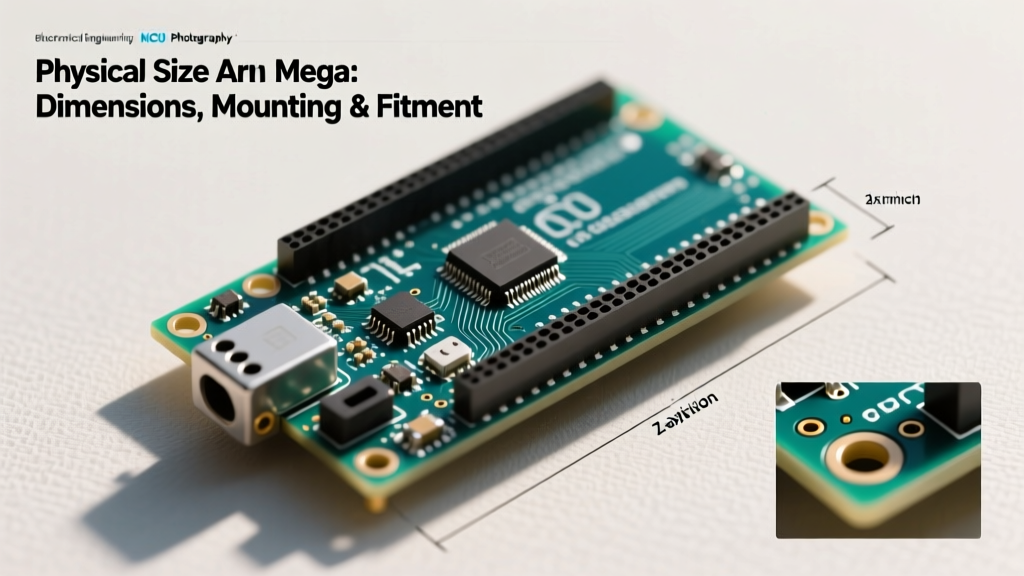
The original Arduino Nano form factor remains the gold standard for compact, breadboard-compatible prototyping. However, the Amazon marketplace is heavily saturated with third-party alternatives.
Official Arduino Nano (A000005 / ABX00073)
The genuine article (typically priced between $24.50 and $28.00 on Amazon) utilizes high-grade PCB substrates, an Onsemi NCP1117ST50T3G voltage regulator, and historically relied on the FTDI FT232RL USB-to-serial bridge. Official boards guarantee strict adherence to the Arduino Nano hardware specifications, ensuring that shield compatibility, 5V logic thresholds, and analog-to-digital converter (ADC) reference voltages remain perfectly stable.
The Amazon Clone Market (Elegoo, HiLetgo, Rexqualis)
Third-party clones dominate search results, often sold in 3-packs for $13.99 to $17.50. The primary cost-cutting measure is the USB-to-serial chip. While older clones used the WCH CH340G (requiring an external 12MHz crystal), modern 2026 clones predominantly use the CH340C. The CH340C features an internal oscillator, reducing the component count and minimizing points of failure related to crystal vibration or solder joint cracking. However, clones frequently cut corners on the voltage regulator, leading to thermal issues under moderate loads.
The Modern IoT & ESP32 Nano Variants
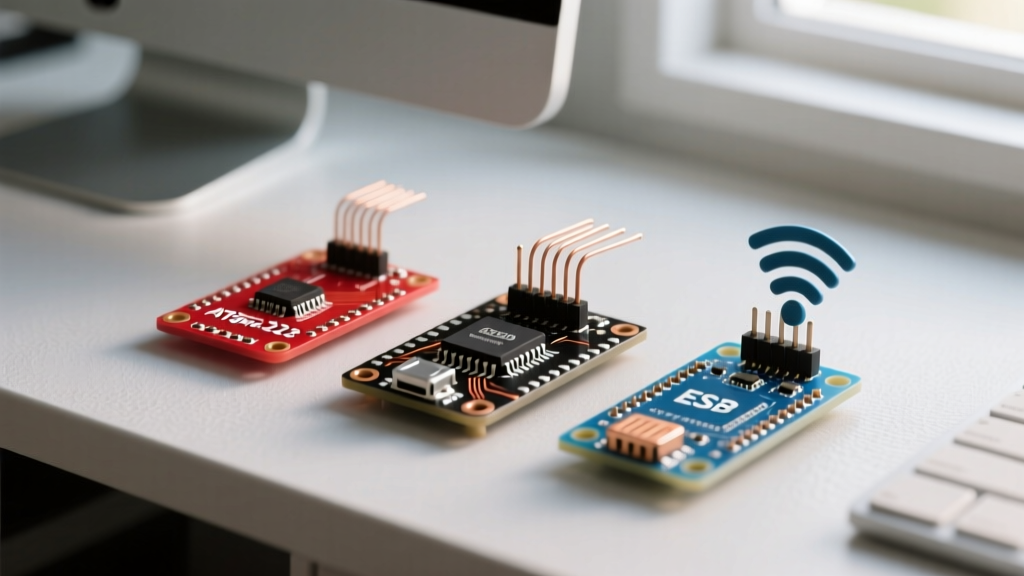
The most significant shift in the ecosystem is Arduino's aggressive expansion of the Nano footprint into the 32-bit and IoT spaces. When browsing Amazon, you will encounter these official variants which offer vastly superior processing power.
Arduino Nano ESP32 (ABX00075)
Priced around $21.00, the Nano ESP32 is arguably the most disruptive board in the 2026 lineup. Based on the u-blox NORA-W106 (an ESP32-S3 module), it features a dual-core 240MHz processor, native Wi-Fi/Bluetooth 5, and a native USB-C port supporting hardware HID. Because it is priced lower than the classic official Nano, it has become the default choice for engineers requiring wireless connectivity without the bulk of a full-sized ESP32 DevKit.
Arduino Nano 33 IoT (ABX00033)
Retailing for $23.50, this board pairs a Microchip SAMD21 Cortex-M0+ with a u-blox NINA-W102 Wi-Fi module. It is specifically targeted at makers who need the Arduino IoT Cloud ecosystem and onboard 6-axis IMU (LSM6DS3) for motion tracking, but prefer the established stability of the SAMD21 architecture over the ESP32.
Hardware Comparison Matrix
| Board Variant | Amazon Price (2026) | Core MCU | USB Interface | Connectivity | Best Use Case |
|---|---|---|---|---|---|
| Classic Nano Clone | $14.99 (3-Pack) | ATmega328P (16MHz) | CH340C (Micro-USB) | None | Basic education, simple LED/sensor logic |
| Official Classic Nano | $27.50 | ATmega328P (16MHz) | FT232RL (Mini/Micro-USB) | None | Industrial prototyping, strict ADC requirements |
| Nano ESP32 (Official) | $21.00 | ESP32-S3 (240MHz) | Native USB-C | Wi-Fi / BT 5 | IoT edge nodes, HID devices, DSP audio |
| Nano 33 IoT (Official) | $23.50 | SAMD21 + NINA-W102 | Native Micro-USB | Wi-Fi / BT | Arduino IoT Cloud, motion-tracking wearables |
Critical Failure Modes & Edge Cases
Buying cheap Amazon clones introduces specific hardware risks that engineers must design around. Understanding these failure modes is the difference between a successful deployment and a field failure.
- Voltage Regulator Thermal Shutdown: Most ATmega328P clones use a generic AMS1117-5.0 LDO in a SOT-223 package. Due to inadequate PCB copper pour on the ground pad, these regulators experience thermal throttling at just 250mA of continuous 5V draw. If your project powers external 5V sensors or small OLED displays, the clone's regulator will overheat and drop the logic voltage, causing brownout resets.
- Decoupling Capacitor Starvation: High-speed serial uploads require stable VCC rails. Budget clones often omit the 100nF decoupling capacitors near the ATmega328P VCC pins. This results in 'avrdude: stk500_recv(): programmer is not responding' errors during code compilation, masquerading as bootloader corruption.
- USB-C Pinout Inconsistencies: While some premium clones have upgraded to USB-C connectors in 2026, many fail to include the necessary 5.1k pull-down resistors on the CC lines. Consequently, they will not draw power from modern USB-C PD wall chargers or Apple MacBooks, requiring a legacy USB-A to USB-C cable to function.
Pro-Tip for Clone Users: If you must use a CH340-based clone for a permanent installation, bypass the onboard 5V regulator entirely. Power the '5V' pin directly with a clean, external 5V DC source, and use the '3.3V' pin only for low-current reference. This eliminates the primary thermal failure point of clone boards.
Bootloader Bricking & Recovery
A common edge case when working with both cheap clones and the newer Nano ESP32 is bootloader corruption. On ATmega328P clones, poor USB cable shielding can cause voltage drops during the flash process, bricking the board. Recovery requires an external ISP programmer (like a USBasp) to reburn the Optiboot bootloader via the ICSP headers.
Conversely, the official Nano ESP32 features a hardware ROM bootloader. If user code crashes the device or corrupts the partition table, holding the B0 (BOOT0) button while pressing reset forces the ESP32-S3 into native DFU (Device Firmware Update) mode, allowing recovery directly via the Arduino IDE 2.x without external hardware.
The 2026 Amazon Buying Framework
To maximize your budget and project reliability, apply this decision matrix when navigating Amazon search results:
- Choose 3-Pack Clones ($15) IF: You are running a classroom environment, building disposable proof-of-concept breadboard circuits, or your total 5V current draw remains strictly under 150mA.
- Choose Official Classic Nano ($27) IF: You are integrating precision analog sensors (like load cells or thermocouples) where the ADC noise floor and 5V reference stability are non-negotiable.
- Choose Nano ESP32 ($21) IF: You need wireless connectivity, high-speed processing, or native USB HID capabilities. Note: This is currently the highest value-for-money board in the entire Amazon Nano ecosystem.
By looking past the sponsored listings and scrutinizing the silicon, schematic choices, and voltage regulation of the boards you buy, you can effectively leverage the Amazon marketplace for both rapid prototyping and robust engineering deployments.