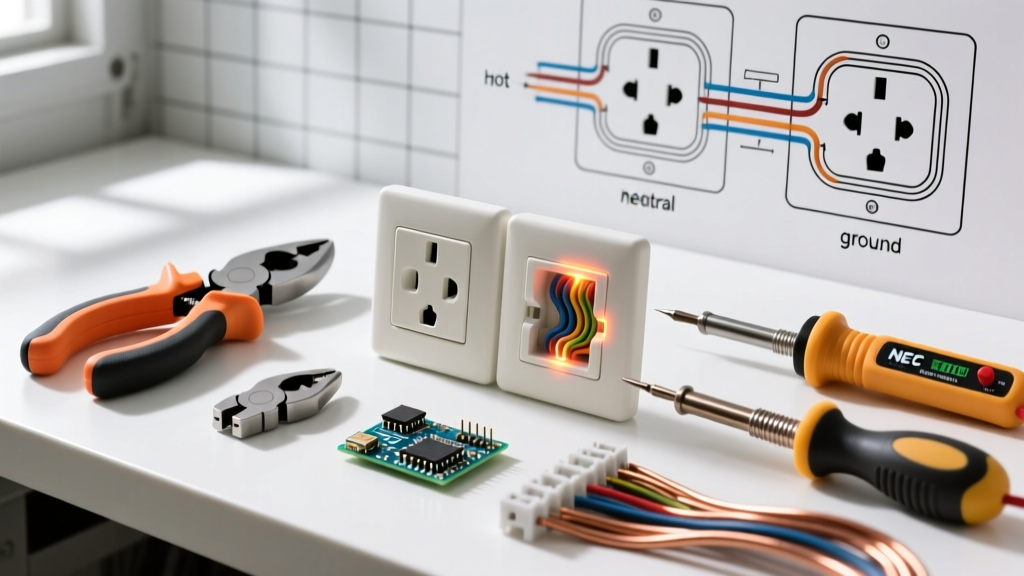

Understanding the Turkish Electrical Outlet Standard
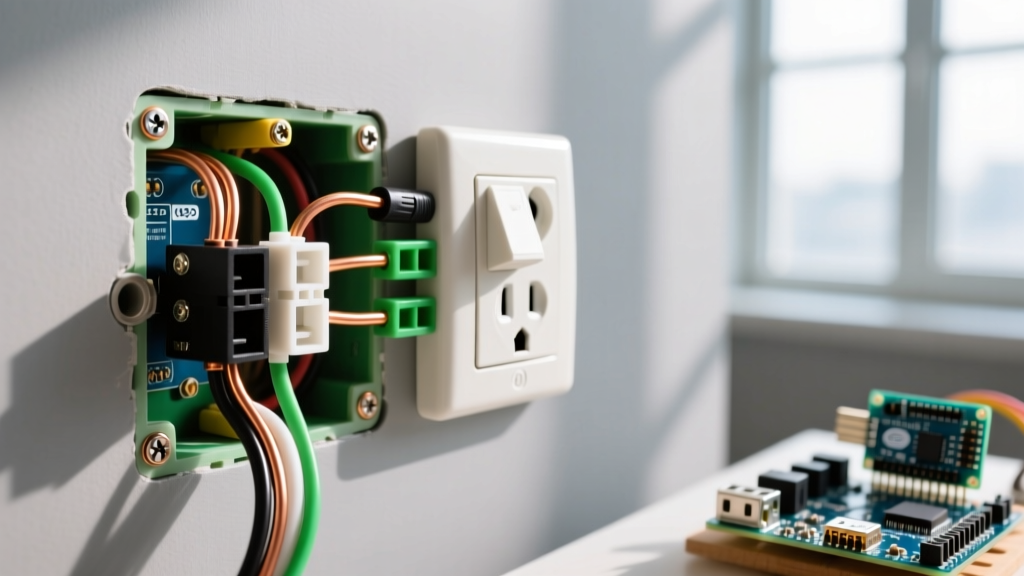
When wiring international properties, expat villas, or specialized appliance circuits, understanding regional receptacle standards is critical for safety and code compliance. The Turkish electrical outlet operates on the harmonized European standard, specifically utilizing the Type F (Schuko) receptacle, governed locally by the TS 9789 standard (which aligns with CEE 7/3 and CEE 7/4).
Unlike the North American NEMA 5-15R, the Turkish Type F outlet features two round pins for line and neutral, alongside dual side-grounding clips for the earth connection. As of 2026, with the rise of high-draw smart appliances and portable EV chargers, properly wiring these 230V/50Hz circuits requires strict adherence to torque specifications and thermal management protocols.
Core Technical Specifications
| Parameter | Specification |
|---|---|
| Nominal Voltage | 230V AC |
| Frequency | 50 Hz |
| Plug/Socket Type | Type F (Schuko / CEE 7/4) |
| Maximum Current Rating | 16A (Continuous draw requires derating) |
| Governing Standard | TS 9789 / IEC 60884-1 |
| Standard Cable Type | NYM-J 3x2.5mm² (Copper) |
Source: For global plug and socket mapping, refer to the International Electrotechnical Commission (IEC) World Plugs database.
Pre-Wiring Safety and Tool Requirements
Working with 230V systems carries a severe risk of arc flash and lethal shock. Before opening any junction box or consumer unit, verify that the main breaker is locked out and tagged out (LOTO). Use a CAT III or CAT IV non-contact voltage tester to confirm zero energy state.
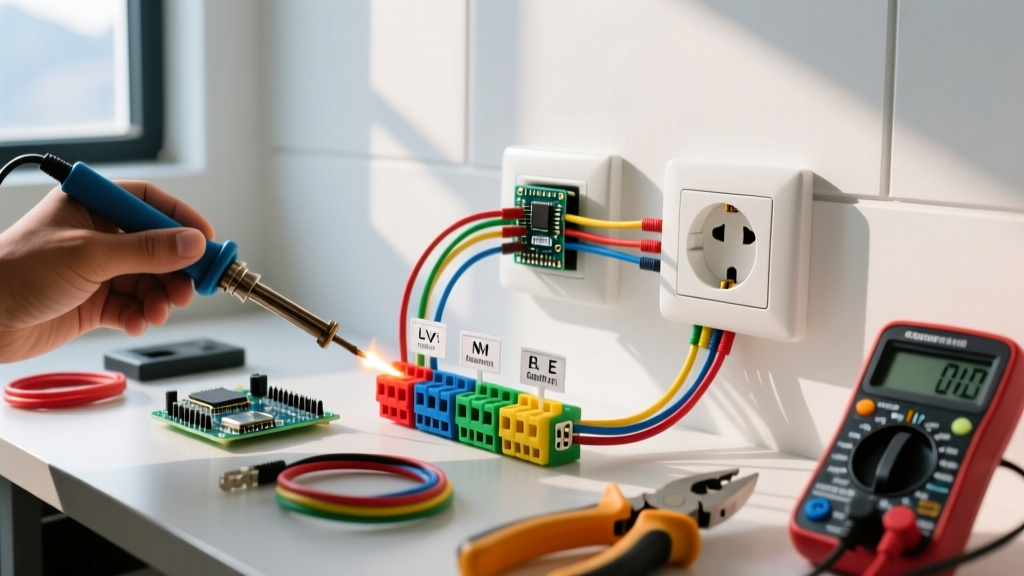
Required VDE-Certified Tools
- Wire Strippers: Calibrated for 2.5mm² solid copper (do not use generic multi-strippers that nick the conductor).
- Torque Screwdriver: Preset to 0.5 Nm to 0.8 Nm (crucial for preventing terminal arcing).
- Insulated Screwdrivers: VDE-rated to 1000V, specifically flathead and Pozidriv PZ2.
- Thermal Camera: For post-installation load testing (e.g., FLIR C5 or Seek Thermal).
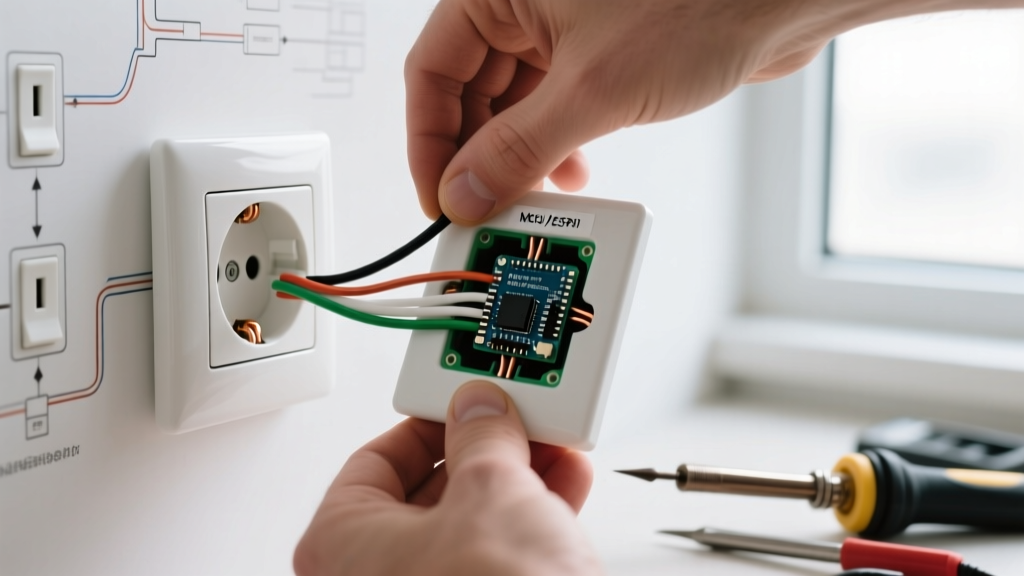
Step-by-Step Wiring Scenario: Flush-Mounted Type F Receptacle
The most common scenario is installing a flush-mounted Type F receptacle in a standard European-style backbox (minimum 45mm depth required to accommodate the 2.5mm² cable bends).
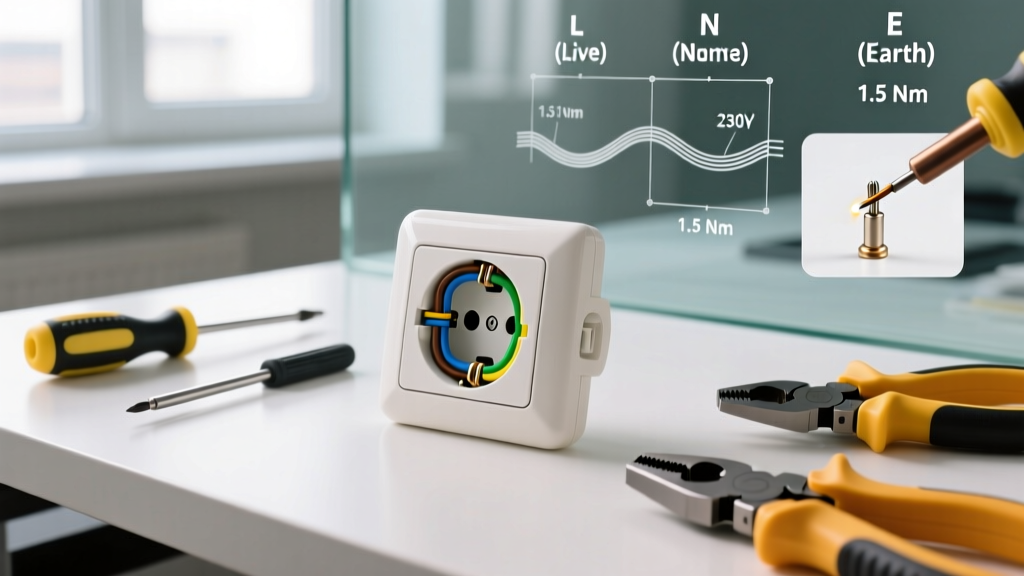
- Cable Preparation: Strip the outer NYM-J sheath back to the edge of the backbox. Strip exactly 12mm to 14mm of insulation from the individual Brown (Line), Blue (Neutral), and Green/Yellow (Earth) conductors. Exposed copper beyond the terminal block is a primary cause of short circuits.
- Earth Connection (PE): Connect the Green/Yellow wire to the central earth terminal. In Type F sockets, this terminal bridges to the two side grounding clips. Never bypass this connection.
- Line and Neutral Connections: While Type F plugs are reversible and unpolarized, standard wiring practice dictates connecting the Brown (Line) wire to the right-hand terminal and the Blue (Neutral) wire to the left-hand terminal when facing the socket. This maintains consistency for inline double-pole switched sockets.
- Torque and Secure: Tighten the terminal screws using your torque screwdriver set to 0.5 Nm. Under-tightening causes high-resistance joints that melt under 16A loads; over-tightening shears the copper strands.
- Mounting: Push the cable neatly into the backbox using a 'U-bend' relief loop. Secure the receptacle faceplate using the M3.5 mounting screws, ensuring the plaster claws do not crack the drywall or masonry.
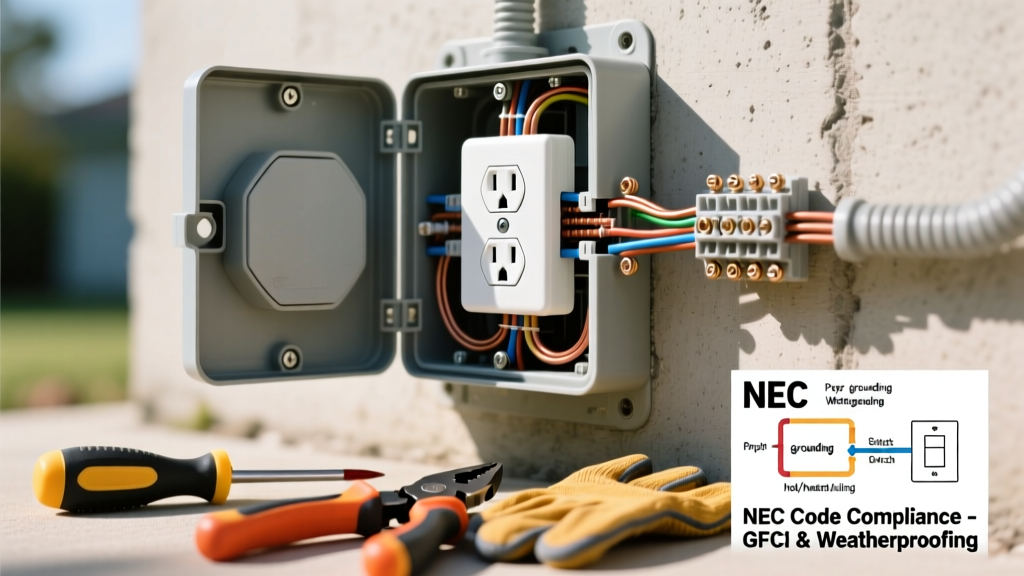
Expert Insight: As of 2026, modern Turkish and EU electrical codes strongly mandate the use of 30mA Residual Current Devices (RCDs) or RCBOs on all 16A socket circuits. If you are wiring a new outlet circuit, ensure the consumer unit features an active RCBO to protect against both earth leakage and overcurrent.
Common Wiring Scenarios & Edge Cases
Scenario A: Upgrading Ungrounded Type C to Grounded Type F
Older properties in Turkey and across Europe often feature legacy Type C (Europlug) sockets wired with only two conductors (Line and Neutral) inside flexible conduits. The Fix: You cannot simply swap the faceplate. You must pull a new NYM-J 3x2.5mm² cable from the distribution board to the socket location to establish a true Protective Earth (PE). Attempting to bootleg a ground by jumping the neutral terminal to the earth terminal is highly illegal, violates IEC 60364, and creates a lethal shock hazard if the neutral wire breaks upstream.
Scenario B: The EV Charging Thermal Trap
A massive edge case in 2026 involves users plugging portable Electric Vehicle (EV) chargers into standard Turkish Type F outlets. While the outlet is rated for 16A, standard Schuko contacts are designed for intermittent peak loads, not 12-hour continuous 16A draws. The Reality: Continuous 16A draw causes thermal creep in standard brass contacts, leading to melting faceplates and fire hazards. The Solution: If wiring an outlet specifically for portable EV charging, you must install an EV-rated Schuko socket (which features heavy-duty silver-plated contacts and integrated thermal sensors) or, preferably, hardwire a dedicated 7kW/11kW Wallbox EVSE directly to a 32A circuit.
Troubleshooting Table: Failure Modes and Fixes
| Symptom | Root Cause | Actionable Fix |
|---|---|---|
| RCD trips immediately upon plugging in a device | Neutral-to-Earth fault in the appliance, or shared neutral bus bar in the consumer unit. | Isolate the appliance. Check consumer unit wiring to ensure the socket's neutral connects only to its dedicated RCBO, not a shared neutral bar. |
| Faceplate feels hot (>40°C) under load | Under-torqued terminal screws causing micro-arcing and increased resistance. | De-energize circuit. Remove faceplate, check for discoloration. Cut back damaged wire, re-strip to 12mm, and torque to 0.5 Nm. |
| Device works but metal chassis has a 'tingle' | Missing or high-resistance Protective Earth (PE) connection. | Test earth loop impedance with a multifunction tester (MFT). Must be < 1.5 Ohms. Trace PE wire back to the earth bus bar. |
| Breaker trips only after 10+ minutes of use | Thermal overload on a 16A MCB due to continuous 18A+ draw (e.g., space heaters + EV). | Split the loads across two separate 16A RCBO circuits. Do not upsize the breaker without upsizing the cable to 4.0mm². |
For detailed safety parameters regarding grounding and fault protection, consult the World Standards Type F Socket Guide.
Code Compliance and Authoritative Standards
When executing any wiring scenario involving a Turkish electrical outlet, adherence to local and international standards is non-negotiable. The Turkish Standards Institution (TSE) harmonizes its national codes with the European CENELEC standards. Specifically, IEC 60884-1 dictates the dimensional and safety requirements for the Type F socket itself, while IEC 60364 governs the low-voltage installation rules (including cable sizing, derating factors for bundled cables, and RCD tripping times).
Always ensure that the receptacles you purchase carry the TSEK certification mark or a recognized European equivalent (like VDE or NF), indicating they have passed rigorous thermal and mechanical fatigue testing. Counterfeit or uncertified outlets frequently fail the 16A continuous load test and lack the necessary internal arc chambers.
Frequently Asked Questions (FAQ)
Can I use a US NEMA 5-15 plug in a Turkish outlet?
No. The physical pin geometry is entirely different (flat blades vs. round pins). Furthermore, Turkey operates on 230V/50Hz. Plugging a 120V US device directly into a 230V Turkish outlet via a simple travel adapter will instantly destroy the device and may cause a fire. You must use a step-down voltage transformer rated for the device's wattage.
Is the Turkish Type F outlet polarized?
No. The Type F Schuko design is inherently unpolarized, meaning the plug can be inserted in two ways, swapping line and neutral. Therefore, appliances designed for the Turkish market must use double-pole switches to ensure complete isolation when turned off, as the 'neutral' wire may actually be carrying line voltage depending on plug orientation.
What wire gauge is required for a 16A socket circuit in Turkey?
Standard practice dictates 2.5mm² solid copper wire (NYM-J or H07V-U). While 1.5mm² wire can theoretically carry 16A under perfect, un-bundled conditions, 2.5mm² is the mandatory minimum for socket circuits to account for voltage drop, thermal insulation derating, and mechanical strength during installation.