
Understanding the Swiss Type J (SEV 1011) Standard
When planning an installation or troubleshooting an electrical outlet in Switzerland, it is critical to recognize that the country does not use the standard Schuko (Type F) plugs common in neighboring Germany and Austria. Instead, Switzerland utilizes its own unique domestic standard known as SEV 1011 (now formally updated and maintained under the SN 441011 standard by Electrosuisse). This system, commonly referred to globally as the Type J plug and socket, operates on a 230V / 50Hz single-phase alternating current supply.
The physical design of the Swiss socket is distinctly hexagonal or diamond-shaped, featuring a crucial safety recess. According to the updated SN 441011:2012 regulations, the socket face must have a minimum recess depth of 10 mm (often 12 mm in modern Feller or Legrand models). This recess prevents users from touching the live pins of a plug while it is partially inserted, drastically reducing arc-flash and shock hazards. For DIYers and professional electricians alike, understanding the exact pinout, wire color codes, and mechanical mounting requirements is essential for a code-compliant installation.
Swiss Wiring Color Codes & Terminal Matrix
Switzerland has fully harmonized its domestic wiring color codes with the IEC 60446 / HD 308 S2 standards. However, if you are retrofitting an older building (pre-1990s), you may encounter legacy color codes. Always verify with a multimeter before touching any conductors. Below is the definitive terminal matrix for wiring a modern 16A Type J receptacle.
| Terminal Designation | Function | Modern Color Code (Post-2000) | Legacy Color Code (Pre-1990) | Torque Spec (Nm) |
|---|---|---|---|---|
| L (Line) | Phase / Hot | Brown (or Black/Gray) | Red or Black | 0.5 - 0.8 Nm |
| N (Neutral) | Return Path | Blue | White or Gray | 0.5 - 0.8 Nm |
| PE (Earth) | Protective Ground | Green/Yellow Stripe | Green/Yellow (Unchanged) | 0.8 - 1.0 Nm |
Type J vs. Schuko (Type F): Why Switzerland is Unique
A common mistake made by expats or foreign contractors is attempting to install Schuko (Type F) sockets in Swiss residential properties. This is a direct violation of the Swiss Federal Inspectorate for Heavy Current Installations (ESTI) regulations. The table below highlights the critical differences that dictate why specific Swiss-rated hardware must be used.
| Feature | Swiss Type J (SEV 1011) | Schuko Type F (CEE 7/3) |
|---|---|---|
| Pin Configuration | 3 pins in a flattened triangle | 2 round pins + top/bottom earth clips |
| Grounding Mechanism | Dedicated offset earth pin | Side earthing clips |
| Socket Recess | Mandatory 10mm+ hexagonal recess | Circular recess (approx. 4.8mm deep) |
| Max Standard Rating | 10A or 16A (depending on breaker) | 16A |
| Compatibility | Accepts Type C (Europlug) & Type J | Accepts Type C, E, and F |
Step-by-Step Wiring Diagram & Installation Reference
Wiring an electrical outlet in Switzerland requires precision, particularly regarding the flush-mounting boxes (Unterputzdosen) which are typically 68mm in diameter but feature specific screw-mounting lugs for Swiss faceplates. Brands like Feller (Edizio series) and Legrand (Niloé) dominate the market, costing between 15 CHF and 35 CHF ($17–$40 USD) per complete socket set.
1. Preparation and Cable Stripping
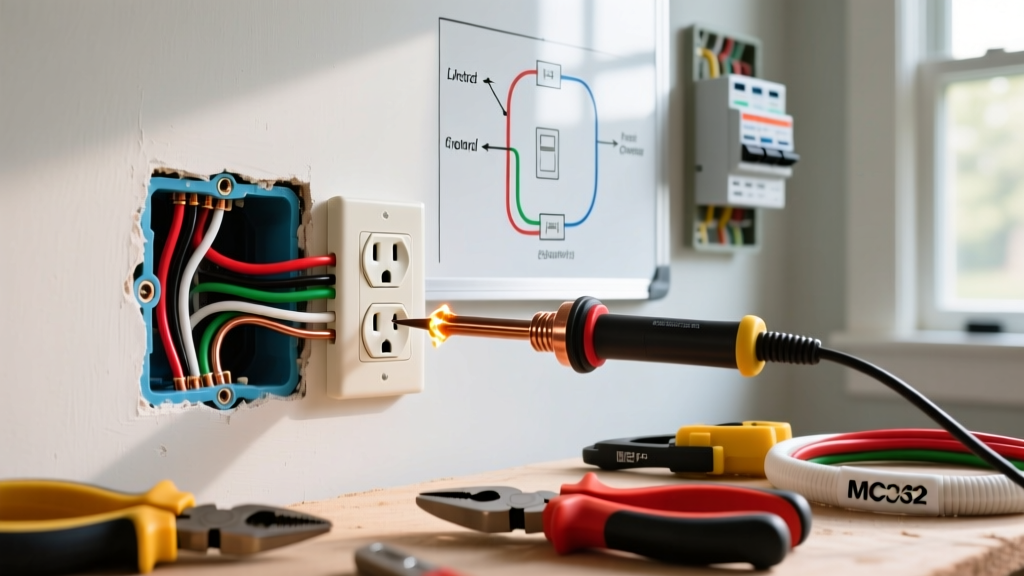
Ensure the 10A or 16A miniature circuit breaker (MCB) and the corresponding 30mA Residual Current Device (RCD) are switched off and locked out (LOTO). Use a standard 3x1.5 mm² or 3x2.5 mm² copper cable (NYM-J). Strip the outer sheath to expose 60mm of the inner conductors. Strip exactly 12mm of insulation from the tips of the Brown, Blue, and Green/Yellow wires. Pro Tip: Do not tin the wire ends with solder before inserting them into screw terminals; this causes cold flow and loose connections over time, leading to thermal failure.
2. Terminal Connection Sequence
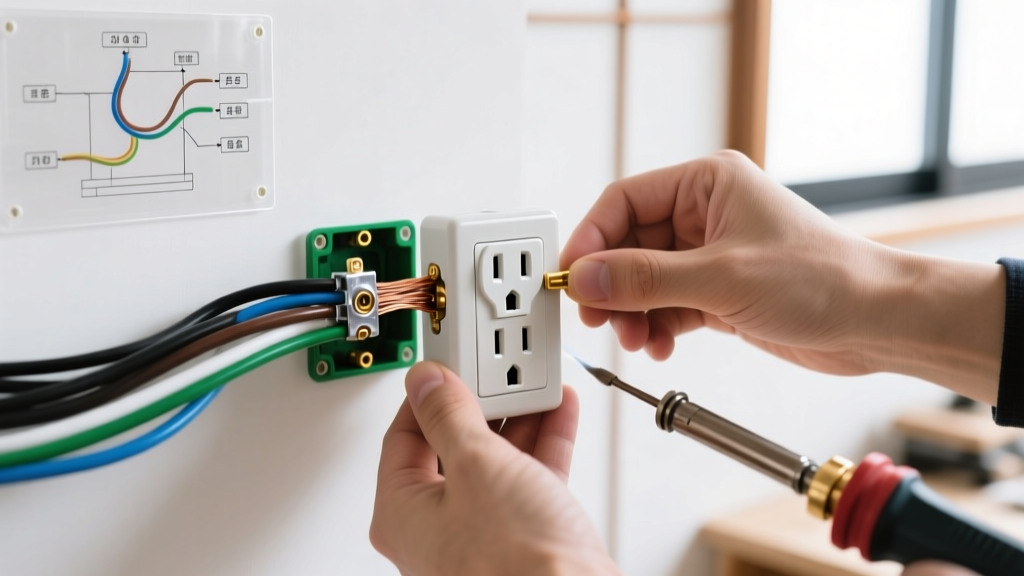
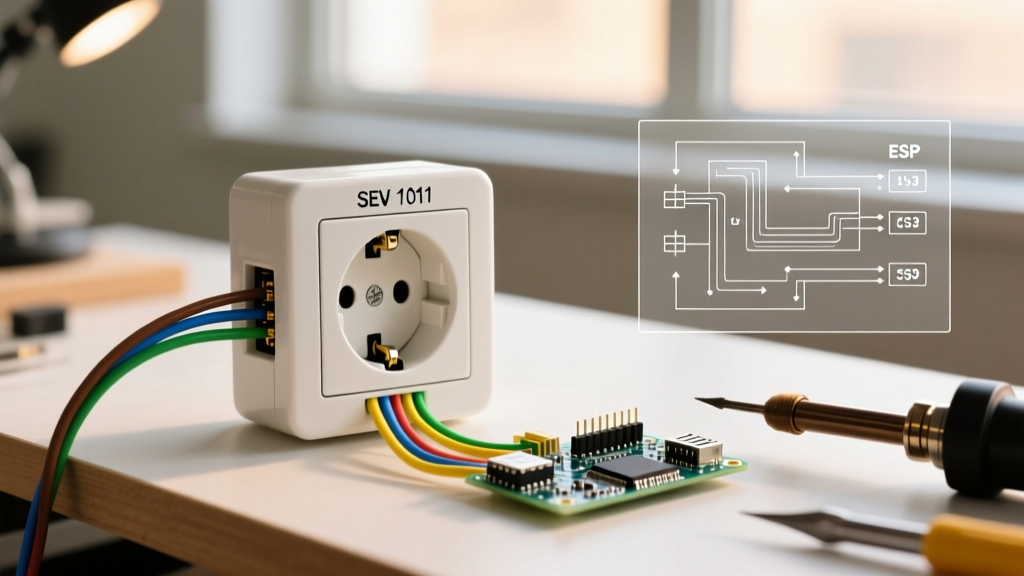
Looking at the back of the Type J socket mechanism, the terminals are usually clearly marked. According to the IEC World Plugs standard and local SEV norms:
- Earth (PE): Connect the Green/Yellow wire to the center terminal marked with the earth symbol (⏚). This is the longest pin and must be connected first to ensure ground continuity.
- Neutral (N): Connect the Blue wire to the terminal marked 'N'. In Swiss wiring diagrams, the neutral is typically positioned on the left side when facing the socket from the front, though the physical mechanism may vary by manufacturer.
- Line (L): Connect the Brown wire to the terminal marked 'L'. This corresponds to the right-side pin on the faceplate.
Tighten all screws to the manufacturer's specified torque (usually 0.5 to 0.8 Nm). Give each wire a firm tug to ensure it is seated correctly in the cage clamp or screw terminal.
3. Recess Depth and Faceplate Mounting
Push the mechanism into the 68mm flush-mount box. The Swiss standard mandates that the socket faceplate must sit flush against the wall, and the internal mechanism must provide the 10mm recess. If your wall box is protruding or recessed too far into the drywall, you must use plastic spacer rings (Ausgleichsringe) to ensure the hexagonal safety recess is maintained. Secure the mechanism using the M4 mounting screws provided, ensuring the socket is perfectly level.
Safety Warning: Never bypass the RCD requirement for newly installed sockets. The Swiss low-voltage installation ordinance (NIV) strictly mandates 30mA RCD protection for all standard 10A/16A receptacles in residential and commercial spaces to prevent lethal electric shock.
Common Failure Modes in Swiss 230V Circuits
When troubleshooting an existing electrical outlet in Switzerland, be aware of these specific failure modes associated with the Type J ecosystem:
- Partial Insertion Arcing: If an older, non-recessed (pre-2012) socket is used, dust accumulation or partial plug insertion can cause phase-to-earth arcing across the exposed pins. Solution: Upgrade to a modern SN 441011:2012 compliant recessed socket.
- Overheated Neutral Terminals: In multi-outlet daisy-chains (ring or radial spurs), the neutral wire often carries the unbalanced load. If a 2.5 mm² wire was stripped too short (e.g., 8mm instead of 12mm), the insulation might be caught in the terminal, causing high resistance and thermal melting. Solution: Cut back, re-strip to exactly 12mm, and replace the damaged mechanism.
- Earth Pin Deformation: The Type J earth pin is slightly thinner than the Line and Neutral pins on some older appliance plugs. Repeated use can widen the socket's internal brass earth contact, leading to a loose ground connection. Solution: Test with a dedicated Type J socket tester; replace the receptacle if the earth LED fails to illuminate.
Frequently Asked Questions
Can I use a standard European Schuko socket in my Swiss home?
No. While it may physically fit into the wall box, installing a Schuko (Type F) socket violates Swiss ESTI regulations and will fail a periodic safety inspection. Furthermore, standard Swiss Type J plugs will not fit into a Schuko socket, rendering it useless for local appliances. Always use certified SEV 1011 / Type J hardware.
What wire gauge is required for a 16A Swiss outlet?
For a 16A circuit protected by a Type B or Type C MCB, you must use a minimum of 1.5 mm² copper wire if the cable is installed in conduit or clipped directly, though 2.5 mm² is highly recommended (and often required by local cantonal inspectors) for longer runs to mitigate voltage drop and thermal buildup.
Where can I find the official wiring diagrams for Swiss sockets?
Official schematic references and safety bulletins are published by Electrosuisse and the World Standards electrical database. For binding legal installation diagrams, electricians must refer to the latest edition of the NIV (Niederspannungs-Installations-Verordnung) available via the Swiss Federal Council.