
The Portuguese Electrical Landscape: Type F and 230V
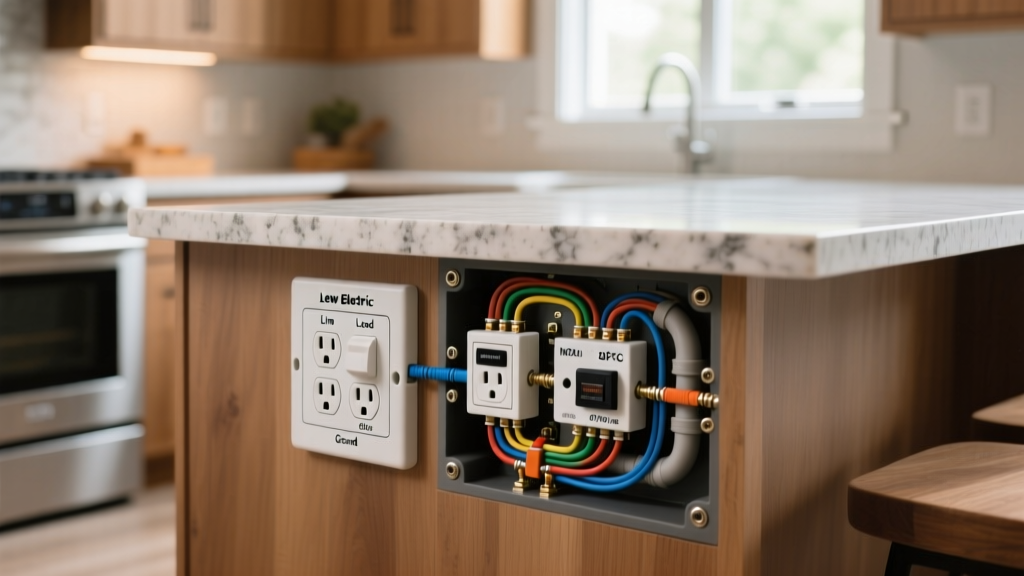
Relocating to the Iberian Peninsula or renovating a traditional property requires a firm understanding of local electrical codes. When you are tasked with installing an electrical outlet in Portugal, you are working within the framework of the NP 4592 national standard, which closely mirrors the IEC 60364 international standard. The standard household socket is the Type F (Schuko / CEE 7/3), operating at 230V and 50Hz.
Unlike North American systems that rely on 120V and drywall-mounted boxes, Portuguese infrastructure is built on 230V single-phase (or 400V three-phase for large estates) power, routed through solid masonry walls. Understanding the physical and regulatory differences is critical to preventing catastrophic failures, ensuring appliance compatibility, and passing local inspections.
Expert Insight: According to the IEC World Plugs database, Type F sockets feature two 4.8mm round pins spaced 19mm apart, with earthing clips on the top and bottom edges of the recessed cavity. Never attempt to install a Type E (French/Belgian) socket with the protruding earth pin in a standard Portuguese dwelling, as it will violate local harmonization norms and prevent standard Schuko plugs from seating correctly.
Navigating Portuguese Wire Color Codes
One of the most dangerous hurdles when wiring an electrical outlet in Portugal is encountering legacy wiring in older homes. Portugal fully adopted the harmonized European color codes (HD 308 S2) in 2006. If you are renovating a property built before this date, you must test every conductor with a multimeter before making terminations.
| Era / Standard | Phase (Fase / L) | Neutral (Neutro / N) | Earth (Terra / PE) |
|---|---|---|---|
| Modern (Post-2006) IEC Harmonized |
Brown (Castanho) | Blue (Azul) | Green/Yellow (Verde/Amarelo) |
| Legacy (1980s-2005) Old National |
Black or Red (Preto/Vermelho) | Light Blue or White (Azul Claro/Branco) | Yellow/Green or Bare Copper |
| Vintage (Pre-1980s) High Risk |
Various (Often Black/White) | Various (Often Grey/White) | Often Missing or Iron Pipe |
Pro Tip: Always use a non-contact voltage tester and a CAT III multimeter to verify the Phase and Neutral. In older Portuguese installations, it is common to find switches wired on the Neutral leg rather than the Phase leg—a severe shock hazard that must be corrected at the quadro elétrico (distribution board) during renovations.
Masonry Wall Installation: Step-by-Step
Portuguese homes are predominantly constructed from hollow clay brick, concrete block, or solid stone, finished with cement and plaster. You cannot use standard US 'old work' drywall boxes. You must use European standard Ø68mm flush-mounted boxes (caixas de embutir).
1. Chasing and Drilling
Mark the desired height. Standard Portuguese socket height is 30cm from the finished floor for living areas, and 110cm for kitchens and bathrooms. Use a rotary hammer drill with a 68mm carbide-tipped hole saw (copo de serra) to core out the masonry. Chase the wall using a wall chaser (roçadora de paredes) to lay the corrugated PVC conduit (tubo corrugado), typically 20mm or 25mm in diameter.
2. Embedding the Flush Box
Thread the 2.5mm² copper conductors through the conduit before embedding the box. Secure the Ø68mm box into the masonry cavity using rapid-setting plaster (estafa) or specialized mounting cement. Ensure the box is perfectly level and flush with the plaster line. Allow 20 minutes for the cement to cure.
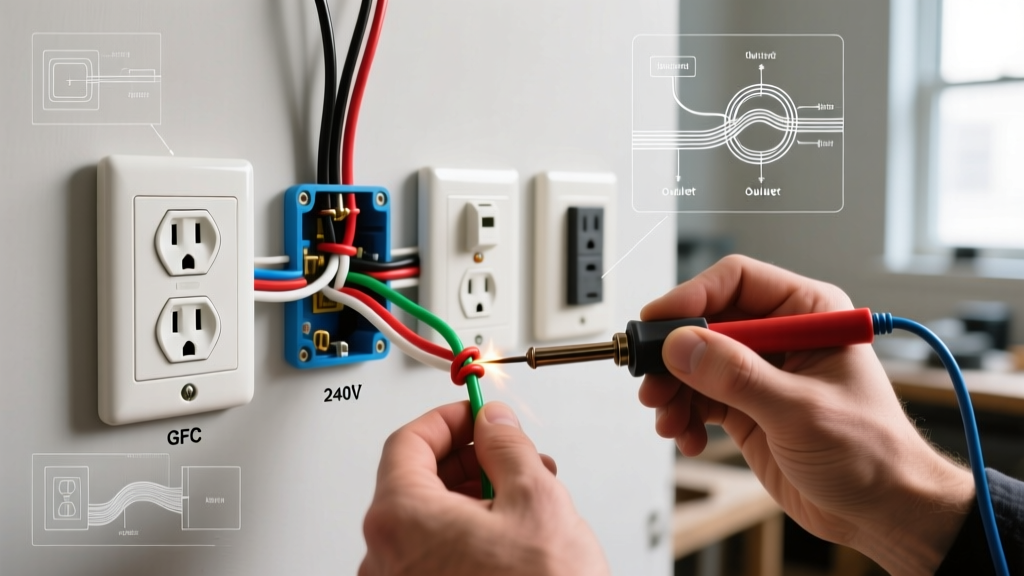
3. Stripping and Termination
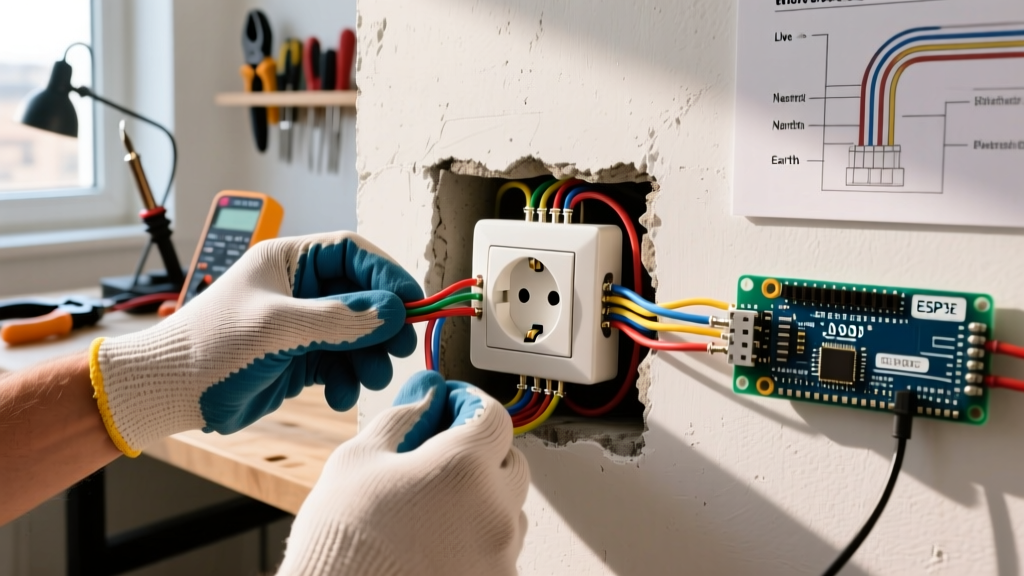
Strip exactly 12mm of insulation from the 2.5mm² wires. Modern Portuguese sockets (like the EFAPEL Logus 90 or Legrand Valena Life) utilize either screw-clamp or push-in automatic terminals. If using screw terminals, apply exactly 1.2 Nm of torque. Over-tightening will shear the copper strands, creating a high-resistance hot spot that leads to melting and fire.
4. Faceplate Mounting
Secure the mechanism to the flush box using the provided M3.5 expansion screws. Attach the decorative faceplate and restore power at the distribution board to test polarity with a Schuko socket tester.
Common Wiring Scenarios & Edge Cases
Scenario A: The Missing Earth Wire in Pre-1980s Buildings
Many older apartments in Lisbon and Porto lack a dedicated Protective Earth (PE) conductor. Never bootleg the ground by connecting the earth terminal to the neutral wire; a reversed polarity fault upstream will instantly energize the appliance chassis with 230V.
The Solution: Install a highly sensitive 30mA Type A RCD (Interruptor Diferencial) at the main distribution board to protect the ungrounded circuit. According to IEC 60364-4-41, a 30mA RCD provides supplementary fault protection in the absence of an earth wire, tripping within 40 milliseconds if a human touches a live chassis. Note: You must still label the socket as 'No Earth Present' and avoid plugging in surge protectors that rely on PE for diversion.
Scenario B: High-Load Kitchen and Laundry Circuits
Standard Portuguese socket circuits are protected by 16A or 20A MCBs (Disjuntores Magnetotérmicos). However, modern kitchens feature induction hobs, pyrolytic ovens, and high-draw washing machines.
The Solution: Major appliances require dedicated radial circuits wired with 4mm² or 6mm² copper cable, protected by 25A or 32A MCBs. Furthermore, because washing machines and induction hobs use internal rectifiers and inverters, they can produce pulsating DC fault currents that blind standard AC-type RCDs. You must install a Type A or Type F RCD for these specific circuits to ensure the differential protection does not become saturated and fail to trip.
2026 Material Costs & Recommended Brands
Sourcing high-quality materials is vital for longevity, especially in coastal regions where salt air accelerates corrosion in cheap metal components. Here is a breakdown of standard market rates in Portugal for 2026:
- EFAPEL (Logus 90 or Solara 7 series): The premier Portuguese brand. A complete Type F socket mechanism and faceplate costs between €8.50 and €14.00. Highly resistant to UV and salt corrosion.
- Legrand (Valena Life / Netatmo): Widely available at Leroy Merlin or local lojas de material elétrico. Standard sockets range from €7.00 to €12.00. Smart sockets with energy monitoring run around €45.00.
- Simon (Play or 82 series): A robust Spanish brand heavily used in Portuguese commercial builds. Expect to pay €6.50 to €10.00 per unit.
- 2.5mm² H07V-U Copper Wire (100m roll): Approximately €45.00 to €60.00 depending on copper market fluctuations.
Legal Compliance: The CERTIEL Certification
In Portugal, electrical safety is not just a matter of best practice; it is strictly regulated. Any new installation, major renovation, or upgrade to the main distribution board (quadro elétrico) must be certified.
Regulatory Warning: According to CERTIEL, the official Portuguese electrical certification body, only a licensed electrician registered with the DGEG (Direção-Geral de Energia e Geologia) can sign off on a new electrical installation. Upon completion, the electrician will issue a Declaração de Conformidade, which is submitted to CERTIEL to generate the final certification required by your home insurance provider and the local municipality.
While DIY enthusiasts can legally perform minor like-for-like replacements (e.g., swapping an old, broken Type F socket for a new one on an existing, compliant circuit), extending circuits, adding new flush boxes, or altering the breaker panel requires professional sign-off. Attempting to bypass CERTIEL regulations can result in denied insurance claims in the event of an electrical fire.
Frequently Asked Questions
Can I wire a US 120V NEMA 1-15 outlet in my Portuguese home?
Technically, you can install a step-down transformer and wire a dedicated 120V circuit for specific North American appliances. However, you must not use standard US white or ivory NEMA faceplates, as this creates a severe hazard for future occupants or guests who may plug a 230V European appliance into a 120V socket, resulting in immediate destruction of the appliance and potential fire. Use distinct, color-coded industrial sockets (like IEC 60309 blue/yellow) for any non-standard voltages.
What is the standard breaker size for a bedroom socket circuit?
Under NP 4592, standard bedroom and living room socket circuits are wired with 2.5mm² cable and protected by a 16A or 20A Curve C MCB. The circuit must also be protected by a 30mA RCD at the main panel to provide life-safety protection against earth leakage.