
Understanding the NEC Requirements for New Outlets
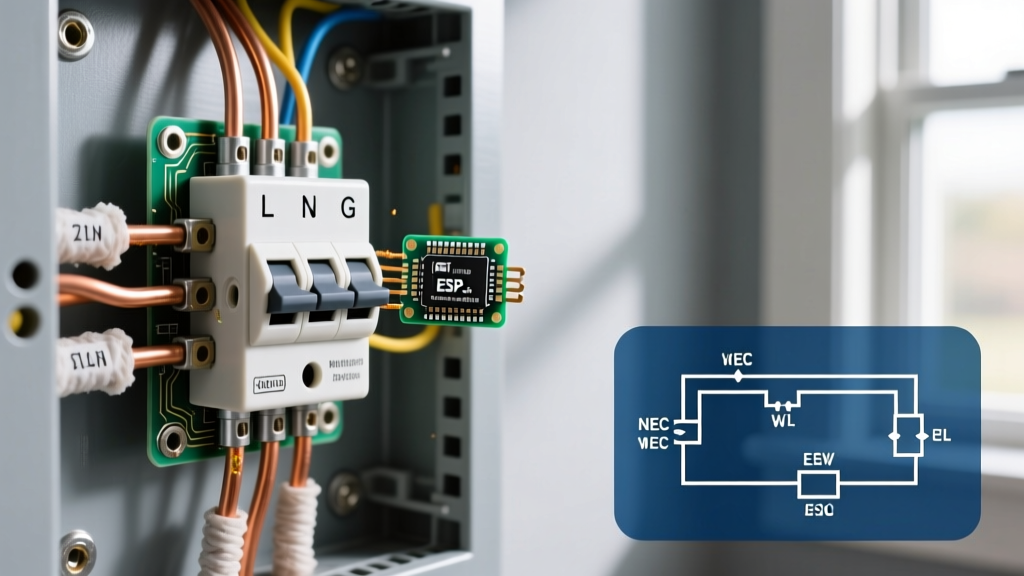
Learning how to add a new electrical outlet is a fundamental DIY electrical skill, but executing it safely requires strict adherence to the National Electrical Code (NEC). As of the 2026 adoption cycles, local jurisdictions are heavily enforcing NEC 2023 and newer amendments regarding branch circuit protection, box fill capacities, and tamper-resistant mandates. Failing to comply not only risks catastrophic electrical fires but can also void your homeowner's insurance policy in the event of an incident.
Before cutting into any drywall, you must verify whether your local Authority Having Jurisdiction (AHJ) requires a permit for extending a branch circuit. In most municipalities, adding a new receptacle to an existing circuit does not require a full rough-in inspection, but the final work must still meet NFPA 70 (NEC) standards. This guide provides the exact technical specifications, mathematical calculations, and product recommendations required for a code-compliant installation.
⚠️ SAFETY WARNING: Never rely solely on a wall switch to de-energize a circuit. Always verify the absence of voltage at the specific wires you are working on using a CAT III or CAT IV rated non-contact voltage tester or solenoid tester, such as the Fluke T+PRO, before touching any conductors.
Step 1: Circuit Capacity and Wire Gauge Selection
The most common failure mode in amateur outlet installations is mismatching the wire gauge to the circuit breaker. The NEC strictly prohibits placing 14 AWG wire on a 20-amp breaker, as the wire will overheat and melt before the breaker trips during a sustained overload.
Wire Sizing and Breaker Matrix
| Wire Gauge (AWG) | Max Breaker Size | Common Cable Type | NEC Box Fill Volume per Conductor |
|---|---|---|---|
| 14 AWG | 15 Amps | 14/2 NM-B (Romex) | 2.0 cubic inches |
| 12 AWG | 20 Amps | 12/2 NM-B (Romex) | 2.25 cubic inches |
| 10 AWG | 30 Amps | 10/2 NM-B (Romex) | 2.5 cubic inches |
Note: While 10 AWG is rated for 30A, standard 15A and 20A duplex receptacles (NEMA 1-15R and 5-20R) cannot physically accept 10 AWG solid wire under their terminal screws. For standard receptacle branch circuits, you are restricted to 14 AWG or 12 AWG.
Step 2: Box Fill Calculations (NEC Article 314.16)
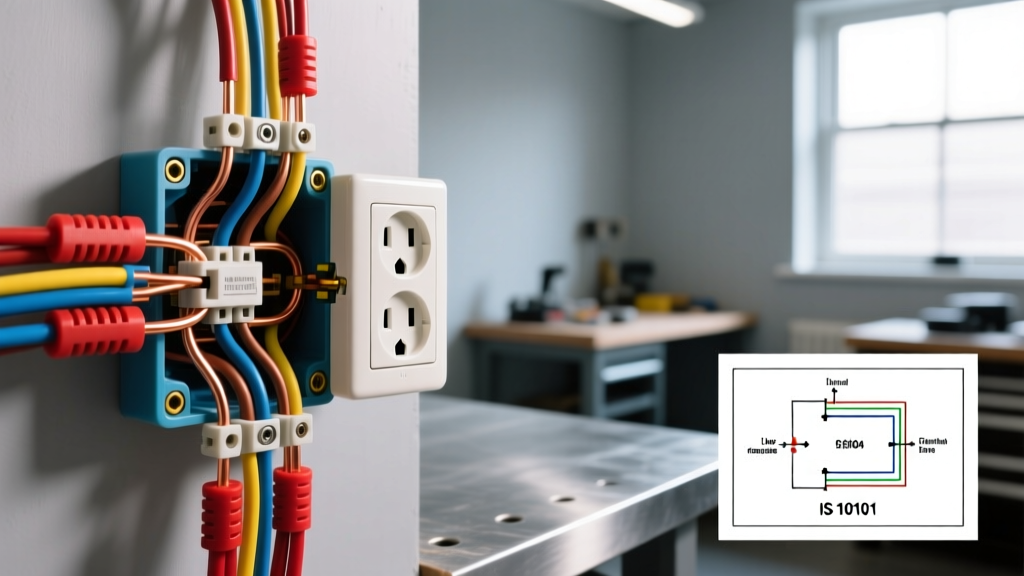
Overcrowding an electrical box causes conductors to pinch, damaging the insulation and creating short-circuit hazards. NEC Article 314.16 dictates exactly how many wires and devices can fit inside a junction or outlet box. You must calculate the "box fill" before purchasing your electrical box.
Real-World Calculation Example
Imagine you are adding a new single-gang outlet using 14/2 NM-B cable (which contains one 14 AWG hot, one 14 AWG neutral, and one 14 AWG bare ground) and a standard 15A duplex receptacle.
- Hot Conductor: 1 volume allowance
- Neutral Conductor: 1 volume allowance
- Equipment Grounding Conductor: 1 volume allowance (All grounds combined count as a single allowance)
- Device (Receptacle): 2 volume allowances
- Clamps (if internal/metal): 1 volume allowance (Plastic nail-on boxes have no internal clamps, so 0)
Total Allowances: 5 allowances.
Multiplier for 14 AWG: 2.0 cubic inches.
Minimum Required Box Volume: 5 × 2.0 = 10.0 cubic inches.
A standard Carlon B114R single-gang "nail-on" plastic box provides 14.0 cubic inches of volume, making it perfectly compliant. However, if you were to splice two 14/2 cables together in that same box to feed another outlet downstream, your allowances would jump to 9 (4 conductors + 1 ground + 2 device + 2 cables = 9), requiring 18.0 cubic inches. The standard B114R would now be a code violation, and you would need to upgrade to a deeper "old work" box like the Carlon B120R (20.0 cu in).
Step 3: GFCI and AFCI Protection Mandates
Modern code compliance goes far beyond simple overcurrent protection. The NEC mandates advanced fault protection to prevent both shocks and arc fires.
Where GFCI is Required (NEC 210.8)
Ground Fault Circuit Interrupter (GFCI) protection is mandatory in any area where water and electricity may intersect. According to the U.S. Consumer Product Safety Commission (CPSC), GFCIs prevent over two-thirds of the roughly 300 annual home electrocutions. You must install GFCI protection in:
- Kitchens (all countertop receptacles)
- Bathrooms
- Garages and accessory buildings
- Outdoors (including soffits and roof outlets)
- Crawlspaces and unfinished basements
- Laundry areas and within 6 feet of wet bar sinks
Where AFCI is Required (NEC 210.12)
Arc Fault Circuit Interrupter (AFCI) protection detects dangerous electrical arcing that standard breakers miss. As of recent code cycles, Combination-Type AFCI (CAFCI) protection is required on 120V, 15A and 20A branch circuits supplying outlets in virtually all living spaces, including bedrooms, living rooms, hallways, and closets. The most cost-effective and code-compliant way to achieve this is by installing a CAFCI breaker (e.g., Square D HOM120CAFIC) in your main panel, rather than using expensive AFCI receptacles at every point.
Step 4: Safe Wiring Execution and Torque Specifications
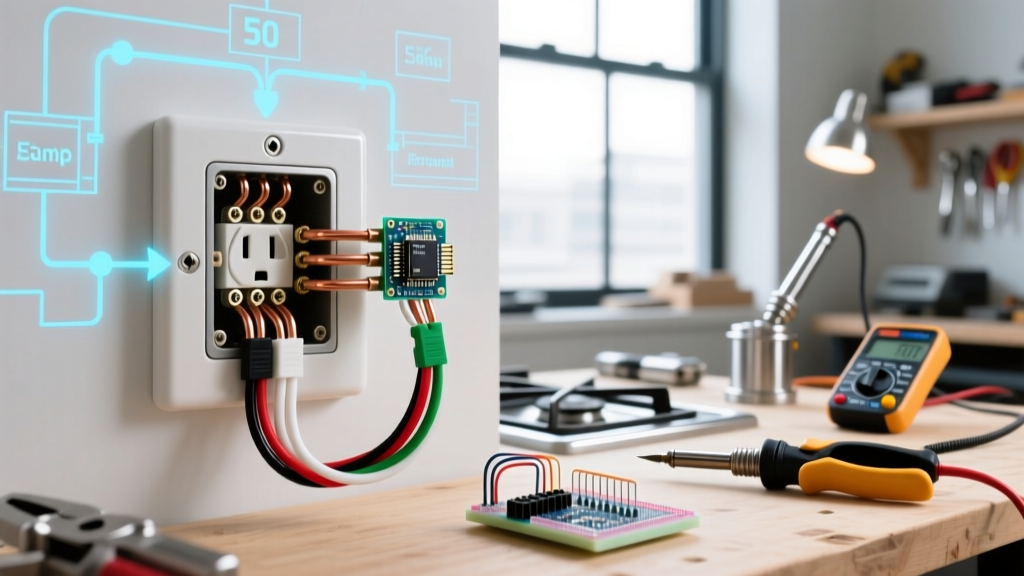
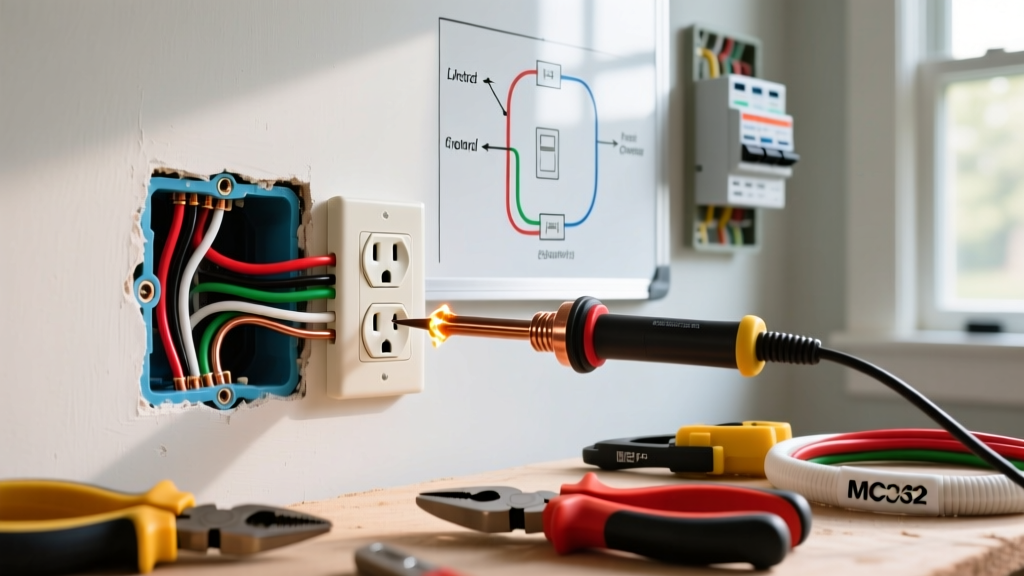
The physical termination of the wires to the receptacle is where poor workmanship leads to high-resistance connections, melting, and fires. Follow these exact steps for a professional-grade termination:
- Strip the Insulation: Use precision wire strippers like the Klein Tools 11055. Strip exactly 3/4 inch of insulation from the solid copper conductor. Stripping too little leaves exposed copper outside the terminal; stripping too much exposes bare wire near the screw head.
- Form the Hook: Use needle-nose pliers to create a smooth, clockwise hook at the end of the wire. The clockwise direction ensures that tightening the screw pulls the wire loop tighter, rather than pushing it out.
- Terminate on the Screw, Not the Backstab: While many commercial-grade receptacles feature "back-wire" clamp plates (which are acceptable and code-compliant), the cheap "push-in" backstab holes found on residential-grade receptacles are notorious for failing under thermal expansion. Always use the side terminal screws or the screw-tightened back-clamps.
- Apply Correct Torque: This is the most overlooked step. NEC 110.14(D) requires terminations to be torqued to the manufacturer's specifications. For a standard Leviton Decora 15A Tamper-Resistant receptacle (Model R52-05320-00W), the terminal screws must be tightened to 14 in-lbs. Use a calibrated torque screwdriver, such as the Wiha 28502, to ensure the connection is neither loose (causing arcing) nor overtightened (stripping the brass threads or snapping the screw).
Common Code Violations to Avoid
When learning how to add a new electrical outlet, avoiding these frequent DIY mistakes will save you from failing an inspection or causing a fire:
- Bootleg Grounds: Connecting the green grounding screw to the neutral terminal or using an ungrounded 2-prong cable to wire a 3-prong receptacle. This is a lethal violation. If no ground wire exists, you must either install a GFCI receptacle (labeled "No Equipment Ground") or run a new grounded cable.
- Missing Tamper-Resistant (TR) Markings: NEC 406.4(D) requires all 15A and 20A receptacles in dwelling units to be Tamper-Resistant. Standard receptacles without the internal plastic shutters are illegal for new installations in living spaces.
- Reversed Polarity: Connecting the white neutral wire to the brass (hot) terminal and the black hot wire to the silver (neutral) terminal. The brass screw must always connect to the ungrounded (hot) conductor.
- Exposed Drywall Paper: The plaster ears of the receptacle must sit flush against the drywall. If the gap between the box and the drywall exceeds 1/8 inch, the box must be extended using a box extender ring to prevent sparks from igniting the paper backing of the drywall.
Frequently Asked Questions (FAQ)
Can I add a new outlet to a lighting circuit?
Technically, the NEC allows receptacles to be on lighting circuits in some older configurations, but modern best practices and many local amendments prohibit mixing lighting and receptacle loads on the same 15A breaker to prevent nuisance tripping. Furthermore, you cannot add a receptacle to a circuit controlled by a wall switch, as plugging in a device like a vacuum cleaner could result in it being unexpectedly shut off.
Do I need to use a metal box instead of plastic?
For standard interior wood-framed walls using NM-B (Romex) cable, non-metallic (plastic) boxes are entirely code-compliant and preferred by most electricians due to ease of installation. Metal boxes are required when using metal-clad (MC) cable, exposed conduit (EMT), or in specific fire-rated assemblies and commercial applications.
What if my existing circuit doesn't have a ground wire?
If you are extending a circuit in a pre-1960s home with ungrounded Knob & Tube or early 2-wire NM cable, you cannot legally install a standard grounded receptacle. Your only NEC-compliant options are to install a 2-prong receptacle, or install a GFCI receptacle and apply the included "GFCI Protected" and "No Equipment Ground" stickers to the faceplate. Note that a GFCI protects against shock, but it does not provide a true equipment ground for surge protectors.