
Understanding the Qatar Type G (BS 1363) Outlet System
Troubleshooting electrical outlets in Qatar requires a precise understanding of local infrastructure and the specific hardware in use. The State of Qatar utilizes the Type G electrical outlet, governed by the British Standard BS 1363. While the physical socket design is identical to that of the United Kingdom, the underlying circuit topology and local wiring regulations enforced by Kahramaa (Qatar General Electricity and Water Corporation) introduce unique diagnostic variables.
Qatar operates on a 240V AC, 50Hz electrical grid. Unlike the UK, which heavily relies on 32A ring main circuits for socket outlets, modern Qatari residential and commercial installations predominantly utilize radial circuits. These are typically wired with 4.0mm² copper conductors protected by a 32A Miniature Circuit Breaker (MCB), or 2.5mm² conductors on a 20A MCB. Recognizing this distinction is critical when diagnosing voltage drops, tripped breakers, or thermal degradation at the terminal blocks.
The Diagnostic Toolkit for 240V Systems
Before removing any faceplates, ensure you have the correct safety equipment. Working with 240V systems demands rigorous insulation standards.
- Digital Multimeter (DMM): Must be rated CAT III 600V or CAT IV 300V (e.g., Fluke 117 or Klein Tools CL800). Never use a basic automotive multimeter for mains diagnostics.
- Non-Contact Voltage Tester (NCVT): For initial dead-front verification.
- VDE-Certified Insulated Screwdrivers: Rated to 1000V, essential for terminal tightening.
- BS 1362 Fuse Tester: To verify the integrity of appliance plug fuses.
- Thermal Imaging Camera (Optional but recommended): Devices like the FLIR C5 can identify high-resistance connections behind the faceplate before they cause a fire.
Step 1: The Plug Fuse Check (The Expat Trap)
The most common reason for a "dead" Qatar electrical outlet is not a faulty wall socket, but a blown fuse inside the appliance's plug. According to Electrical Safety First guidelines on BS 1363 standards, the plug itself acts as the primary flexible cable protection device.
If an appliance fails to draw power, do not immediately dismantle the wall outlet. Instead, open the plug and inspect the ceramic or glass BS 1362 fuse.
BS 1363 Plug Fuse Sizing Matrix
| Appliance Wattage (at 240V) | Required Fuse Rating | Fuse Color Code | Common Examples |
|---|---|---|---|
| Up to 700W | 3 Amp | Red | Laptops, LED TVs, phone chargers, desk lamps |
| 700W to 1200W | 5 Amp (Rare) | Black/White | Some older irons, heavy-duty power tools |
| 1200W to 3120W | 13 Amp | Brown | Kettles, microwaves, space heaters, hair dryers |
Diagnostic Tip: If a 3A fuse is installed in a 2000W kettle, the fuse will blow immediately upon switching on the socket. Always match the fuse to the appliance's maximum draw.
Step 2: Distribution Board (DB) & RCBO Verification
If the plug fuse is intact and the appliance works in another socket, the issue lies within the wall outlet or the circuit protection. Navigate to your main Distribution Board.
Differentiating the Trip Mechanism
Kahramaa regulations mandate that all socket outlet circuits be protected by a Residual Current Device (RCD) or a combined Residual Current Breaker with Overcurrent protection (RCBO) with a maximum sensitivity of 30mA.
- MCB Tripped (Overload/Short Circuit): The switch is firmly in the DOWN position. This indicates a short circuit in the appliance, a damaged flexible cord, or a catastrophic failure inside the wall outlet (e.g., Live and Neutral touching due to melted insulation).
- RCBO/RCD Tripped (Earth Leakage): The main toggle has dropped, and a small blue or grey "Test" button has popped out. This indicates current is leaking to earth. Common culprits include moisture ingress in outdoor Type G sockets, a failing heating element in a water heater, or degraded insulation in the 4.0mm² radial wiring.
Pro-Tip for Radial Circuits: Because Qatar uses radial circuits rather than ring mains, a single loose neutral connection at the furthest socket on the 4.0mm² radial branch will kill power to all downstream sockets on that specific leg. If multiple outlets in a single room are dead, trace the radial daisy-chain starting from the DB.
Step 3: Switched Socket Neon & Mechanical Shutter Inspection
Type G sockets in Qatar are almost universally "switched sockets," featuring a red rocker switch and a neon indicator lamp. These introduce two unique mechanical failure points.
The Neon Indicator Fallacy
The neon lamp is wired in series with a high-value resistor across the Live and Neutral terminals on the load side of the rocker switch. If the neon light is OFF, it simply means the switch is open or the neon bulb has burned out. A burned-out neon bulb does not mean the socket is dead. Always test with a multimeter or plug in a known-working lamp to verify actual power delivery.
The Earth Pin Shutter Mechanism
The International Electrotechnical Commission (IEC) notes that Type G sockets feature internal safety shutters over the Live and Neutral slots. These shutters are mechanically interlocked with the Earth slot. If the Earth pin on your plug is bent, missing, or slightly shorter than spec (due to a cheap travel adapter), the internal cam will not retract the shutters. If you feel physical resistance when inserting a plug, do not force it; you risk cracking the urea-formaldehyde faceplate or damaging the internal phosphor bronze contacts.
Step 4: Live Voltage Testing at the Terminals
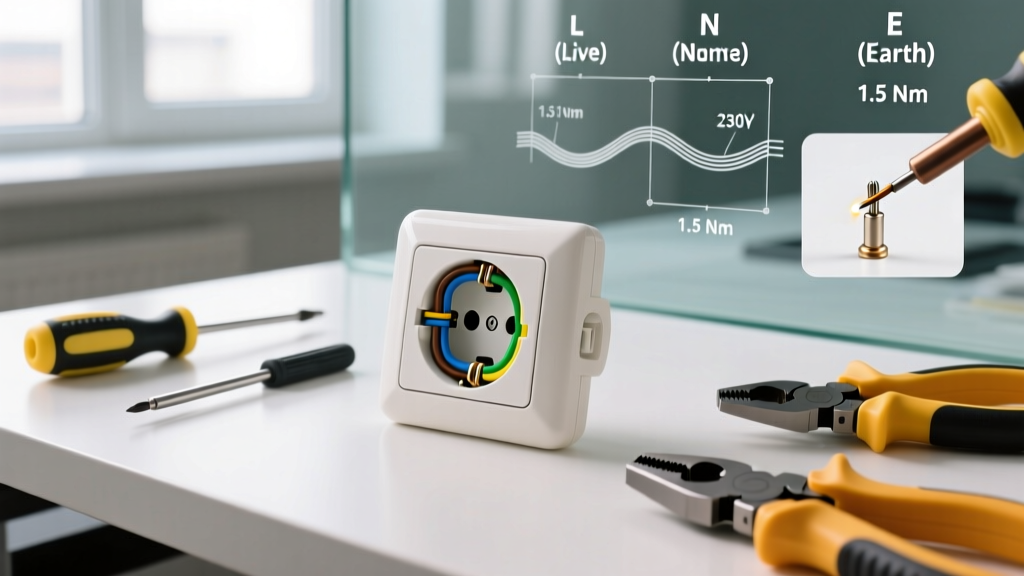
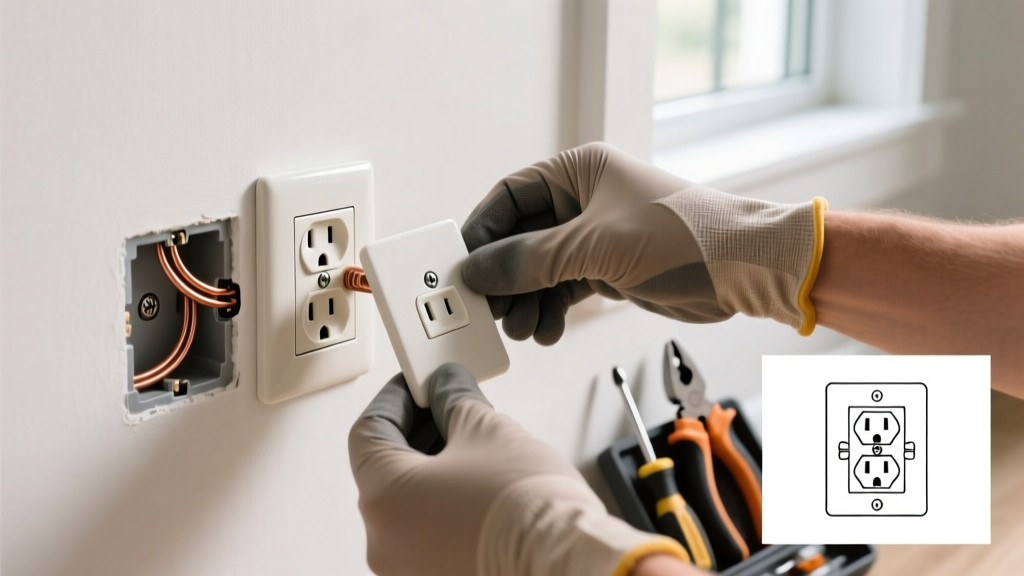
If the DB is reset, the plug fuse is good, and the shutter is engaging, you must test the terminal connections. Warning: Turn off the main isolator at the DB before removing the faceplate screws. Once the faceplate is removed, restore power and use your CAT III multimeter to probe the terminal screws directly.
Voltage Testing Matrix & Fault Interpretations
| Test Points | Expected Reading | Fault Indication if Abnormal |
|---|---|---|
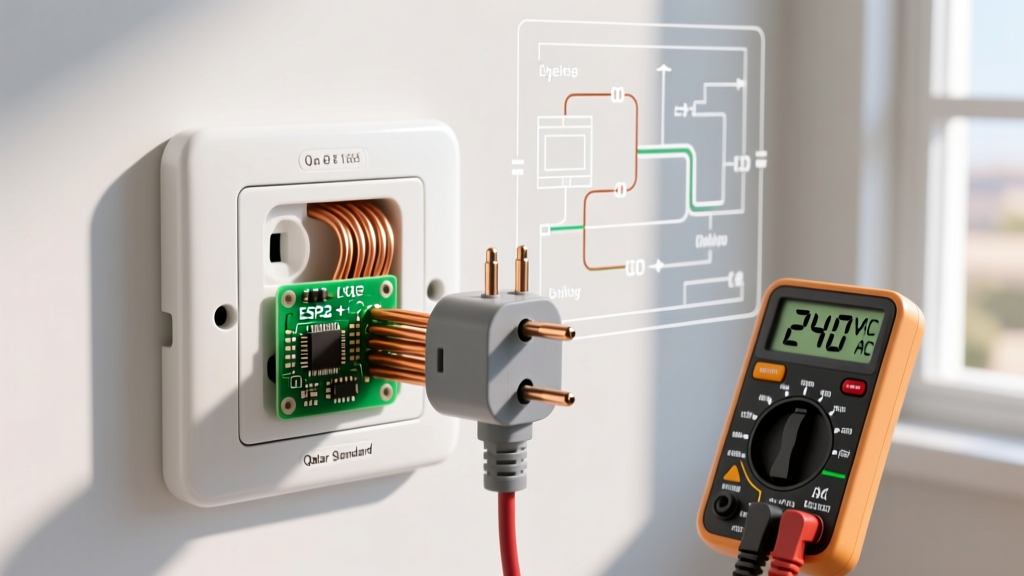
| Live (Brown) to Neutral (Blue) | 235V - 245V AC | 0V: Open circuit upstream. <200V: High resistance loose connection or severe voltage drop on the radial branch. |
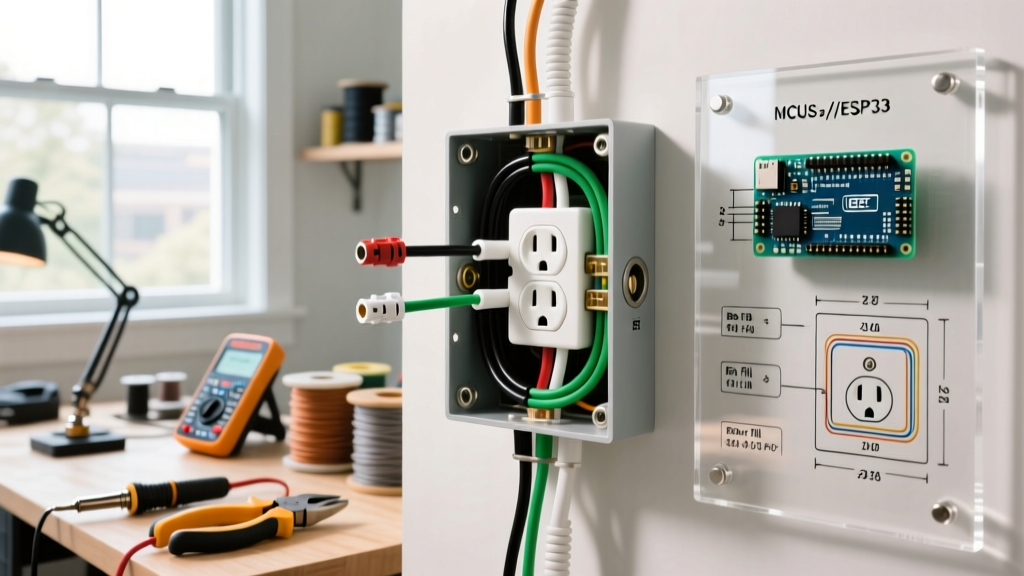
| Live (Brown) to Earth (Green/Yellow) | 235V - 245V AC | 0V: Broken earth continuity. <200V: Poor earthing electrode connection at the DB. |
| Neutral (Blue) to Earth (Green/Yellow) | 0V - 2V AC | >5V: Loose neutral at the DB neutral bar, or shared neutral overload on a multi-wire branch circuit. |
Advanced Fault Finding: Thermal Degradation & Arcing
In Qatar's high-ambient-temperature climate (often exceeding 45°C in summer), electrical components are under severe thermal stress. A common failure mode in older villas is terminal screw loosening due to thermal expansion and contraction cycles.
When a terminal screw holding the 4.0mm² Live wire is loose, it creates a high-resistance connection. According to Joule's first law ($P = I^2R$), as resistance increases, heat generation squares with the current draw. If you plug in a 13A portable air conditioner or space heater, this loose connection will generate massive heat, eventually melting the brass terminal block and the surrounding thermoset plastic faceplate.
Visual Inspection Checklist:
- Look for brown or black scorch marks around the Live (right) pin slot.
- Check if the faceplate feels warm to the touch after running a high-draw appliance for 10 minutes.
- Listen for a faint, high-frequency "buzzing" or "crackling" sound, which indicates micro-arcing inside the wall cavity.
If any of these signs are present, immediately isolate the circuit at the DB. The outlet must be replaced, and the damaged insulation on the 4.0mm² wire must be trimmed back to clean copper before re-terminating.
Frequently Asked Questions (FAQ)
Can I use a US/Japanese 110V appliance in a Qatar outlet?
No. Qatar's grid supplies 240V. Plugging a 110V appliance directly into a Type G socket (even with a physical adapter) will instantly destroy the appliance's power supply and likely cause a fire. You must use a step-down voltage transformer rated for at least 120% of the appliance's maximum wattage.
Why does my Qatar outlet spark when I plug something in?
A small blue spark when plugging in a high-wattage device (like a laptop charger or vacuum) is normal; it is the capacitive inrush current charging the device's internal power supply. However, a large yellow/orange spark accompanied by a loud "pop" indicates a short circuit or a severely degraded internal contact spring inside the socket. Replace the socket immediately.
Are smart sockets compatible with Qatar's electrical system?
Yes, provided you purchase smart plugs rated for 240V AC and 50Hz with a physical Type G footprint. Many generic smart plugs sold online are only rated for 110V/60Hz (US standard). Using a 110V-rated smart relay on a 240V Kahramaa circuit will result in catastrophic failure of the smart switch's internal triac.