
Understanding the Russian Electrical Outlet Standard
When working with international electrical systems, understanding regional receptacle standards is critical for safety and compliance. The standard Russian electrical outlet operates on a 230V, 50Hz AC supply and primarily utilizes the Type F connector, widely known as the 'Schuko' (Schutzkontakt) plug. Governed locally by GOST 7396.1-89 and harmonized with international IEC World Plugs standards, the Type F outlet features two 4.8mm round pins spaced 19mm apart, alongside two side-mounted earth clips for grounding.
While the ungrounded Type C (Europlug) is also prevalent in Russia for low-draw appliances (like phone chargers or lamps), any permanent wiring scenario involving high-wattage devices, kitchen appliances, or power tools mandates the grounded Type F Schuko receptacle. As of 2026, modern Russian electrical codes heavily align with European CENELEC standards, emphasizing strict adherence to proper grounding, arc-fault protection, and fire-retardant cable sheathing.
Technical Specifications at a Glance
| Parameter | Russian Type F (Schuko) Standard |
|---|---|
| Nominal Voltage | 230V (±10%) |
| Frequency | 50 Hz |
| Max Current Rating | 16A (Standard Circuit) |
| Pin Diameter / Spacing | 4.8mm / 19mm center-to-center |
| Grounding Mechanism | Side earth clips (Protective Earth) |
| Governing Standards | GOST 7396.1-89 / CEE 7/4 / IEC 60898 |
Common Wiring Scenarios for Russian Outlets
Wiring a Russian electrical outlet varies drastically depending on the age of the building and the existing earthing topology. Below are the two most common scenarios encountered by electricians and advanced DIYers.
Scenario 1: Upgrading Legacy 2-Wire Soviet Wiring (TN-C Systems)
Millions of older apartments in Russia and Eastern Europe (such as Khrushchevka and Brezhnevka buildings) were wired using a TN-C earthing system. This means the wiring consists of only two cores: Phase (L) and PEN (Combined Protective Earth and Neutral). There is no dedicated ground wire running to the socket.
The Challenge: Homeowners often want to replace old, ungrounded Type C bakelite sockets with modern Type F Schuko outlets to accommodate imported appliances. However, simply swapping the faceplate without a ground wire creates a false sense of security.
CRITICAL SAFETY WARNING: Never create a 'bootleg ground' by bridging the Neutral terminal to the Earth terminal inside the socket. If the neutral wire breaks or is reversed at the main panel, the metal chassis of your plugged-in appliance will become energized at 230V, posing a lethal shock hazard. According to World Standards, Type F outlets must only be connected to a verified, dedicated Protective Earth (PE) conductor.
The 2026 Compliant Solution: If a dedicated PE wire cannot be pulled from the main distribution board (MDB), the safest approach is to install a Type F outlet but leave the PE terminal unconnected, while protecting the circuit with a highly sensitive 10mA or 30mA Residual Current Device (RCD / УЗО) at the breaker panel. This ensures that even without a ground wire, a fault to a human body will trip the breaker in milliseconds.
Scenario 2: New Installation in a Modern 230V Circuit (TN-C-S)
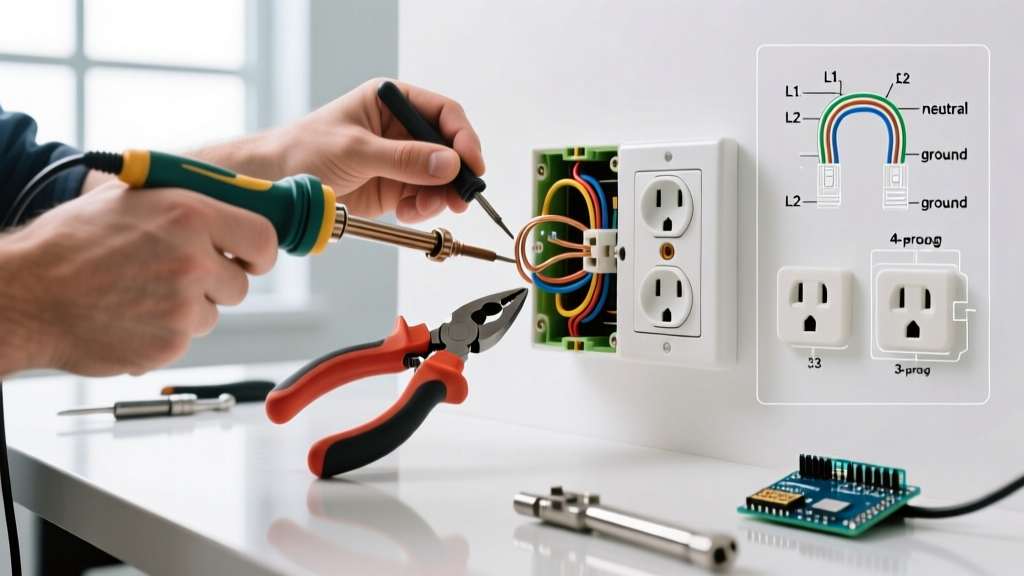
In modern Russian construction (post-2000s) or fully renovated apartments, the TN-C-S system is standard. A dedicated 3-core copper cable runs from the distribution board to the outlet, providing separate Phase, Neutral, and Earth conductors.
Step-by-Step Wiring Procedure
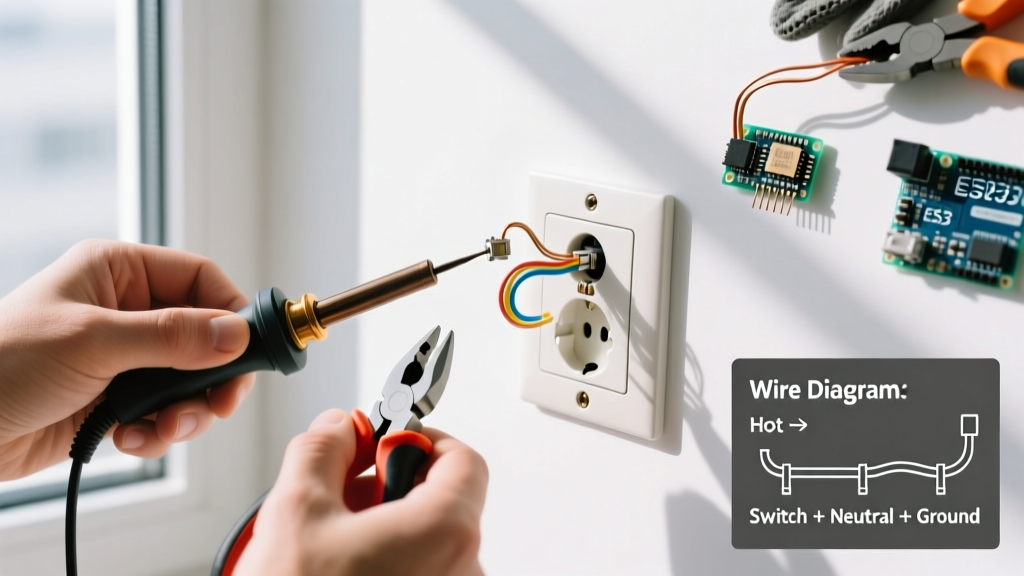
- Isolate the Circuit: Turn off the 16A Type C MCB (Miniature Circuit Breaker) and the upstream RCD. Verify zero voltage using a CAT III rated multimeter.
- Prepare the Cable: Strip the outer sheath of the VVG-ng-LS cable, leaving about 10cm of working length. Strip 12mm of insulation from the three 2.5mm² copper cores.
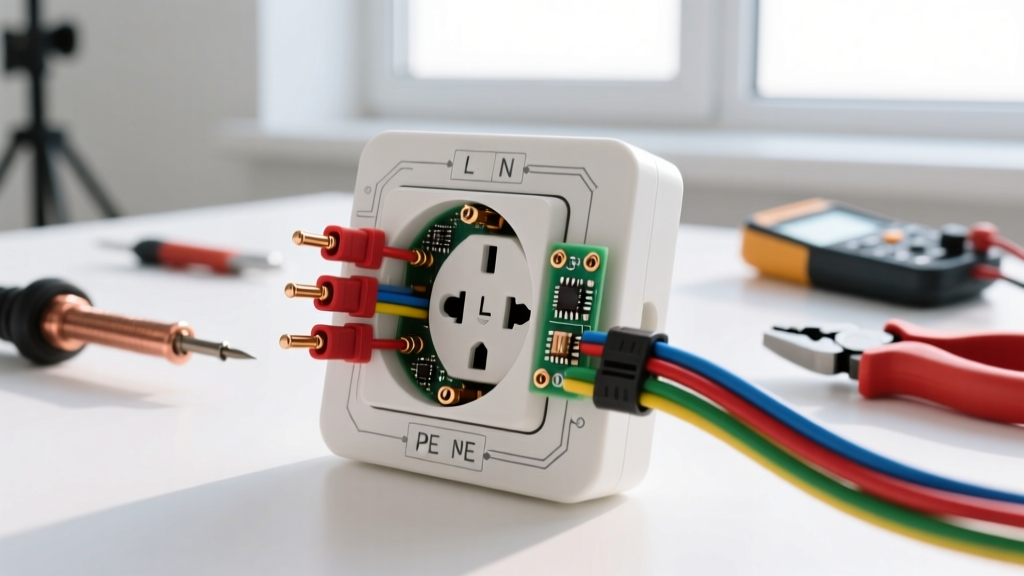
- Terminate the Earth (PE): Connect the Green/Yellow wire to the central earth screw terminal or the side clip bridge on the Schuko mechanism. Torque to 1.2 Nm.
- Terminate Phase (L) and Neutral (N): Russian code does not strictly mandate L/N polarity for standard Schuko sockets (as the plug is reversible), but best practice dictates connecting the Brown (Phase) wire to the right-hand terminal and the Blue (Neutral) wire to the left-hand terminal when facing the socket.
- Secure the Mechanism: Use the 3.5mm mounting screws to secure the outlet to the flush-mounted backbox (podrozetnik). Ensure the ceramic or high-impact polycarbonate faceplate sits flush against the wall.
Cable Selection and Breaker Sizing
Using the correct cable is non-negotiable for fire safety. In Russia, the standard for socket wiring is the VVG-ng-LS (ВВГ-нг-LS) cable. This translates to a copper core, PVC insulation, PVC sheath, non-combustible (ng), and low smoke (LS).
- Wire Gauge: 3x2.5mm² is mandatory for all 16A socket circuits. Never use 1.5mm² (reserved for lighting) for a Russian electrical outlet.
- Breaker Protection: A 16A Type C MCB (e.g., ABB SH201-C16 or Schneider iC60N) is required to protect the 2.5mm² cable from overcurrent.
- AFDD Integration: As of 2026, integrating Arc Fault Detection Devices (AFDD / УЗДП) on socket circuits is highly recommended and increasingly required in premium residential builds to prevent electrical fires caused by loose terminal connections or damaged cords.
Troubleshooting Common Installation Failures
Even experienced DIYers make mistakes when adapting to regional standards. Here are specific failure modes associated with Type F installations:
- Over-tightening Terminal Screws: Applying excessive torque to the brass terminals on cheaper outlet brands can sheer the screw or crush the 2.5mm² stranded/solid copper wire, increasing resistance and causing thermal runaway.
- Backbox Depth Issues: Standard Russian flush-mount boxes (podrozetnik) are typically 68mm in diameter and 45mm deep. If you are wiring smart sockets or AFCI-integrated receptacles, the shallow 45mm depth will not accommodate the bulky electronics. Always upgrade to 60mm deep backboxes for smart/specialty outlets.
- Aluminum to Copper Transitions: If extending an old Soviet aluminum circuit, never directly twist aluminum and copper wires together. Galvanic corrosion will cause high resistance and arcing. Use WAGO 2273 series connectors filled with anti-oxidant paste (e.g., Alu-Plus) to bridge the metals safely.
Frequently Asked Questions (FAQ)
Can I use a US 120V outlet in a Russian home?
No. The Russian electrical grid supplies 230V. Installing a standard US NEMA 5-15R receptacle is extremely dangerous, as plugging in a US 120V appliance will result in immediate catastrophic failure and potential fire. If you must accommodate US appliances, you must wire a dedicated circuit through a 230V-to-120V step-down transformer and use a distinctly different, non-standard receptacle to prevent accidental 230V plug-ins.
Why are the side clips on the Russian outlet important?
The side clips are the grounding mechanism for the Schuko standard. Unlike the UK (Type G) or US (Type B) outlets that use a dedicated third grounding pin, the Type F relies on these metal clips making contact with the corresponding grooves on the male plug. If these clips are bent or lose tension over time, the appliance loses its earth connection, which is a major safety hazard for devices with metal casings like washing machines and microwaves.
What is the typical cost to install a Russian electrical outlet in 2026?
Material costs for a high-quality Type F Schuko outlet (such as Legrand Valena Life or Schneider Unica) range from $6 to $15 USD. The VVG-ng-LS 3x2.5mm² cable costs approximately $0.80 per meter. Professional labor in major cities like Moscow or St. Petersburg typically averages $10 to $20 USD per point for standard concrete-wall chasing and installation, bringing the total per-outlet cost to roughly $30–$50 USD depending on site conditions.