
Understanding the Electrical Outlet in Iceland: The Type F Standard
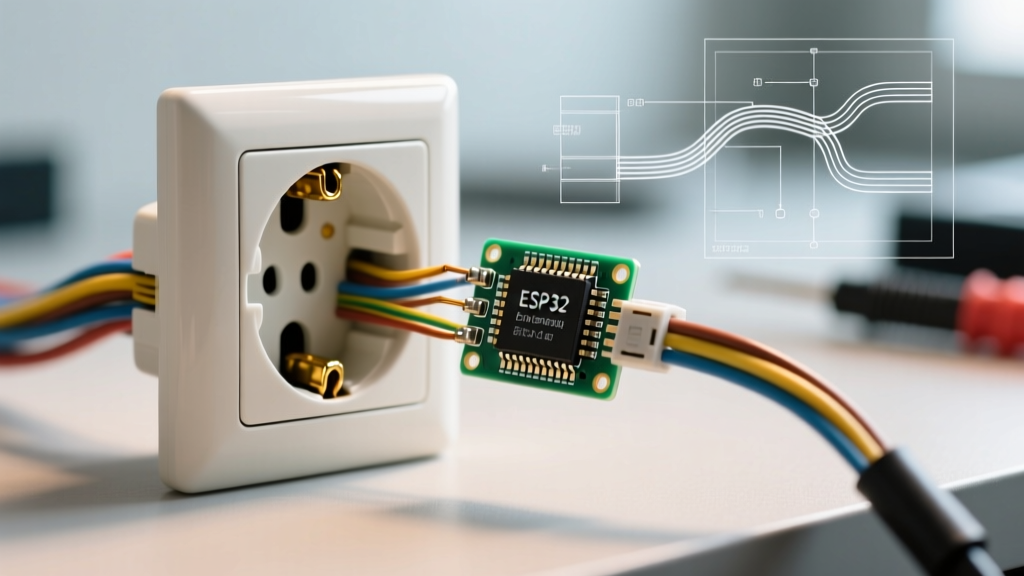
When working on residential or commercial electrical projects in Iceland, understanding the local receptacle standards is non-negotiable for safety and code compliance. The standard electrical outlet in Iceland is the Type F socket, universally known as the "Schuko" (from the German Schutzkontakt) receptacle. Defined under the CEE 7/3 standard, this outlet is designed to accept CEE 7/4 plugs and operates on a 230V, 50Hz alternating current (AC) grid.
Unlike the North American NEMA 5-15R or the British BS 1363, the Type F outlet relies on dual side-grounding clips rather than a dedicated third earth pin. This design requires precise wiring techniques to ensure the earth connection is established before the live pins make contact. As of 2026, Icelandic electrical installations strictly adhere to the IEC 60364 harmonized standards, meaning DIYers and professional electricians must follow rigorous European color-coding and circuit protection protocols.
Expert Note: According to the IEC World Plugs database, Iceland's Type F infrastructure is identical to that of Germany, Norway, and the Netherlands. However, local Icelandic building codes mandate strict RCD (Residual Current Device) protection for all new socket circuits, a detail often overlooked by foreign contractors.
Technical Specifications for Icelandic Type F Outlets
Before stripping any wires, verify that your materials match the national grid specifications. Using undersized wire or incorrect breaker ratings is a primary cause of thermal faults in 230V systems.
| Parameter | Icelandic / Type F Specification |
|---|---|
| Nominal Voltage | 230V AC (Single Phase) |
| Frequency | 50 Hz |
| Standard Socket Type | CEE 7/3 (Schuko Type F) |
| Standard Plug Type | CEE 7/4 (Schuko) / CEE 7/7 (Hybrid) |
| Pin Diameter | 4.8 mm |
| Standard Circuit Rating | 16A (Maximum continuous load ~3680W) |
| Grounding Method | Dual side-mounted earth clips |
IEC 60364 Wiring Color Codes
Iceland utilizes the harmonized European IEC 60364 color code for fixed wiring. Misidentifying these conductors can result in catastrophic short circuits or lethal shock hazards. Always verify voltage with a CAT III or CAT IV multimeter before beginning work.
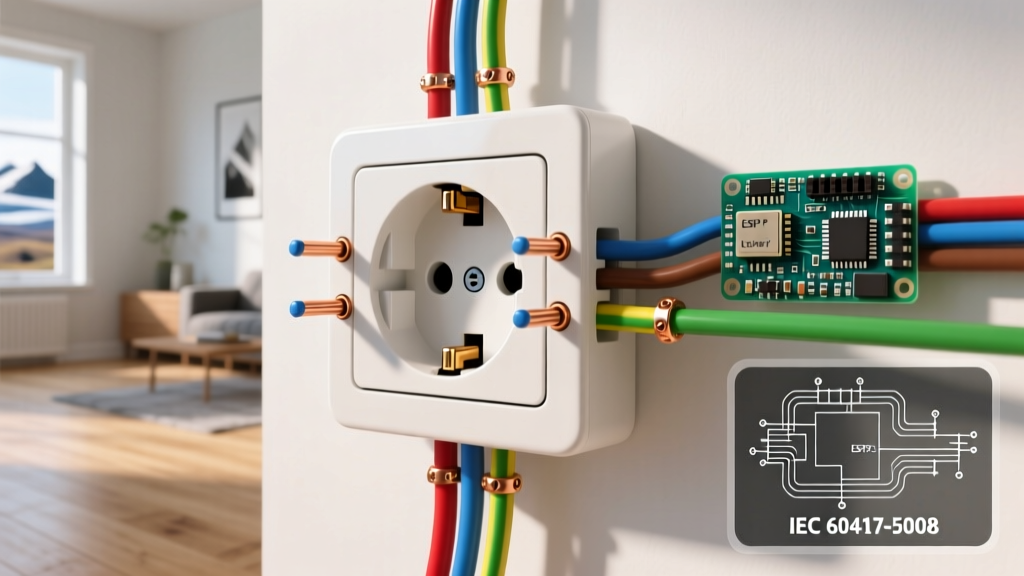
- Brown (L): Line / Phase (Live conductor carrying 230V)
- Blue (N): Neutral (Return path to the transformer)
- Green/Yellow (PE): Protective Earth (Grounding conductor)
For standard 16A socket radial circuits in Iceland, 2.5 mm² solid copper wire (often sold as 3-core PVC or LSZH sheathed cable) is the minimum requirement to prevent voltage drop and thermal degradation over long runs.
Step-by-Step Wiring Diagram Reference
Wiring a modern Schuko receptacle (such as those manufactured by Legrand, ABB, or Schneider Electric) requires attention to terminal torque and insulation strip lengths. Follow this sequence to ensure a safe, code-compliant connection.
1. Preparation and Wire Stripping
Strip the outer sheath of the 2.5 mm² cable to expose the three inner conductors. Using a precision wire stripper, remove exactly 12 mm to 14 mm of insulation from the brown, blue, and green/yellow wires. Stripping too much leaves exposed copper outside the terminal (a shock hazard), while stripping too little causes the terminal screw to bite into the insulation, leading to high-resistance arcing.
2. Connecting the Protective Earth (PE)
Connect the Green/Yellow wire to the central earth terminal block. In a Type F socket, this terminal bridges the two side-mounted metal grounding clips. This connection is critical: the Schuko design ensures the earth clips engage with the plug before the live pins enter the socket holes.
3. Terminating Line (L) and Neutral (N)
Insert the Brown (Line) wire into the terminal marked L (or the right-hand side when facing the socket). Insert the Blue (Neutral) wire into the terminal marked N (left-hand side). While European AC is technically unpolarized regarding appliance function, maintaining consistent L/N orientation across all outlets in a building is a strict requirement for modern troubleshooting and smart-home integration.
4. Torque and Mounting
Tighten the terminal screws to the manufacturer's specified torque, typically 0.5 Nm to 0.8 Nm for modern 16A receptacles. Perform a gentle "pull test" on each wire to ensure it is securely clamped. Mount the receptacle into the standard European 68mm flush-mount backbox using the provided M4 machine screws.
Circuit Protection: MCB and RCD Requirements
An electrical outlet in Iceland is only as safe as the protection devices upstream in the distribution board. As of 2026, Icelandic electrical codes require dual protection for all general-use socket circuits.
Miniature Circuit Breaker (MCB)
Standard socket circuits must be protected by a 16A Type C MCB. Type C breakers trip instantaneously at 5 to 10 times the rated current (80A–160A), which accommodates the high inrush currents of modern switching power supplies and small motors without nuisance tripping.
Residual Current Device (RCD)
Every socket circuit must be protected by a 30mA RCD to prevent fatal electrocution. While Type AC RCDs were standard in the past, modern installations heavily favor Type A or Type F RCDs. Type A RCDs detect both AC and pulsating DC residual currents, which is essential for protecting circuits feeding modern appliances with inverter drives (like washing machines and heat pumps). If the circuit supplies an EV charger, a Type B RCD is mandatory to handle smooth DC fault currents.
For comprehensive details on European plug and socket safety standards, refer to the World Standards Type F documentation.
Troubleshooting Common Type F Wiring Faults
When testing a newly installed or existing electrical outlet in Iceland, use a dedicated Schuko socket tester. Below is a matrix of common faults and their diagnostic indicators.
| Fault Condition | Tester Indication | Probable Cause & Correction |
|---|---|---|
| Missing Earth | Earth LED off, Line/Neutral LEDs on | Green/Yellow wire disconnected at socket or distribution board. Verify PE continuity. |
| Reversed Polarity | Tester shows L/N swap | Brown and Blue wires swapped. Swap to correct L and N terminals. (Not immediately lethal, but fails code). |
| High Earth Resistance | Tester fails earth loop impedance test | Loose terminal screw, wire oxidation, or undersized PE conductor. Re-terminate and torque to 0.5 Nm. |
| Nuisance RCD Tripping | Breaker trips immediately upon plugging in device | Neutral-to-Earth fault downstream, or appliance leaking >30mA. Isolate circuit and megger test. |
Adapting North American Appliances to Icelandic Outlets
Expats and DIYers moving from the US or Canada frequently attempt to wire North American 120V appliances directly into Icelandic 230V circuits. This will result in immediate catastrophic failure and potential fire.
- Dual-Voltage Devices (Laptops, Phone Chargers): Check the power brick for an input rating of 100-240V ~ 50/60Hz. These only require a simple, ungrounded CEE 7/16 Europlug adapter or a CEE 7/7 travel adapter.
- Single-Voltage 120V Devices (KitchenAid mixers, US power tools): You must use a heavy-duty step-down transformer (230V to 120V) rated for at least 150% of the appliance's wattage. Do not attempt to rewire the appliance's internal motor for 230V unless the manufacturer provides a specific dual-voltage wiring diagram on the nameplate.
Frequently Asked Questions (FAQ)
Can I install a USB-integrated Type F outlet in Iceland?
Yes, USB-integrated Schuko outlets are widely available from brands like Legrand and ABB. Ensure the USB module is CE-marked and complies with IEC 62368-1 safety standards. The main 230V AC terminals are wired exactly as a standard Type F socket, while the internal step-down converter handles the 5V DC output for the USB ports.
Are Type E and Type F sockets interchangeable in Iceland?
No. Iceland strictly uses Type F (CEE 7/3), which features side grounding clips. Type E (used in France and Belgium) features a protruding male earth pin on the socket face. While the hybrid CEE 7/7 plug fits both, a Type E socket cannot be legally or physically installed in an Icelandic wall box designed for Type F.
What is the standard height for wall outlets in Icelandic homes?
According to general Nordic ergonomic and building guidelines, standard wall sockets are installed with the center of the receptacle approximately 20 cm to 30 cm (8 to 12 inches) above the finished floor level. In kitchens and workshops, they are typically mounted 10 cm to 15 cm above the countertop or workbench surface.