
The "220V" Misnomer: Understanding Modern 240V Systems
When DIYers and professionals search for a wiring diagram for a 220 plug, they are usually dealing with heavy-duty appliances, welders, or Electric Vehicle Supply Equipment (EVSE). However, from an electrical engineering and National Electrical Code (NEC) perspective, residential "220V" is a legacy term. Modern North American split-phase power systems deliver 240V across two 120V hot legs. Understanding this distinction is critical when selecting breakers, wire gauges, and NEMA receptacle configurations.
Wiring a 240V circuit requires strict adherence to NFPA 70 (NEC) guidelines, particularly regarding continuous vs. non-continuous loads, torque specifications, and proper grounding. Below, we break down the most common high-amperage wiring scenarios, complete with material specifics and failure-mode prevention.
NEMA Receptacle Matrix: Choosing the Right Configuration
Before pulling wire, you must match the receptacle to the load. The National Electrical Manufacturers Association (NEMA) standardizes these plugs. Here is a comparison of the most common 240V configurations you will encounter:
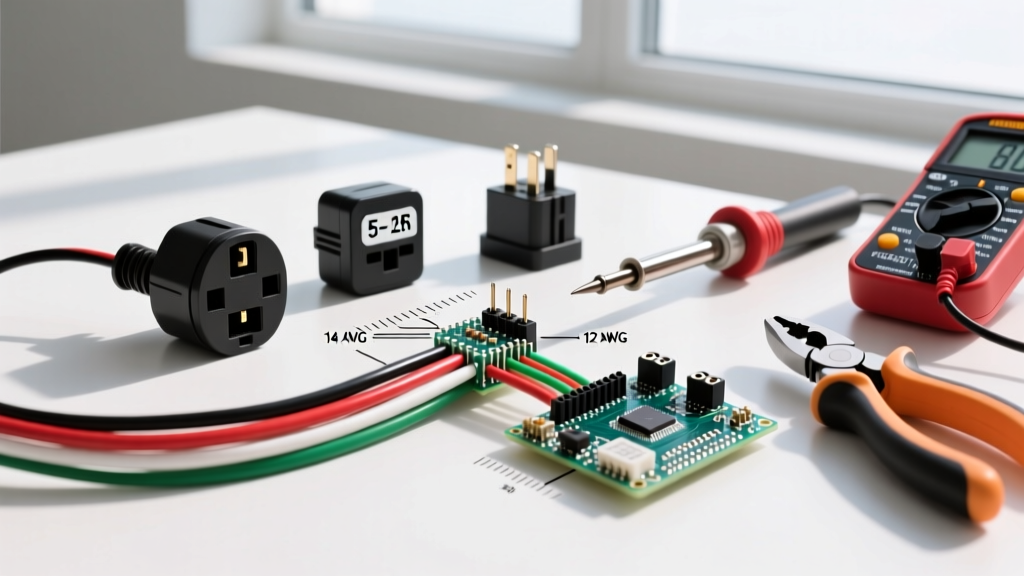
| NEMA Config | Amps / Volts | Poles & Wires | Common Applications | Wire Gauge (Copper) |
|---|---|---|---|---|
| 6-20R | 20A / 250V | 2-Pole, 3-Wire | Window AC units, small compressors | 12 AWG |
| 6-50R | 50A / 250V | 2-Pole, 3-Wire | MIG/TIG Welders, air compressors | 6 AWG |
| 10-30R | 30A / 125/250V | 3-Pole, 3-Wire | Older electric dryers (Pre-1996) | 10 AWG (Obsolete for new installs) |
| 14-50R | 50A / 125/250V | 3-Pole, 4-Wire | EV Chargers, electric ranges, RV hookups | 6 AWG |
Scenario A: Wiring a NEMA 6-50R (Welders and Heavy Compressors)
The NEMA 6-50 is the gold standard for 240V-only equipment that does not require a 120V neutral. Examples include the Miller Millermatic 211 or heavy-duty shop compressors like the Quincy QT-5.
Materials and Tooling
- Breaker: 50A Double-Pole (e.g., Square D HOM250 or Eaton BR250, approx. $12-$18)
- Receptacle: Hubbell 9450A or Bryant 9450FR (Avoid cheap big-box store brands; they suffer from poor internal contact tension)
- Wire: 6 AWG Copper THHN/THWN-2 (approx. $1.60/ft) pulled in 3/4" EMT conduit, or 6/2 NM-B Romex for exposed indoor runs.
- Tools: Fluke 117 Multimeter, Klein 60173 Torque Screwdriver.
Step-by-Step Termination
- Lockout/Tagout: Turn off the main breaker. Verify zero voltage at the panel using a CAT III multimeter. Follow OSHA electrical safety protocols for lockout/tagout.
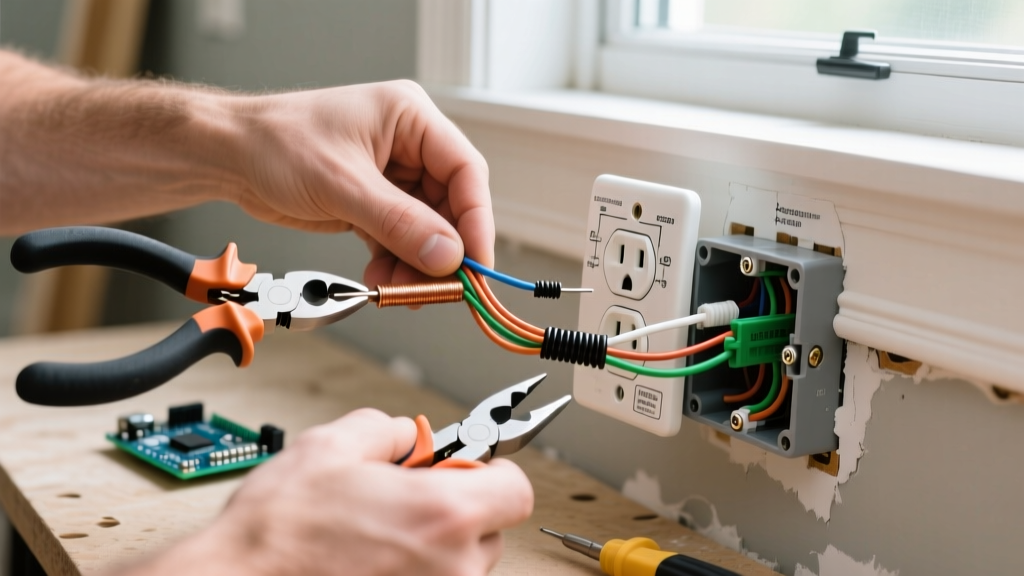
- Panel Connection: Land the black and white wires (re-identified with black tape or heat shrink) onto the two brass terminals of the 50A double-pole breaker. Land the bare copper ground onto the panel's ground bar.
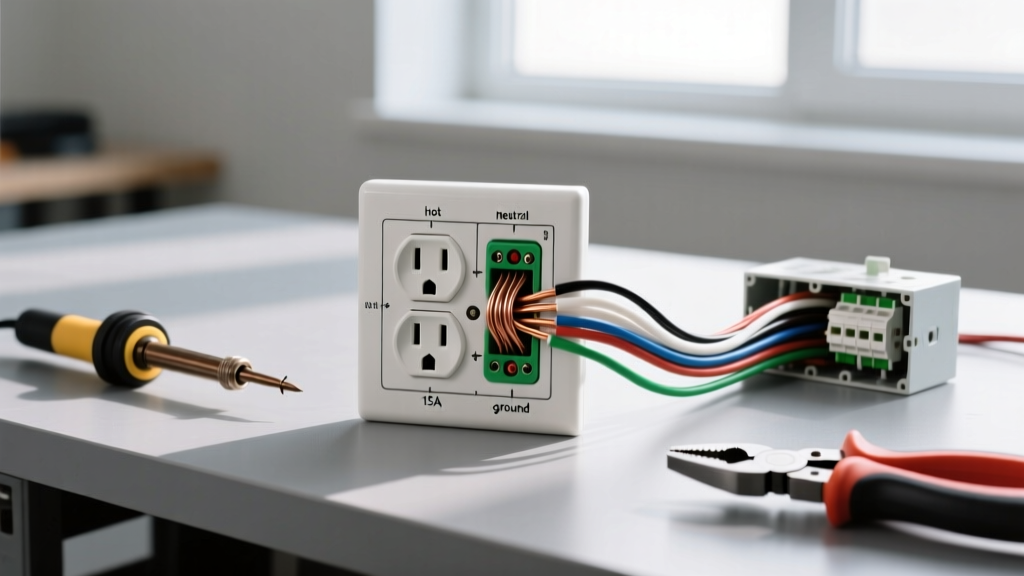
- Receptacle Termination: A 6-50R has three terminals: X (Hot 1), Y (Hot 2), and G (Ground). Connect the two hot wires to the X and Y brass screws. Polarity does not matter on a 240V-only circuit.
- Grounding: Connect the bare copper wire to the green G terminal. Ensure the grounding path is continuous back to the main service disconnect.
Scenario B: Wiring a NEMA 14-50R (EV Chargers and Electric Ranges)
The NEMA 14-50 is a 4-wire configuration providing two 120V hot legs, a neutral, and a ground. This is the standard for modern electric ranges and Level 2 EV chargers (like the ChargePoint Home Flex or Tesla Wall Connector).
The 4-Wire Requirement and EVSE Nuances
Since the NEC 2020 update (and reinforced in subsequent editions), the neutral and ground must be kept strictly separated at the receptacle. You must use a 4-wire cable, such as 6/3 NM-B with ground (approx. $4.50/ft) or four individual 6 AWG THHN wires in conduit.
Critical EVSE Note: Many modern EV chargers do not use the neutral wire internally. However, if you install a NEMA 14-50 receptacle, the NEC requires you to run and terminate the neutral wire to the silver terminal, even if your specific EV charger's plug adapter leaves the neutral blade blank. Never bootleg a ground-to-neutral bond at the receptacle.
Continuous Load Calculations (NEC Article 210.20)
EV charging is classified as a continuous load (operating for 3 hours or more). The NEC mandates that the circuit breaker must be rated at 125% of the continuous load. Therefore, a 40A EV charger requires a 50A breaker. Conversely, a welder is a non-continuous load, meaning a 50A welder can safely operate on a 50A breaker without the 125% multiplier.
Critical Failure Modes: The Leviton Melting Issue and Torque Specs
One of the most documented failure modes in modern 240V wiring is the thermal meltdown of inexpensive 14-50 receptacles. Brands like Leviton (specifically the 279-S00 model) have been widely reported by EV owners to melt or catch fire under continuous 40A EV charging loads. This is due to poor internal bus bar tension and low-grade phenolic materials.
The Solution: Always specify industrial-grade receptacles like the Hubbell 9450A or Bryant 9450FR (approx. $85-$110). They feature heavy-duty copper-alloy contacts designed for sustained thermal loads.
NEC 110.14(D) Torque Requirements
Loose connections cause increased electrical resistance, which generates exponential heat (I²R losses). To combat this, the NEC now requires the use of calibrated torque tools for all terminations. For a standard 50A receptacle, terminal screws typically require 35 to 45 inch-pounds of torque. Use a calibrated torque screwdriver (e.g., CDI 401SMV or Klein 60173) to secure the lugs. Hand-tightening is no longer code-compliant and is a leading cause of residential electrical fires.
Wire Gauge, Breaker Sizing, and Conduit Fill Matrix
When pulling wire through conduit, you must adhere to NEC Chapter 9, Table 1 for conduit fill capacities to prevent wire jamming and insulation damage. Below is a quick-reference matrix for 240V circuits using THHN copper wire in EMT conduit:
| Breaker Size | Max Continuous Load (80%) | Min. Copper Wire Gauge | Min. EMT Conduit Size (3 Wires) | Common Use Case |
|---|---|---|---|---|
| 20A | 16A | 12 AWG | 1/2 inch | Window AC, Small Tools |
| 30A | 24A | 10 AWG | 1/2 inch | Dryers, Water Heaters |
| 40A | 32A | 8 AWG | 1/2 inch | EVSE (32A), Shop Heaters |
| 50A | 40A | 6 AWG | 3/4 inch | EVSE (40A), Welders, Ranges |
| 60A | 48A | 4 AWG | 3/4 inch | Subpanels, Heavy EVSE |
Note: If using Aluminum wire (e.g., SER cable for ranges), you must upsize by two gauges (e.g., use 4 AWG Aluminum for a 50A circuit) and apply anti-oxidant compound (Noalox) to the terminations.
Frequently Asked Questions
Can I use a 10-30 dryer outlet for my welder?
No. A NEMA 10-30 is a 30A, 3-wire setup lacking a dedicated equipment grounding conductor. Using it for a 50A welder will immediately trip the breaker or, worse, cause a fire. Furthermore, the NEC prohibits installing new 3-wire 10-30 receptacles; all new installations require a 4-wire setup with a dedicated ground.
Do I need GFCI protection on a 240V receptacle?
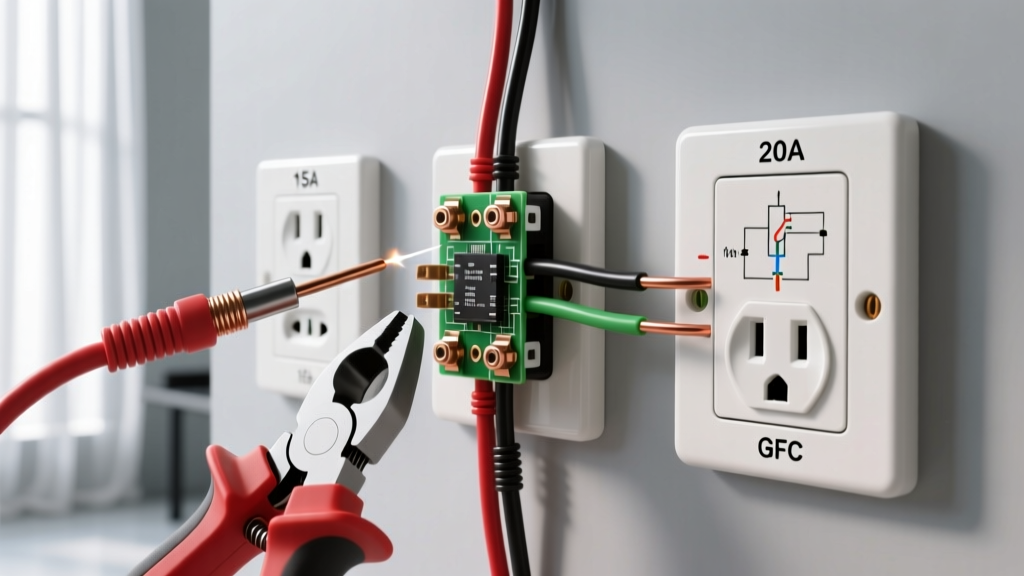
It depends on the location and the current NEC cycle adopted by your municipality. As of recent code updates, GFCI protection is required for 240V receptacles in garages, basements, and outdoors. For EV charging in a garage, this means installing a 50A GFCI double-pole breaker (approx. $110-$150) or using a receptacle with built-in GFCI protection. Always check with your local Authority Having Jurisdiction (AHJ) and review local resources like the Department of Energy's EV charging guidelines for regional compliance.
Why does my 240V breaker trip immediately upon plugging in the tool?
Immediate tripping usually indicates a dead short or a ground fault. Verify that the ground wire is not accidentally touching one of the hot terminals inside the plug head. Additionally, check the tool's internal contactor; a welded contactor can cause an inrush current spike that exceeds the breaker's magnetic trip threshold.