
The NEC Reality Check: Do Washers and Dryers Share an Outlet?
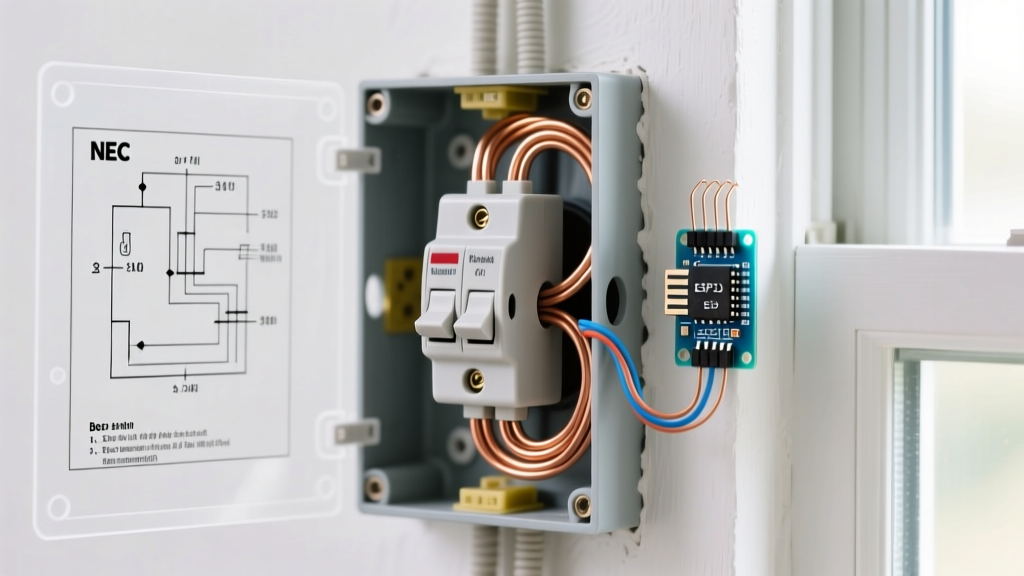
When homeowners search for a washer dryer electrical outlet, they often picture a single, heavy-duty receptacle that powers both appliances. However, under the modern National Electrical Code (NEC), this is a dangerous misconception. According to the National Electrical Code (NEC), modern laundry rooms require two separate, dedicated circuits:
- The Washer Circuit: A dedicated 120-volt, 20-amp circuit (NEC Article 210.11(C)(2)).
- The Electric Dryer Circuit: A dedicated 240-volt, 30-amp circuit (NEC Article 220.54).
Expert Insight: If you are installing a gas dryer, it only requires a standard 120V/15A or 20A outlet for the motor and controls, sharing the laundry circuit with the washer. But for standard electric dryers, the 240V heating elements demand massive current. Never attempt to wire a single receptacle to handle both a 120V washing machine and a 240V electric dryer unless you are installing a factory-built, all-in-one stacked combo unit with a specialized manufacturer pigtail.
This beginner tutorial will walk you through installing both the 30-amp dryer receptacle (NEMA 14-30R) and the 20-amp washer receptacle (NEMA 5-20R) to ensure your laundry room is safe, functional, and up to 2026 code standards.
Tools and Material Specifications
Using the correct, UL-listed components is non-negotiable. Below is the exact bill of materials used by professionals for a standard 50-foot cable run.
| Component | Specification / Model Example | Estimated Cost (2026) |
|---|---|---|
| Dryer Cable | 10/3 NM-B (Romex) with Ground - 50ft | $45.00 - $60.00 |
| Dryer Breaker | 30A Double-Pole (e.g., Square D HOM230) | $12.00 - $18.00 |
| Dryer Receptacle | NEMA 14-30R, 4-Prong (e.g., Leviton 278-S00) | $15.00 - $22.00 |
| Washer Cable | 12/2 NM-B with Ground - 50ft | $25.00 - $35.00 |
| Washer Breaker | 20A Dual Function AFCI/GFCI (e.g., Square D HOM120DF) | $45.00 - $55.00 |
| Washer Receptacle | 20A 125V Duplex NEMA 5-20R (e.g., Leviton T5262) | $4.00 - $8.00 |
Required Tools: Non-contact voltage tester, wire strippers (rated for 10-12 AWG), flathead and Phillips screwdrivers, a torque screwdriver (calibrated to inch-pounds), cable staples, and a drywall saw.
Step-by-Step: Wiring the 30-Amp 240V Dryer Outlet
The 240V dryer outlet is the more complex of the two installations. It utilizes 10/3 NM-B cable, which contains a black (hot), red (hot), white (neutral), and bare copper (ground) wire.
Step 1: Power Down and Verify
Turn off the main breaker to your electrical panel. Use a non-contact voltage tester on the existing bus bars to confirm the panel is completely dead. Never rely solely on the main switch label.
Step 2: Route the 10/3 NM-B Cable
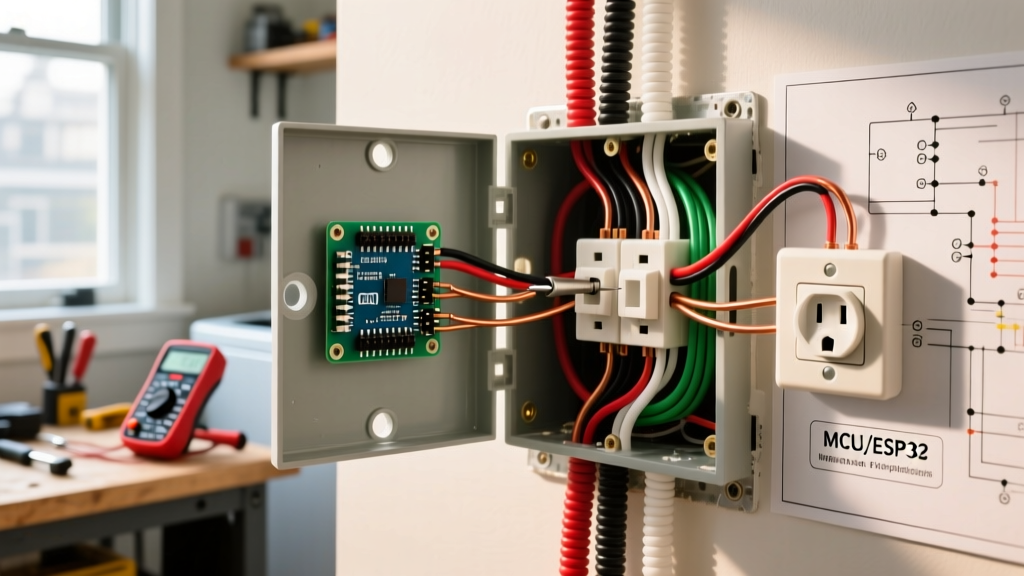
Run the 10/3 cable from the panel to the dryer outlet location. Secure the cable within 8 inches of the panel and every 4.5 feet along the studs using approved cable staples. Leave at least 8 inches of slack protruding from the outlet junction box.
Step 3: Panel Terminations
- Ground: Connect the bare copper wire to the panel's ground bus bar.
- Neutral: Connect the white wire to the neutral bus bar. (Note: In a 240V/120V split circuit like a dryer, the white wire acts as a true neutral for the dryer's 120V timer and motor, so it must go to the neutral bar, not the ground bar).
- Hots: Connect the black and red wires to the two terminals on your new 30A double-pole breaker. Snap the breaker into the panel bus stabs.
Step 4: Receptacle Termination (NEMA 14-30R)
Strip the cable sheath and connect the wires to the Leviton 278-S00 receptacle. Use your torque screwdriver to tighten the terminal screws. Critical E-E-A-T Detail: Most 30A receptacles require a tightening torque of roughly 14 to 18 inch-pounds. Under-torquing causes arcing and fires; over-torquing strips the brass threads.
- Brass Terminals (X and Y): Black and Red wires (interchangeable).
- Silver Terminal (W): White wire (Neutral).
- Green Terminal (G): Bare copper wire (Ground).
Step-by-Step: Wiring the 20-Amp 120V Washer Outlet
The washing machine requires a 120V, 20-amp circuit. Modern NEC updates (2020, 2023, and 2026) heavily emphasize ground-fault and arc-fault protection in laundry areas.
- Run the 12/2 NM-B cable from the panel to the washer outlet location, stapling it securely.
- At the panel, connect the bare wire to the ground bar and the white wire to the neutral bar.
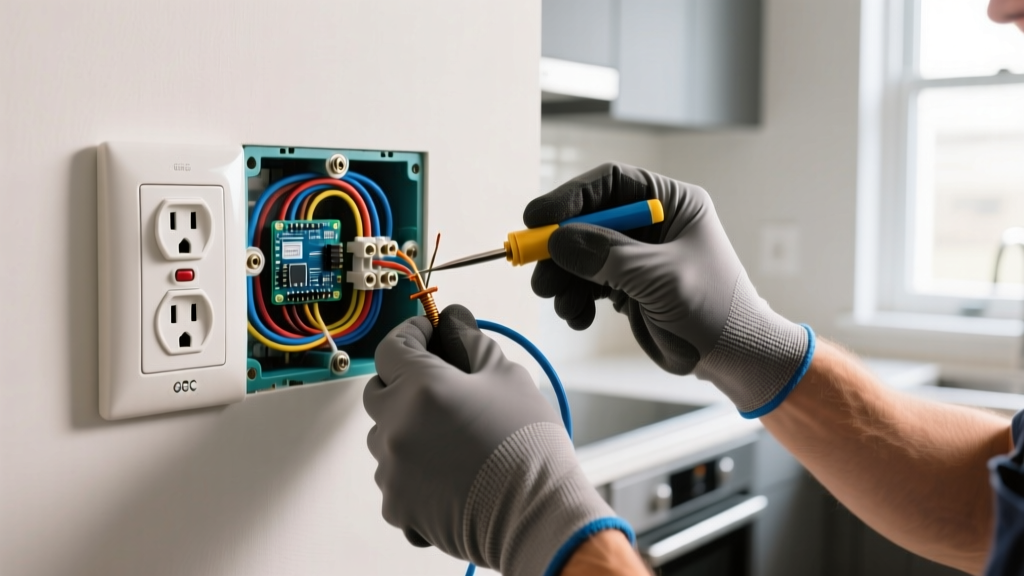
- Connect the black wire to a 20A Dual Function (AFCI/GFCI) breaker. While GFCI protection is mandated for 125V, 15A and 20A laundry receptacles, AFCI protection is also required for the entire branch circuit. A Dual Function breaker satisfies both requirements cleanly without needing a bulky GFCI receptacle behind the washer.
- At the outlet box, wire the NEMA 5-20R receptacle: Black to the Brass screw, White to the Silver screw, and Bare to the Green screw. Use the side-wire terminal clamps rather than "backstabbing" the push-in holes, which are notorious for loosening over time due to washing machine vibrations.
Common Beginner Mistakes and Troubleshooting
Even careful DIYers make errors when installing a washer dryer electrical outlet. Review this troubleshooting matrix before turning the power back on.
| Mistake / Symptom | The Cause | The Professional Fix |
|---|---|---|
| Dryer runs but won't heat | One of the 240V hot legs is loose or the breaker is only partially tripped. | Check torque on both red and black wires at the breaker and receptacle. Ensure the double-pole breaker is fully seated on both stabs. |
| Using a 3-Prong NEMA 10-30 | Reusing outdated materials from a pre-1996 remodel. | Throw it away. The NEC banned 3-prong dryer outlets for new installations decades ago. You must use a 4-prong NEMA 14-30R to separate the neutral and ground. |
| Washer trips breaker mid-cycle | Using a standard 15A breaker or sharing the circuit with a utility sink light. | Verify you are using a dedicated 20A breaker and 12 AWG wire. The laundry circuit cannot supply any other outlets outside the laundry room. |
| Burn marks on receptacle prongs | Push-in "backstab" wiring connections used instead of screw terminals. | Replace the receptacle. Always use the side terminal screws and torque them to manufacturer specifications. |
Frequently Asked Questions
Can I install the washer and dryer outlets on the same circuit?
No. The U.S. Department of Energy and the NEC strictly dictate that major appliances with high-draw heating elements (like electric dryers) must have their own dedicated circuit. Sharing a circuit will instantly trip the breaker when both appliances draw peak current.
My new dryer has a 4-prong cord, but my house has a 3-prong outlet. What do I do?
Since you are updating the electrical, you must replace the old 3-prong NEMA 10-30 receptacle with a modern 4-prong NEMA 14-30R. This requires pulling a new 10/3 NM-B cable from the panel, as old 3-prong setups lack a dedicated equipment grounding conductor. Do not use a "cheater" adapter.
Does the 240V dryer outlet need a GFCI breaker?
Generally, no. The NEC requires GFCI protection for 125-volt, single-phase, 15- and 20-ampere receptacles in laundry areas (which covers your washer). The 240V, 30-amp dryer receptacle does not require GFCI protection unless your local jurisdiction has specific amendments or the outlet is located within 6 feet of a water source (like a utility sink), which is rare in standard laundry layouts.
Disclaimer: Electrical work carries inherent risks of shock and fire. Always consult your local building department to obtain the necessary permits and ensure your specific installation complies with local amendments to the National Electrical Code. If you are uncomfortable working inside a live electrical panel, hire a licensed electrician.