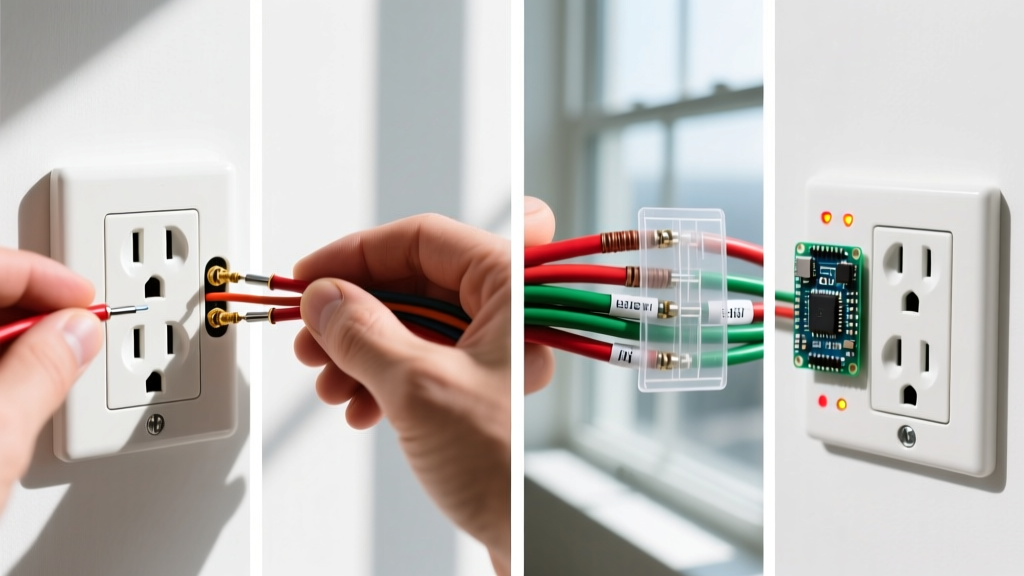

Defining the Device: What Is a Electrical Outlet?
When homeowners and DIYers ask, "what is a electrical outlet," they are typically referring to the female receptacle on the wall where appliances and lamps are plugged in. However, in professional electrical terminology and under the National Electrical Code (NEC), an outlet is defined much more broadly. According to NEC Article 100, an outlet is any point on the wiring system at which current is taken to supply utilization equipment. This means a ceiling junction box feeding a hardwired smoke detector is technically an outlet. The device on your wall that accepts a plug is specifically called a receptacle.
Understanding this distinction is critical for safety and code compliance. As we navigate the 2026 inspection cycles, local jurisdictions enforcing the latest NEC editions require strict adherence to receptacle placement, grounding, and fault protection standards. This guide breaks down the anatomy, safety mandates, and installation edge cases of standard residential receptacles.
Internal Anatomy & NEMA Configurations
Standard residential receptacles in North America follow NEMA (National Electrical Manufacturers Association) configurations. The most common are the NEMA 5-15R and NEMA 5-20R.
- NEMA 5-15R (15-Amp, 125-Volt): Features two parallel slots (one slightly longer for the neutral blade) and a U-shaped grounding pin. This is the standard receptacle found in bedrooms, living rooms, and hallways.
- NEMA 5-20R (20-Amp, 125-Volt): Identical to the 15-amp version, but the neutral slot is shaped like a sideways "T". This allows it to accept both 15-amp and 20-amp plugs. These are mandated by code in kitchens, bathrooms, and garages to handle high-draw appliances like microwaves and power tools.
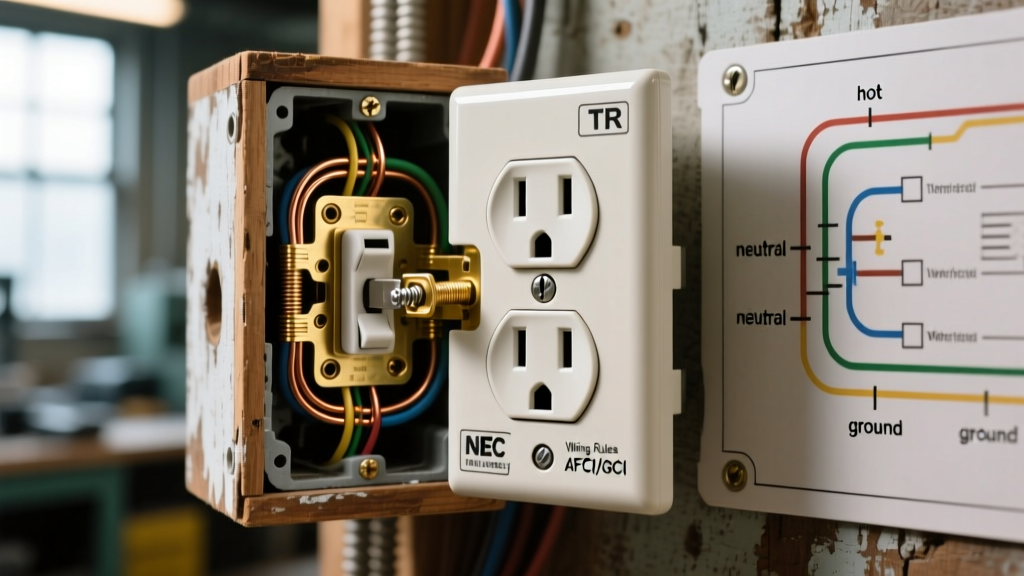
Internally, a standard duplex receptacle contains terminal screws for the hot (brass), neutral (silver), and ground (green) wires. High-quality commercial-grade models, such as the Leviton T5262-2W or Hubbell WR5262TR, utilize thick steel mounting straps and deep-set terminal wells to prevent accidental short circuits inside the junction box.
2026 NEC Code Compliance & Safety Mandates
Modern electrical safety relies on three critical receptacle classifications. If you are upgrading a panel or finishing a basement in 2026, your inspector will verify the following:
1. Tamper-Resistant (TR) Receptacles
Under NEC Article 406.12, all 15-amp and 20-amp, 125-volt receptacles in dwelling units must be tamper-resistant. TR receptacles feature internal spring-loaded shutters that only open when equal pressure is applied to both the hot and neutral slots simultaneously (as happens when inserting a plug). This prevents children from inserting foreign objects like paperclips or keys into a single slot. According to the Electrical Safety Foundation International (ESFI), TR receptacles have drastically reduced childhood electrocution incidents since their widespread mandate.
2. Weather-Resistant (WR) & In-Use Covers
NEC Article 406.9 dictates that all 15-amp and 20-amp receptacles installed outdoors, in garages, or in crawl spaces must be Weather-Resistant (WR). These devices are manufactured with UV-stabilized thermoplastics and nickel-plated brass contacts to resist corrosion. Furthermore, they must be protected by an "in-use" bubble cover, ensuring the outlet remains sealed even when a cord is plugged in.
3. GFCI and AFCI Protection
While not always built directly into the receptacle itself, Ground Fault Circuit Interrupter (GFCI) and Arc Fault Circuit Interrupter (AFCI) protection is mandatory. GFCIs protect against lethal electrical shocks in wet areas (kitchens, bathrooms, exteriors), while AFCIs protect against electrical fires caused by arcing faults in bedrooms and living spaces. You can verify your local jurisdiction's specific adoption of these codes via the NFPA Code Adoption Map.
Inspector Tip: In 2026, many municipalities are rejecting "feed-through" GFCI wiring for downstream protection in new construction due to nuisance tripping and troubleshooting difficulties. Inspectors increasingly prefer GFCI circuit breakers at the panel paired with standard TR receptacles on the branch circuit.
Receptacle Selection & Application Matrix
Choosing the wrong receptacle for a specific environment is a common code violation. Use the matrix below to ensure compliance and longevity.
| Receptacle Type | Environment / Application | Required Features | Average Cost (2026) |
|---|---|---|---|
| Standard TR Duplex | Bedrooms, Living Rooms, Hallways | Tamper-Resistant (TR) | $3.50 - $6.00 |
| Commercial Grade TR | High-traffic areas, Home Offices | TR, Heavy-duty strap, back-wire clamps | $8.00 - $14.00 |
| Weather-Resistant (WR) | Exteriors, Garages, Crawlspaces | TR, WR, UV-resistant, In-use cover | $12.00 - $18.00 |
| GFCI Receptacle | Bathrooms, Kitchens, Basements | TR, GFCI, WR (if damp location) | $22.00 - $35.00 |
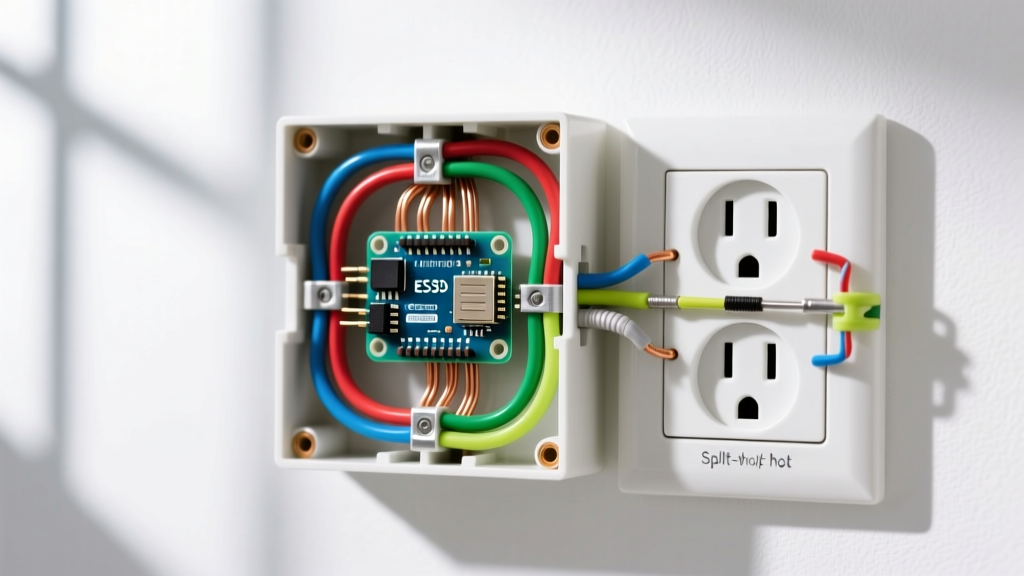
| Smart / Wi-Fi Outlet | Home Automation, Energy Monitoring | TR, Neutral wire required, Hub/Zigbee/Wi-Fi | $25.00 - $45.00 |
Common Wiring Failures & Edge Cases
Even if you purchase the correct NEC-compliant receptacle, improper installation can create severe fire hazards. Here are the most frequent failures observed during electrical audits:
The "Backstab" Push-In Wiring Hazard
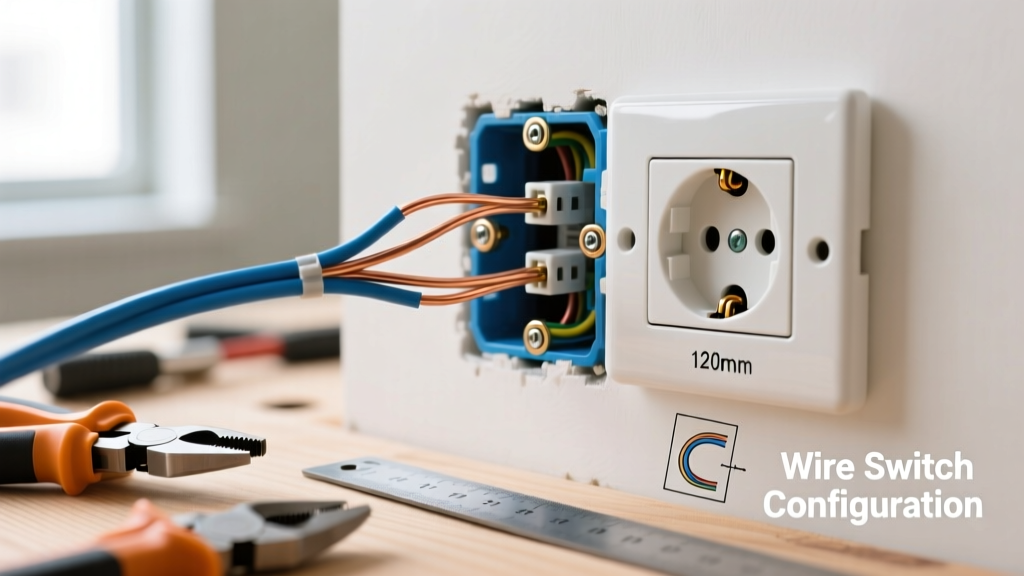
Many budget receptacles feature quick-wire push-in holes on the back. These rely on a small internal spring to grip the 14 AWG copper wire. Over 10 to 15 years, thermal expansion and contraction from daily appliance use causes these springs to loosen. This creates a high-resistance connection, leading to arcing, melting, and potentially electrical fires. Actionable Advice: Always use the side terminal screws or, preferably, the internal back-wire clamps found on commercial-grade models. If using side screws, wrap the wire clockwise around the screw so tightening the screw pulls the loop tighter.
Bootleg Grounds & Reverse Polarity
In older homes (pre-1960s) with ungrounded knob-and-tube or early Romex wiring, homeowners sometimes replace a 2-prong outlet with a modern 3-prong NEMA 5-15R to fit newer plugs. If no ground wire is present, this creates a "bootleg ground" illusion. Furthermore, jumpering the neutral terminal to the ground screw is a lethal code violation that can electrify the chassis of a plugged-in appliance. If no equipment grounding conductor exists, NEC Article 406.4(D) allows you to install a 3-prong receptacle only if it is GFCI protected and labeled "No Equipment Ground."
Ignored Torque Specifications
Under NEC 110.14(D), terminations must be tightened to the manufacturer's specified torque. Loose neutral connections on multi-wire branch circuits (MWBC) can cause the neutral bus to carry unbalanced current, potentially overloading the wire and causing a fire. Professional electricians now use calibrated torque screwdrivers (e.g., Klein Tools 32308) set to the receptacle's listed inch-pound rating (usually between 12 and 14 in-lbs for standard 15A/20A devices).
Frequently Asked Questions
Can I replace a 15-amp outlet with a 20-amp outlet?
No. You can only install a 20-amp receptacle (NEMA 5-20R) if the circuit is protected by a 20-amp breaker and the wiring is 12 AWG copper. Placing a 20-amp receptacle on a 15-amp circuit with 14 AWG wire is a code violation because it tricks users into plugging in high-draw appliances that could overheat the undersized wiring before the breaker trips.
Why does my outlet feel warm to the touch?
A warm outlet indicates a high-resistance connection, usually caused by loose terminal screws, degraded push-in backstab wiring, or an overloaded circuit. High-draw appliances like space heaters (1500W) pull roughly 12.5 amps, which is near the continuous limit of a 15-amp circuit. Turn off the breaker immediately, inspect the wiring, and upgrade to a commercial-grade, side-wired receptacle.
Are smart outlets safe for high-wattage appliances?
Most smart outlets, such as the Leviton DW15R, are rated for 15 amps (1800 watts max). They are safe for lamps, fans, and coffee makers. However, you should never use a standard smart plug or smart outlet for continuous high-draw loads like space heaters, window AC units, or sump pumps, as the internal relays can overheat and weld shut, rendering the switch useless in an emergency.