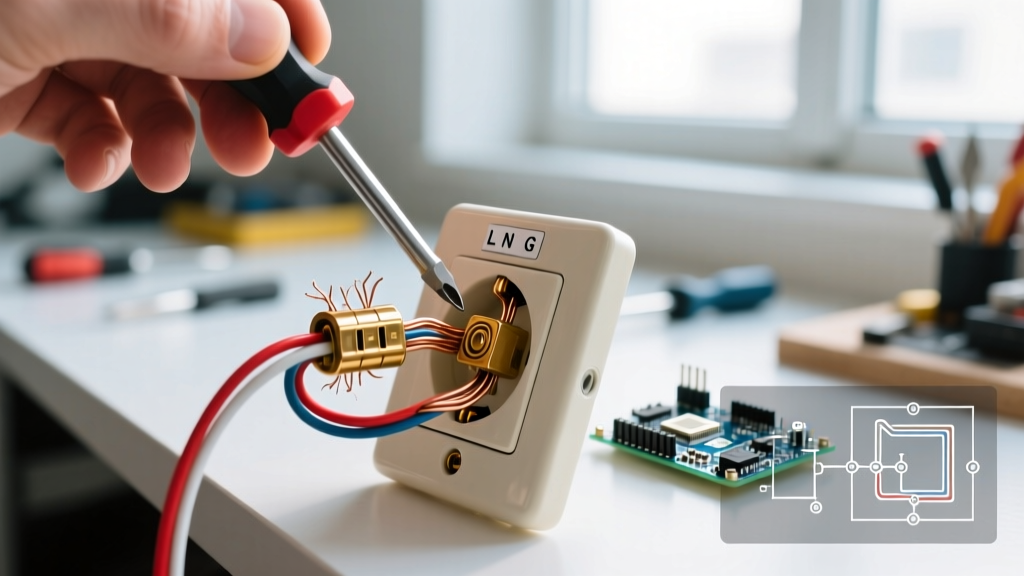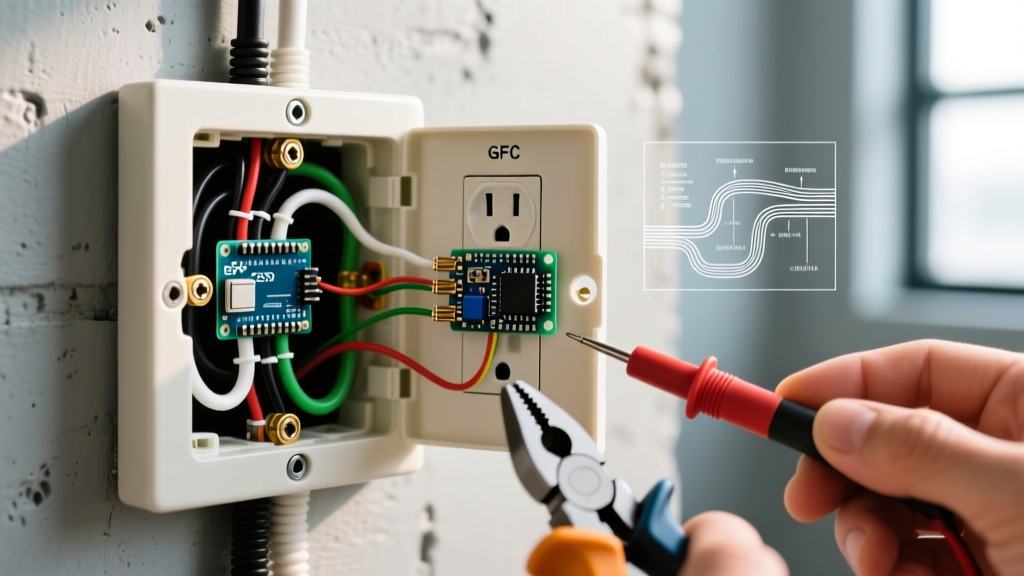

Understanding the Electric Outlet GFCI Nuisance Trip
When an electric outlet GFCI (Ground Fault Circuit Interrupter) repeatedly trips, it is rarely a random glitch. Homeowners and DIYers often assume the receptacle itself is broken, but in over 75% of cases, the GFCI is doing exactly what it was engineered to do: detecting a microscopic current imbalance. According to the Electrical Safety Foundation International (ESFI), a properly functioning GFCI will trip when it detects a ground-fault current as low as 4 to 6 milliamps (mA). This extreme sensitivity is what prevents lethal electrocution in wet environments like kitchens, bathrooms, and outdoor patios.
However, distinguishing between a 'nuisance trip' caused by wiring anomalies and a 'legitimate fault' caused by a failing appliance requires a systematic diagnostic approach. In this advanced troubleshooting guide, we will bypass basic reset-button advice and dive deep into the electrical physics, specific failure modes, and multimeter testing protocols required to diagnose a stubbornly tripping electric outlet GFCI in 2026.
The Anatomy of a Ground Fault Detection
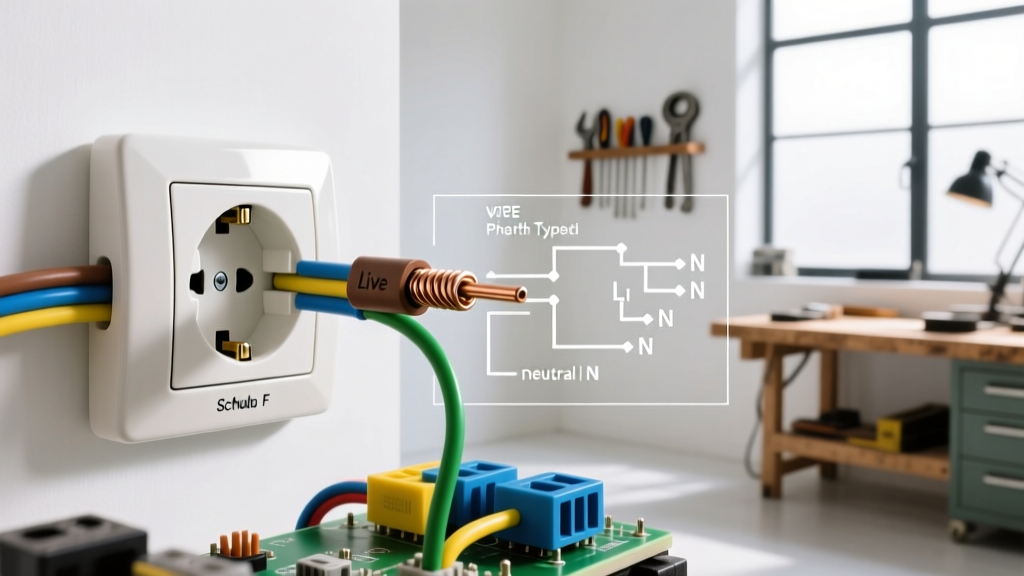
Before diagnosing the circuit, you must understand the internal mechanism of modern GFCI receptacles, such as the Leviton GFNT2-W SmartLock Pro or the Eaton GFRF series. Inside the plastic housing sits a differential current transformer (a toroidal coil). Both the hot (line) and neutral conductors pass through the center of this coil.
Under normal conditions, the current flowing out on the hot wire exactly equals the current returning on the neutral wire. The magnetic fields cancel each other out, resulting in zero net flux. If current leaks to ground—perhaps through a faulty toaster casing or a damp outdoor junction box—the return neutral current drops. The toroidal coil detects this magnetic imbalance, inducing a voltage in its secondary winding. This voltage triggers a silicon-controlled rectifier (SCR), which energizes a solenoid to physically unlatch the contacts, cutting power in under 25 milliseconds.
Top 5 Causes of Electric Outlet GFCI Tripping
When your GFCI refuses to stay reset, the fault usually falls into one of five specific categories. Identifying which one is at play will save you hours of unnecessary rewiring.
1. Downstream Neutral-to-Ground Faults (Bootleg Grounds)
This is the most common cause of 'ghost' tripping. In a properly wired circuit, the neutral and ground wires are bonded only at the main service panel. Downstream from the panel, they must remain strictly isolated. If a downstream receptacle has a 'bootleg ground' (a wire illegally connecting the neutral terminal to the ground terminal) or if a pinched cable causes the bare ground wire to touch the white neutral wire, normal return current will split. Some current returns via the neutral, and some via the ground. The GFCI senses this imbalance and trips immediately when a load is applied.
2. Shared Neutrals on Multi-Wire Branch Circuits (MWBC)
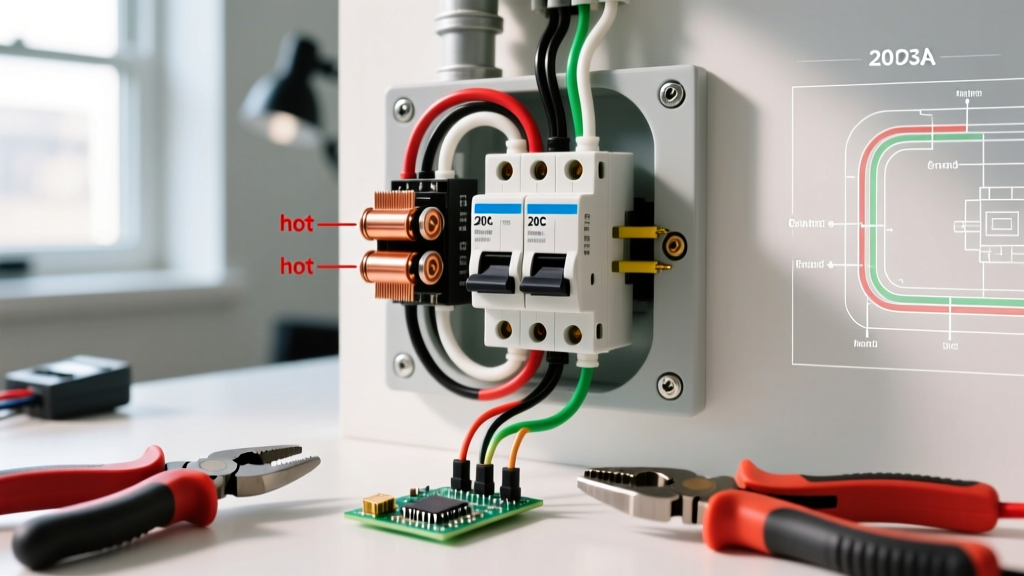
Older homes often utilize Multi-Wire Branch Circuits, where two hot wires share a single neutral wire to save copper. If an electrician replaces a standard duplex receptacle on an MWBC with a GFCI without separating the circuits, the GFCI will see the return current from the second hot wire as a massive ground fault. The NEC strictly requires handle-tied breakers and specific pigtailing configurations for MWBCs feeding GFCIs.
3. Capacitive Leakage in Long Cable Runs
Capacitive leakage occurs when long runs of NM-B (Romex) cable act as a capacitor, allowing microscopic amounts of AC current to bleed to the ground wire through the cable's insulation and parasitic capacitance. While a single 50-foot run produces negligible leakage, a circuit with over 150 feet of cabling feeding multiple motorized appliances (like refrigerators or sump pumps) can accumulate enough cumulative leakage to breach the 4mA UL 943 threshold, causing nuisance trips.
4. Moisture Ingress in Outdoor or Wet Locations
Even with 'in-use' weatherproof bubble covers, outdoor GFCI receptacles are subjected to extreme thermal cycling. This causes condensation to form inside the electrical box. Over time, mineral deposits from evaporated water create a high-resistance conductive path between the hot and ground terminals. This slow leakage eventually trips the GFCI, particularly during early morning hours when dew is heavy.
5. Cumulative Leakage from Multiple Appliances
Modern appliances, especially those with variable-frequency drives (VFDs), EMI filters, and switching power supplies, naturally leak 1mA to 2mA of current to ground during normal operation. If a kitchen GFCI circuit daisy-chains a microwave, a dishwasher, and a coffee maker, their combined normal leakage (e.g., 1.5mA + 1.5mA + 2mA = 5mA) can push the circuit right to the edge of the GFCI's trip threshold.
Step-by-Step Diagnostic Protocol
Stop guessing and start measuring. To properly diagnose the circuit, you will need a digital multimeter (DMM) and, ideally, a megohmmeter (Megger). Warning: Always turn off the main breaker before removing the GFCI receptacle from the box.
- Isolate the Load Side: Disconnect the wires attached to the 'LOAD' terminals on the GFCI. Cap them with wire nuts. Turn the breaker back on and reset the GFCI. If it holds, the GFCI is fine; the fault is downstream. If it trips with no load attached, the GFCI is defective or the LINE wiring is compromised.
- Test Line Voltage: With the DMM set to AC Voltage (200V range), measure between the hot and neutral LINE wires. You should read between 115V and 125V. Measure hot to ground; it should read the same. Measure neutral to ground; it should read less than 1.5V. A higher neutral-to-ground voltage indicates a loose neutral connection upstream.
- Continuity Check for Neutral-to-Ground Faults: Turn the power back OFF. Set your DMM to the Ohms (Ω) setting. Place one probe on the downstream neutral wire and the other on the downstream bare ground wire. You should read 'OL' (Open Line / Infinite resistance). If you read anything less than 100,000 ohms, you have a neutral-to-ground fault downstream.
- Megger Testing (Advanced): For elusive faults, use a megohmmeter set to 500V DC on the downstream cables (ensure all sensitive electronics are unplugged first). The insulation resistance should read greater than 1 Megohm (1 MΩ). Readings below this indicate degraded wire insulation allowing current to leak to ground.
Receptacle Comparison Matrix: GFCI vs. Dual-Function
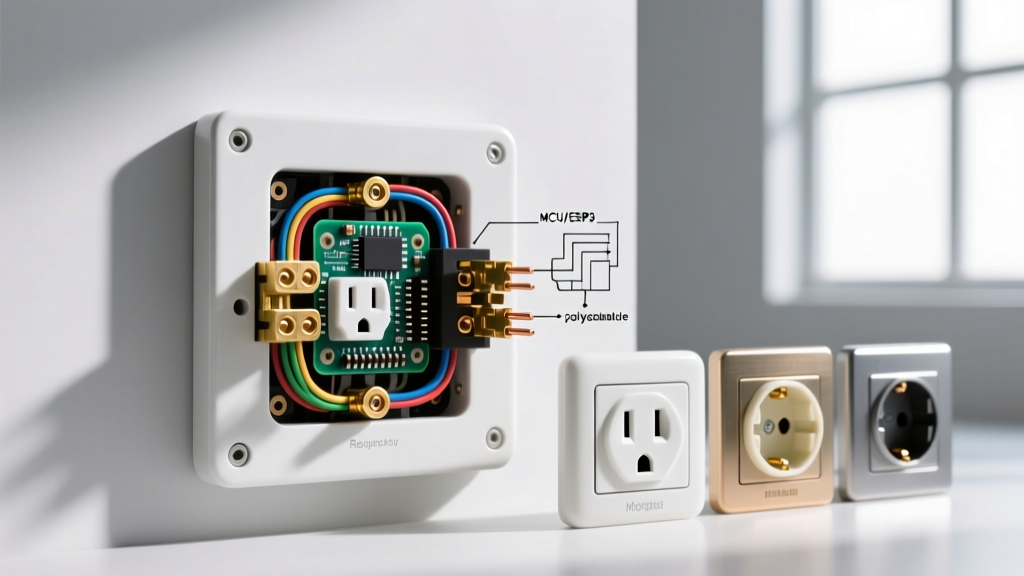
When replacing a failed unit, it is critical to choose the right technology for the circuit. The National Fire Protection Association (NFPA) has expanded requirements in recent NEC cycles, often necessitating dual protection in areas like kitchens and laundry rooms.
| Feature | Standard GFCI (e.g., Leviton GFNT2-W) | Dual-Function AFCI/GFCI (e.g., Leviton DFGF1-W) | Tamper-Resistant GFCI (e.g., Pass & Seymour 2095TRW) |
|---|---|---|---|
| Primary Protection | Ground Fault (Shock) | Ground Fault & Arc Fault (Fire) | Ground Fault & Physical Insertion |
| Trip Threshold | 4mA - 6mA | 4mA - 6mA / 5A Arc | 4mA - 6mA |
| Average 2026 Cost | $16.00 - $22.00 | $38.00 - $48.00 | $15.00 - $19.00 |
| Best Application | Bathrooms, Garages, Outdoors | Kitchens, Laundry Rooms (NEC compliant) | Child-occupied living spaces |
| Nuisance Trip Risk | Moderate (Capacitive leakage) | High (Sensitive to motor arcing) | Low |
When to Replace vs. Reset: End-of-Life Indicators
GFCI receptacles are not designed to last forever. The internal metal contacts degrade, and the solid-state sensing circuitry can fail due to power surges from lightning or grid switching. Most premium manufacturers rate their GFCIs for a 10-year operational lifespan.
Pro Tip: If you press the 'TEST' button and the receptacle does not trip, or if the 'RESET' button feels spongy and fails to click firmly into place, the internal mechanical latch has failed. Do not attempt to repair the internal solenoid; immediate replacement is required by code.
Furthermore, if your electric outlet GFCI features a solid red LED that remains illuminated even when the outlet has no power, this is the manufacturer's built-in 'End-of-Life' indicator. The internal self-test diagnostic has detected a failure in the protection circuit, and the device has permanently locked itself in the tripped state to prevent unsafe use.
Final Safety and Code Considerations
Troubleshooting an electric outlet GFCI requires respect for lethal voltages. Never bypass a tripping GFCI by replacing it with a standard duplex receptacle; this is a severe code violation and creates an immediate electrocution hazard, particularly in wet locations. Always ensure that replacement receptacles are rated for the correct amperage (typically 15A or 20A) and feature Tamper-Resistant (TR) shutters, which have been mandated by the NEC for all 125-volt, 15- and 20-ampere residential receptacles since 2008. By methodically isolating the line and load, testing for neutral-to-ground faults, and understanding the physics of capacitive leakage, you can accurately diagnose and resolve even the most persistent GFCI tripping issues.