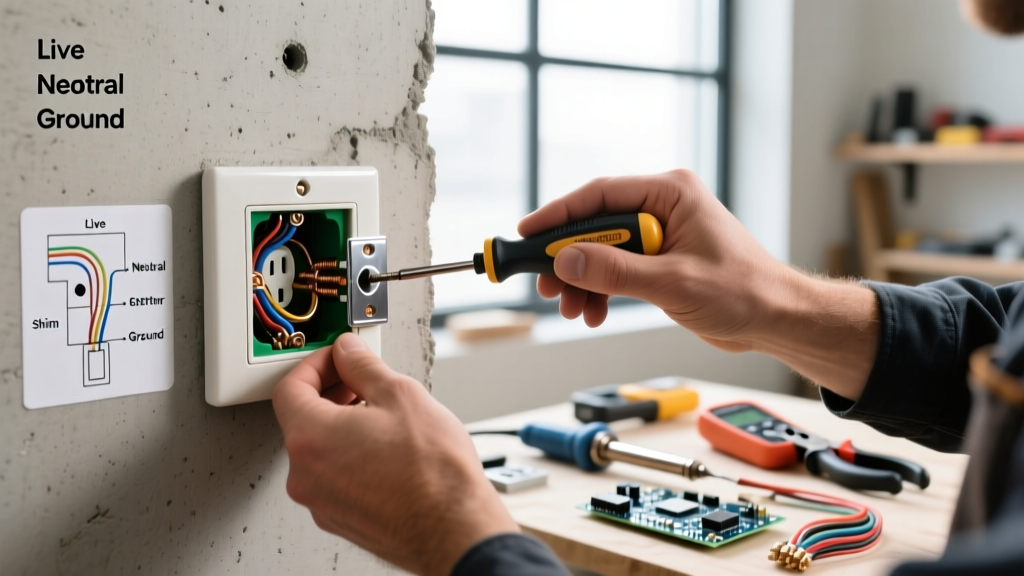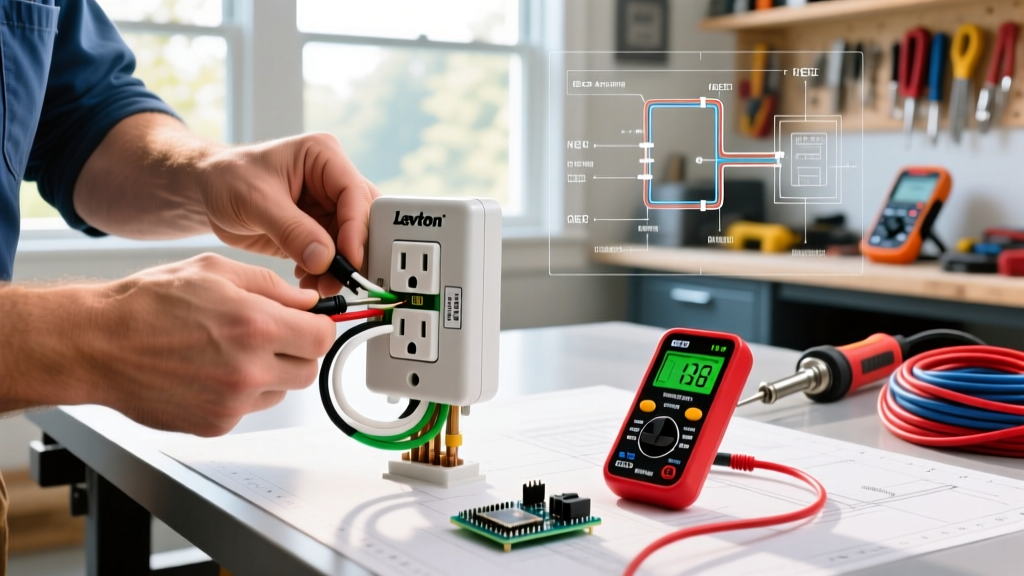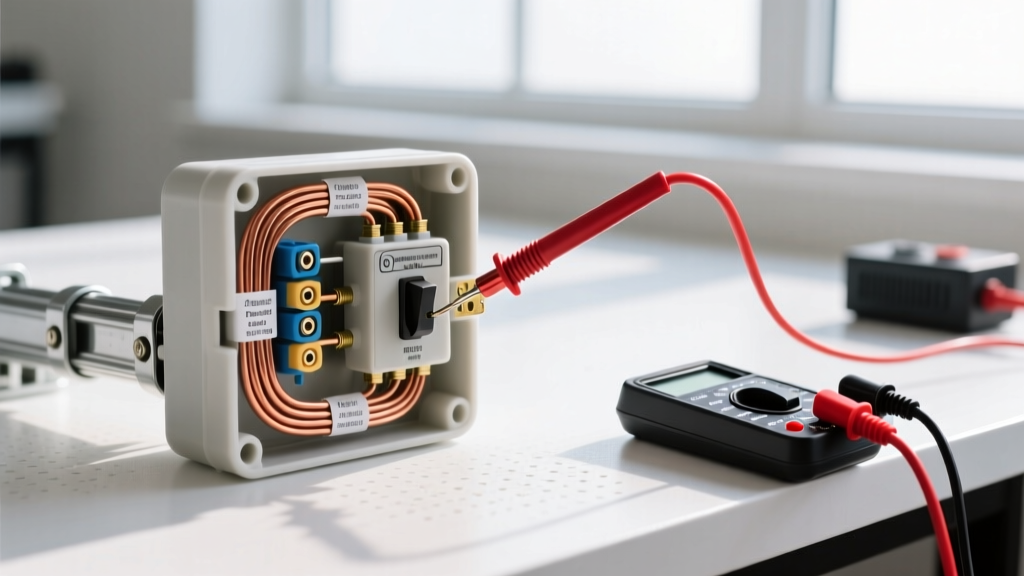

Initial Triage: Is It the Range or the Electric Range Plug Outlet?
When your stove refuses to heat or the digital display goes completely dark, the immediate assumption is often a failed appliance control board. However, a significant percentage of these failures originate at the electric range plug outlet or the dedicated 240V branch circuit. Before you spend $250 on an appliance repair diagnostic fee, you must systematically isolate the receptacle, the cord, and the breaker panel. A 240V, 50-amp circuit carries enough continuous current to cause sustained arc flashes and fatal ventricular fibrillation; therefore, precise diagnostic methodology is non-negotiable.
⚠️ CRITICAL SAFETY WARNING: Never probe a live 240V receptacle with standard automotive test lights or non-insulated tools. You must use a CAT III or CAT IV rated digital multimeter (DMM) and wear arc-flash rated PPE when testing live terminals.
Essential Diagnostic Tools for 240V Circuits
To properly troubleshoot an electric range plug outlet, you need equipment capable of handling high-voltage residential circuits. Throw away the cheap $10 voltage pens; they are unreliable on 240V split-phase systems due to phantom voltage and capacitive coupling.
- Digital Multimeter (DMM): Fluke 117 or Klein Tools MM400 (CAT III 600V minimum). Cost: $60–$180.
- Non-Contact Voltage Tester (NCVT): Klein Tools NCVT-2 (dual-range 12-1000V). Cost: $25.
- Insulated Screwdrivers: Klein Tools 32557 or Wiha insulated set for terminal tightening.
- Receptacle Tester: While standard 120V testers won't work, a specialized 240V receptacle tester (like the Taylor Electric 240V tester) can quickly verify basic wiring topology before you pull out the DMM.
Understanding Your Electric Range Plug Outlet Configuration
Modern electrical codes mandate specific receptacle types for high-draw kitchen appliances. Identifying your outlet type is the first step in diagnosis.
NEMA 14-50R (Modern 4-Prong Standard)
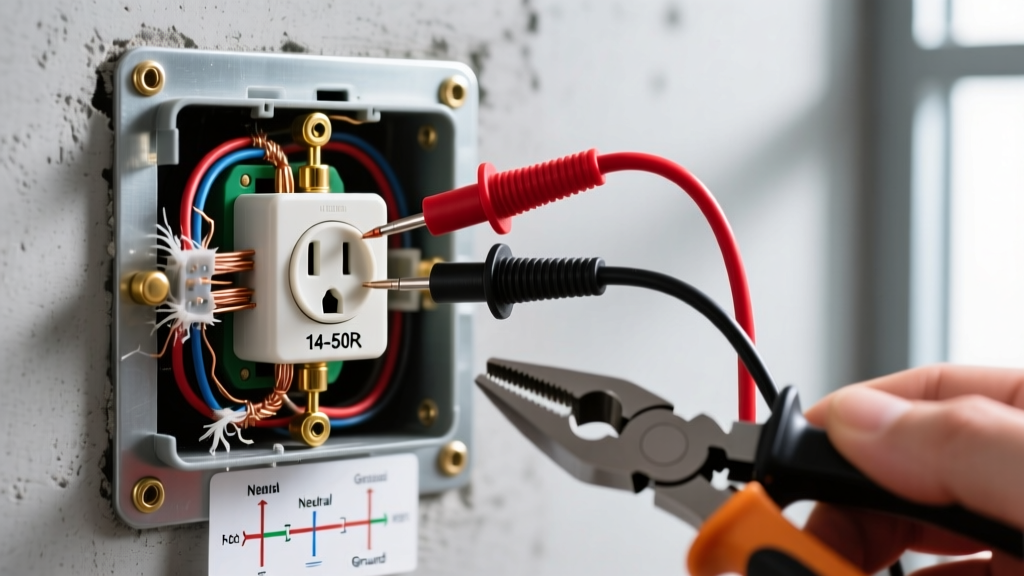
Since the 1996 National Electrical Code (NEC) revision, and strictly enforced in all subsequent updates through 2026, new installations require a 4-wire setup: two hots (X and Y), one neutral (W), and one dedicated equipment grounding conductor (G). The NEMA 14-50R receptacle features four slots. Popular, code-compliant models include the Leviton 278-S00 (~$14) and the heavy-duty Hubbell 9450A (~$22).
NEMA 10-50R (Legacy 3-Prong)
Found in older homes, this 3-prong outlet lacks a dedicated ground wire, relying instead on the neutral wire to bond the appliance chassis to ground. If you are troubleshooting a legacy 10-50R outlet and experiencing stray voltage or mild shocks from the range chassis, the neutral-ground bond on the appliance side may be compromised or the neutral wire is failing.
Step-by-Step Multimeter Testing Guide (NEMA 14-50R)
With your DMM set to AC Voltage (V~) and a range exceeding 300V, insert the probes into the live receptacle. Do not remove the receptacle cover yet; test through the slots to verify incoming power from the breaker panel.
| Probe 1 (Red) | Probe 2 (Black) | Expected Reading | System Function |
|---|---|---|---|
| X (Hot Leg 1) | Y (Hot Leg 2) | 240V | Powers main bake/broil elements and surface burners |
| X (Hot Leg 1) | W (Neutral) | 120V | Powers oven light, clock, and 120V convenience outlets |
| Y (Hot Leg 2) | W (Neutral) | 120V | Powers control board logic and digital displays |
| X or Y (Hot) | G (Ground) | 120V | Verifies continuous equipment grounding path |
| W (Neutral) | G (Ground) | 0V - 2V | Confirms neutral is not carrying fault current |
Note: If your X-to-Y reading is 208V instead of 240V, you are likely in a commercial building or a multi-family dwelling with a 3-phase wye electrical service, which requires different appliance ratings.
Common Failure Modes and Edge Cases
When the voltage matrix above yields abnormal readings, you have isolated the failure to the branch circuit or the receptacle itself. Here are the most frequent culprits we see in the field.
1. The "Half-Dead" Range (Lost Neutral or Lost Leg)
Symptoms: The oven clock and interior light work perfectly, but the surface burners and bake elements produce zero heat. Alternatively, the digital display is dead, but the burners click and heat.
Diagnosis: If X-to-Y reads 240V, but X-to-W or Y-to-W reads 0V, you have an open neutral. The 120V accessories are starved of power. If X-to-Y reads only 120V, one of the hot legs has tripped or the double-pole breaker has suffered an internal mechanical failure on one pole.
Fix: Turn off the main breaker. Remove the receptacle cover and check the terminal screws. Aluminum wiring (common in the 1970s) is notorious for creeping and loosening under thermal cycling. If you find a loose neutral wire, strip it back to clean copper, apply Noalox antioxidant paste if it's aluminum, and torque it to the manufacturer's specification (typically 14-18 in-lbs for 14-50R terminals).
2. Melted Prongs and Terminal Arcing
Symptoms: A distinct ozone or burning plastic smell near the floor behind the range. The plug feels excessively hot to the touch after baking.
Diagnosis: Pull the plug and inspect the prongs. If the X or Y prong shows black pitting, blueing, or melted plastic, the receptacle's internal brass contacts have lost their tension. This creates high resistance, generating massive heat (I²R losses) at the connection point.
Fix: Both the male plug cap on the range cord and the female NEMA 14-50R receptacle must be replaced. Do not attempt to clean and reuse melted components. When installing the new receptacle, ensure the 6 AWG or 8 AWG wires are stripped to exactly 3/4 inch and fully seated under the terminal plates.
3. Nuisance Tripping and 2026 GFCI Codes
Symptoms: The breaker trips immediately when the range is plugged in, or trips randomly during the self-clean cycle.
Diagnosis: Under recent NEC adoptions leading into 2026, Ground Fault Circuit Interrupter (GFCI) protection is increasingly mandated for 240V receptacles located within 6 feet of the kitchen sink edge. If your range is near the sink and on a GFCI breaker, a degraded heating element (which develops micro-cracks and leaks current to ground when hot) will trip the breaker. Furthermore, older ranges with EMI filters can cause nuisance tripping on sensitive modern AFCI/GFCI breakers.
Fix: Test the heating elements for continuity to ground using your multimeter's Ohms setting. If an element shows anything less than infinite resistance (OL) to the chassis, replace the element. If the layout permits, consult an electrician about moving the receptacle outside the 6-foot sink zone to remove the GFCI requirement.
The 3-Prong to 4-Prong Grounding Hazard
A frequent DIY disaster occurs when homeowners move from an older home with a NEMA 10-50R (3-prong) to a new build with a NEMA 14-50R (4-prong). They buy a new 4-prong cord but forget to remove the neutral-to-ground bonding strap on the back of the range.
If this strap is left in place on a 4-wire system, normal neutral return current will flow on the equipment grounding conductor. This energizes the chassis of the range, creating a severe shock hazard and violating NEC Article 250.140. Always remove the bonding strap or screw when connecting a 4-prong cord to a modern electric range plug outlet.
Authoritative Safety and Code Resources
When working on high-amperage kitchen circuits, always defer to established safety organizations and the latest electrical codes. The National Fire Protection Association (NFPA) provides the foundational NEC guidelines that dictate wire sizing, breaker amperage, and receptacle grounding requirements. Additionally, the Electrical Safety Foundation International (ESFI) offers critical data on kitchen-specific electrical hazards, emphasizing the dangers of overloaded circuits and improper grounding in wet environments. For statistics on electrical fires caused by faulty appliance wiring and receptacles, the Consumer Product Safety Commission (CPSC) maintains an extensive database of incident reports and recall notices for defective range cords and receptacles.
When to Call a Licensed Electrician
While replacing a burnt NEMA 14-50R receptacle is well within the capabilities of an experienced DIYer, you must call a licensed electrician if:
- You discover 8 AWG wire connected to a 50-Amp breaker (a severe fire hazard; 50A requires 6 AWG copper).
- The breaker panel shows signs of rust, scorching, or utilizes a recalled brand like Federal Pacific (FPE) or Zinsco.
- You need to upgrade a legacy 3-wire circuit to a modern 4-wire circuit, which requires pulling new cable through finished walls.
Diagnosing an electric range plug outlet requires patience, the right testing equipment, and a strict adherence to safety protocols. By following the voltage matrix and understanding the mechanical failure points of 240V receptacles, you can accurately pinpoint the issue and restore your kitchen's functionality safely.