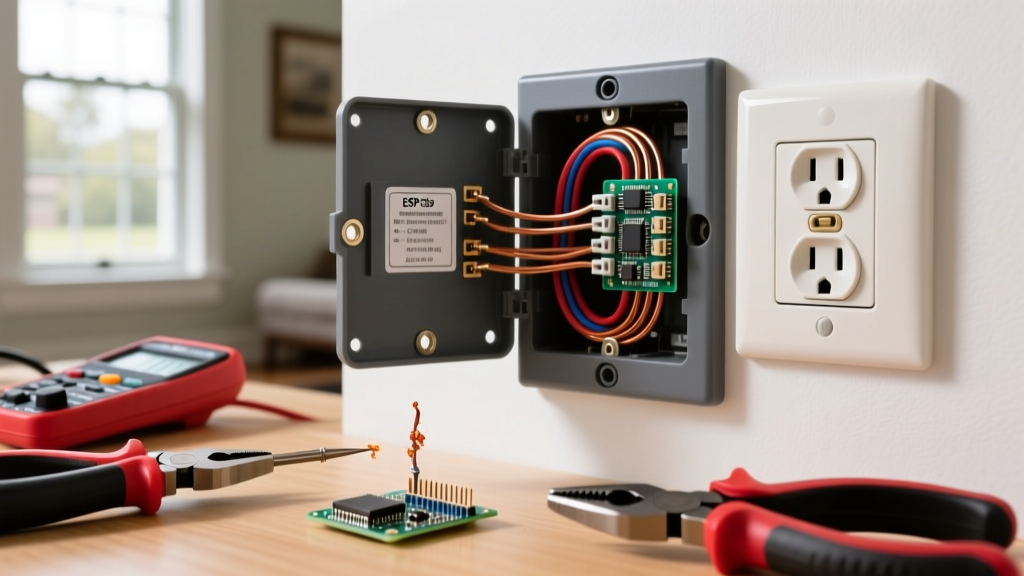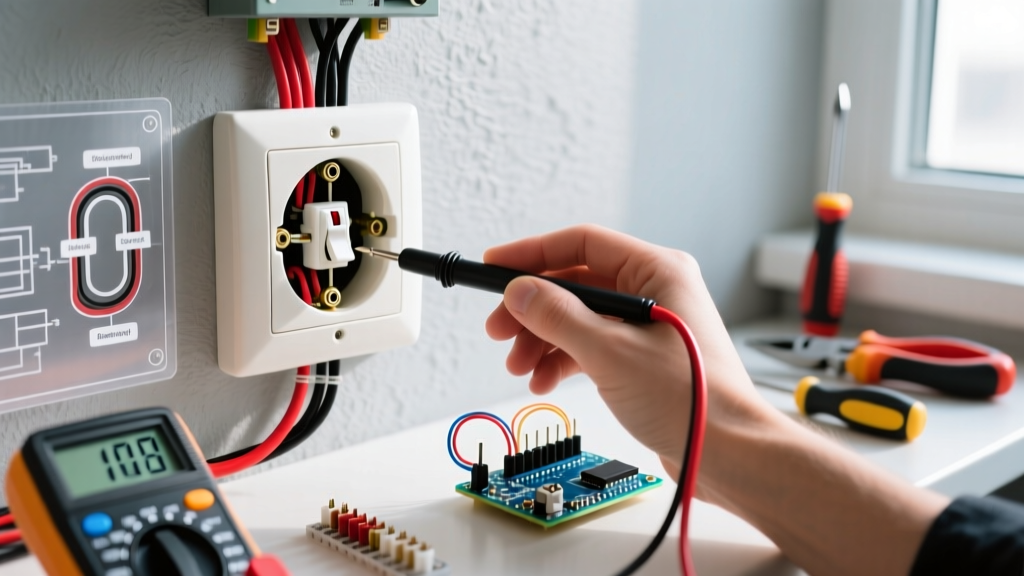

The Immediate Threat: Why Water and 120V Don't Mix
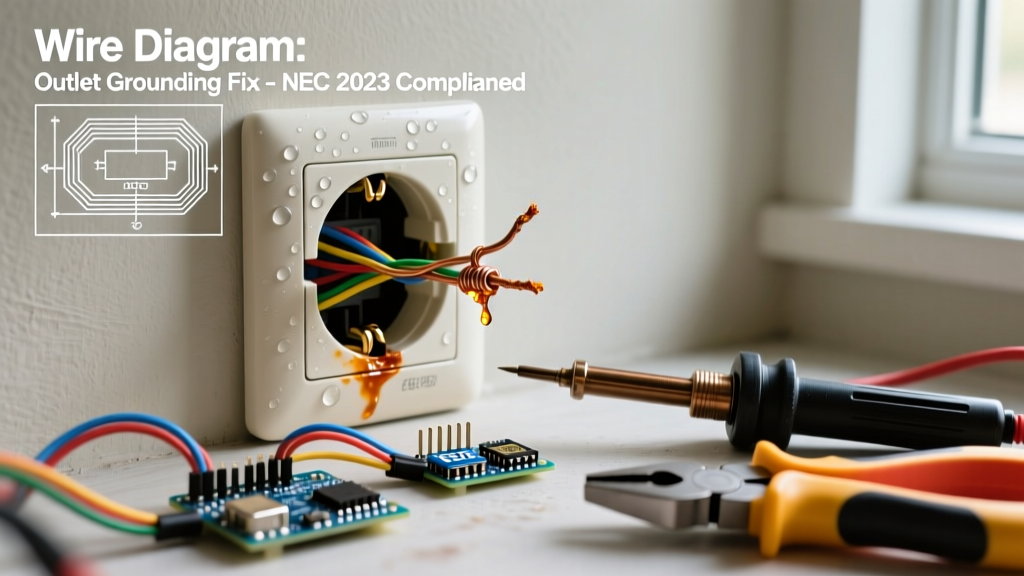
Finding water in an electrical outlet is a high-stakes emergency that bridges the gap between immediate life-safety hazards and long-term wiring degradation. When H2O meets a 120V or 240V alternating current, the dissolved minerals in tap, ground, or rainwater create a conductive bridge. This can lead to arc faults, ground faults, or catastrophic thermal events. According to the National Fire Protection Association (NFPA), water intrusion and subsequent galvanic corrosion are leading hidden causes of residential electrical fires.
This guide details the exact triage protocol, the physics of moisture wicking in NM-B cables, and the National Electrical Code (NEC) compliant repair procedures for compromised receptacles. Whether you are dealing with a flooded basement, a roof leak tracking down a wall cavity, or sprinkler splashback on an exterior facade, the following protocols will ensure your safety and code compliance.
Emergency Triage: The First 5 Minutes
Do not touch the wet outlet, the faceplate, or any plugged-in cords. Water dramatically lowers the electrical resistance of human skin, meaning a standard 15-amp breaker will not trip fast enough to prevent lethal ventricular fibrillation.
- Identify and Kill the Breaker: Go to your main service panel and switch off the breaker controlling the affected room. If the panel is in a flooded area, do not enter; call your utility company to disconnect power at the meter.
- Verify the Absence of Voltage: Wait 60 seconds, then use a non-contact voltage tester (like the Klein NCVT-3) near the outlet. Follow up with a digital multimeter (such as the Fluke 117) set to AC Voltage (V~). Test Hot-to-Neutral and Hot-to-Ground. Both must read 0.00V.
- Unplug All Devices: Once verified dead, remove any cords plugged into the wet receptacle or adjacent outlets on the same circuit.
- Extract Standing Water: Use a wet/dry vacuum or towels to remove ambient moisture from the wall and floor.
OSHA Safety Warning: The Occupational Safety and Health Administration (OSHA) strictly mandates that electrical equipment exposed to water must be de-energized, removed, and inspected by a qualified person before being re-energized. Never attempt to 'dry out' and reuse a submerged receptacle.
The Hidden Danger: Capillary Wicking in NM-B Cable
One of the most misunderstood phenomena in residential wiring is the 'wicking effect.' Standard NM-B (Romex) cable consists of PVC outer jacketing, a paper wrap, and individual THHN/THWN insulated conductors surrounding a bare copper ground wire.
How Water Travels Up Your Walls
If water enters an outlet box located near the floor, it can seep into the paper wrap inside the NM-B cable. Through capillary action, this moisture can wick upward three to four feet inside the wall cavity. Even if you replace the wet outlet, the retained moisture inside the cable jacket will eventually cause the bare copper ground to oxidize and the THHN insulation to degrade, leading to micro-arcing inside the wall.
The Fix: If an outlet was submerged or heavily saturated, you must cut back the NM-B cable to a point where the paper wrap and copper conductors are bone-dry and free of oxidation. This often requires installing a new junction box higher up the stud and running a new drop down to the outlet location.
Damage Assessment Matrix
Before installing a replacement, inspect the existing wiring and junction box. Use the following matrix to determine your next steps.
| Visual Symptom | Underlying Issue | Required Action |
|---|---|---|
| Green/white crust on brass terminal screws | Galvanic corrosion and copper oxidation | Cut wire back to clean, shiny copper. Do not reuse corroded conductors. |
| Melted faceplate or brown scorch marks | Arc fault caused by mineral bridging | Replace receptacle. Inspect the metal/plastic box for structural heat warping. |
| GFCI 'Test/Reset' buttons feel spongy or stuck | Moisture in internal sensing circuitry | Discard GFCI immediately. Internal shunts are permanently compromised. |
| Rust inside the metal junction box | Box seal failure, prolonged high humidity | Sand rust, apply zinc-rich cold galvanizing compound, or replace the box. |
NEC Wet vs. Damp Location Requirements
When repairing exterior outlets or interior areas prone to flooding, you must adhere to NEC Article 406.9 (Receptacles in Damp or Wet Locations). The code makes a strict distinction between 'damp' and 'wet' environments, and using the wrong hardware is a common DIY failure point.
- Damp Locations: Areas protected from direct rainfall but subject to moderate moisture (e.g., covered porches, under eaves, unfinished basements). Standard tamper-resistant (TR) receptacles are permitted, but they must be protected by a weatherproof cover.
- Wet Locations: Areas exposed to direct weather, splash zones, or flooding (e.g., uncovered decks, exterior walls, basement floors with a history of water intrusion). You must use a receptacle stamped with 'WR' (Weather-Resistant).
What Makes a WR Receptacle Different?
A Weather-Resistant (WR) receptacle, such as the Leviton GFNT2-W or Hubbell GFTR20W, features UV-stabilized thermoplastic faceplates that resist sun degradation, nickel-plated brass terminal screws to resist galvanic corrosion, and stainless steel mounting straps to prevent structural failure during seasonal temperature swings.
Step-by-Step Rewiring Protocol
Once the area is dry and you have your WRTR (Weather-Resistant Tamper-Resistant) GFCI receptacle, follow this exact procedure to ensure a safe, code-compliant connection.
- Strip the Conductors: Use a precision wire stripper (like the Klein 11055) to remove exactly 3/4 inch of insulation from the 14 AWG or 12 AWG solid copper wires. Do not nick the copper, as nicks create stress fractures that snap under thermal expansion.
- Form the Shepherd's Hook: Bend the wire into a tight 'U' shape using needle-nose pliers.
- Loop Clockwise: Insert the hook under the brass (Hot) and silver (Neutral) terminal screws. The loop must wrap clockwise so that tightening the screw pulls the wire tighter rather than pushing it out.
- Torque to Specification: This is the most skipped step in DIY wiring. Use an insulated torque screwdriver set to 14 in-lbs (inch-pounds). Under-torquing causes high-resistance connections that generate heat; over-torquing strips the screw head or deforms the copper.
- Seal the Connections: Apply a small bead of silicone dielectric grease over the terminal screws to block ambient moisture and prevent future oxidation.
- Install an Extra-Duty Cover: For exterior wet locations, install a NEMA 3R rated 'bubble' or extra-duty weatherproof cover. Apply a continuous bead of exterior-grade polyurethane caulk along the top and sides of the cover flange (leave the bottom uncaulked to allow condensation weepage).
Frequently Asked Questions
Can I just dry out the outlet with a hairdryer and keep using it?
No. While evaporating the water removes the immediate conductive bridge, it leaves behind dissolved minerals (calcium, magnesium, salts). These mineral deposits create 'tracking' paths across the plastic faceplate and internal GFCI circuitry. Over time, humidity will reactivate these deposits, leading to micro-arcing and eventual thermal failure. Always replace a flooded receptacle.
My GFCI tripped when water hit it. Did it save my life?
Yes. A Class A GFCI receptacle is designed to trip when it detects a ground-fault current imbalance of 4 to 6 milliamps. Since it takes roughly 30 milliamps to induce respiratory paralysis in a human, the GFCI reacted milliseconds before the current could cause harm. However, the internal sensing transformer likely sustained water damage during the event and must be replaced.
Do I need an AFCI breaker if I have a GFCI outlet?
Yes, they serve entirely different purposes. A GFCI protects humans from shock (ground faults). An AFCI (Arc-Fault Circuit Interrupter) protects the building from fire by detecting the high-frequency signatures of electrical arcing. Modern NEC codes require dual-function AFCI/GFCI protection in many areas, including kitchens, laundry rooms, and exterior circuits.