
Understanding the Dubai Electrical Outlet Standard
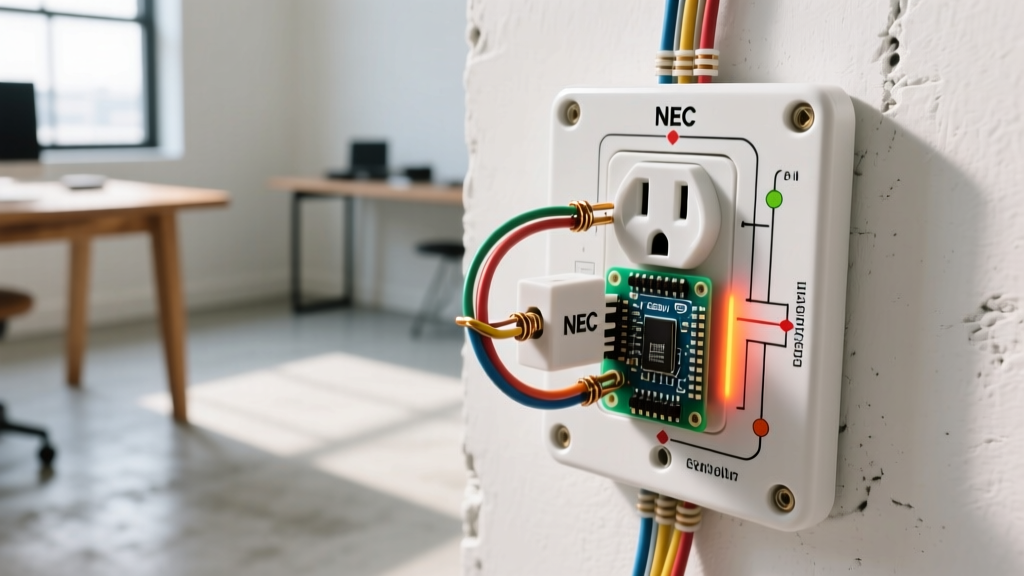
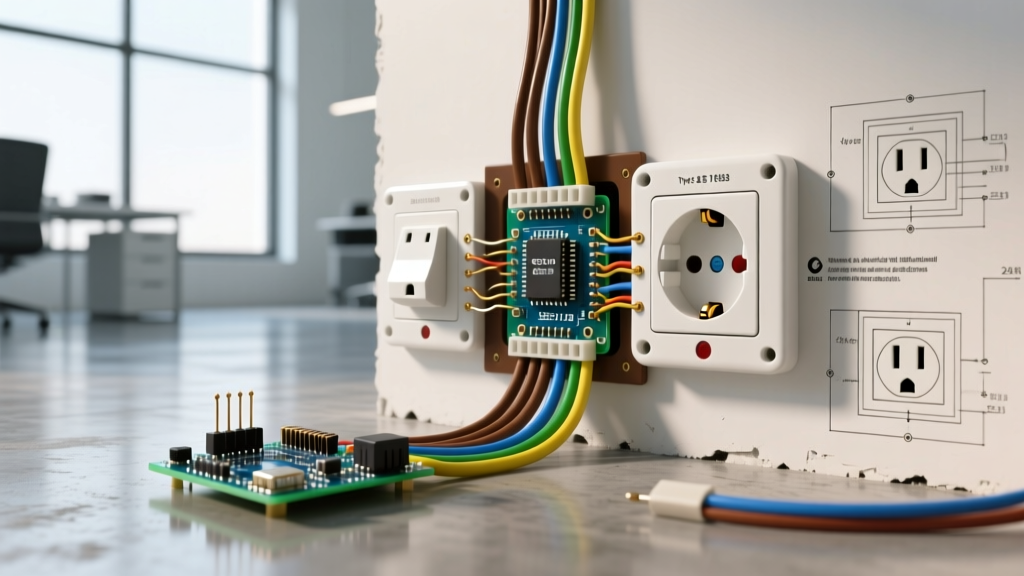
When installing or upgrading a Dubai electrical outlet, electricians and DIY enthusiasts must navigate a specific intersection of British Standards and local municipal codes. The United Arab Emirates operates on a 230V supply voltage and 50Hz frequency. The standard receptacle used across Dubai is the Type G plug and socket system, formally defined by the BS 1363 standard. According to the International Electrotechnical Commission (IEC), Type G features three rectangular pins in a triangular pattern and incorporates built-in safety shutters to prevent foreign object insertion.
Unlike North American NEMA 5-15R receptacles, a Dubai electrical outlet requires an internal earth pin that mechanically operates the live and neutral shutters. Furthermore, the plug itself must contain a replaceable fuse (BS 1362 standard), typically rated at 3A, 5A, or 13A, providing localized appliance protection before the branch circuit breaker even trips.
DEWA Wiring Regulations: Radial vs. Ring Circuits
The Dubai Electricity and Water Authority (DEWA) bases its electrical installation regulations heavily on the UK's IET Wiring Regulations (BS 7671), but with critical regional amendments. One of the most significant differences between standard UK practice and Dubai code compliance is the treatment of socket circuit topologies.
The Shift Away from Ring Final Circuits
In the UK, 32A Ring Final Circuits using 2.5mm² cable are the norm for general socket outlets. However, DEWA and many UAE consulting engineers heavily favor radial circuits for residential and commercial projects. The high ambient temperatures in Dubai (often exceeding 45°C / 113°F in summer) necessitate strict thermal derating of cables. A ring circuit hidden behind insulated drywall in a Dubai villa poses a severe overheating risk if the ring is inadvertently broken, forcing the entire load onto a single 2.5mm² leg.
- Standard Dubai Radial Circuit: 20A Type C MCB protecting a 2.5mm² copper conductor.
- Heavy Duty Radial Circuit: 32A Type C MCB protecting a 4.0mm² copper conductor (used for kitchen countertops and high-draw appliances).
- Cable Insulation: As of 2026, DEWA mandates Low Smoke Zero Halogen (LSZH) cables for all commercial buildings and high-rise residential towers to prevent toxic smoke emission during a fire.
Mandatory RCD Protection and Earth Leakage
Safety codes in Dubai strictly dictate Residual Current Device (RCD) protection for all socket outlets intended for general use by ordinary persons. You cannot wire a Dubai electrical outlet directly to a standard Miniature Circuit Breaker (MCB) without supplementary earth leakage protection.
Code Alert: Under current BS 7671 Amendment 2 guidelines adopted by Dubai municipalities, standard Type AC RCDs are no longer considered sufficient for modern circuits. Because modern appliances (laptop chargers, smart home hubs, inverter ACs) introduce pulsating DC fault currents, you must install Type A or Type F RCBOs (Residual Current Breakers with Overcurrent) rated at 30mA to ensure the device does not become blinded by DC offsets.
Component Selection: Top Brands in the UAE Market
Selecting the right receptacle is critical for longevity in Dubai's climate, where fine desert dust and high humidity (in coastal areas like JBR or Palm Jumeirah) can degrade cheap contacts. Below is a comparison of the most DEWA-compliant and widely specified brands in 2026.
| Brand & Model | Type | Terminal Capacity | Approx. Price (AED) | Best Application |
|---|---|---|---|---|
| MK Logic Plus (13A Switched) | BS 1363 Type G | 3 x 2.5mm² | 18 - 25 AED | Standard residential, landlord flips |
| Schneider AvatarOn (13A w/ USB-C) | BS 1363 + PD Charger | 2 x 2.5mm² | 85 - 120 AED | Luxury villas, modern smart homes |
| Legrand Arteor (13A Switched) | BS 1363 Type G | 3 x 4.0mm² | 45 - 60 AED | Commercial offices, high-end retail |
| Crabtree Platinum (13A) | BS 1363 Type G | 2 x 2.5mm² | 22 - 30 AED | Mid-tier residential, hospitality |
Step-by-Step Wiring Procedure for a 13A Switched Socket
Wiring a Dubai electrical outlet requires precision. Loose connections in a 230V system will arc, generate immense heat, and melt the polycarbonate faceplate. Follow this exact procedure to ensure DEWA compliance and operational safety.
1. Lockout/Tagout (LOTO) and Verification
Never rely on the wall switch to isolate power. Turn off the 20A or 32A RCBO at the main distribution board (DB). Apply a physical lockout padlock. Use a calibrated CAT III or CAT IV voltage tester to verify zero energy between Live-Neutral, Live-Earth, and Neutral-Earth at the backbox.
2. Cable Preparation and Stripping
For a standard 2.5mm² LSZH radial circuit, strip the outer sheath back to the edge of the 47mm deep galvanized steel backbox. Do not nick the copper strands. Strip the individual Brown (Live), Blue (Neutral), and Green/Yellow (Earth) insulation to exactly 12mm. Pro Tip: If using stranded flexible cable for the final drop, crimp 2.5mm² bootlace ferrules to prevent splaying under the terminal screw.
3. Termination and Torque
Insert the wires into the BS 1363 socket terminals. The standard color code must be strictly followed:
- Brown (Live): Connects to the terminal marked 'L' (usually on the right, integrated with the neon indicator switch).
- Blue (Neutral): Connects to the terminal marked 'N' (on the left).
- Green/Yellow (Earth): Connects to the central top terminal marked 'E' or with the earth symbol.
4. Earth Sleeve and Grommeting
DEWA inspectors will immediately fail an installation if the bare earth wire is not sleeved with green/yellow PVC tubing right up to the terminal. Additionally, ensure the metal backbox is earthed via a separate 2.5mm² fly-lead connected to the socket's earth terminal, ensuring the metal faceplate screws (if used) do not become live in a fault condition.
Troubleshooting Common Dubai Outlet Failures
Even with perfect installation, environmental factors in the UAE can cause specific failure modes. Here is how to diagnose them:
Frequent 30mA RCBO Tripping
If the breaker trips immediately upon plugging in an appliance, the issue is likely an earth fault in the appliance. However, if the outlet trips randomly with no load, suspect insulation degradation due to moisture ingress. In ground-floor villas in areas like Arabian Ranches or Dubai Hills, capillary action can pull ground moisture into poorly sealed floor conduits. Use a 500V Megger insulation resistance tester; readings below 1.0 MΩ between Earth and Neutral indicate a compromised cable.
Thermal Discoloration of Faceplates
If the polycarbonate faceplate turns yellow or brown around the Live pin, the internal switch contacts are failing. In Dubai, it is common for residents to use 13A outlets for continuous high-draw appliances like portable AC units or space heaters. The BS 1363 switch is rated for 13A resistive, but inductive loads cause arcing across the switch contacts. Solution: Replace the standard switched socket with a 20A double-pole switch fused connection unit (FCU) or wire the appliance to a dedicated industrial commando socket (IEC 60309).
DEWA Inspection and Final Certification
Any new circuit addition or major modification to a Dubai electrical outlet layout requires a completion certificate. Before calling for a DEWA inspection, the contracting electrical firm must perform a dead-test sequence: Continuity of protective conductors, Ring/Radial circuit continuity, Insulation Resistance, and Polarity. Once energized, Earth Fault Loop Impedance (Zs) and RCD trip times must be recorded. For a 30mA RCBO, the trip time at 1x IΔn (30mA) must be under 300ms, and at 5x IΔn (150mA), it must trip in under 40ms. Failing to document these specific metrics will result in an immediate rejection by the municipal inspector, delaying the project's energization approval.