
Navigating Jamaica Electrical Outlet Standards: A Code Requirement Explainer
Wiring a residential or commercial property in Jamaica requires a nuanced understanding of local electrical codes, which blend North American physical standards with unique local grid characteristics. While a Jamaica electrical outlet physically resembles a standard United States receptacle, the underlying grid frequency, earthing mandates, and historical wiring color codes create distinct challenges for electricians and DIYers. This guide breaks down the Jamaica Building Code (JBC) requirements, Jamaica Public Service (JPS) regulations, and practical installation parameters you need to know in 2026.
Core Grid & Receptacle Specifications
| Parameter | Jamaica Standard | US Standard (Comparison) |
|---|---|---|
| Nominal Voltage | 110V (Single Phase) | 120V |
| Frequency | 50Hz | 60Hz |
| Plug / Receptacle Type | Type A (NEMA 1-15) & Type B (NEMA 5-15) | Type A & Type B |
| Standard Breaker Sizes | 15A / 20A | 15A / 20A |
Source: International Electrotechnical Commission (IEC) World Plugs
Jamaica Building Code (JBC) Receptacle Placement Rules
The Jamaica Building Code dictates strict spacing and circuit allocation rules for receptacles to prevent overloading and minimize the use of extension cords, which are a leading cause of residential fires.
General Living Areas
- The 1.8-Meter (6-Foot) Rule: In any habitable room, no point along the floor line of a wall can be more than 1.8 meters (6 feet) from a receptacle outlet. This ensures a standard 6-foot lamp cord can reach an outlet without crossing a doorway.
- Wall Width Threshold: Any wall space wider than 600mm (24 inches) requires its own dedicated receptacle.
Kitchen Small Appliance Branch Circuits (SABC)
Kitchens require a minimum of two 20-amp small appliance branch circuits. These circuits must be wired with 12 AWG THHN/THWN copper conductors and protected by 20A breakers (e.g., Eaton BR120 or Schneider Homeline HACR). Crucially, these circuits must only serve kitchen and dining area receptacles; lighting or other room outlets cannot be tied into the SABC.
The Color Code Conundrum: US vs. Legacy British Standards
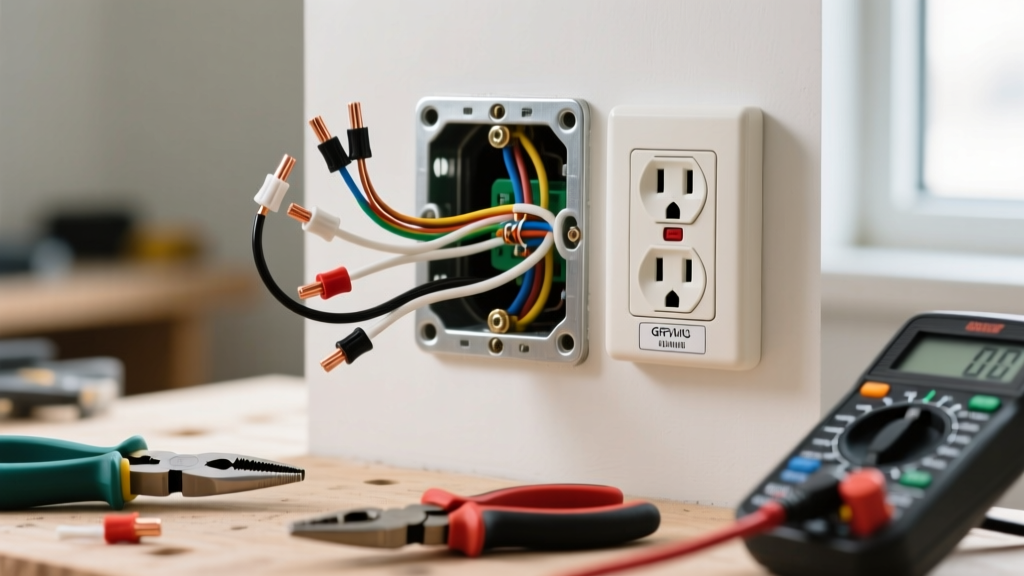
One of the most dangerous edge cases when upgrading or troubleshooting a Jamaica electrical outlet is encountering legacy wiring color codes. Due to Jamaica's historical ties, older properties (pre-2000s) often utilized British BS 7671 color standards, while modern JBC-compliant builds strictly follow the North American NEC color scheme.
| Conductor Function | Modern JBC / NEC Standard | Legacy British Standard (Older Homes) |
|---|---|---|
| Hot / Line (Phase) | Black (or Red for 2nd hot) | Brown |
| Neutral | White (or Grey) | Blue |
| Earth / Ground | Green, Green/Yellow, or Bare | Green/Yellow |
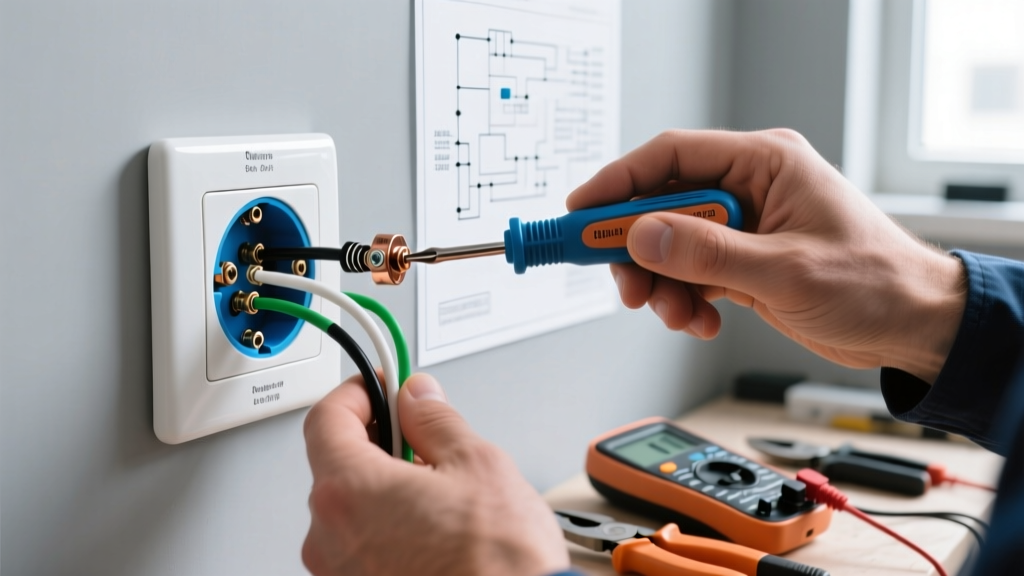
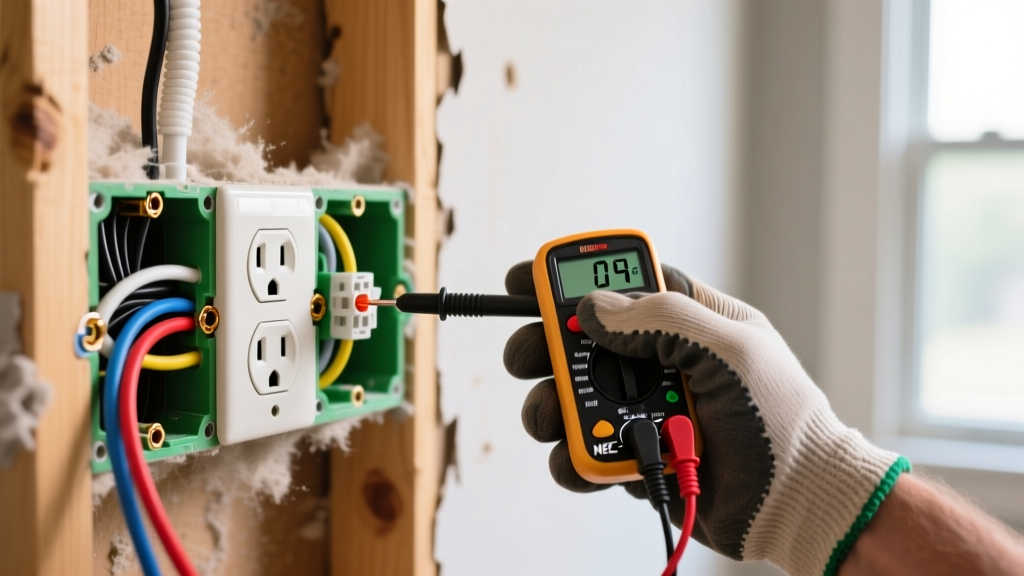
Expert Troubleshooting Warning: Never assume wire colors in an older Jamaican home. A previous contractor may have used leftover UK-spec cable on a US-spec NEMA 5-15R receptacle. Always use a non-contact voltage tester and a digital multimeter to verify the hot, neutral, and ground conductors before terminating a new Jamaica electrical outlet.
Grounding, Bonding, and JPS Earthing Mandates
The Jamaica Public Service (JPS) enforces strict earthing requirements for all new grid connections. Jamaica primarily utilizes a TT (Terra-Terra) earthing system in residential areas, meaning the earth connection is provided by a local ground rod at the premises, rather than relying solely on the utility's neutral wire.
Mandatory Grounding Electrode System
- Ground Rod Specifications: A minimum of one 5/8-inch diameter, 8-foot copper-bonded steel ground rod must be driven into the earth.
- Resistance Threshold: The ground resistance must measure less than 25 ohms. If a single rod fails to achieve this (common in the rocky, limestone-heavy terrains of parishes like St. Ann or Trelawny), a second rod must be driven at least 6 feet away and bonded to the first.
- Grounding Conductor: A minimum 6 AWG bare copper wire must connect the ground rod to the main service panel's neutral/ground bus bar.
GFCI and AFCI Requirements
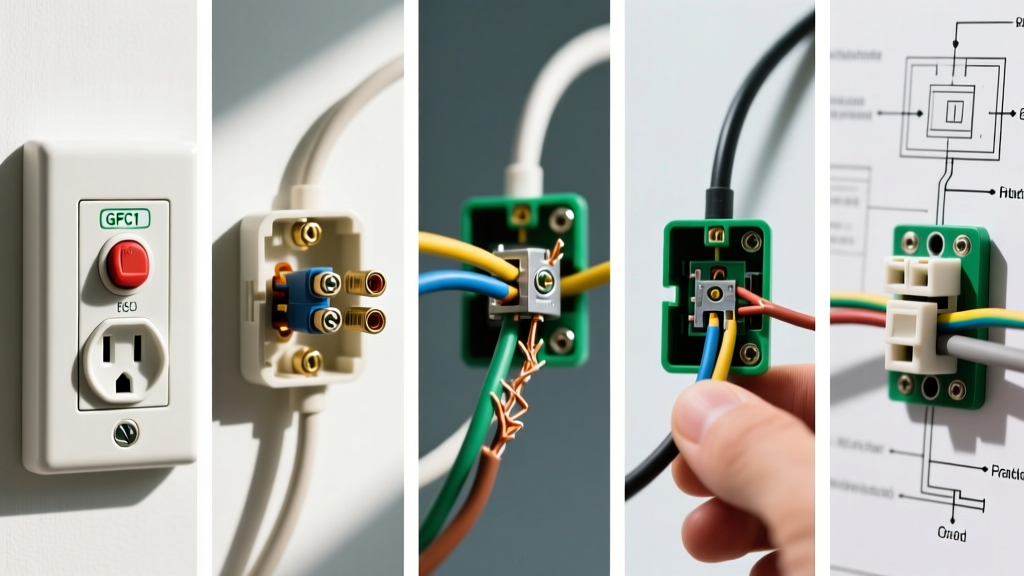
Modern JBC updates mandate Ground Fault Circuit Interrupter (GFCI) protection for all 15A and 20A, 110V receptacles located in:
- Bathrooms and wet areas
- Kitchens (countertop receptacles)
- Outdoor spaces (patios, balconies, garages)
- Within 1.8 meters of a laundry sink or water heater
For living rooms and bedrooms, Arc Fault Circuit Interrupter (AFCI) breakers are now heavily recommended and increasingly enforced in high-end residential builds to mitigate hidden wiring fires.
The 50Hz Factor: Appliance Compatibility & Outlet Sizing
The most critical differentiator of a Jamaica electrical outlet compared to the rest of the Americas is the 50Hz grid frequency. While a US appliance will physically plug into a Jamaican NEMA 5-15R outlet, the 50Hz frequency can cause severe operational issues for specific device categories.
50Hz vs 60Hz Appliance Compatibility Matrix
| Appliance Type | Impact on 50Hz Grid | Action Required |
|---|---|---|
| Switching Power Supplies (Laptops, TVs, Phones) | None. Operates normally (rated 50/60Hz). | Plug in directly. |
| AC Motors (Blenders, Power Tools, AC Units) | Runs 17% slower. May overheat due to reduced cooling fan speed. | Use 50Hz-rated tools or install VFDs for heavy machinery. |
| Analog Clocks / Timers | Will lose 12 minutes per hour. | Replace with quartz/digital alternatives. |
| Resistive Heating (Toasters, Hair Dryers) | Negligible. Slight wattage variance. | Safe to use. |
Common Installation Failures in Jamaica
When inspecting Jamaica electrical outlet installations, JPS and independent Bureau of Standards Jamaica (BSJ) certified inspectors frequently flag the following code violations:
- Bootleg Grounds: Using a jumper wire between the neutral and ground terminals on a NEMA 5-15R receptacle to trick a tester into reading 'correct'. This is highly dangerous on a TT system, as a lost neutral will energize the appliance chassis to 110V.
- Undersized Conductors in Rural Parishes: In areas with long utility runs (e.g., deep rural St. Elizabeth), voltage drop is a major issue. Standard 14 AWG wire on a 100-foot run will result in severe voltage drop. Code requires upsizing to 10 AWG or 8 AWG for long branch circuits to maintain a minimum of 104V at the furthest receptacle.
- Missing Weather-Resistant (WR) Receptacles: Outdoor outlets must not only have in-use bubble covers but the receptacle itself must carry the WR (Weather Resistant) stamp, indicating UV and corrosion-resistant internal components.
Frequently Asked Questions (FAQ)
Can I install a 220V outlet in a Jamaican home?
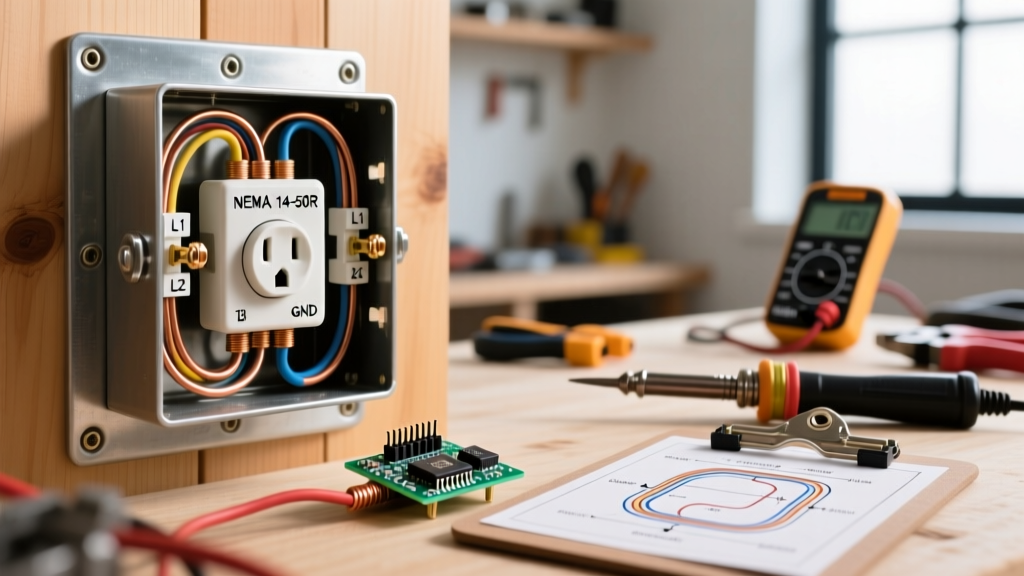
Yes, but it requires a specific split-phase or step-up transformer setup. Standard Jamaican residential service is 110V single-phase. However, for heavy appliances like central AC units or large water heaters, JPS provides a 220V split-phase feed (similar to the US). You must install a dedicated NEMA 6-20R or 6-30R receptacle on a double-pole breaker, and it must be explicitly approved during your JPS electrical inspection.
What is the typical cost for upgrading outlets to GFCI in Jamaica?
As of 2026, a high-quality 20A GFCI receptacle (such as a Leviton or Hubbell WR model) costs between $2,500 and $4,500 JMD (approx. $16–$29 USD). Factoring in labor by a JPS-licensed electrician, expect to pay around $4,000 to $6,000 JMD per location for a retrofit, assuming existing ground wires are present in the conduit.
Do I need a permit to replace existing receptacles?
Under the JBC, like-for-like replacement of a damaged Jamaica electrical outlet does not require a formal permit. However, if you are adding new circuits, upgrading the service panel, or wiring a new addition, you must submit an electrical plan to the local municipal corporation and pass a final inspection by a government-approved electrical inspector before JPS will energize the new meter.