
Navigating the Peruvian Electrical Grid: The 220V / 60Hz Anomaly
When working with or plugging devices into an electrical outlet in Peru, the most critical safety factor is understanding the country's unique electrical grid specifications. Unlike North America, which operates on 120V, or Europe, which operates on 230V at 50Hz, Peru utilizes a nominal 220V supply at 60Hz. This specific combination is relatively rare globally and presents unique hazards for expats, travelers, and DIY electricians who assume all 220V systems operate at 50Hz.
Because Peru maintains a 60Hz frequency, North American motors (such as those in power tools, blenders, or HVAC components) will not suffer from the frequency-induced overheating and torque loss common in Europe. However, the 220V voltage will instantly destroy 120V-rated electronics, cause catastrophic insulation failure, and ignite electrical fires if a device is connected without a proper step-down transformer. According to the CIA World Factbook, Peru's national grid has undergone significant modernization, yet voltage fluctuations between 205V and 235V remain common in rural and older urban districts, making surge protection non-negotiable.
Physical Receptacle Standards: Type A and Type C
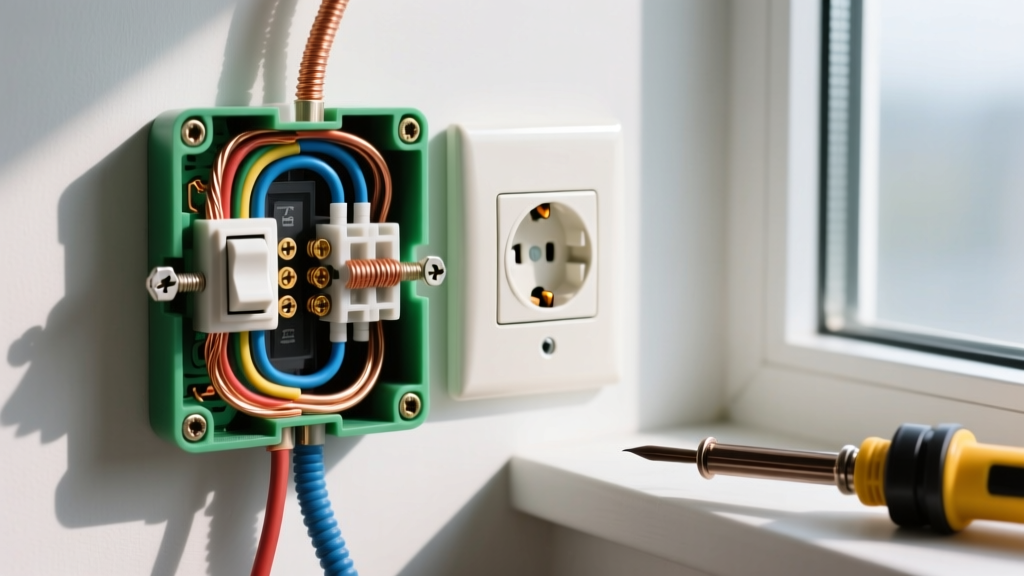
The physical architecture of a standard electrical outlet in Peru typically accepts two distinct plug types:
- Type A (NEMA 1-15): Two flat parallel pins. This is identical to the ungrounded North American plug.
- Type C (Europlug): Two round pins. This is the standard ungrounded European plug.
As documented by the International Electrotechnical Commission (IEC), both Type A and Type C receptacles lack a dedicated grounding pin. This creates a severe safety bottleneck. Many modern North American appliances feature a Type B plug (with a round grounding pin). Forcing a Type B plug into a Peruvian Type A receptacle by bending or snapping off the ground pin is a leading cause of equipment damage and lethal shock hazards in legacy Peruvian infrastructure.
The Grounding Deficit in Legacy Infrastructure
In older Peruvian homes and commercial buildings constructed before the early 2000s, true equipment grounding is often entirely absent. The wiring may consist of only a line (hot) and a neutral conductor. If you are troubleshooting or upgrading an electrical outlet in Peru, never assume the metal junction box is grounded. In many legacy installations, the conduit is PVC, or the metallic conduit was never bonded to a grounding electrode system, rendering it useless for fault-current clearing.
Code Compliance: Peruvian CNE vs. North American NEC
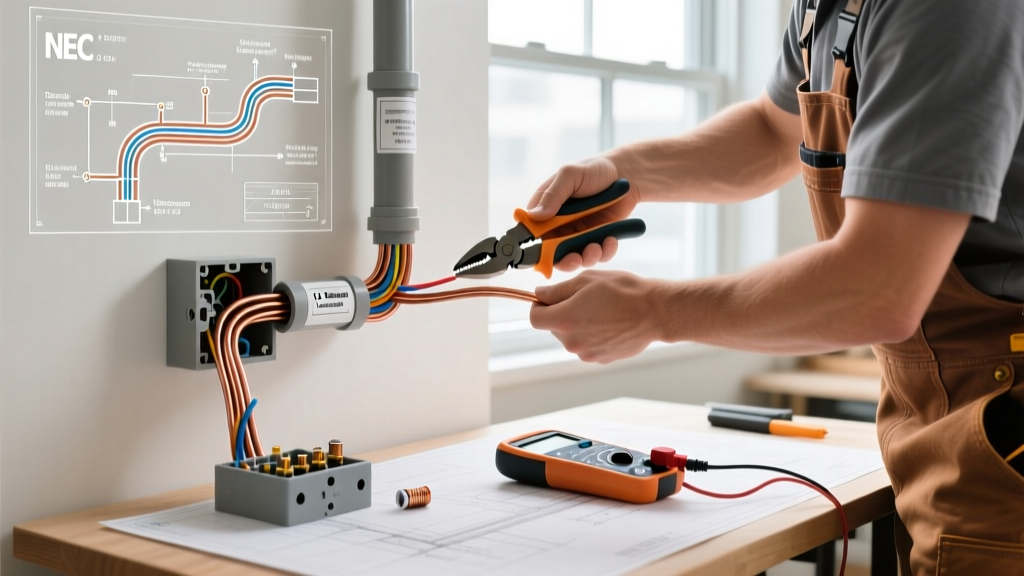
Electrical installations in Peru are governed by the Código Nacional de Electricidad (CNE), specifically the Utilización section, which is heavily influenced by the US National Electrical Code (NEC) but adapted for local infrastructure realities. The Peruvian Ministry of Energy and Mines (MINEM) enforces these standards, though enforcement in residential retrofitting can be inconsistent.
Under modern CNE updates, new residential constructions are mandated to include grounded circuits and Residual Current Devices (RCDs), similar to North American GFCIs. However, DIYers and inspectors frequently encounter 'bootleg grounds'—where a previous installer jumpered the neutral terminal to the ground terminal on the receptacle to trick a standard outlet tester. This is a severe code violation in both the CNE and NEC, as a lost neutral connection will instantly energize the appliance chassis with 220V.
Specification Comparison Matrix
| Parameter | Peru (CNE Standard) | North America (NEC Standard) | Europe (IEC Standard) |
|---|---|---|---|
| Nominal Voltage | 220V | 120V / 240V (Split-Phase) | 230V |
| Frequency | 60Hz | 60Hz | 50Hz |
| Standard Receptacles | Type A, Type C | Type A, Type B | Type C, Type E, Type F |
| Grounding Requirement | Mandatory (New Builds) | Mandatory (All Habitable) | Mandatory (Schuko) |
| Standard Breaker Type | Thermal-Magnetic / RCD | Thermal-Magnetic / GFCI / AFCI | MCB / RCCB |
Critical Safety Protocol: Adapters vs. Step-Down Transformers
A fatal mistake made by travelers and new expats is confusing a plug adapter with a voltage transformer. An adapter merely changes the physical shape of the pins; it does absolutely nothing to alter the 220V current. If you plug a 120V US hair dryer into a Peruvian outlet using only an adapter, the heating element will draw four times its intended wattage (due to Ohm's Law: P = V²/R), resulting in immediate meltdown and fire.
Calculating Transformer Wattage for High-Draw Appliances
To safely operate 120V appliances, you must use a step-down transformer (220V to 110V). Sizing this transformer correctly is vital for fire prevention:
- Identify Appliance Wattage: Check the nameplate. A standard US laptop charger draws 65W. A US space heater draws 1500W.
- Apply the 125% Safety Rule: Transformers should never be run at 100% capacity continuously. Multiply the appliance wattage by 1.25.
- Select the Unit: For a 1500W space heater, you need a transformer rated for at least 1875W (commonly sold as 2000W). These heavy-duty units weigh approximately 18 to 22 lbs and cost between $90 and $140 USD. For a 65W laptop, a lightweight 100W travel transformer ($25 USD) is sufficient.
WARNING: Never use a step-down transformer for high-moisture environments (like bathrooms) unless the transformer itself is rated for damp locations and paired with an upstream RCD/GFCI breaker. The secondary side of a standard isolation transformer can still present a shock hazard if a ground fault occurs.
Field Testing an Electrical Outlet in Peru
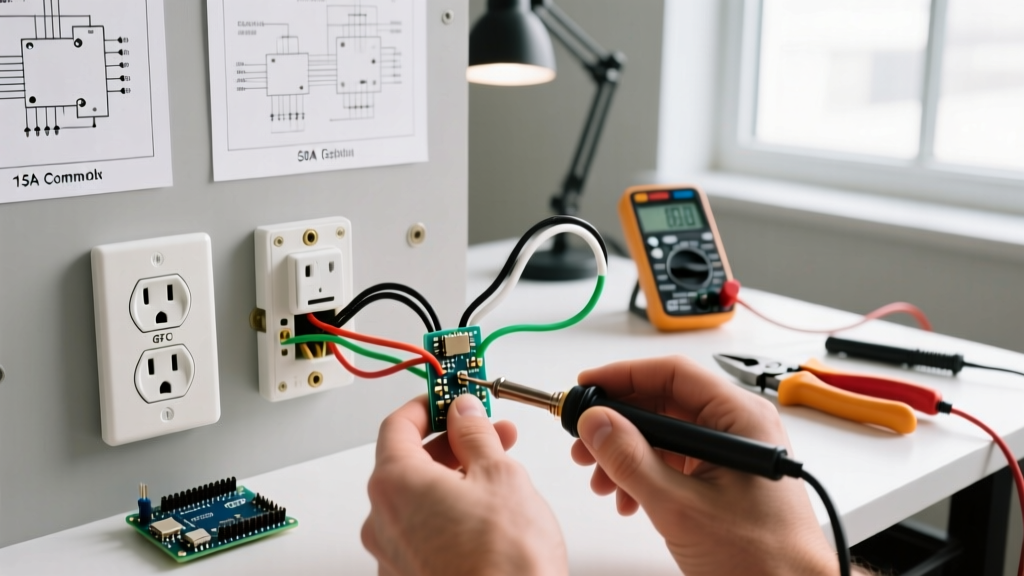
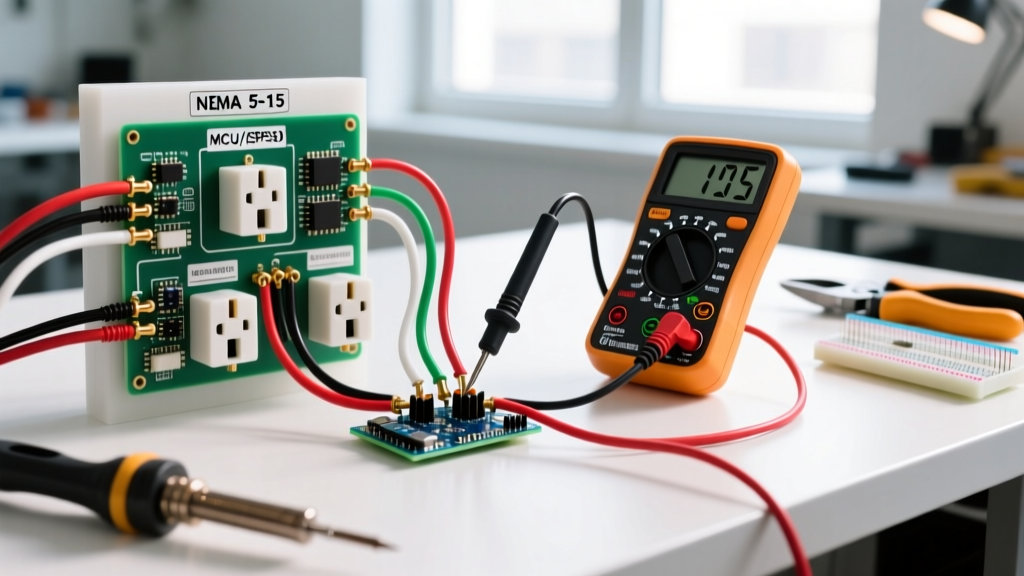
If you are renting a property, setting up a workshop, or verifying a contractor's work, you must test the electrical outlet in Peru using a digital multimeter (such as a Fluke 117 or Klein Tools MM400). Do not rely on cheap neon-light outlet testers, as they are often calibrated for 120V and will give false readings or blow their internal resistors on a 220V circuit.
Step-by-Step Multimeter Verification
- Set the Multimeter: Turn the dial to AC Voltage (V~), ensuring the range is set to at least 250V or 600V.
- Test Line-to-Neutral (L-N): Insert the red probe into the smaller/hot slot and the black probe into the larger/neutral slot (or either slot for Type C). You should read between 210V and 230V. If you read ~110V, the building may have a rare split-phase setup or a severe neutral-to-ground fault upstream.
- Test Line-to-Ground (L-G): If the outlet has a grounding pin (Type B or Schuko adapter), test the hot slot to the ground pin. It should read the same as L-N (~220V). If it reads 0V, the outlet is ungrounded.
- Test Neutral-to-Ground (N-G): Measure between the neutral slot and the ground pin. A reading of less than 2V indicates a healthy, bonded neutral-ground system. A reading above 5V suggests a loose neutral connection or an overloaded circuit, which can cause sensitive 220V electronics to malfunction.
Upgrading to Grounded Receptacles: Best Practices
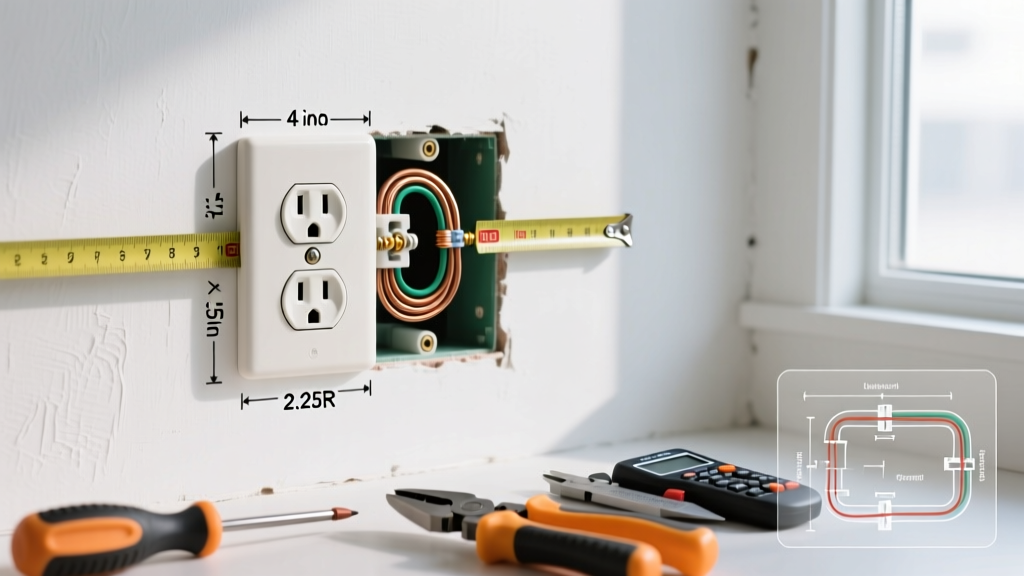
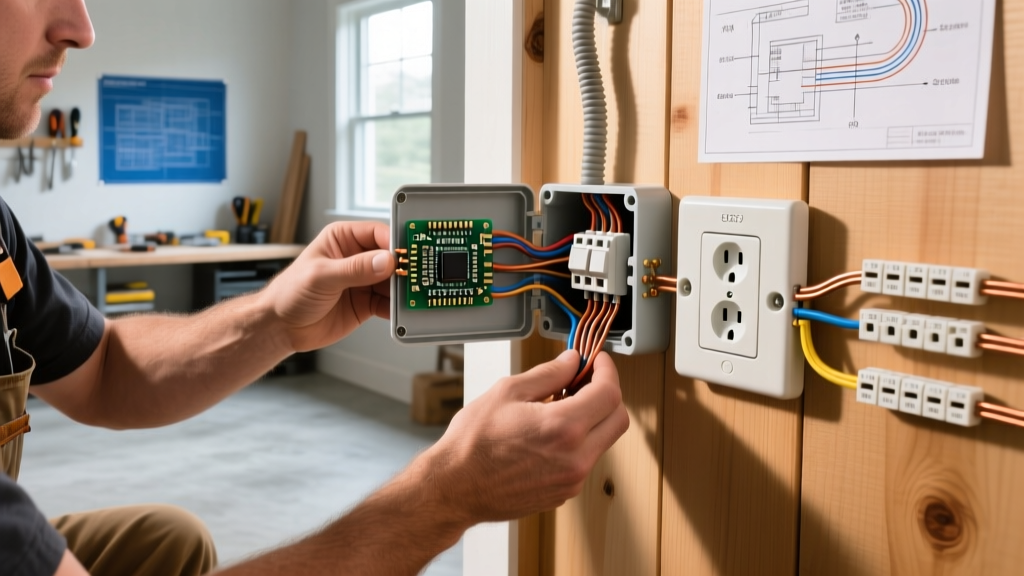
If you are tasked with upgrading an ungrounded Type A or C outlet to a grounded, code-compliant receptacle, the only CNE-compliant method is to pull a new equipment grounding conductor (EGC) back to the main distribution panel. Simply swapping the receptacle to a grounded Type B or Schuko (Type F) without connecting a true ground wire creates a 'false sense of security' and is a direct violation of electrical safety codes.
If pulling a new ground wire is physically impossible due to concrete encased conduits, the CNE (mirroring NEC Article 406.4(D)(4)) permits the installation of a GFCI/RCD protected receptacle. The outlet must be clearly labeled with a sticker reading 'GFCI Protected - No Equipment Ground'. This protects human life from lethal shock by tripping on current leakage (typically 5mA to 30mA), but it will not protect sensitive electronics that require a true ground for surge suppression and EMI filtering.
Frequently Asked Questions (FAQ)
Can I use my US 120V power strip in Peru?
No. Standard US power strips are rated for 125V AC. Plugging a 125V-rated power strip into a 220V Peruvian outlet will cause the internal MOVs (Metal Oxide Varistors) in the surge protector to violently short-circuit, potentially causing a fire or explosion, even if nothing is plugged into the strip. Always use a 220V-rated power strip paired with a step-down transformer.
Why do my LED lights flicker in my Lima apartment?
Lima's grid can experience voltage sags during peak evening hours. If your LED drivers are not rated for a wide input voltage range (e.g., 100V-240V), they will flicker when the local voltage drops below 200V. Upgrade to high-quality LED bulbs with integrated constant-current drivers rated specifically for 220V-240V operation.
Is it safe to use a 50Hz European appliance in Peru?
While the voltage (230V EU vs 220V Peru) is compatible, the frequency mismatch (50Hz appliance on a 60Hz grid) will cause AC motors to run 20% faster. This can lead to premature bearing wear, overheating, and mechanical failure in appliances like washing machines, analog clocks, and heavy-duty mixers. Universal motors (found in vacuums and most power tools) and solid-state electronics (laptops, phone chargers) will operate perfectly fine.