
Why Is Your Electrical Outlet Warm to Touch?
Feeling a slight, almost imperceptible warmth from an outlet powering a high-draw appliance like a 1500W space heater is normal. However, if your electrical outlet is warm to touch under normal loading conditions, or hot enough to be uncomfortable, you are facing a severe fire hazard. According to the Electrical Safety Foundation International (ESFI), electrical receptacles are involved in over 5,300 structure fires annually, causing dozens of fatalities and hundreds of millions in property damage.
This guide dissects the physics, National Electrical Code (NEC) compliance requirements, and exact diagnostic protocols to identify and remediate thermal anomalies in 15A and 20A residential and commercial circuits.
The Physics of Receptacle Heating: Joule's First Law
Heat in an electrical circuit is governed by Joule heating, defined by the formula P = I²R (Power/Heat equals Current squared multiplied by Resistance). In a perfectly functioning 15-amp circuit using 14 AWG copper wire and a commercial-grade receptacle, resistance (R) at the terminal connections and internal brass wipers is near zero.
However, when resistance increases—due to loose terminals, corrosion, or metal fatigue—even a modest 10-amp draw generates significant localized heat. Because the receptacle faceplate is typically made of thermoplastic (nylon or polycarbonate) with low thermal conductivity, the heat traps inside the junction box, degrading the wire insulation and eventually leading to an arc fault or thermal runaway.
5 Critical Failure Modes Causing Warm Outlets
1. Backstabbed (Push-In) Connections
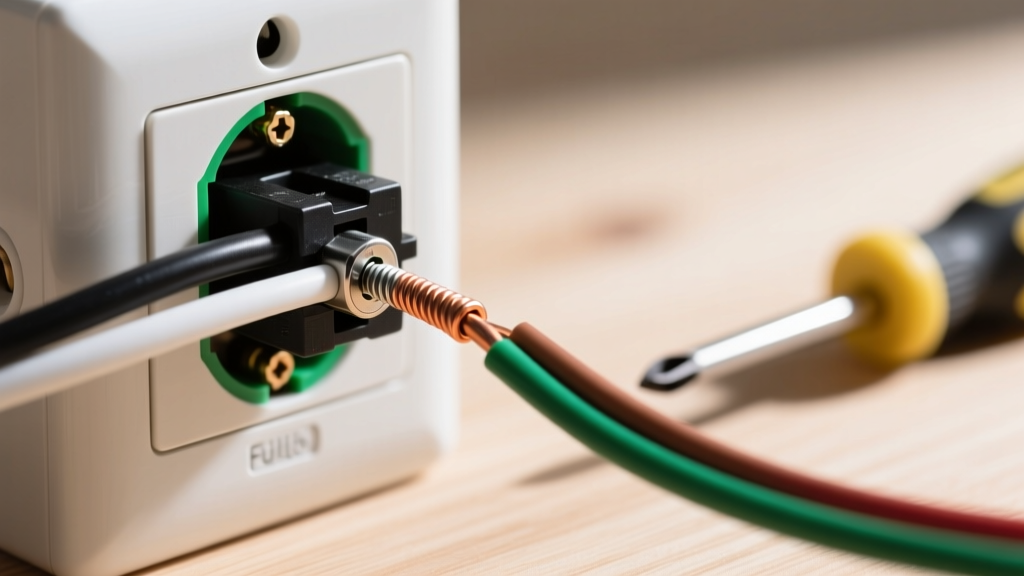
Builder-grade receptacles feature push-in terminals that rely on a single, thin brass spring clip to grip the stripped wire. Over years of thermal cycling (expansion and contraction), these clips lose tension. This creates a micro-gap, leading to arcing and high resistance. NEC Compliance Note: While not strictly banned by the NEC for 15A circuits, push-in connections are widely condemned by master electricians and are explicitly prohibited on 20A circuits (NEC Article 210.21).
2. Improper Terminal Torque
Under-tightened side-wire terminal screws allow the wire to shift, reducing the contact surface area. Over-tightening can strip the brass screw or crush the copper conductor, causing it to neck down and increase resistance. The 2017 and subsequent NEC updates (Article 110.14(D)) mandate that connections be torqued to the manufacturer's specified values. For standard Leviton and Hubbell 15A/20A duplex receptacles, the specified torque is typically 12 to 14 inch-pounds.
3. Loss of Internal Wiper Tension
The female contacts inside the receptacle rely on spring tension to grip the male prongs of a plug. If plugs insert too easily or fall out, the internal brass wipers have fatigued. This poor contact creates localized resistance exactly at the plug face, making the outlet warm to touch right around the slots.
4. Aluminum Wiring Incompatibility
Homes built between 1965 and 1972 often contain single-strand aluminum branch wiring. Aluminum oxidizes rapidly when exposed to air, and aluminum oxide is an electrical insulator. Connecting aluminum wire to a standard copper-rated (CU-AL) receptacle causes severe galvanic corrosion and high-resistance heating. Code Requirement: You must use CO/ALR rated receptacles or pigtail the aluminum to copper using AlumiConn connectors or COPALUM crimps.
5. Downstream Overloading (Daisy-Chaining)
Receptacles act as pass-through nodes. The line and load terminals carry the current for all downstream devices. If a downstream outlet is heavily loaded (e.g., drawing 14 amps), the first outlet in the daisy chain carries that 14 amps plus its own load. If wired with 14 AWG wire on a 15A breaker, the terminal screws at the first receptacle will absorb the cumulative thermal stress.
Diagnostic Matrix: Thermal Symptoms & Remediation
| Thermal Symptom | Probable Root Cause | NEC / Safety Violation? | Required Action |
|---|---|---|---|
| Slight warmth (10°F above ambient) near plug face | Normal Joule heating from high-draw appliance (e.g., 1500W heater) | No (if under 80% continuous load limit) | Monitor. Ensure plug prongs are clean. |
| Hot to touch, localized to one terminal screw | Loose side-wire connection or backstabbed wire | Yes (NEC 110.14 - Torque/Connection) | De-energize, re-terminate to 14 in-lbs. |
| Entire faceplate is hot, discoloration present | Internal arcing, melted brass wipers, severe overload | Yes (Imminent Fire Hazard) | Immediate replacement with Spec-Grade receptacle. |
| Warmth accompanied by buzzing or fishy odor | Active series arc fault or melting PVC insulation | Yes (Critical Emergency) | Shut off breaker immediately. Full circuit inspection. |
Step-by-Step Diagnostic & Remediation Protocol
Do not rely on the "back of the hand" test. Use precise diagnostic tools to evaluate the safety of the circuit.
- Thermal Imaging / IR Thermometry: Use a FLIR infrared thermometer. Measure the ambient wall temperature, then measure the center of the receptacle faceplate. According to NETA (InterNational Electrical Testing Association) guidelines adapted for residential single-phase, a temperature rise of 15°C (27°F) above ambient warrants investigation. A rise of 40°C (72°F) is an immediate emergency requiring circuit de-energization.
- De-Energize and Verify (LOTO): Turn off the branch circuit breaker. Use a non-contact voltage tester (e.g., Klein NCVT-3) followed by a digital multimeter (testing Line to Ground, Line to Neutral, and Neutral to Ground) to confirm 0V.
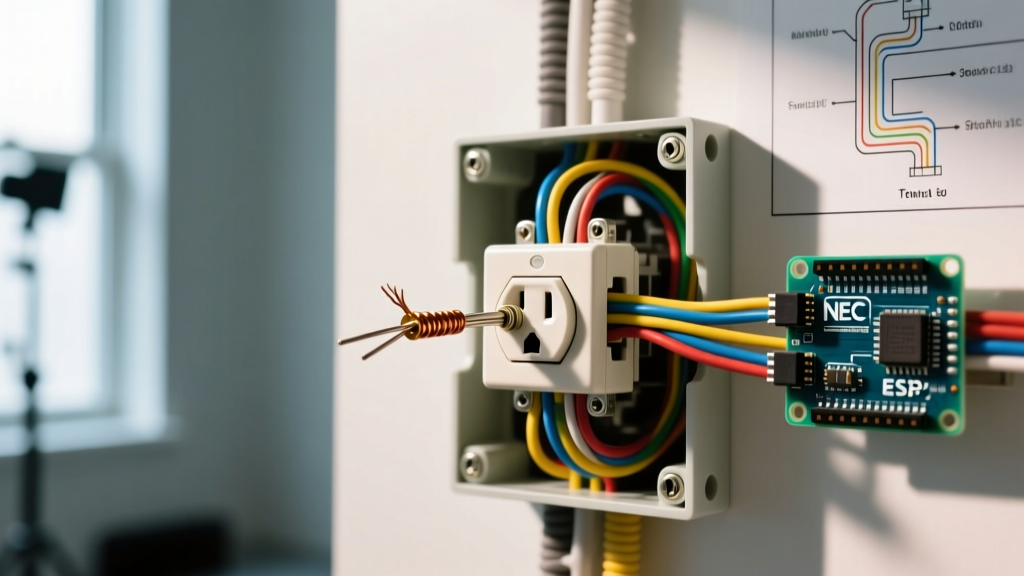
- Extract and Inspect: Remove the faceplate and unscrew the receptacle. Pull it gently from the junction box. Inspect the wire insulation. If the PVC is brittle, cracked, or shows heat shrinkage past the wire nut/terminal, the wire must be stripped back to clean copper or replaced.
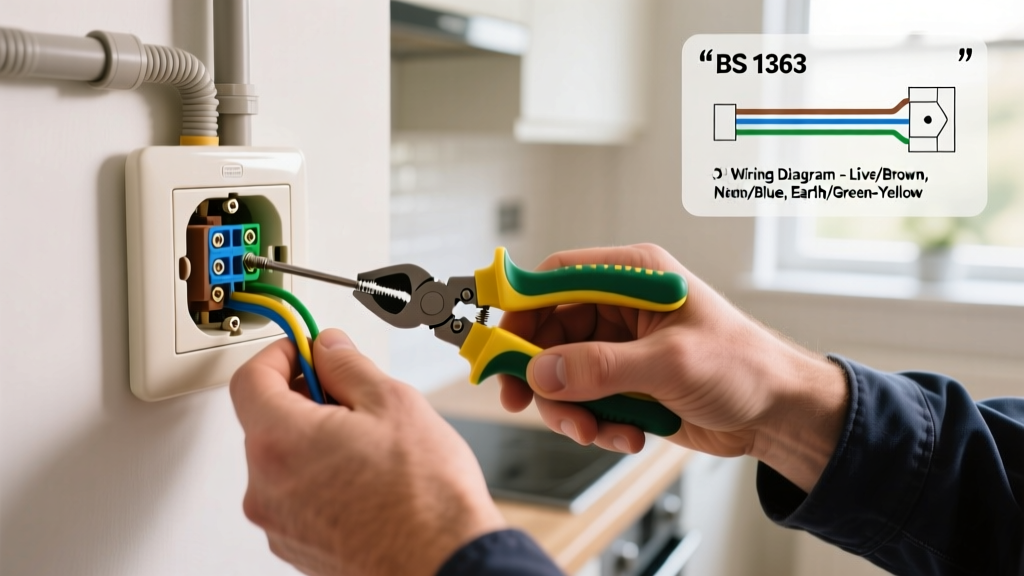
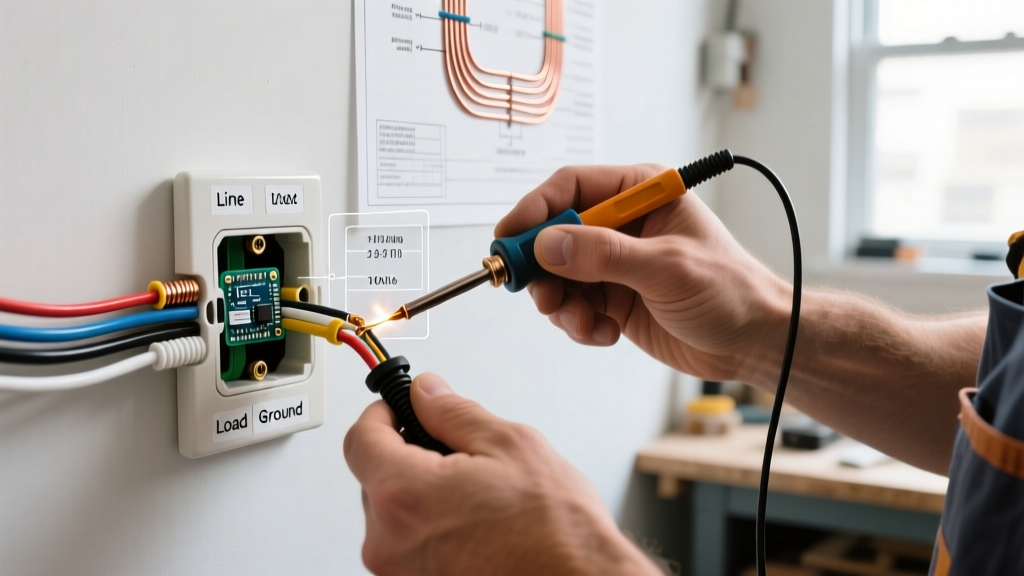
- Re-Terminate with Precision: Abandon push-in backstabbing entirely. Use the side-wire terminal screws or, preferably, create a pigtail using a Wago 221 lever nut or copper wire nut, leaving only one wire on the receptacle terminals. Use a calibrated torque screwdriver (e.g., Klein Tools 32500 series) set to 14 in-lbs.
- Upgrade the Hardware: Replace builder-grade receptacles with Commercial Spec-Grade models. The Leviton 5262 or Hubbell 5262 (approx. $4.50 - $6.00 each) feature thicker brass internal wipers, high-impact nylon faceplates rated for higher thermal thresholds, and back-wire clamping plates that grip the wire securely without relying on screw-head pressure alone.
⚠️ CRITICAL ALUMINUM WIRING WARNING: If you discover silver-colored wire or markings like "AL" on the jacket, do NOT attach it to a standard copper-rated receptacle. You must use a receptacle explicitly marked CO/ALR (Copper-Aluminum Revised), such as the Leviton 1643, or use AlumiConn lug connectors to pigtail to copper. Failure to comply violates NEC Article 110.14(A) and voids most homeowners' insurance policies in the event of a fire.
NEC Code Compliance: What the Inspectors Look For
When evaluating a warm outlet, licensed electricians reference specific sections of the National Electrical Code to ensure the installation is safe and legal:
- NEC Article 110.14 (Electrical Connections): Mandates that connections must be tight and torqued to manufacturer specifications to prevent heating.
- NEC Article 210.19(A)(1) (Conductor Sizing): Ensures the branch circuit conductors are sized to handle 125% of the continuous load. If a 15A outlet is warm because it's feeding a 12A continuous load (like an aquarium heater running 24/7), the circuit is overloaded by code definition.
- NEC Article 406.4(D) (Receptacle Replacement): Requires that any replaced receptacle in a modern home must be Tamper-Resistant (TR) and, if located in specific zones (bathrooms, kitchens, garages, outdoors), must be GFCI protected. Furthermore, if the outlet is within 6 feet of a water source, AFCI/GFCI dual-function protection may be required depending on your local 2023/2026 NEC adoption cycle.
For comprehensive code references and updates on residential electrical safety, always consult the National Fire Protection Association (NFPA) NEC directory or your local Authority Having Jurisdiction (AHJ).
Frequently Asked Questions (FAQ)
Can a warm outlet cause a fire even if the breaker doesn't trip?
Yes. Circuit breakers are designed to trip based on overcurrent (e.g., pulling 20 amps on a 15-amp breaker) or short circuits. A loose connection causes high resistance and intense localized heat while drawing only 5 amps. The breaker will never see this as a fault, but the junction box can easily reach ignition temperatures for surrounding wood framing or insulation. This is why Arc Fault Circuit Interrupters (AFCIs) are now mandated by the NEC for most living spaces.
Is it safe to use a smart plug on an outlet that gets slightly warm?
No. Smart plugs (like the Kasa EP25 or Wyze Plug) contain internal relays and Wi-Fi radios that generate their own baseline heat. Adding a smart plug to an already compromised, warm outlet compounds the thermal stress, potentially melting the smart plug's internal solder joints and causing a failure. Fix the root cause of the outlet's warmth before introducing inline smart home devices.
How much does it cost to have an electrician fix a warm outlet?
A licensed electrician typically charges a $75 to $150 service call fee. If the issue is simply a loose connection or a failed builder-grade receptacle, the total repair usually ranges from $125 to $225. However, if the thermal damage has melted the wire insulation inside the wall, requiring a junction box extension or a new cable pull, costs can escalate to $350 - $600 per drop.
Disclaimer: Electrical work carries inherent risks of shock, arc flash, and fire. If you are not experienced with multimeter diagnostics, torque specifications, and NEC code requirements, hire a licensed electrical contractor. Always consult the U.S. Consumer Product Safety Commission (CPSC) guidelines for residential electrical safety.