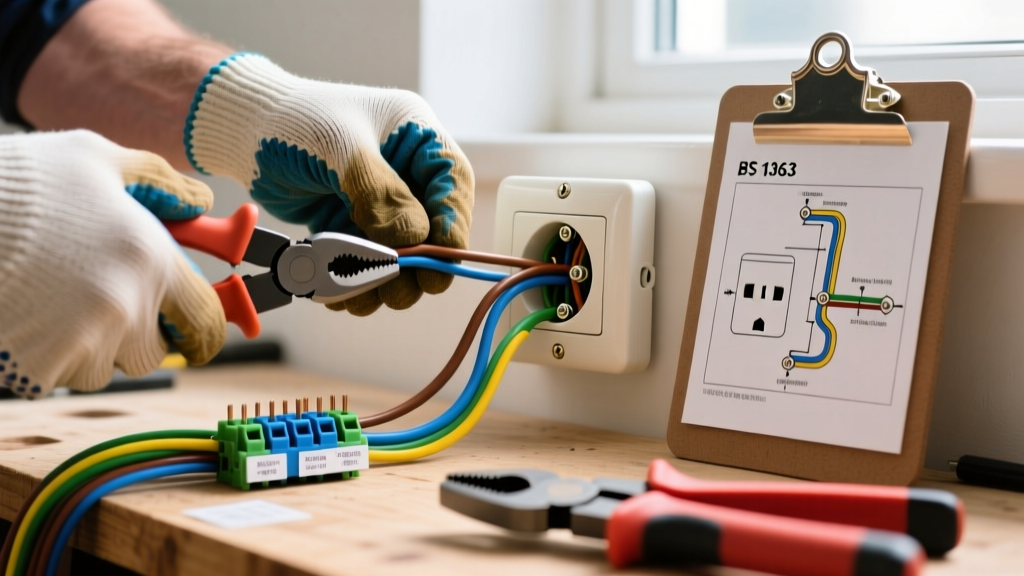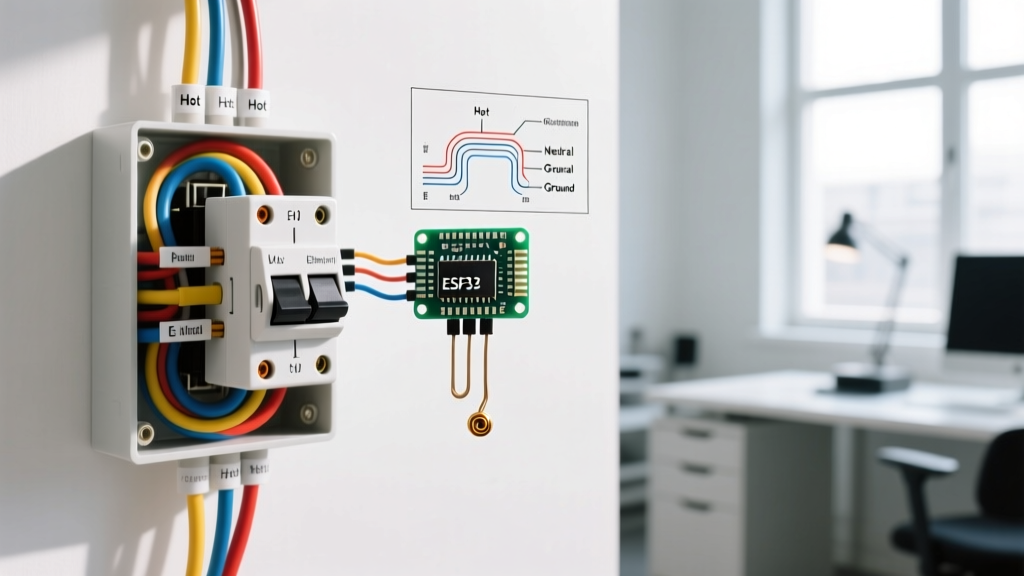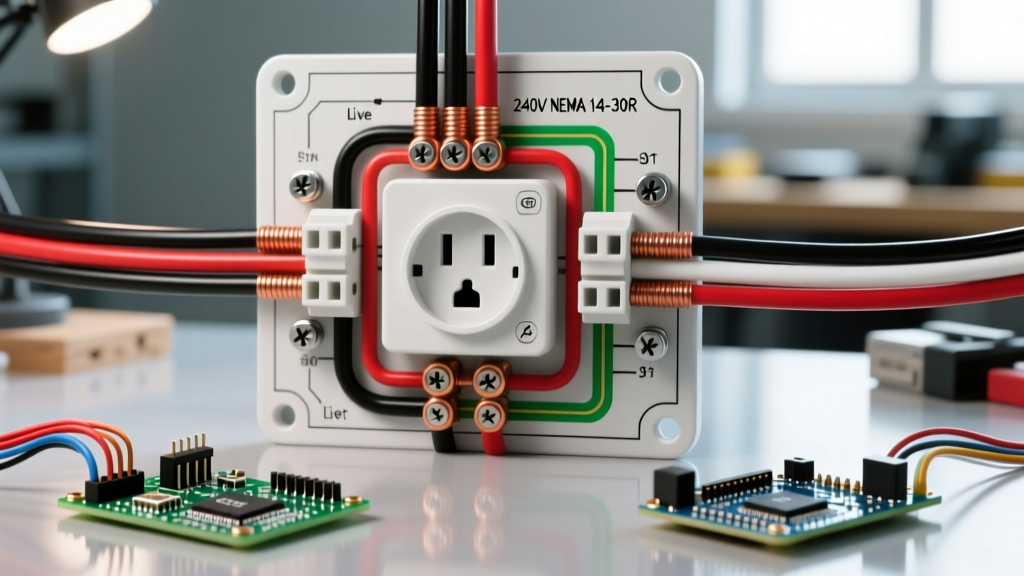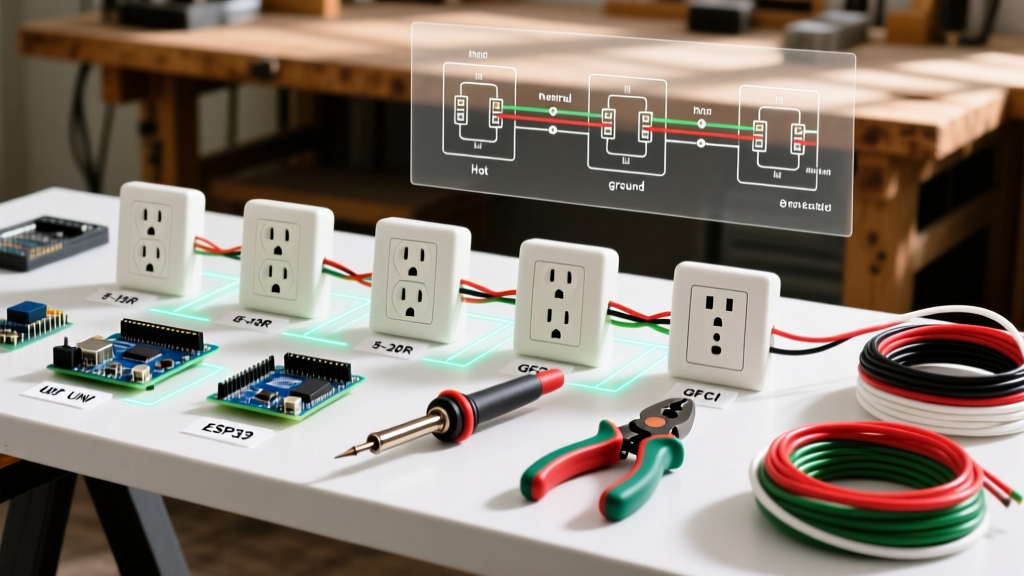

Navigating the landscape of residential and commercial wiring requires a precise understanding of receptacle configurations. When evaluating electrical outlet types US building codes mandate, electricians and advanced DIYers must match the National Electrical Manufacturers Association (NEMA) configurations to the specific amperage, voltage, and grounding requirements of the branch circuit. Installing the wrong receptacle on an incompatible circuit is not just a code violation; it is a severe fire and electrocution hazard.
This comprehensive guide breaks down the most common US receptacle types and provides a rigorous, step-by-step installation procedure for upgrading standard circuits to modern, code-compliant Ground Fault Circuit Interrupter (GFCI) and 20-amp configurations.
Decoding US Electrical Outlet Types (NEMA Standards)
The NEMA wiring device classification system standardizes plug and receptacle configurations across North America. Below is a matrix of the most frequently encountered electrical outlet types US homes and garages utilize, detailing their electrical characteristics and primary applications.
| NEMA Type | Amperage | Voltage | Prong/Slot Config | Common Application |
|---|---|---|---|---|
| 1-15R | 15A | 125V | 2-Prong (Ungrounded) | Obsolete; pre-1960s homes (No new installs) |
| 5-15R | 15A | 125V | 3-Slot (Standard) | General lighting and standard appliance circuits |
| 5-20R | 20A | 125V | T-Slot (1 Horizontal) | Kitchen small appliance, garage, and bathroom circuits |
| 6-20R | 20A | 250V | 3-Slot (Horizontal/Vert) | Heavy-duty shop tools, window AC units |
| 14-50R | 50A | 125/250V | 4-Slot (Split Phase) | Level 2 EV chargers, RV hookups, electric ranges |
Pre-Installation: Circuit Verification and Tooling
Before removing a single faceplate, you must verify the circuit's capacity. A NEMA 5-20R receptacle requires a 20-amp breaker and 12 AWG copper wire. Installing a 20A receptacle on a 15-amp breaker with 14 AWG wire is a critical NEC violation that masks circuit overloads.
Required Professional Tooling
- Voltage Tester: Fluke 2AC Non-Contact Voltage Tester (approx. $35) for initial dead-circuit verification.
- Multimeter: Klein Tools CL800 for verifying exact line voltage (should read 118V-122V) and checking continuity.
- Wire Strippers: Ideal 45-122 reflex strippers calibrated for 12 AWG and 14 AWG THHN/NM-B.
- Torque Screwdriver: CDI 401SM or Klein Tools 32500 series (capable of 14 in-lbs) to meet NEC 110.14(D) torque specifications.
Step-by-Step: Installing a NEMA 5-20R GFCI Receptacle
Upgrading a kitchen or garage circuit to a Tamper-Resistant (TR) GFCI is one of the most common tasks when modernizing electrical outlet types US properties feature. We will use the Pass & Seymour 2095-TR (20A GFCI, retailing around $26 in 2026) as our reference model.
Step 1: Isolate and Verify the Circuit
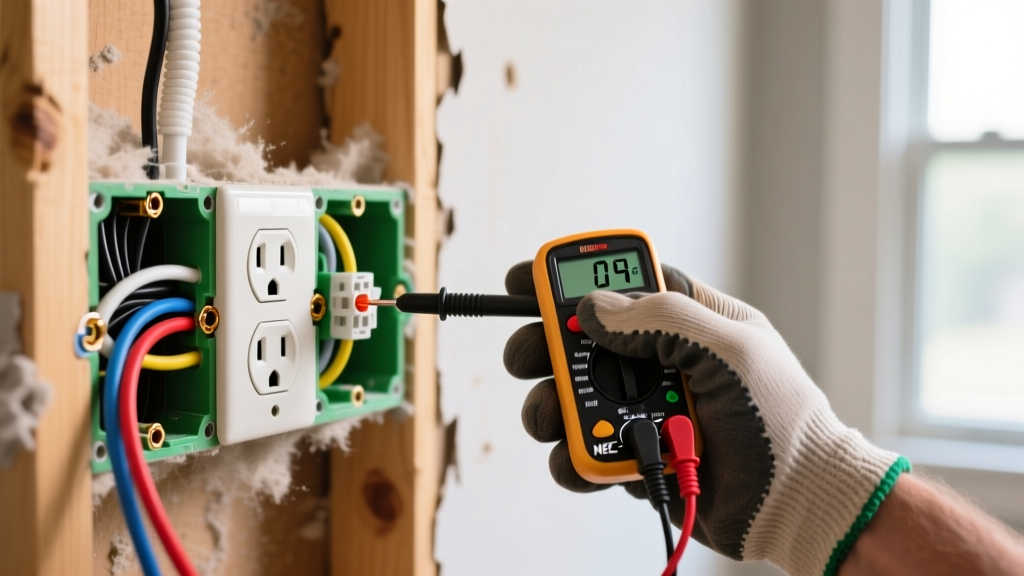
Switch off the corresponding 20A breaker at the main service panel. Remove the existing faceplate and unscrew the receptacle. Pull the device out of the gang box and use the Fluke 2AC tester on both the top and bottom terminal screws. Follow up with a multimeter testing between the hot (black) and neutral (white) wires to ensure a reading of 0.0V.
Step 2: Identify LINE vs. LOAD
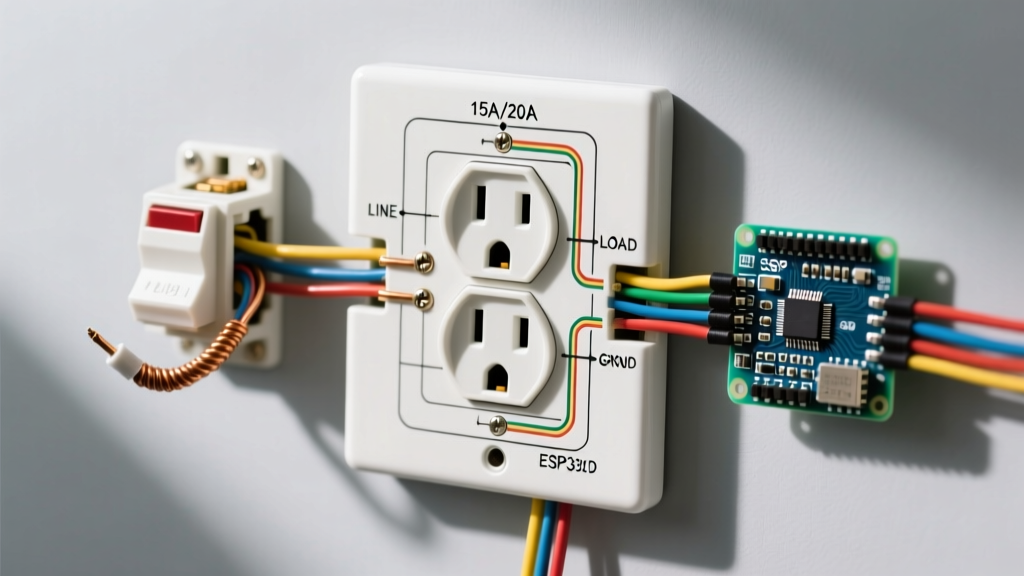
GFCI receptacles feature two distinct sets of terminals: LINE (incoming power from the panel) and LOAD (downstream power to other outlets). Miswiring these is the #1 cause of GFCI failure.
Pro-Tip: If you only have one set of black and white wires in the box, they connect exclusively to the LINE terminals. The LOAD terminals remain unused, capped with electrical tape.
Step 3: Strip and Prep the Conductors
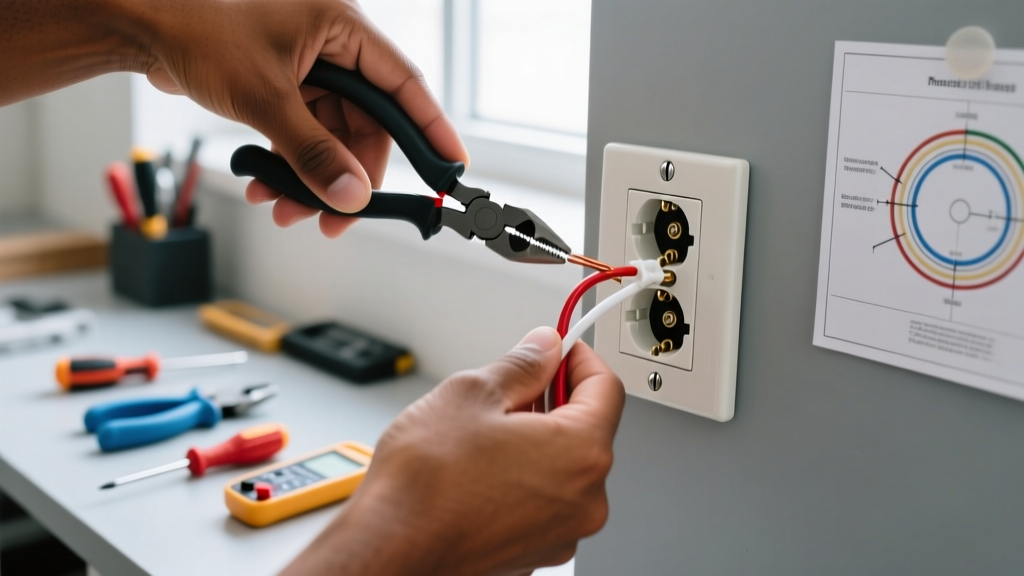
Strip exactly 5/8-inch of insulation from the 12 AWG solid copper wires. Do not nick the copper conductor, as this creates a micro-fracture that can snap under thermal expansion. Use needle-nose pliers to form a tight, clockwise shepherd's hook at the end of each wire.
Step 4: Terminate and Torque
- Hook the bare copper ground wire around the green grounding screw.
- Connect the white neutral wire to the silver LINE terminal.
- Connect the black hot wire to the brass LINE terminal.
- Using your calibrated torque screwdriver, tighten all terminal screws to exactly 14 in-lbs. Under-torqued screws cause high-resistance connections, leading to arcing and melted receptacle faces.
Step 5: Box Make-Up and Testing
Fold the wires neatly into the back of the gang box using a "Z-fold" technique to avoid pinching the conductors against the metal box edges. Mount the GFCI, attach the faceplate, and restore power. Press the "TEST" button on the receptacle; it should click and cut power. Press "RESET" to restore the circuit.
High-Power Installations: NEMA 14-50 for EV Charging
As electric vehicle adoption accelerates through 2026, the NEMA 14-50R has become a highly requested installation. According to the U.S. Department of Energy, a properly installed 14-50 receptacle delivers up to 40 amps of continuous Level 2 charging (50A circuit derated to 80%).
Installation Parameters for NEMA 14-50:
- Wire Gauge: 6 AWG copper THHN in conduit, or 6/3 NM-B Romex (though many 2026 local jurisdictions now mandate THHN in conduit for EV circuits due to thermal derating concerns).
- Breaker: 2-Pole, 50-Amp standard thermal-magnetic breaker.
- Receptacle Model: Hubbell 9450A or Bryant 9450FR (Industrial Grade). Avoid cheap residential-grade 14-50s found at big-box stores, as their internal bus bars cannot handle the continuous 4-hour thermal load of EV charging without melting.
NEC Code Compliance and Tamper Resistance
The National Fire Protection Association (NFPA) strictly governs receptacle installations. Under the National Electrical Code (NEC), specifically Article 406.4(D), any replacement of an existing receptacle must comply with current new-construction standards. This means that even if you are replacing an outlet in a 1970s home that lacks a ground wire, you must install a GFCI receptacle (marked "No Equipment Ground") to provide shock protection.
Furthermore, all 15A and 20A, 125V receptacles installed in dwelling units must be Tamper-Resistant (TR). TR receptacles feature internal spring-loaded shutters that only open when equal pressure is applied to both slots simultaneously, preventing children from inserting foreign objects. As of 2026, TR receptacles are the universal baseline; non-TR 5-15R and 5-20R devices are essentially obsolete for residential use.
Troubleshooting Common Receptacle Failures
1. Nuisance Tripping on GFCI Circuits
If a newly installed GFCI trips immediately or randomly, check for a "bootleg ground" or a shared neutral. In older multi-wire branch circuits (MWBC), two hot wires may share a single neutral wire. A GFCI cannot function on a shared neutral because the current returning on the neutral will not match the current leaving the hot wire, triggering the internal sensing coil. The fix is to pigtail the neutrals or replace the breaker with a 2-pole GFCI breaker at the panel.
2. Voltage Drop and Warm Faceplates
If the receptacle faceplate feels warm to the touch, or if a plugged-in vacuum cleaner runs sluggishly, you are likely experiencing voltage drop or a high-resistance connection. Use a multimeter to measure voltage under load. If the voltage drops below 112V when a 10A load is applied, check the terminal torques. Back-stabbed (push-in) connections are notorious for loosening over time due to thermal cycling. Always use the side-wire terminal screws and torque them to spec.
Expert FAQs
Q: Can I install a NEMA 5-20R (20A) receptacle on a 15-amp breaker?
A: Yes, NEC Article 210.21(B)(3) permits a 20A receptacle on a 15A circuit, provided it is not a single-receptacle dedicated circuit. However, you cannot plug a 20A appliance into it and expect to draw 20 amps, as the 15A breaker will trip. Conversely, you cannot install a 15A receptacle on a 20A breaker (unless it is a multi-outlet branch circuit, but a single 15A receptacle on a 20A circuit is a direct code violation).
Q: Why do my USB-integrated outlets charge devices so slowly?
A: Many early-generation USB receptacles (circa 2015-2019) only output 2.1 to 3.6 total amps shared across all ports, lacking USB-C Power Delivery (PD) negotiation. For modern 2026 installations, specify receptacles like the Leviton USB-C PD 30W Receptacle, which utilizes a dedicated step-down transformer to deliver up to 30W directly to modern smartphones and tablets without bottlenecking.