
Navigating the Italian Electrical Standard (CEI 23-50)
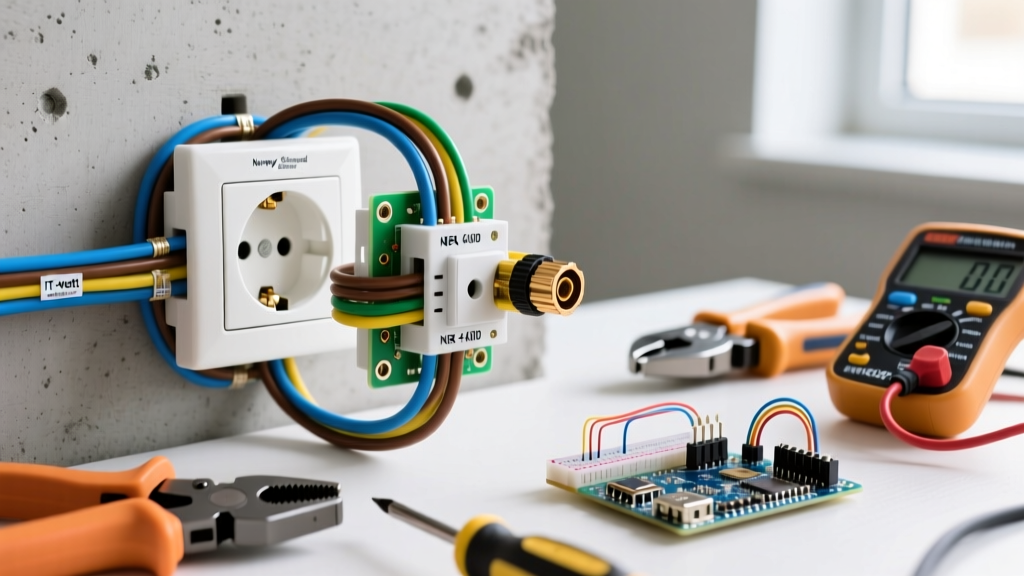
If you are renovating a historic property in Tuscany, updating an apartment in Milan, or simply replacing a damaged wall socket, dealing with an electrical power outlet in Italy requires a solid understanding of local standards. Unlike the US (NEMA) or the UK (BS 1363), Italy operates on its own unique plug and socket architecture, historically defined by the CEI 23-50 standard. The standard voltage is 230V at 50Hz, and the wiring color codes follow the harmonized European IEC 60446 standard.
⚠️ Critical Safety Warning: Before touching any wiring, turn off the main breaker (interruttore generale) at your electrical panel. Always verify the circuit is dead using a CAT III or CAT IV multimeter or a non-contact voltage tester. Never rely solely on a basic cercafase (screwdriver voltage tester) for confirmation.
The Legacy vs. Modern Italian Socket Landscape
Historically, Italian homes were wired with two distinct socket sizes: the 10A (small pins, 4mm diameter, 19mm spacing) for lighting and small appliances, and the 16A (large pins, 5mm diameter, 26mm spacing) for high-draw devices like space heaters and washing machines. This dual-system caused massive frustration for homeowners and travelers alike.
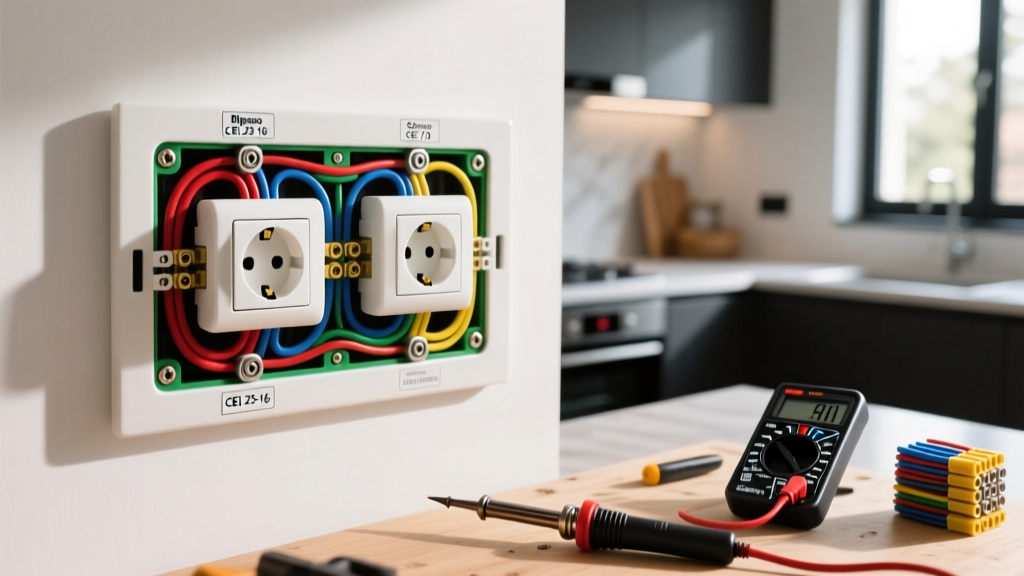
Today, the 2026 standard for residential upgrades relies on the Bipasso (dual-size) socket, which accepts both 10A and 16A Italian plugs, and the Bivalent (Schuko-Italian hybrid) socket, which accepts the European Schuko (Type F) plug alongside the Bipasso configuration. When upgrading an electrical power outlet in Italy, installing Bivalent modules is the absolute best practice for future-proofing your home.
Socket Type Comparison Matrix
| Socket Type | Standard / Alias | Pin Acceptance | Max Current | Best Use Case |
|---|---|---|---|---|
| Legacy 10A | CEI 23-50 (Small) | 10A Italian only | 10A (2300W) | Older homes, lighting circuits (Not recommended for new upgrades) |
| Legacy 16A | CEI 23-50 (Large) | 16A Italian only | 16A (3680W) | Dedicated appliance lines (ovens, HVAC) |
| Bipasso | 10A/16A Hybrid | 10A & 16A Italian | 16A (3680W) | General purpose, older appliance compatibility |
| Bivalent (Schuko-Italian) | Type F + Type L | Schuko, 10A & 16A Italian | 16A (3680W) | 2026 Standard: Living rooms, kitchens, travel adapters |
Top Receptacle Brands for Italian Upgrades
The Italian market is dominated by three major electrical manufacturers. When replacing an electrical power outlet in Italy, you will almost certainly be working with one of these ecosystems. The standard Italian flush-mounting backbox (scatola da incasso) is the 3-module (503 standard) box, measuring approximately 68mm wide.
1. Vimar (Plana & Arké Series)
Vimar is the most ubiquitous brand in Italian residential wiring. The Vimar Plana series is the budget-friendly, reliable workhorse. A standard 3-module Bivalent socket (Model 14012) costs between €6 and €9. For a more premium, modern aesthetic, the Vimar Arké series offers sleek, flat-profile faceplates and costs roughly €12 to €15 per module.
2. Bticino (Living Now & Light Series)
Owned by Legrand, Bticino is the premium choice for smart homes and high-end renovations. The Living Now series features edge-to-edge cover plates and integrated smart home capabilities (Netatmo compatibility). A Bivalent socket in the Living Now line (Model K4003C) retails for about €14 to €18. According to the Vimar International Catalog and Bticino's official specs, these premium modules feature reinforced silver-alloy contacts rated for over 10,000 insertion cycles.
3. Gewiss (Chorus Series)
Gewiss offers highly modular solutions, particularly favored in commercial spaces and modern minimalist apartments. Their Chorus series uses a unique 4-module standard in some configurations, so verify your backbox dimensions before purchasing.
Step-by-Step: Replacing a 3-Module Italian Outlet
Upgrading a standard wall outlet requires working with the Italian 3-module support frame. Follow these precise steps to ensure a safe, code-compliant installation.
- Remove the Faceplate: Insert a small flathead screwdriver into the notches on the bottom or sides of the outer cover plate and gently pry it off.
- Unscrew the Support Frame: You will see two screws anchoring the internal support frame to the wall backbox. Remove these screws and carefully pull the frame forward.
- Identify the Wiring (IEC 60446 Colors):
- Brown (or Black): Phase / Live (Fase)
- Blue: Neutral (Neutro)
- Yellow/Green: Earth / Ground (Terra)
- Prepare the Wires: If the copper ends are oxidized or damaged, snip them back and strip exactly 12mm to 14mm of insulation using a precision wire stripper.
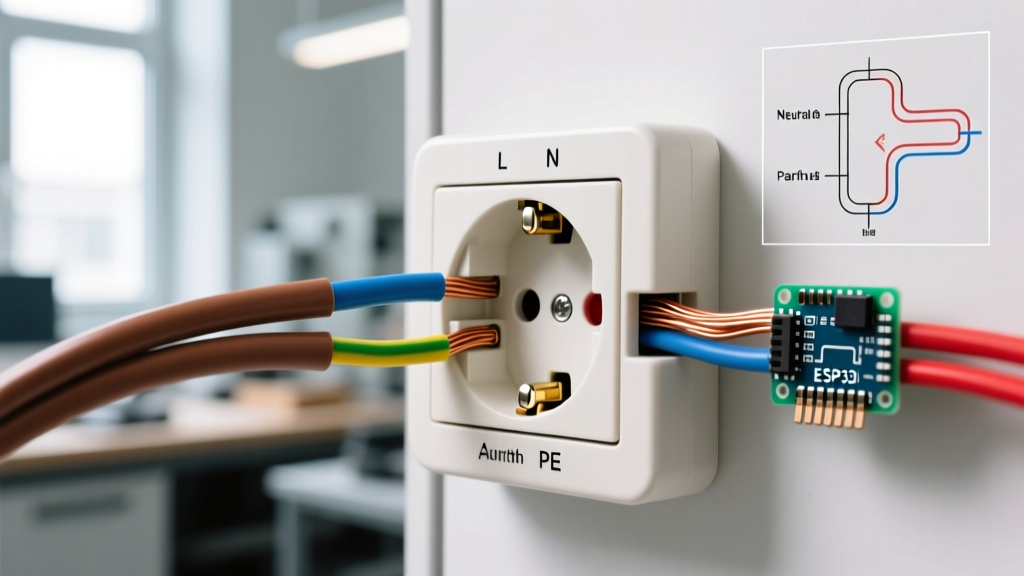
- Wire the New Bivalent Module: Insert the Yellow/Green wire into the central Earth terminal. This terminal internally bridges to both the side Schuko grounding clips and the central Type L earth pin. Insert the Blue wire into the Neutral terminal (usually marked 'N' or left side) and the Brown wire into the Phase terminal (marked 'L' or right side).
- Torque and Secure: Tighten the terminal screws to 0.5 Nm. Give each wire a gentle tug test to ensure it is seated properly. Snap the module into the center slot of the 3-module support frame, screw the frame back into the wall box, and attach the cover plate.
Modern Upgrades: USB-C PD and Smart Outlets
As of 2026, the demand for integrated charging and smart monitoring has surged. If you are upgrading an electrical power outlet in Italy, consider dedicating one 3-module wall box to a USB-C Power Delivery (PD) receptacle.
For example, the Vimar USB-C PD 30W module (Model 14232) occupies 2 modules, leaving 1 module for a standard Bipasso socket or a blank cover. This module supports the USB-C PD 3.0 protocol, delivering up to 30W to fast-charge modern laptops and smartphones directly from the wall without bulky adapters. Expect to pay between €40 and €55 for these specialized modules. Ensure the circuit you are tapping into is rated for 16A and protected by a 30mA RCD, as USB modules introduce sensitive DC electronics to the line.
CEI 64-8 Compliance: RCDs and Circuit Protection
When upgrading outlets, you must also consider the protection devices at the main panel. The Comitato Elettrotecnico Italiano (CEI) mandates strict rules under the CEI 64-8 standard for residential safety.
Historically, Italian homes used Type AC salvavita (RCDs/GFCIs) which only detect alternating current faults. However, modern appliances with variable frequency drives (VFDs)—such as inverter washing machines, heat pumps, and LED drivers—can produce smooth DC fault currents that blind Type AC RCDs. If you are upgrading your outlets to support modern high-efficiency appliances, the IEC and CEI strongly recommend upgrading your panel's 30mA RCDs to Type A or Type F to ensure comprehensive fault detection and prevent nuisance tripping.
Frequently Asked Questions
Can I install a US or UK socket in my Italian home?
While physically possible if you modify the backbox, it is highly discouraged and violates CEI 64-8 codes. It will cause issues for future owners, insurance claims, and resale value. Instead, use a high-quality Bivalent Schuko-Italian socket and a travel adapter, or install a dedicated 110V transformer circuit if you absolutely must run US-specific 120V equipment.
Do I need an electrician to replace a standard wall socket?
Under Italian law (DM 37/08), any modification or extension to the electrical system requires a certified professional to issue a Declaration of Conformity (Dichiarazione di Conformità). However, like-for-like replacement of a damaged faceplate or socket module by a homeowner for maintenance purposes is generally tolerated, provided you adhere strictly to safety protocols and do not alter the circuit topology.
Why does my new Bivalent socket feel stiff when inserting a Schuko plug?
Schuko plugs rely on side-grounding clips rather than a dedicated earth pin. Italian Bivalent sockets feature heavy-duty internal tensioning springs to maintain contact with the Schuko plug's outer rim. It is normal for these to require slightly more insertion force during the first few dozen uses compared to a standard UK or US receptacle.