
The Hidden Danger: Why Ants Invade Electrical Outlets
Discovering a trail of insects crawling out of your wall receptacles is more than just a nuisance; it is a severe fire and shock hazard. When homeowners encounter ants in electrical outlet boxes, they are often dealing with a phenomenon that has cost the electrical and agricultural industries millions of dollars in damaged infrastructure. While standard nuisance ants might wander into a wall void seeking moisture, specific species are actively drawn to the electromagnetic fields and ambient heat generated by your home's wiring.
If left untreated, an ant colony inside a junction box can cause arc faults, trip GFCI/AFCI breakers continuously, and even melt wire insulation. According to the National Fire Protection Association (NFPA), electrical failures or malfunctions are a leading cause of home structure fires, and biological intrusion into electrical panels and receptacles is an often-overlooked catalyst for these failures.
The 'Crazy Ant' Short-Circuit Phenomenon
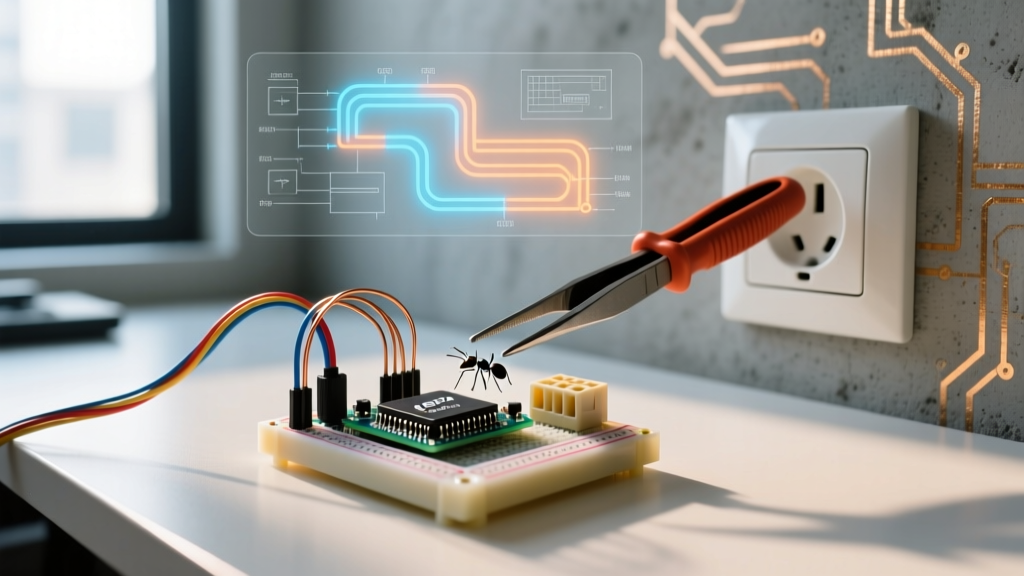
Not all ants behave the same way around electricity. The Tawny Crazy Ant (Nylanderia fulva) and the Caribbean Crazy Ant are notorious for infiltrating electrical equipment. According to entomologists at the University of Florida IFAS Extension, these ants are attracted to magnetic fields and the warmth of electrical currents. When a worker ant wanders onto an exposed terminal or wire nut and is electrocuted, it releases an alarm pheromone. This chemical signal does not repel the colony; instead, it triggers a swarm response. Thousands of ants rush to the site of the dead ant, piling up until their accumulated biomass bridges the gap between the hot and neutral terminals, resulting in a massive short circuit, localized melting, and potential ignition.
Essential Tools & Materials for Safe Remediation
As a beginner tackling this issue, you must prioritize electrical safety and targeted pest eradication. Never use liquid aerosol bug sprays (like standard RAID) inside or near an energized or recently de-energized outlet, as the propellants are highly flammable and the liquid carriers can cause immediate short circuits.
- Non-Contact Voltage Tester: Klein Tools NCVT-2 (Approx. $28). Essential for verifying the circuit is dead before touching any screws.
- Insulated Screwdrivers: Wiha 32004 Insulated Set (Approx. $45). Rated for 1000V to protect against accidental contact with live bus bars in the panel.
- Targeted Gel Bait: Syngenta Advion Ant Gel (Approx. $32 for a 4-pack in 2026). Contains Indoxacarb, which exploits the ants' trophallaxis (food-sharing) behavior to destroy the colony.
- Cleaning Solvent: 99% Isopropyl Alcohol (IPA) and an ESD-safe (anti-static) soft-bristle brush. Do not use 70% rubbing alcohol, as the 30% water content promotes copper corrosion.
- Sealing Materials: Frost King FO-1 Outlet and Switch Sealer gaskets ($4) and 100% silicone exterior caulk.
Step-by-Step Tutorial: Removing Ants from Your Outlet
Follow this exact sequence to safely eradicate the colony, clean the biological residue, and secure the receptacle.
Step 1: Isolate and Verify Power
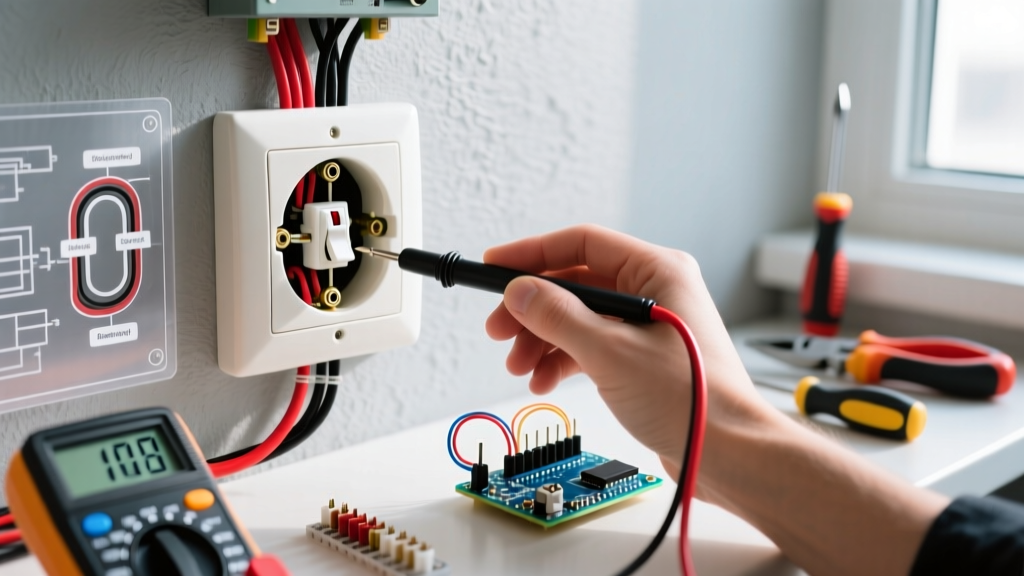
Navigate to your main electrical panel and switch off the breaker controlling the affected room. Because older homes may have mixed circuits, you must verify the power is off at the specific outlet. Insert a plug-in circuit tester or hold your Klein Tools NCVT-2 against the receptacle slots. The tester must remain completely dark and silent. If it beeps, you have not killed the correct circuit. Never proceed until power is verified off.
Step 2: Disassemble and Inspect the Junction Box
Remove the center screw of the faceplate. Carefully pull the receptacle out of the gang box by unscrewing the top and bottom mounting tabs. Do not pull too hard; you need to inspect the side wiring terminals and the wire nuts at the back of the box. Take a flashlight and look for 'ant middens'—piles of dead ants, soil, and debris packed behind the outlet yoke.
Step 3: Apply Targeted Gel Bait (Exterior to the Box)
Do not squeeze gel bait directly onto the wires or inside the metal/plastic junction box. Instead, apply small, pea-sized dots of Advion Ant Gel on the drywall paper just outside the gang box, or inside the adjacent wall void if there is a gap. The foraging ants will find the gel, carry it back to the queen, and eliminate the colony within 48 to 72 hours.
Step 4: Vacuum and Deep Clean the Components
Once the ants are dead (or if you are dealing with a pre-existing dead swarm), use a vacuum with a crevice tool to suck up the debris from the bottom of the gang box. Next, dip your ESD-safe brush into 99% Isopropyl Alcohol and gently scrub the brass terminal screws and the copper wire ends. Ants secrete acidic bodily fluids (including formic acid in some species) when crushed or electrocuted, which rapidly oxidizes copper and increases electrical resistance. This resistance generates excess heat, a primary cause of outlet melting.
Step 5: Re-Torque and Reassemble
Inspect the wire insulation for brittleness or charring. If the insulation is cracked, you must cut the wire back, strip a fresh 3/4-inch section, and re-terminate. When pushing the wires back into the box, ensure no bare copper is exposed outside the terminal screws. Tighten the terminal screws to the manufacturer's specification (typically 12 to 14 in-lbs for standard 15A/20A duplex receptacles) to prevent arcing.
Method Comparison: What to Use (and What to Avoid)
Choosing the wrong pest control method inside a wall cavity can result in catastrophic electrical failure. Review this compatibility matrix before treating your home.
| Eradication Method | Electrical Safety Rating | Effectiveness on Colony | Why / Why Not? |
|---|---|---|---|
| Liquid Aerosol Sprays | Extremely Dangerous | Low (Only kills foragers) | Propellants are flammable; liquid carriers cause immediate short circuits and copper corrosion. |
| Diatomaceous Earth (Dust) | Moderate Risk | Medium | Non-conductive, but dust accumulation inside the gang box can trap heat and interfere with moving parts in GFCI mechanisms. |
| Indoxacarb Gel Bait | Safe (If applied outside box) | Extremely High | Exploits food-sharing behavior to kill the queen. No conductive liquids or flammable propellants. |
| Boric Acid Powder | Moderate Risk | High | Effective, but if applied too heavily, moisture in the wall can turn it into a mildly conductive, corrosive paste. |
Preventative Sealing: Keeping the Colony Out
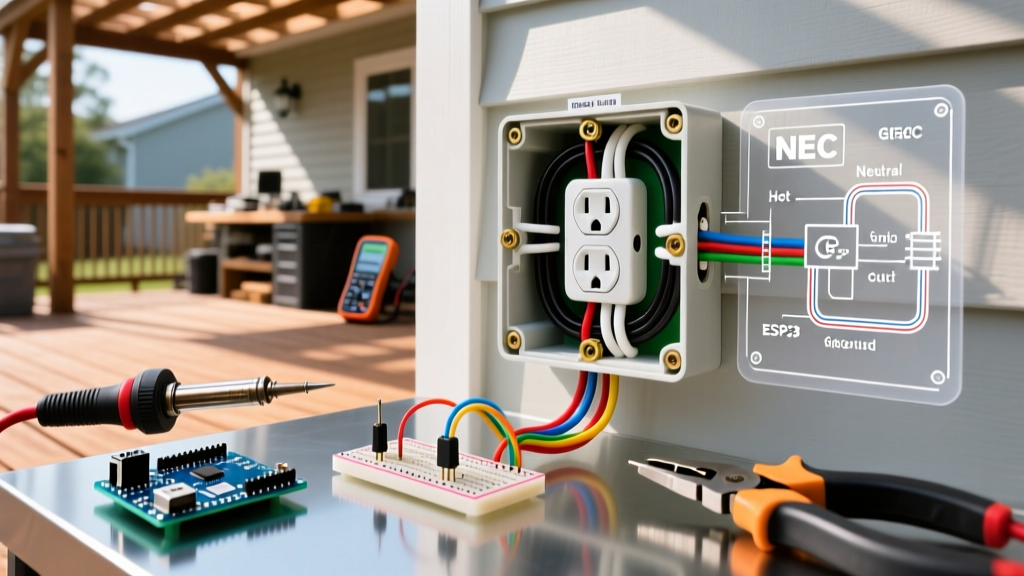
As of the 2026 NEC (NFPA 70) updates, draft-stopping and sealing of electrical boxes in exterior walls are heavily emphasized for both energy efficiency and pest exclusion. Once the outlet is clean and the colony is dead, you must fortify the perimeter.
Exterior vs. Interior Sealing Techniques
For outlets mounted on exterior walls, the gap between the vinyl siding (or stucco) and the plastic gang box is a superhighway for insects. Go outside and apply a continuous bead of 100% silicone exterior caulk around the weatherproof cover plate. Inside, install a Frost King FO-1 foam gasket behind the plastic faceplate. This foam creates an airtight seal against the drywall, blocking pheromone trails from reaching the interior living space while providing a minor thermal break.
Safety Warning: Never use expanding polyurethane foam (like Great Stuff) inside an electrical junction box to seal gaps. Expanding foam is highly flammable during application, traps dangerous amounts of heat generated by the receptacle, and violates Consumer Product Safety Commission (CPSC) guidelines regarding wire ampacity and heat dissipation.
Frequently Asked Questions (FAQ)
What if the ants are already inside the wire nuts?
If you see ants crawling out from under the plastic wire nuts at the back of the box, you must unscrew the wire nuts, separate the wires, and clean them with 99% IPA. Ants packed inside wire nuts compromise the metal-to-metal contact, leading to high-resistance faults. Replace any corroded wire nuts with new, UL-listed copper crimp sleeves or high-quality silicone-filled wire connectors (like 3M Scotchlok) if the connection is in a damp exterior wall.
Can ants damage the internal electronics of a GFCI outlet?
Yes. GFCI and AFCI receptacles contain sensitive microprocessors and sensing coils. If a swarm of crazy ants bridges the solder joints on the internal PCB (Printed Circuit Board), the outlet will trip continuously or fail in a 'fail-safe' or 'fail-dangerous' state. If a GFCI outlet is heavily infested, do not attempt to clean the internal electronics; replace the entire receptacle with a new 20A Tamper-Resistant GFCI (approx. $25-$35).
When should I call a licensed electrician or exterminator?
If you remove the faceplate and discover that the main service panel (breaker box) is also infested, or if the wire insulation inside the wall is melted and brittle, stop immediately. Whole-house infestations of Tawny Crazy Ants require a coordinated effort between a licensed pest control professional (using specialized non-conductive dusts in wall voids) and a master electrician to inspect the bus bars for arc damage.