
Navigating the Spanish Electrical Landscape
Upgrading an electrical outlet in Spain requires more than just swapping out a dated faceplate for a modern one. Whether you are renovating a historic finca in Andalusia, updating a mid-century apartment in Madrid, or simply adding USB-C charging to your kitchen, understanding the local 230V/50Hz infrastructure is critical. Unlike North American systems that operate at 120V, Spain’s higher voltage demands strict adherence to safety protocols and specific wiring standards.
For expats and DIY enthusiasts, the most vital concept to grasp is the Reglamento Electrotécnico para Baja Tensión (REBT). This national electrical code dictates everything from wire gauge to circuit breaker sizing. Ignoring these regulations isn't just a safety hazard; it can void your home insurance and cause your property to fail the mandatory Boletín Eléctrico inspection required for new utility connections. This comprehensive guide will walk you through the technical, legal, and practical steps of replacing and upgrading Spanish wall sockets in 2026.
Type C vs. Type F: What’s Actually in Your Wall?
Before you purchase replacement outlets, you must identify the existing socket type. According to the International Electrotechnical Commission (IEC), Spain officially utilizes two plug standards, though only one is legal for new installations.
| Feature | Type C (Europlug) | Type F (Schuko) |
|---|---|---|
| Grounding | Ungrounded (2-pin) | Grounded (2-pin + earth clips) |
| Max Current | 2.5A (Historically up to 10A) | 16A (Standard residential) |
| REBT Status | Obsolete / Illegal for new installs | Mandatory standard |
| Common Era | Pre-1980s installations | 1980s to Present |
If your home still features flush-mounted, ungrounded Type C outlets, you are overdue for an upgrade. Modern appliances, surge protectors, and smart home devices require the grounding path provided by the Type F (Schuko) standard to operate safely and meet current AENOR certification requirements.
REBT Compliance: The Law Behind the Socket
The REBT (specifically Royal Decree 842/2002, as updated) is the bible of Spanish electrical work. You can review the official Boletín Oficial del Estado (BOE) documentation for the exact legal text, but here are the practical rules you must follow when upgrading an electrical outlet in Spain:
Circuit Classifications (ITC-BT-25)
- C1 (Lighting): 1.5mm² wire, protected by a 10A breaker. (No outlets allowed here).
- C2 (General Use Outlets): 2.5mm² wire, protected by a 16A breaker. Maximum of 20 outlets per circuit.
- C3 (Kitchen/Oven): 4mm² or 6mm² wire, protected by a 20A or 25A breaker. Dedicated to high-draw appliances.
- C4 (Washing Machine/Dishwasher): 2.5mm² wire, protected by a 16A breaker. Dedicated circuits for wet appliances.
Expert Warning: Never connect a new 16A Schuko outlet to a 1.5mm² lighting wire. If a fault occurs, the wire will overheat and potentially catch fire before the 10A breaker trips. Always verify the wire gauge in the backbox before upgrading.
Step-by-Step Schuko Outlet Replacement
Replacing a standard wall socket in Spain follows a logical sequence, but local hardware quirks require specific attention.
Step 1: Isolate and Verify
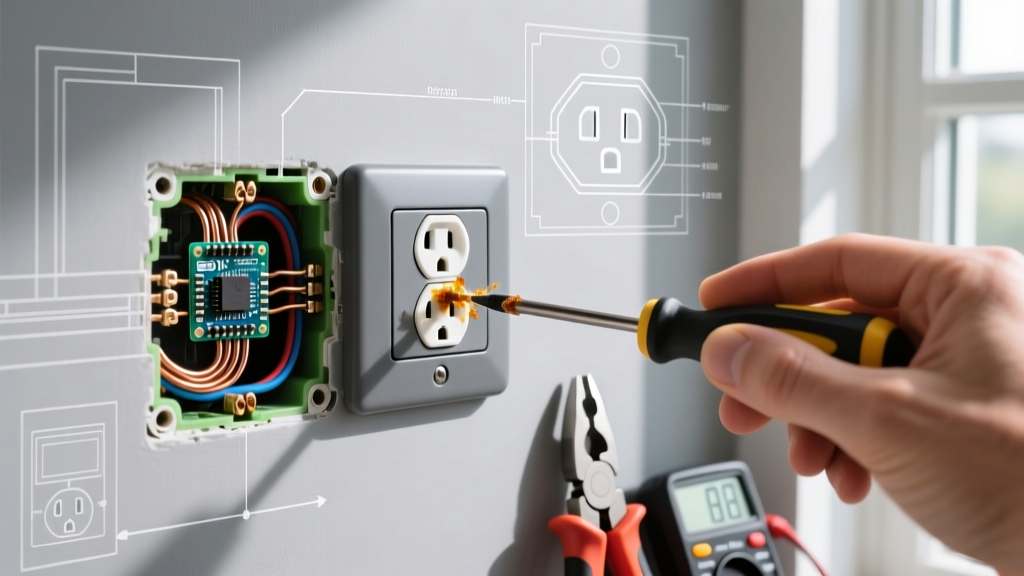
Locate your cuadro eléctrico (main electrical panel). Turn off the specific 16A pequeño interruptor automático (PIA) for the room you are working in. Use a non-contact voltage tester (like the Fluke 1AC-II) to confirm the wires are dead. Spanish panels also feature an Interruptor Diferencial (RCD/GFCI equivalent)—do not rely on this for isolation; always kill the specific PIA.
Step 2: Extract the Old Mechanism
Spanish outlets are typically mounted in standard 65mm diameter circular backboxes (cajas de mecanismo). Remove the center screw holding the faceplate. Gently pull the mechanism out. Note that older Spanish installations might use M3x25mm machine screws rather than drywall screws.
Step 3: Inspect and Prep the Wiring
Post-2002 REBT color codes are strict:
Brown (Fase): Live/Hot
Blue (Neutro): Neutral
Yellow/Green (Tierra): Earth/Ground
Note: In pre-1990s homes, you may encounter Black (Live), Gray (Neutral), and bare copper or green (Earth). Label them immediately with tape if the colors are non-standard.
Strip exactly 12mm of insulation from the solid copper wires. Do not score the copper, as this creates a weak point that can snap when pushed back into the tight Spanish backbox.
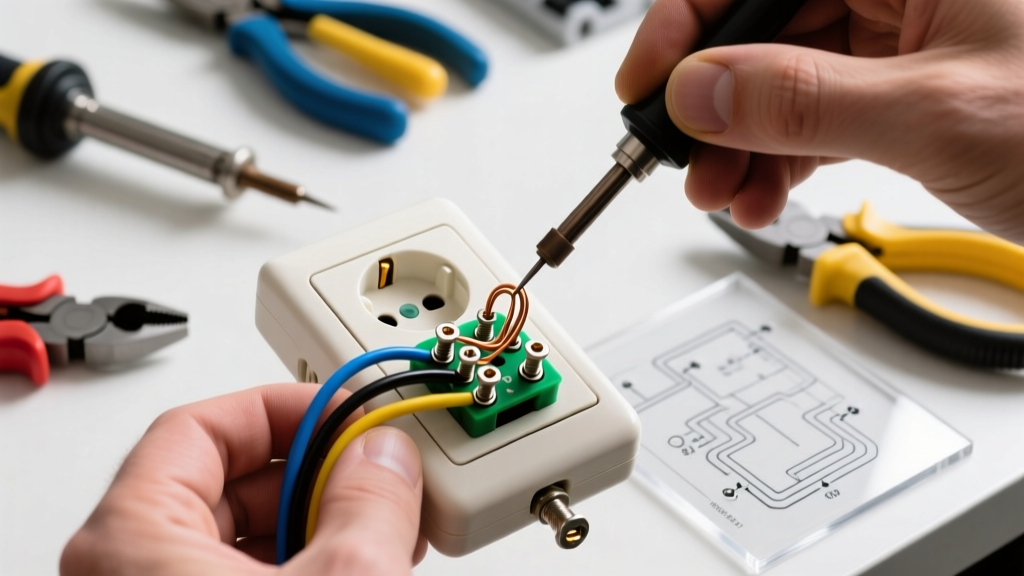
Step 4: Terminate the New Schuko
Insert the wires into the new mechanism's screw terminals.
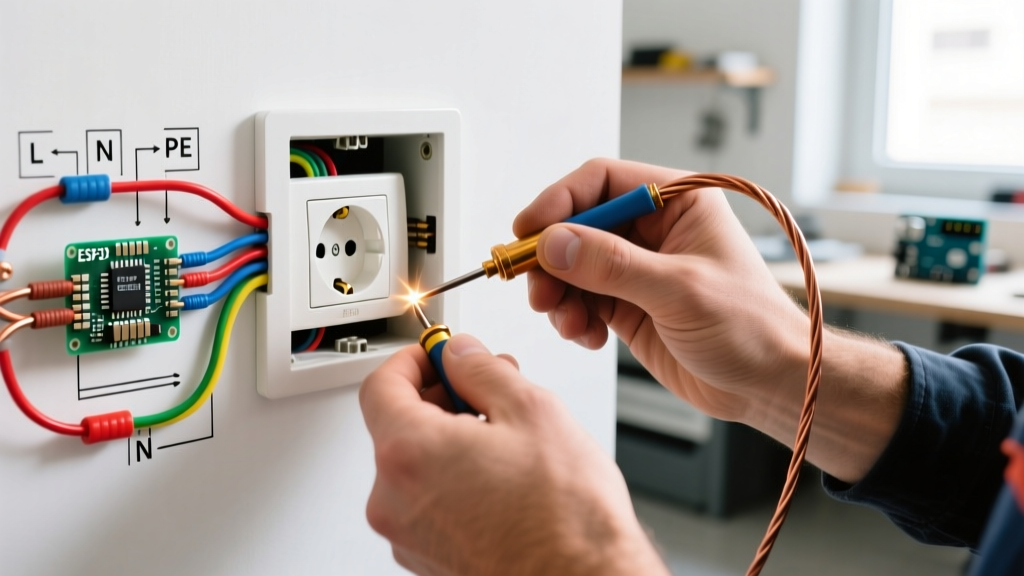
1. Brown goes to the terminal marked 'L' or the right-side pin.
2. Blue goes to the terminal marked 'N' or the left-side pin.
3. Yellow/Green goes to the central terminal connected to the side grounding clips.
Tighten the screws to 0.8 Nm of torque. Give each wire a firm tug to ensure a solid mechanical connection.
Step 5: Mount and Test
Carefully fold the wires in a 'Z' pattern to fit them into the 40mm or 50mm deep backbox. Secure the mechanism using the expanding claws (uñas) and the M3 machine screws. Restore power at the PIA and test with a multimeter for 230V between Live and Neutral, and 230V between Live and Earth.
Top 2026 Upgrade Options for Spanish Homes
The Spanish market is dominated by high-quality domestic and European brands. When upgrading an electrical outlet in Spain, consider these modern alternatives that integrate seamlessly with standard 65mm backboxes.
| Brand & Model | Type | Key Features | Avg. Price (EUR) |
|---|---|---|---|
| Simon 100 Schuko | Standard Premium | Flush design, high-impact polycarbonate, child safety shutters. | €6.50 - €9.00 |
| Legrand Valena Next + USB-C | Integrated Tech | 30W Power Delivery (PD) USB-C, fits standard 50mm depth boxes. | €28.00 - €35.00 |
| Shelly Plus Wall Plug | Smart / Wi-Fi | Energy monitoring, Matter protocol support, requires 40mm+ depth. | €42.00 - €55.00 |
| Schneider Electric Odace | Designer / Modular | Customizable faceplates, robust terminal cages for stranded wire. | €11.00 - €14.00 |
Troubleshooting Edge Cases in Older Properties
Spanish real estate is full of charming but electrically compromised older buildings. Here is how to handle the most common roadblocks when upgrading.
Edge Case 1: The Missing Earth Wire
The Problem: You open a backbox in a 1970s apartment and find only Brown and Blue wires. No Yellow/Green earth wire is present.
The Solution: Under current REBT regulations, you cannot legally install a Type F Schuko outlet without a physical ground connection. Using a Schuko faceplate without an earth wire creates a false sense of security and is highly dangerous. You must either run a new 2.5mm² Yellow/Green wire from the nearest accessible caja de derivación (junction box) in the ceiling cavity, or downgrade to a specialized ungrounded outlet (though pulling a new earth wire is the only code-compliant permanent fix).
Edge Case 2: Shallow Backbox Depth
The Problem: You purchased a Legrand USB-C outlet, but your wall features older 30mm shallow backboxes. The bulky electronics module prevents the faceplate from sitting flush.
The Solution: Purchase a prolongador de caja universal (universal box extender). These are 15mm to 20mm plastic rings that screw into the existing 65mm backbox, effectively increasing the depth to 50mm without requiring you to chisel the plaster wall.
Edge Case 3: Tripping the Differential Switch
The Problem: Every time you plug a Class I appliance (like a washing machine or refrigerator) into your newly upgraded outlet, the main Interruptor Diferencial (30mA RCD) trips.
The Solution: This indicates a ground fault in the appliance itself, or a crossed Neutral/Earth wire somewhere downstream. Use a Megger insulation resistance tester to check the circuit. If the wiring is sound, the appliance has an internal leakage and must be repaired. Do not bypass the differential switch.
Frequently Asked Questions
Can I use a US 120V outlet in Spain?
No. The physical plug shapes are different, but more importantly, Spain operates on a 230V/50Hz grid. Installing a North American NEMA 5-15 outlet and wiring it to 230V will instantly destroy any 120V appliance plugged into it and pose a severe fire and electrocution hazard. Always use 230V-rated Schuko mechanisms.
Do I need an electrician's license to change an outlet in Spain?
While changing a single faceplate or mechanism in your own primary residence is generally tolerated as basic maintenance, any alteration to the circuit topology, adding new circuits, or upgrading the main panel requires a certified instalador autorizado. Only a certified professional can issue the Boletín Eléctrico required by utility companies like Iberdrola or Endesa to increase your contracted power limit (potencia contratada).
Why are Spanish outlet screws different from UK or US drywall screws?
Spanish backboxes are manufactured with threaded brass inserts designed specifically for M3 metric machine screws (typically 3x20mm or 3x25mm). Using coarse-thread drywall screws will strip the brass inserts, rendering the backbox useless and requiring a full wall repair and box replacement.