
The Modern Code Standard: NEMA 14-50 and the 4-Prong Mandate
Wiring an electric stove outlet is not a standard 120-volt receptacle swap; it involves managing a high-amperage, 240-volt dedicated circuit that demands absolute precision. Historically, electric ranges utilized a 3-prong NEMA 10-50 configuration, which dangerously bonded the neutral and ground paths. Modern National Electrical Code (NEC) standards, specifically Article 250.140, strictly mandate a 4-prong NEMA 14-50R receptacle for all new installations. This separates the grounded (neutral) conductor from the equipment grounding conductor, drastically reducing the risk of lethal shock in the event of a neutral fault.
Before purchasing a single foot of wire, you must understand that the National Fire Protection Association (NFPA) enforces rigorous sizing and termination standards for 50-amp circuits. Using undersized materials or improper termination techniques doesn't just violate code—it creates a high-resistance connection that can melt the receptacle face and ignite surrounding framing. This guide breaks down the exact materials, specialized tools, and technical specifications required to execute this high-stakes wiring project safely in 2026.
The Core Material Matrix: Specs and 2026 Pricing
When sourcing materials for wiring an electric stove outlet, avoid big-box generic bins where possible. Industrial-grade components handle the thermal expansion and contraction of 50-amp loads far better than residential-grade alternatives. Below is the essential bill of materials.
| Component | Required Specification | Recommended Model / Brand | Est. Cost (2026) |
|---|---|---|---|
| Receptacle | 50A, 125/250V, NEMA 14-50R, Industrial Grade | Hubbell 9450A or Leviton 210-R50 | $35 - $65 |
| Circuit Breaker | 50-Amp, 2-Pole, 240V (Match panel brand) | Square D HOM250 / Eaton BR250 | $45 - $75 |
| Cable (Copper) | 6/3 AWG with Ground (NM-B or SER) | Southwire 6/3 NM-B Romex | $3.50 - $4.50 / ft |
| Cable (Aluminum) | 4/3 AWG with Ground (SER only) | Cerro 4/3 Aluminum SER | $1.80 - $2.50 / ft |
| Wall Plate | Single Gang, NEMA 14-50 Stainless Steel | Leviton 80401 | $4 - $8 |
Deep Dive: Selecting the Right Cable and Breaker
Copper vs. Aluminum Conductors
For a standard 50-amp stove circuit, the NEC dictates a minimum of 6 AWG copper or 4 AWG aluminum. While copper (specifically 6/3 NM-B) is the default choice for most indoor residential runs due to its flexibility and ease of termination, aluminum (SER cable) has seen a massive resurgence due to copper price volatility.
If you choose aluminum SER (Service Entrance Rated) cable, you must account for two critical factors:
- Termination Prep: Aluminum oxidizes rapidly when exposed to air. You must coat the stripped conductor ends with an antioxidant compound like Noalox or Penetrox before inserting them into the breaker or receptacle terminals.
- Torque Sensitivity: Aluminum expands and contracts more than copper under thermal load. If the termination torque is off by even a few inch-pounds, the connection will loosen over time, leading to catastrophic arcing.
Voltage Drop and Run Length
The standard 6 AWG copper wire is rated for 50 amps, but this assumes a standard run length. If your electrical panel is located more than 50 feet from the stove outlet, you must calculate voltage drop. A 3% voltage drop limit on a 240V circuit means you can only afford to lose 7.2 volts. For runs exceeding 60 feet, you must upsize to 4 AWG copper or 2 AWG aluminum to maintain optimal performance and prevent the stove's internal control boards from browning out during high-draw heating cycles.
The Receptacle: Heavy-Duty vs. Standard Grade
Not all NEMA 14-50R receptacles are built equally. When wiring an electric stove outlet that will draw 40+ amps continuously during baking or roasting cycles, the internal brass contacts generate significant heat.
Expert Insight: Standard residential 14-50 receptacles often use thin, stamped brass internal straps. For high-draw appliances, always specify an 'Industrial Grade' receptacle like the Hubbell 9450A. These feature massive, solid brass line contacts and a high-impact thermoset phenolic face that resists melting and cracking under sustained thermal stress.
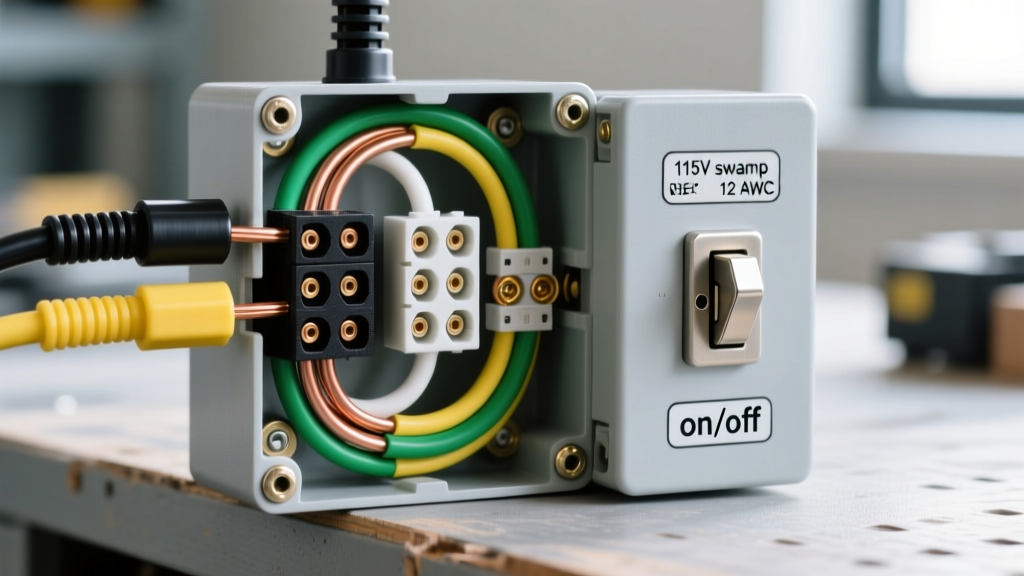
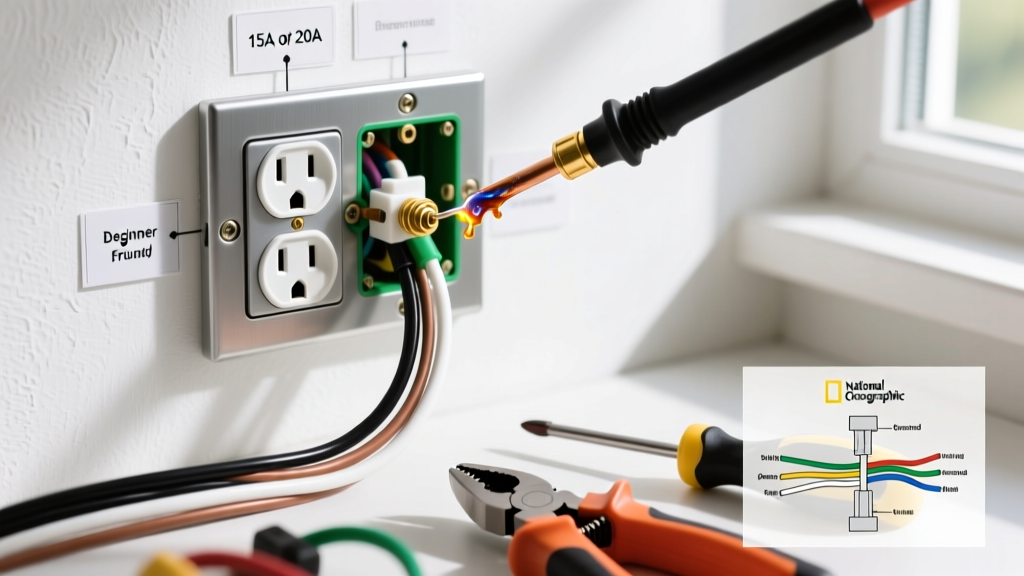
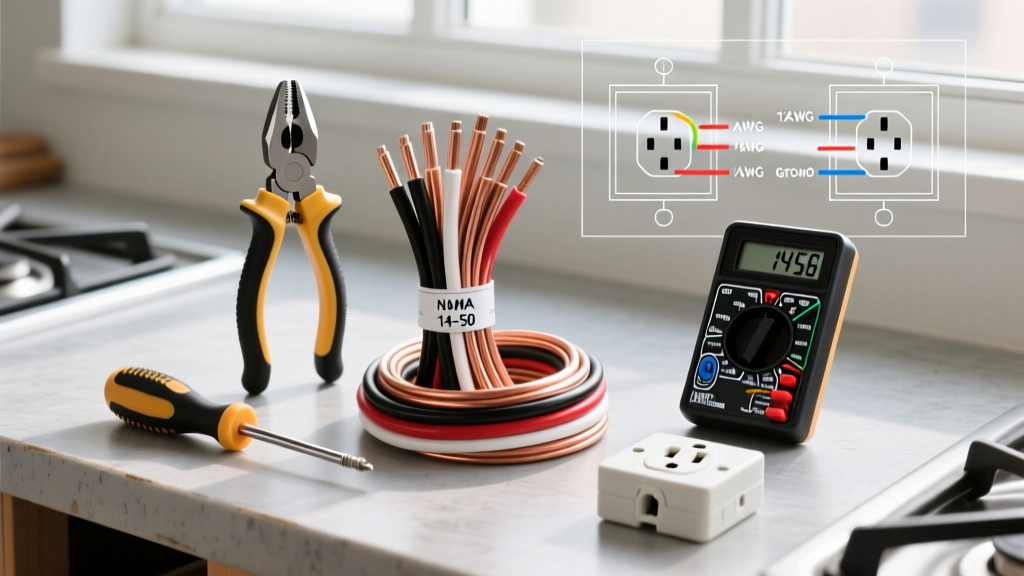
When wiring the receptacle, pay strict attention to the pin configuration. The 'X' slot is Hot 1 (Black), the 'Y' slot is Hot 2 (Red), the 'W' slot is Neutral (White), and the rounded 'U' pin is Ground (Bare/Green). Reversing the neutral and ground on the receptacle yoke is a common, lethal DIY error that will bypass the breaker's protection mechanism.
The Professional Tool Kit: Beyond Basic Screwdrivers
To meet modern safety standards and pass municipal inspections, your tool kit must extend beyond standard wire strippers and flathead screwdrivers. The Occupational Safety and Health Administration (OSHA) and local AHJs (Authority Having Jurisdiction) increasingly demand proof of proper termination techniques.
1. The Calibrated Torque Screwdriver
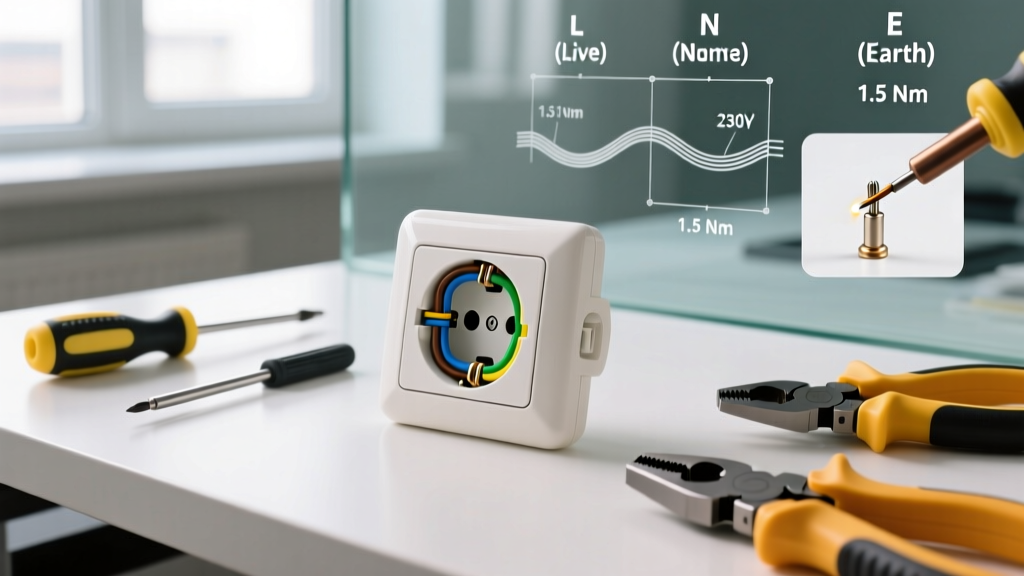
This is the most critical, yet most omitted, tool in DIY electrical work. NEC Article 110.14(D) explicitly requires that terminations be torqued to the manufacturer's specified values. For a typical 50-amp breaker and NEMA 14-50 receptacle, the required torque is usually between 40 and 50 inch-pounds. Using a standard screwdriver relies on 'feel,' which is wildly inaccurate. Invest in a calibrated torque screwdriver (such as the Klein Tools 702-5 or CDI 401SM) to ensure the lugs are clamped with exact pressure, preventing both stripped threads and loose connections.
2. Heavy-Duty Cable Ripper and Strippers
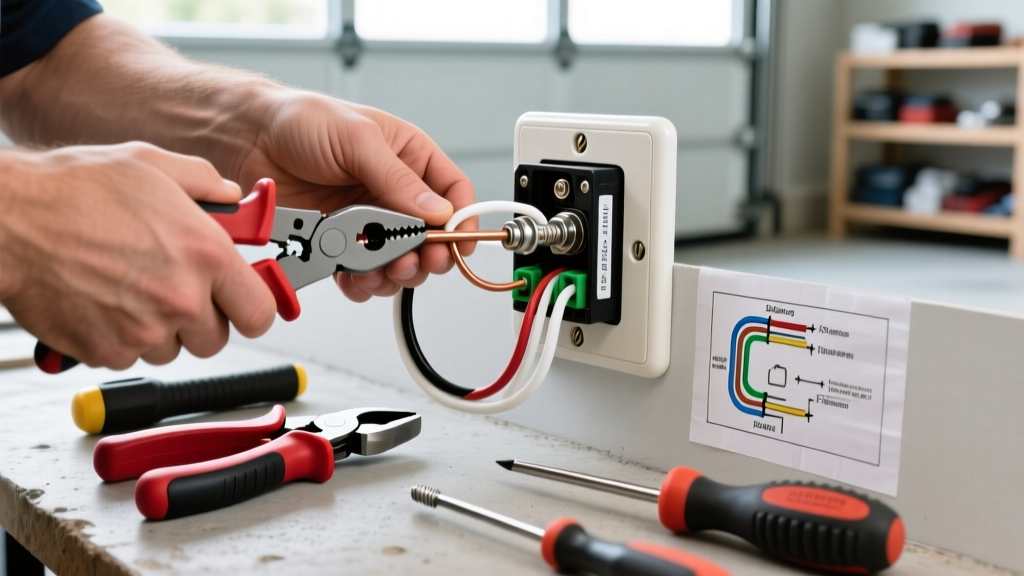
6/3 NM-B cable features a thick, rigid PVC jacket. Using a utility knife to score the jacket often results in nicking the copper conductors, creating a localized hot spot that can fail under a 50-amp load. Use a dedicated cable ripper (like the Klein 460) to split the sheath longitudinally, and use heavy-duty stepped wire strippers (rated for 6 AWG solid and stranded) to remove exactly 3/4-inch of insulation without scoring the metal.
3. True-RMS Digital Multimeter
Before energizing the circuit, and immediately after, a True-RMS multimeter (such as the Fluke 117) is mandatory. You must verify 240V across the two hot legs (X to Y), and exactly 120V from each hot leg to the neutral (X to W, and Y to W). Furthermore, you must test continuity between the neutral and ground bus bars in the panel *before* the breaker is installed to ensure no illegal bonds exist downstream.
Critical Failure Modes and Edge Cases
Even with the right materials, specific edge cases can compromise the integrity of your stove outlet wiring. Be vigilant against the following failure modes:
- The 'Pigtail' Neutral Error: Never splice the neutral wire using a standard wire nut inside the receptacle box if the box is too shallow. The sheer volume of 6/3 wire requires a deep, 40-cubic-inch masonry or metal old-work box to allow the wires to fold without putting mechanical stress on the receptacle terminals.
- Aluminum Creep: If using aluminum wire, the metal 'creeps' or deforms under constant pressure. It is highly recommended to schedule a follow-up torque check six months after the initial installation to ensure the lugs have not loosened.
- Shared Neutral Violations: A 50-amp stove circuit must be entirely dedicated. Do not attempt to tap into the stove's neutral or ground to feed a nearby 120V convenience outlet. This will overload the neutral conductor and trip the GFCI/AFCI breakers if they are integrated into your modern panel.
Final Verification and Safety Sign-Off
Wiring an electric stove outlet bridges the gap between heavy industrial power and residential convenience. By adhering to the 4-prong NEMA 14-50 mandate, utilizing industrial-grade receptacles, and enforcing strict torque specifications with calibrated tools, you ensure a system that operates safely for decades. Always consult with a licensed professional or your local building department, as Underwriters Laboratories (UL) and local codes may have specific amendments regarding panel capacity and load calculations that supersede general guidelines. Safety in high-amperage circuits is never an area for compromise.