
Understanding the Irish Electrical Outlet Standard
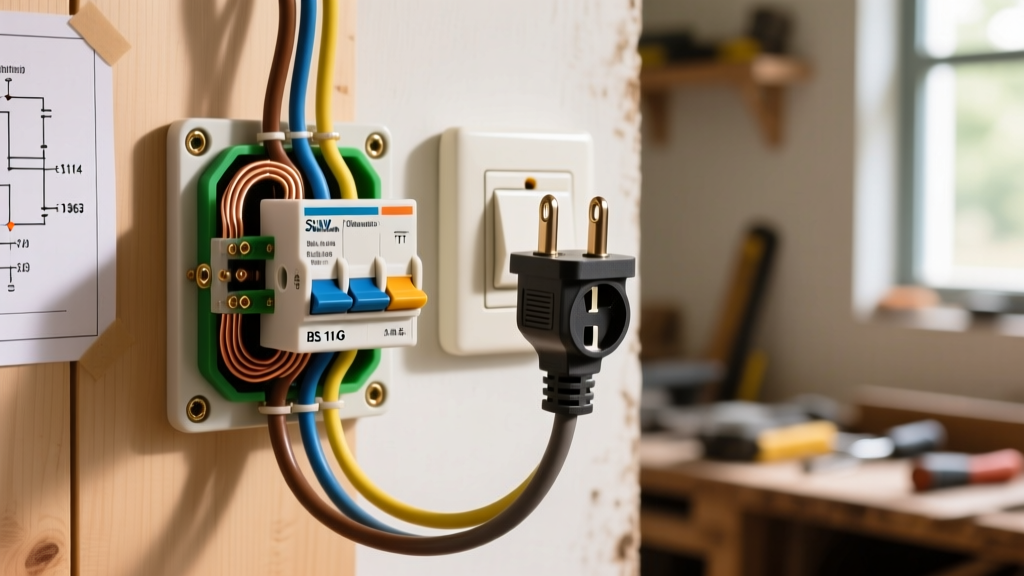
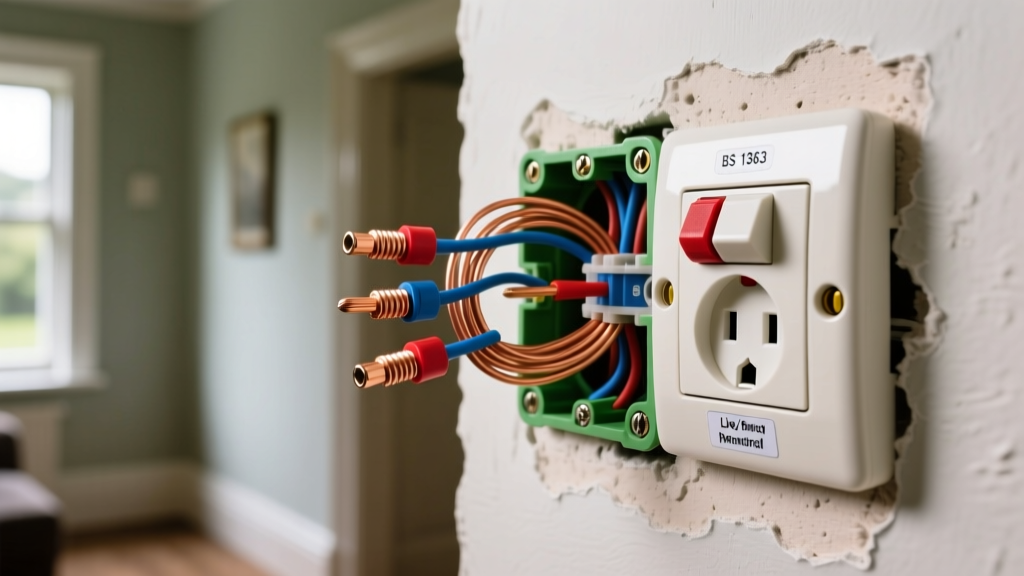
When planning to upgrade an electrical outlet in Ireland, it is critical to understand that the Republic of Ireland operates under strict national wiring rules and specific hardware standards. Unlike mainland Europe, which primarily uses the Schuko (Type F) or Europlug (Type C) systems, Ireland utilizes the BS 1363 (Type G) standard. This means all standard domestic socket-outlets are rated at 13 Amps, feature rectangular pins, and incorporate individual fuses within the plug rather than relying solely on the circuit breaker for appliance protection.
Furthermore, all electrical installations must comply with I.S. 401 (The National Rules for Electrical Installations), published by the National Standards Authority of Ireland (NSAI). The latest iterations of I.S. 401 place heavy emphasis on circuit protection, earth continuity, and the use of Residual Current Devices (RCDs) or Arc Fault Detection Devices (AFDDs) to prevent electrical fires.
When Should You Replace Your Irish Sockets?
While a high-quality BS 1363 socket from a reputable brand can last 20 to 30 years, several failure modes and modern requirements necessitate an upgrade:
- Terminal Degradation and Arcing: Over time, the brass contacts inside the socket can loosen, especially if high-draw appliances (like kettles or space heaters) are frequently plugged in and unplugged. This causes micro-arcing, leading to scorch marks on the faceplate or a distinct ozone smell.
- Outdated Earth Sleeving: In Irish homes wired prior to the 2006 harmonized color code changes, the Circuit Protective Conductor (CPC) was often left as bare copper. Current I.S. 401 regulations mandate that all exposed earth wires must be sleeved in green-and-yellow. If you remove an old faceplate and see bare copper, an upgrade and remediation are legally required.
- Integration of USB-C PD: Modern households require direct charging for laptops and smartphones. Upgrading to a 13A switched socket with integrated 45W USB-C Power Delivery (PD) modules eliminates the need for bulky wall-warts.
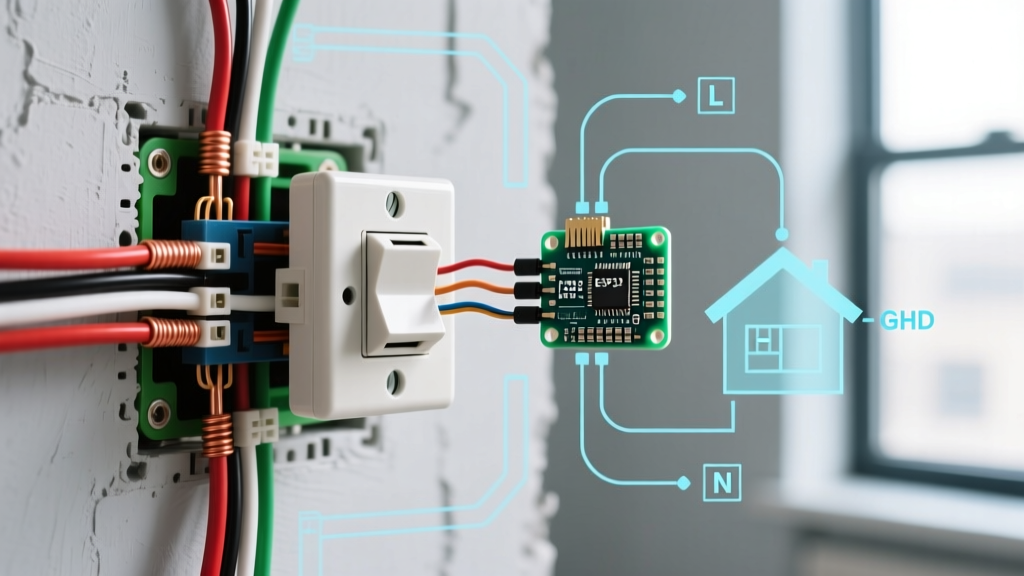
- Smart Home Automation: Replacing standard outlets with Wi-Fi-enabled smart sockets (monitoring energy usage via apps) is a major trend in Irish retrofits.
Choosing the Right Replacement Socket
Not all BS 1363 sockets are created equal. The internal brass thickness, switch mechanisms, and backbox depth requirements vary significantly between brands. Below is a comparison of the most common premium brands available in Irish electrical wholesalers in 2026.
| Brand & Model | Type | Approx. Price (EUR) | Min. Backbox Depth | Best For |
|---|---|---|---|---|
| MK Logic Plus | 13A Switched | €12.50 - €15.00 | 35mm | Standard replacements, high durability |
| Schneider Atlas | 13A Switched | €11.00 - €14.00 | 35mm | Modern aesthetics, smooth switch action |
| Contactum Ultimate | 13A + 2x USB-C PD | €28.00 - €35.00 | 47mm (Deep) | Bedside tables, home offices |
| Crabtree Starbreaker | 13A Unswitched | €9.00 - €12.00 | 35mm | Behind appliances (fridges, washing machines) |
Note: Always opt for 47mm deep backboxes when installing USB or Smart sockets. The internal electronics require extra physical space, and cramming 2.5mm² twin and earth cables into a shallow 35mm box will cause severe strain on the terminals.
Step-by-Step Wiring Guide for a 13A Switched Socket
Replacing an existing electrical outlet in Ireland on a like-for-like basis is a task many competent DIYers undertake. However, electricity is unforgiving. The Health and Safety Authority (HSA) strongly advises that if you are unsure, you must hire a Registered Competent Installer (RCI).
1. Safe Isolation Procedure
Never rely on simply switching off the socket or turning off the wall switch. You must isolate the circuit at the Distribution Board (DB).
- Identify the correct Miniature Circuit Breaker (MCB) or RCBO for the socket circuit.
- Switch it to the OFF position and apply a physical lock-off device to prevent accidental re-energization.
- Use a dedicated, approved two-pole voltage indicator (not a standard multimeter) to prove the socket is dead. Test the indicator on a known live source first, test the dead socket, then re-test the known live source to ensure the tester hasn't failed mid-process.
2. Removing the Old Faceplate
Unscrew the faceplate and gently pull it forward. Take note of the wiring configuration. In Ireland, you will typically encounter a Radial Circuit (one set of cables entering the box) or a Ring Final Circuit (two sets of cables entering the box, forming a loop back to the DB).
3. Preparing the Cables
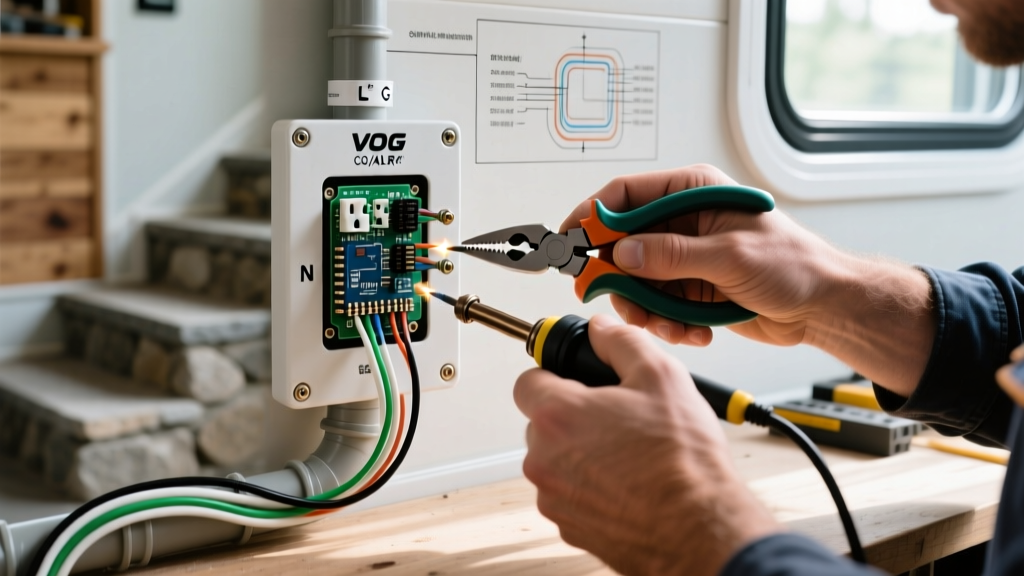
Irish socket circuits are almost universally wired using 2.5mm² Twin and Earth (T&E) cable. If the existing wires are short or damaged, strip back the outer grey PVC sheath to expose 50mm of the inner cores. Strip exactly 15mm of insulation from the Brown (Line), Blue (Neutral), and Earth wires. Critical I.S. 401 Rule: If the earth wire is bare copper, you must slide a green-and-yellow earth sleeve over it before termination.
4. Terminating the Connections
Modern Irish sockets feature clear markings on the rear chassis:
- Brown (Line/Live): Connect to the terminal marked 'L' or 'Line'. On a switched socket, this goes to the side with the switch mechanism.
- Blue (Neutral): Connect to the terminal marked 'N' or 'Neutral'.
- Green/Yellow (Earth): Connect to the terminal marked 'E' or the Earth symbol. This is usually located centrally or on the top mounting ear.
Ensure no bare copper is visible outside the terminal brass, and no insulation is caught inside the terminal clamp. If the manufacturer specifies a torque setting (e.g., 1.5 Nm for MK Logic Plus), use a calibrated torque screwdriver to prevent terminal cracking or loose connections over time.
5. Ring Circuit Spurring and Linking
If you are working on a Ring Final Circuit and the socket has two cables entering, both Brown wires must go into the 'L' terminal (or be crimped together with an insulated ferrule if the terminal cannot safely accept two 2.5mm² wires). The same applies to the Neutral and Earth terminals. Never leave one set of cables disconnected, as this breaks the ring and overloads the remaining cable path.
Legal and Regulatory Compliance in Ireland
Under the oversight of Safe Electric Ireland, electrical work is heavily regulated. While replacing a damaged faceplate with an identical like-for-like model in a standard dry room is generally considered minor maintenance, any new circuit, extension of a circuit, or work in restricted locations (like bathrooms or outdoors) must be carried out and certified by a Registered Electrical Contractor (REC).
If you are upgrading your entire home's outlets as part of a larger rewiring project, the contractor must issue a Completion Certificate upon finishing. This certificate is a legal requirement if you ever intend to sell your property or make an insurance claim related to an electrical fire.
2026 Cost Breakdown: DIY vs. Professional Installation
Budgeting for an outlet upgrade requires understanding current market rates for materials and labor in Ireland.
| Cost Factor | DIY Approach | Hiring an RCI (Professional) |
|---|---|---|
| Standard 13A Socket (MK/Schneider) | €12 - €18 per unit | €20 - €30 per unit (supplied) |
| USB-C Integrated Socket | €30 - €45 per unit | €50 - €75 per unit (supplied) |
| Labor / Call-out Fee | €0 | €85 - €120 (Initial call-out) |
| Hourly Rate | €0 | €70 - €95 per hour |
| Testing & Certification | N/A | €150 - €250 (If altering circuits) |
Pro Tip: If hiring an electrician, batch your upgrades. Replacing a single socket will cost you the €100 call-out fee plus labor, making it roughly €180. Replacing 15 sockets in the same visit will drop the per-socket labor cost to roughly €15 each.
Frequently Asked Questions
Can I use a UK-purchased socket in the Republic of Ireland?
Yes. Because both jurisdictions utilize the BS 1363 standard and share the same 230V/50Hz grid parameters, a socket purchased in Northern Ireland or Great Britain is physically and legally compatible with Irish wiring, provided it carries the appropriate BS/IS certification marks.
Why does my new USB socket feel warm to the touch?
Sockets with integrated USB-C Power Delivery modules contain internal step-down transformers and rectifiers. It is entirely normal for the faceplate to feel warm (up to 40°C) when actively charging a high-draw device like a laptop. However, if the plastic feels hot enough to be uncomfortable, or if it smells of melting PVC, isolate the circuit immediately, as this indicates a failing internal component or overloaded circuit.
Do I need to upgrade my RCD when replacing sockets?
Not necessarily for a simple like-for-like swap. However, I.S. 401:2020 strongly recommends that all standard socket-outlets intended for general use by ordinary persons be protected by an RCD with a residual operating current not exceeding 30mA. If your home still relies on older, non-RCD protected MCBs for socket circuits, upgrading the Distribution Board to RCBOs should be your primary safety priority before swapping faceplates.