
The Unique Anatomy of the Copenhagen Electrical Outlet
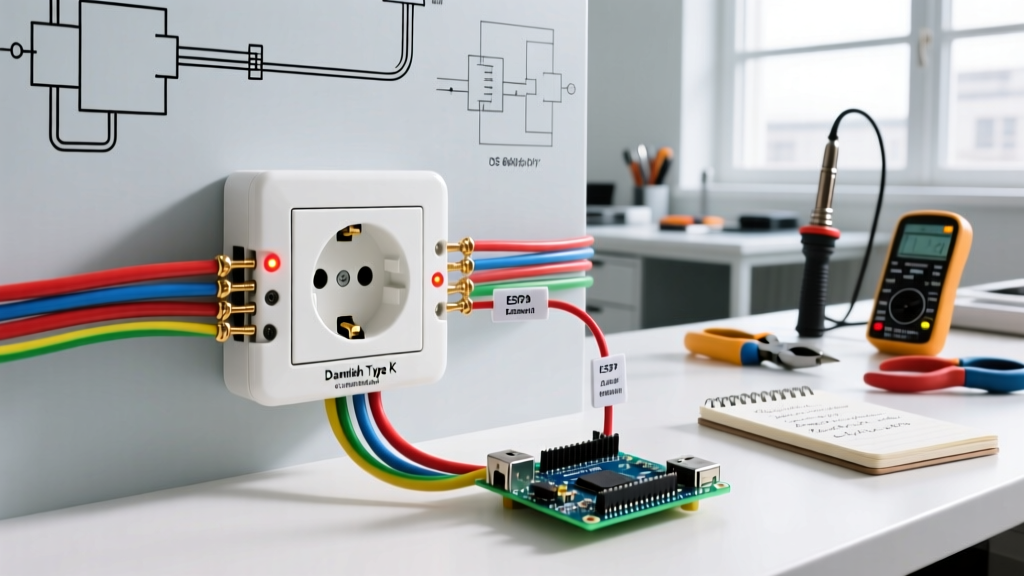
When navigating European electrical systems, the Copenhagen electrical outlet stands out as a unique regional anomaly. Officially designated as Type K (standard DS 60884-2-D1), this receptacle is almost exclusively used in Denmark and Greenland. Unlike the ubiquitous Schuko (Type F) found in Germany or the protruding earth pin (Type E) used in France, the Copenhagen standard utilizes a distinct three-pin configuration featuring a round, dedicated earth pin on the plug itself.
For expatriates, renovators, and electrical DIYers operating in the Danish capital, understanding the precise mechanical and electrical specifications of the Type K outlet is critical for safety and code compliance. The standard operates on a 230V / 50Hz alternating current supply, with standard circuits protected by 13A or 16A miniature circuit breakers (MCBs) and mandatory 30mA Residual Current Devices (RCDs / HFI-relæ).
Physical Specifications and Pin Dimensions
- Phase (L) and Neutral (N) Pins: 4.8 mm diameter, 19 mm length.
- Earth (PE) Pin: 4.8 mm diameter, 19 mm length, positioned at the 12 o'clock position.
- Receptacle Face: Circular or square recessed cavity designed to accept the specific Type K plug skirt.
- Standard Rating: 13 Amps continuous (heavy-duty industrial variants rated for 16 Amps exist but require specialized wiring).
Danish Electrical Code (SB6) and Legal DIY Boundaries
Safety in Denmark is governed by the Stærkstrømsbekendtgørelsen (SB6), enforced by the Danish Safety Technology Authority (Sikkerhedsstyrelsen). Denmark has some of the strictest electrical safety laws in the world. A common and dangerous mistake made by international DIYers is assuming that replacing a wall receptacle is a standard weekend task.
⚠️ CRITICAL LEGAL WARNING: Under Danish law, it is strictly illegal for an uncertified individual to install, replace, or modify fixed electrical wiring, including hardwired wall receptacles (dåseinstallation). All fixed installations must be performed and signed off by an autoriseret elinstallatør (certified electrical installer). Violating this code voids home insurance policies and carries severe fines.
What Homeowners CAN Legally Do
While you cannot wire a new Copenhagen electrical outlet into the wall, Danish code does permit homeowners to perform specific, low-risk maintenance tasks, provided they possess the technical knowledge to do so safely:
- Replacing Plug Tops: Swapping a damaged Type K plug head on an appliance cord.
- Replacing Faceplates (Cover Only): If the internal wiring and receptacle mechanism remain completely untouched, you may swap the outer decorative frame (e.g., upgrading to an LK FUGA® glass or steel finish).
- Connecting Pre-wired Appliances: Plugging devices into existing, compliant Type K sockets.
Grounding Compliance Matrix: Type K vs. European Alternatives
A major safety hazard in Copenhagen arises from the use of imported appliances with Schuko (Type F) or French (Type E) plugs. Because the Type K wall receptacle lacks the side-earth clips of a Schuko socket, plugging in a Type F appliance results in an ungrounded connection, posing a severe shock hazard in the event of an internal appliance fault.
| Plug Type | Origin Region | Earth Mechanism | Safety Status in Copenhagen Type K Socket |
|---|---|---|---|
| Type K | Denmark | Round male pin on plug | ✅ Fully Compliant & Grounded |
| Type F (Schuko) | Germany/EU | Side female earth clips | ❌ DANGEROUS: No earth connection made |
| Type E | France/Belgium | Female hole for male socket pin | ❌ DANGEROUS: No earth connection made |
| Type C (Europlug) | Pan-European | None (Double Insulated) | ✅ Safe (Class II appliances only) |
Source: International Electrotechnical Commission (IEC World Plugs)
The Adapter Trap
Cheap, non-compliant travel adapters often sold at tourist shops in Copenhagen bridge the physical gap between a Schuko plug and a Type K socket but fail to connect the earth pin. For permanent installations, you must either replace the appliance's power cord with a molded Type K plug (legal for the homeowner to do) or use a high-quality, fused adapter specifically rated to bridge the Schuko side-clips to the Type K earth pin, such as the Skross World Adapter Pro or specialized Danish-market Schuko-to-K grounding adapters.
Step-by-Step Safety Inspection for Existing Type K Receptacles
If you are moving into an older Copenhagen apartment (common in areas like Nørrebro or Vesterbro, where buildings date back to the early 1900s), the electrical infrastructure may feature outdated or degraded outlets. While you must hire a certified electrician to replace them, you should perform a safety inspection upon move-in.
1. Visual Thermal Inspection
Examine the bakelite or plastic faceplate of the receptacle. Look for yellowing, brown scorch marks, or micro-fractures around the pin entry holes. These indicate historical thermal overload, often caused by running 13A space heaters on degraded 1.5mm² wiring. The dominant brand in Denmark is Lauritz Knudsen (LK), now part of Schneider Electric. Genuine LK FUGA® sockets are highly durable, but pre-1990s unbranded sockets should be flagged for professional replacement.
2. Mechanical Tension Test
Insert a standard Type K plug. It should require firm, deliberate pressure to insert and extract. If the plug slides in loosely or hangs at an angle, the internal phosphor bronze contact springs have lost their temper and tension. A loose connection increases electrical resistance, leading to localized heating and potential arc faults.
3. RCD (HFI) Trip Testing
Danish code mandates RCD protection on all socket circuits. Locate your main distribution board (Gruppetavle) and press the test button (marked 'T' or 'Test') on the HFI-relæ. It should instantly cut power to the Copenhagen electrical outlet circuits. For precise measurement, use a socket tester like the Fluke T6-1000 or a dedicated Kyoritsu KEW 6516 to verify the RCD trips within 40 milliseconds at a 30mA fault current.
Upgrading to Smart Type K Outlets: Code and Depth Constraints
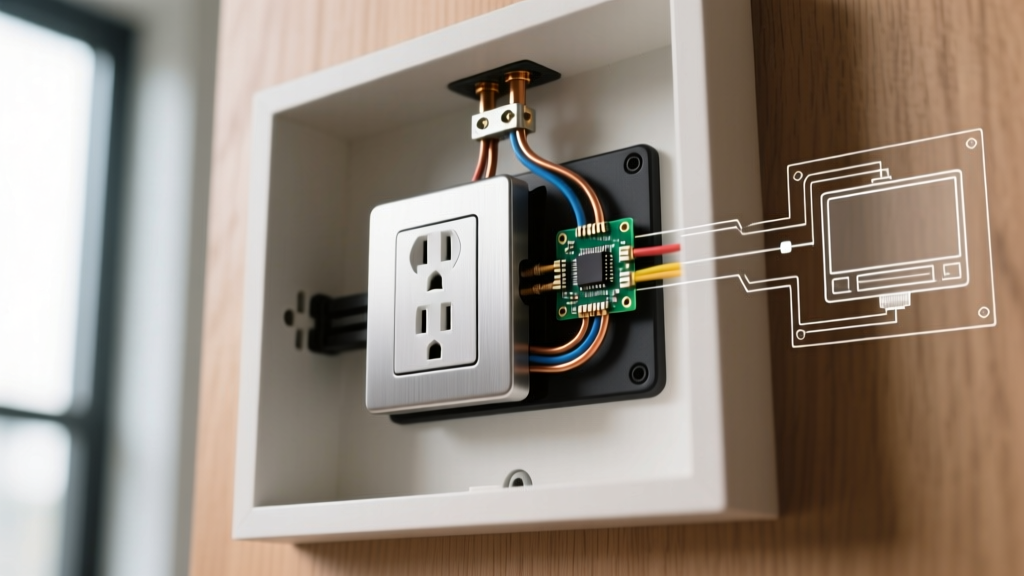
In 2026, integrating smart home technology into Copenhagen's electrical grid is highly popular, but it presents unique physical constraints. Homeowners often wish to install smart relays, such as the Shelly Plus 1PM or Philips Hue Wall Switch Module, behind existing Type K receptacles to monitor energy usage or automate heavy loads.
The Flush Box (Dåse) Depth Problem
Standard Danish wall boxes (indstøbningsdåser) installed in masonry or drywall often have a usable depth of only 35mm to 40mm. A standard Type K receptacle mechanism already consumes roughly 22mm of depth. Adding a smart relay (which typically measures 42mm x 37mm x 16mm) physically will not fit without crushing the 2.5mm² copper conductors, which violates SB6 bending radius codes and creates a severe fire hazard.
The Compliant Solution: If you want smart outlet functionality without hiring an electrician to chisel out the wall and install deeper 60mm boxes, utilize inline smart plugs rated for Type K, such as the Shelly Plug S (Type K variant) or the TP-Link Tapo P110 (DK version). These provide exact energy monitoring and load switching while maintaining full Type K grounding compliance and keeping the fixed wall wiring untouched.
Frequently Asked Questions (FAQ)
Can I legally replace a broken Copenhagen electrical outlet myself?
No. Under the Danish Autorisationsloven, disconnecting the phase, neutral, and earth wires from the back of the receptacle mechanism constitutes fixed installation work. This must be done by a certified electrician. Doing it yourself risks a fine of up to 10,000 DKK and invalidates your home insurance in the event of an electrical fire.
Why do some older Copenhagen apartments have ungrounded outlets?
Buildings constructed before the mid-1970s in Denmark were often wired with only Phase and Neutral (2-wire systems) as earth grounding was not yet legally mandated for standard lighting and socket circuits. If you encounter a 2-pin Type K variant (or a retrofitted 3-pin socket with no earth wire connected behind it), you must use double-insulated (Class II) appliances only. An electrician can install an RCD to provide supplemental shock protection, but running a new earth wire requires significant renovation.
Are USB-integrated Type K wall outlets safe and code-compliant?
Yes, provided they carry the CE mark and are installed by a professional. Brands like ABB and Schneider Electric (LK FUGA series) offer integrated USB-A and USB-C charging receptacles. However, because the USB power supply generates heat inside the wall cavity, ensure the electrician uses a minimum 45mm deep flush box to allow for adequate thermal dissipation, complying with DS/EN 60670 standards.