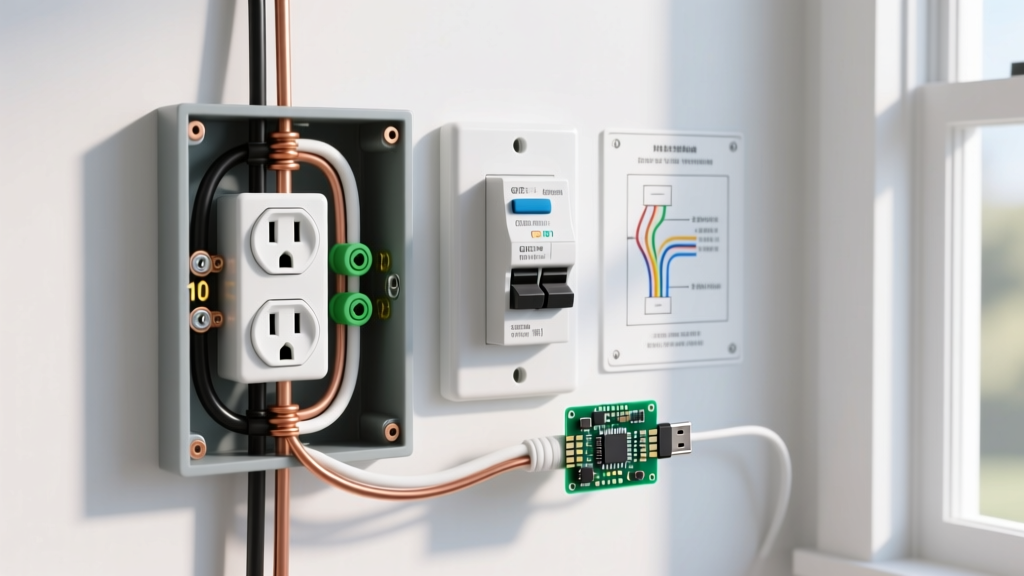

Introduction to Garage Electrical Outlet Wiring
Wiring a garage electrical outlet requires navigating a unique intersection of heavy power demands, harsh environmental conditions, and strict safety codes. Unlike the climate-controlled interior of your home, a garage is considered an unconditioned space subject to extreme temperature fluctuations, conductive dust, and moisture intrusion. Whether you are installing a standard 20-amp receptacle for power tools or a 50-amp NEMA 14-50 for an electric vehicle (EV) charger, precision and code compliance are non-negotiable.
This wiring diagram reference provides exact terminal mappings, torque specifications, and National Electrical Code (NEC) mandates to ensure your installation is safe, durable, and inspection-ready. We will focus on the two most critical garage circuits: the 120V/20A GFCI-protected general-purpose circuit and the 240V/50A EV charging circuit.
Mandatory NEC Code Requirements for Garages
Before stripping any wire, you must understand the governing codes. The National Fire Protection Association (NFPA) NEC Standard 70 outlines specific rules for garages to prevent electrical fires and shock hazards.
| NEC Article | Requirement | Practical Application |
|---|---|---|
| 210.52(G) | Receptacle Quantity | At least one receptacle outlet must be installed in each separate car space. |
| 210.8(A)(2) | GFCI Protection | All 125V, 15A and 20A receptacles in garages must have Ground-Fault Circuit Interrupter protection. |
| 210.12(A) | AFCI Protection | 120V, 15A/20A branch circuits supplying outlets in garages require Arc-Fault Circuit Interrupter protection. |
| 406.4(D) | Receptacle Type | Replacement or new receptacles must be Tamper-Resistant (TR) and Weather-Resistant (WR) if exposed to dampness. |
Pro-Tip for Dual Protection: To satisfy both AFCI and GFCI requirements without installing bulky combo-receptacles, use a Dual-Function (DF) circuit breaker at the main panel. The Square D HOM120DF (approx. $55) provides both layers of protection, allowing you to use standard TR receptacles downstream while maintaining full NEC compliance.
Wiring Diagram Reference: 20-Amp GFCI Receptacle
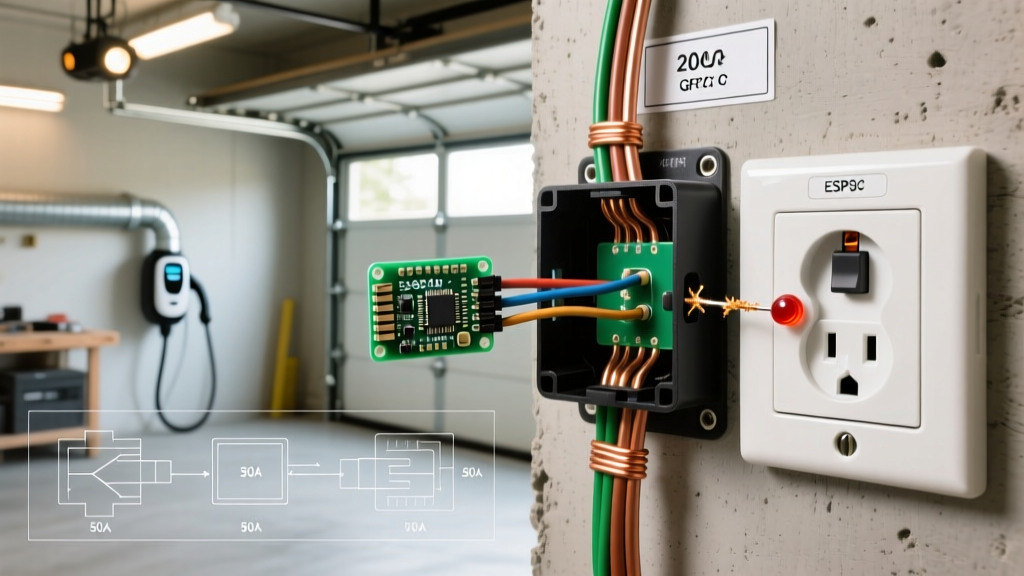
The standard for modern garage tool circuits is a 120V, 20-Amp circuit utilizing 12 AWG THHN wire routed through 1/2-inch EMT (Electrical Metallic Tubing) conduit. We recommend the Leviton GFNT2-W (Slim Tamper-Resistant GFCI, approx. $24), which fits easily into standard single-gang boxes without the bulk of older models.
Terminal Mapping & Step-by-Step Wiring
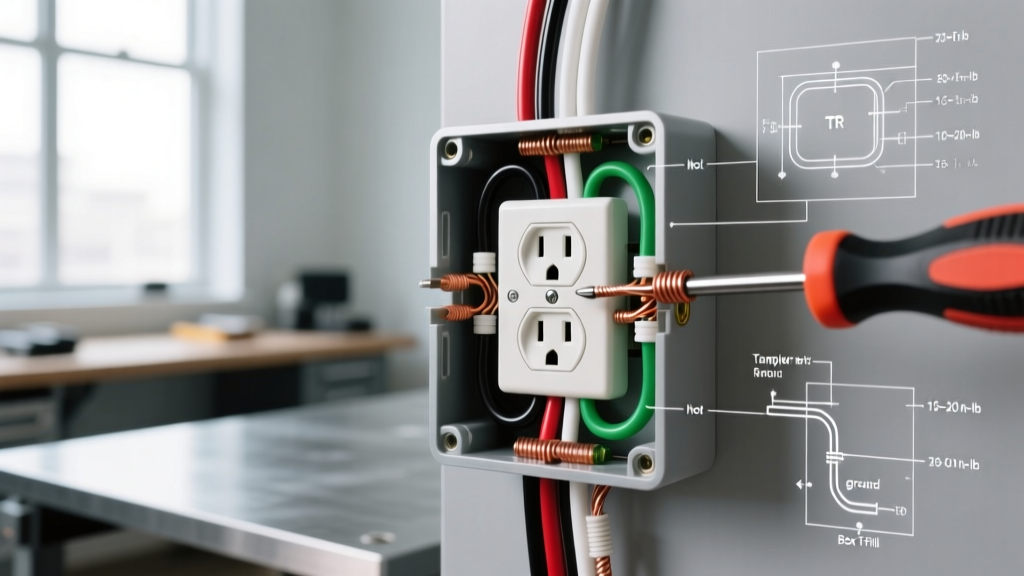
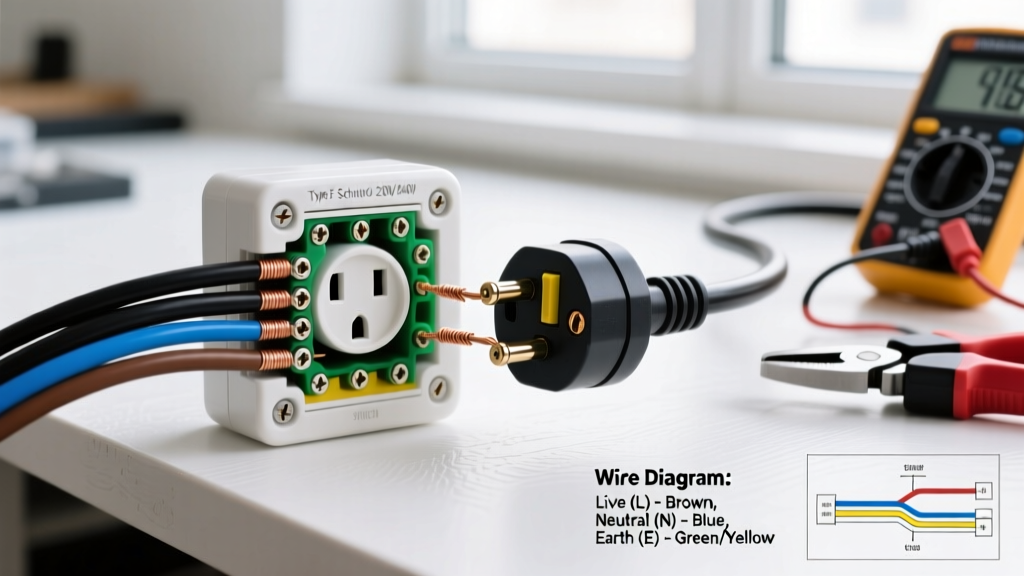
Follow this exact sequence to wire the line side of the GFCI. Do not use the LOAD terminals unless you are intentionally protecting downstream standard receptacles.
- Prepare the Wires: Strip exactly 3/4 inch of insulation from your 12 AWG THHN wires. Do not nick the copper conductor.
- Ground Connection: Connect the bare copper (or green THHN) ground wire to the green grounding terminal on the receptacle. Torque spec: 14 in-lbs.
- Neutral Connection: Connect the white neutral wire to the silver terminal marked LINE. Torque spec: 14 in-lbs.
- Hot Connection: Connect the black hot wire to the brass terminal marked LINE. Torque spec: 14 in-lbs.
- Secure & Test: Fold the wires into the back of the box using a standard box-cushion fold. Mount the device, apply power at the panel, and press the 'TEST' button to verify mechanical tripping, then 'RESET'.
According to the U.S. Consumer Product Safety Commission (CPSC), properly installed GFCIs prevent over two-thirds of the roughly 300 home electrocutions that occur annually. Verifying your line/load orientation with a non-contact voltage tester before termination is critical; reversing these will leave the outlet energized but completely unprotected against ground faults.
Wiring Diagram Reference: 50-Amp EV Charger (NEMA 14-50R)
With EV adoption surging, the most requested garage electrical outlet upgrade is the NEMA 14-50R. This 240V, 50-amp receptacle supports Level 2 charging up to 40 amps continuous. Because continuous loads (operating for 3+ hours) require a 125% derating factor per NEC 210.20(A), a 40A EVSE mandates a 50A breaker and appropriately sized wire.
Component Selection: Avoid the Melting Hazard
Cheap, residential-grade 14-50 receptacles (often priced under $15) have a documented history of melting under continuous 40A EV charging loads due to poor internal bus bar tension. For a garage EV outlet, you must use an industrial-grade receptacle like the Hubbell HBL9450A (approx. $85) or the Bryant 9450FR. These feature massive copper-alloy contacts designed to dissipate heat effectively.
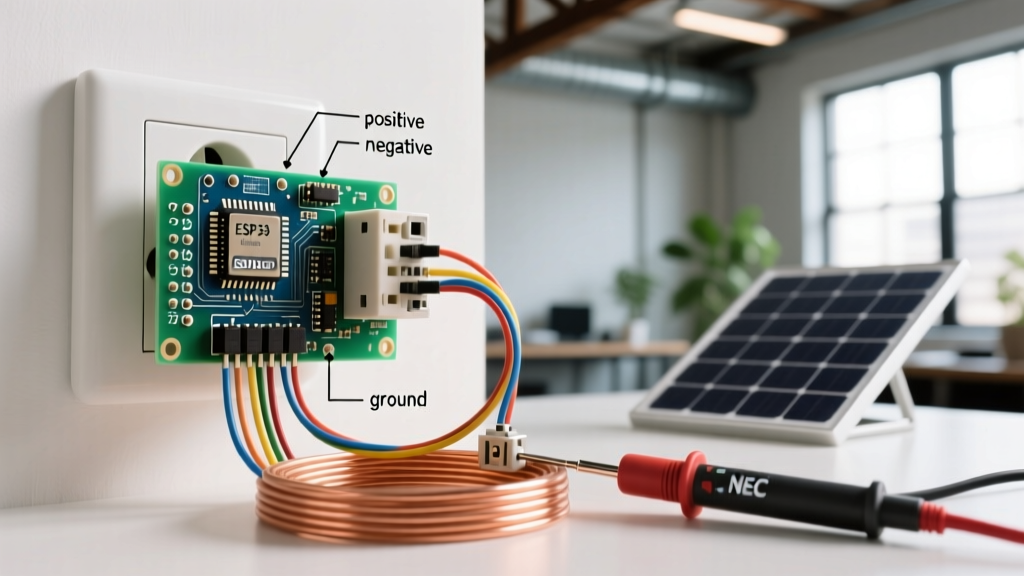
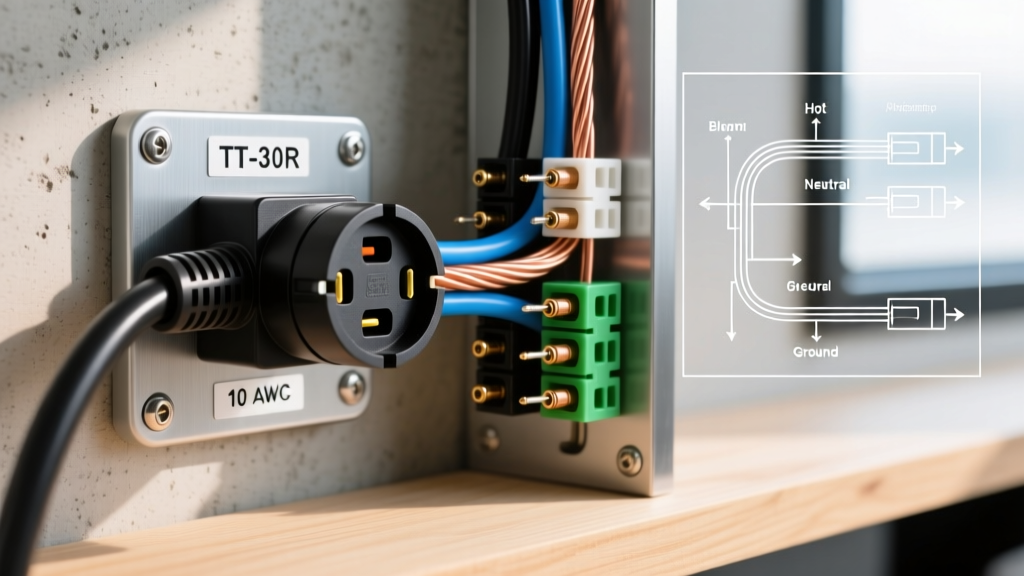
Terminal Mapping for NEMA 14-50R
This circuit requires 6 AWG copper THHN (or 4 AWG aluminum XHHW) and a 2-pole 50A breaker. You will pull four wires through a minimum 3/4-inch EMT conduit.
- X Terminal (Brass): Connect Black (Hot 1). Torque to 75 in-lbs.
- Y Terminal (Brass): Connect Red (Hot 2). Torque to 75 in-lbs.
- W Terminal (Silver): Connect White (Neutral). Torque to 75 in-lbs.
- G Terminal (Green): Connect Bare/Green (Ground). Torque to 75 in-lbs.
Critical Torque Warning: The Hubbell HBL9450A requires a massive 75 inch-pounds of torque on its terminal screws. Using a standard handheld screwdriver will result in under-torqued connections, leading to high resistance, arcing, and eventual thermal failure. You must use a calibrated torque screwdriver (e.g., Klein Tools 601-7) for this installation.
Bill of Materials & 2026 Cost Estimates
Below is a realistic cost breakdown for running a new dedicated 20A GFCI circuit in an unfinished garage, assuming the panel has capacity and the run is approximately 50 feet.
| Component | Specification / Model | Est. Cost (2026) |
|---|---|---|
| Circuit Breaker | Square D HOM120DF (20A Dual Function) | $58.00 |
| Wire | 12 AWG THHN (Black, White, Green) - 150ft total | $35.00 |
| Conduit & Fittings | 1/2" EMT, couplings, and single-gang boxes | $45.00 |
| Receptacle | Leviton GFNT2-W (20A Slim GFCI) | $24.00 |
| Covers | Weatherproof 'In-Use' bubble cover | $18.00 |
| Total Materials | Excludes permits and specialized tools | ~$180.00 |
Common Wiring Mistakes & Edge Cases
Even experienced DIYers make critical errors when wiring garage electrical outlets. Watch out for these specific failure modes:
1. The 'Bootleg Ground' on Older Circuits
If you are upgrading an old, ungrounded 2-prong outlet in an older garage to a 3-prong GFCI, you cannot create a ground by jumpering the neutral terminal to the ground screw. This is a lethal code violation known as a bootleg ground. Instead, connect the GFCI with no equipment ground, apply the 'No Equipment Ground' sticker provided in the Leviton box, and ensure the breaker provides the necessary fault protection.
2. Conduit Fill Violations
When pulling wire through EMT, heat dissipation becomes a major factor. Per NEC Chapter 9, Table 1, conduit fill cannot exceed 40% for three or more wires. A 1/2-inch EMT conduit can safely hold up to nine 12 AWG THHN wires. If you are running multiple circuits to a single garage workbench, you must upsized to 3/4-inch EMT to prevent the wires from overheating and degrading their insulation over time.
3. Neutral-to-Ground Bonding at the Receptacle
The neutral and ground buses are bonded only at the main service disconnect panel. Bonding them at a subpanel or at the receptacle itself creates parallel neutral paths, allowing normal return current to flow through the grounding system. This will cause immediate, nuisance tripping of GFCI and AFCI devices, and poses a severe shock hazard if the ground wire is ever severed.
Frequently Asked Questions
Can I use 14 AWG wire on a 20-amp garage circuit?
No. NEC 240.4(D) strictly limits 14 AWG copper wire to a maximum 15-amp overcurrent device. Because garages require 20-amp circuits for heavy-duty tools and to minimize voltage drop over long runs, you must use a minimum of 12 AWG copper wire paired with a 20-amp breaker.
Does a hardwired EV charger require a GFCI breaker?
Under NEC 2023 and continuing into the 2026 code cycle, hardwired EVSEs (Electric Vehicle Supply Equipment) do not strictly require GFCI protection at the breaker, as the EVSE itself contains internal ground-fault protection. However, if you install a receptacle (like the NEMA 14-50) for a plug-in EV charger, the NEC mandates that the receptacle be GFCI protected. Always check with your local Authority Having Jurisdiction (AHJ), as local amendments can vary.
How high should garage outlets be mounted?
While the NEC does not specify a strict minimum height for general garage receptacles, standard best practice and ADA accessibility guidelines suggest mounting the center of the receptacle box 48 inches above the finished floor. In garages, mounting them at 48 to 52 inches keeps them above potential flood levels, workbench surfaces, and makes them easily accessible without bending over.