
The Hidden Dangers of Power Strips and the 4-Plug Solution
In modern homes and workshops, the demand for plug space constantly outpaces the standard two-receptacle wall outlet. Most people solve this by daisy-chaining power strips or using bulky cube taps. However, the National Fire Protection Association (NFPA) consistently highlights overloaded temporary wiring as a leading cause of residential electrical fires. Upgrading to a hardwired electrical outlet 4 plugs configuration eliminates the fire hazard of cheap power strips while providing a clean, code-compliant solution for high-density device areas like home offices, kitchen islands, and garage workbenches.
This comprehensive upgrade and replacement guide will walk you through the hardware options, National Electrical Code (NEC) box fill calculations, and the exact wiring procedures required to install a 4-plug receptacle safely in 2026.
Defining the 'Electrical Outlet 4 Plugs' Configuration
When electricians and DIYers refer to an electrical outlet 4 plugs setup, they are generally talking about one of two distinct hardware configurations. Understanding the difference is critical before you open your wall box.
1. The Single-Gang Quad Receptacle
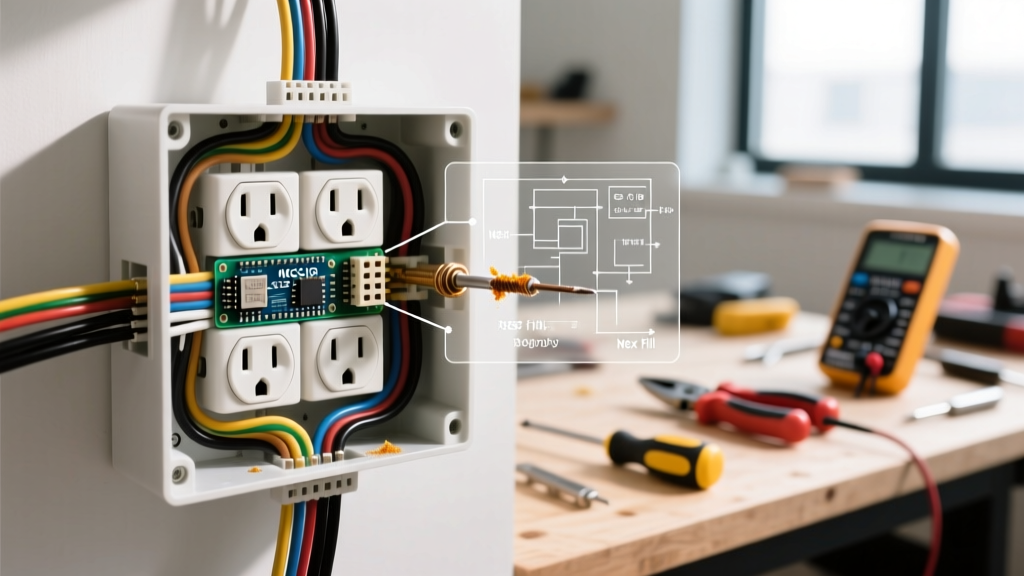
This is a specialized single yoke that houses four individual receptacles (two on top, two on bottom) designed to fit into a standard single-gang wall box. Models like the Leviton 5241-W (15A Tamper-Resistant Quad) are popular for retrofitting existing single-gang boxes without cutting new drywall. While convenient, this setup introduces strict spatial and thermal constraints that we will address in the box fill section.
2. The 2-Gang Dual-Duplex Setup
The preferred method for new construction or major renovations is installing a 2-gang wall box and mounting two standard duplex receptacles side-by-side, covered by a 2-gang wall plate. This provides the same four plug slots but offers vastly superior heat dissipation, easier wiring clearance, and better compatibility with smart plugs or bulky transformer bricks.
NEC Box Fill Calculations: The Hidden Trap
The most common failure point when installing a single-gang quad receptacle is ignoring NEC Article 314 regarding box fill capacity. Cramming four receptacles' worth of wiring into a standard 14-cubic-inch shallow box is a severe code violation and a fire hazard.
Expert Insight: A single-gang quad receptacle counts as two device volumes because it houses two separate internal receptacle mechanisms on a single yoke. If you are using 12 AWG wire (required for 20A circuits), the math demands a significantly deeper box than standard construction provides.
Box Fill Math for 12 AWG Wire (20A Circuit)
- Device Volume: 2 volumes x 2.25 cu in = 4.5 cu in
- Ground Wires: 1 volume x 2.25 cu in = 2.25 cu in
- Internal Clamps: 1 volume x 2.25 cu in = 2.25 cu in
- Current Carrying Conductors (Feed in, Feed out): 4 wires x 2.25 cu in = 9.0 cu in
- Total Minimum Required: 18.0 cubic inches
The Fix: If your existing single-gang box is a standard 14 or 16 cu in 'shallow' box, you must upgrade to an extra-deep single-gang box (minimum 22.5 cu in, such as the Carlon B618R-UPC or a masonry box) or switch to a 2-gang configuration.
Hardware Comparison Matrix
| Feature | Single-Gang Quad (e.g., Leviton 5241) | 2-Gang Dual-Duplex (e.g., Hubbell 5262 x2) |
|---|---|---|
| Plug Capacity | 4 Plugs | 4 Plugs |
| Wall Box Required | Extra-Deep Single Gang (22+ cu in) | Standard 2-Gang (34+ cu in) |
| Smart Plug Compatibility | Poor (Plugs overlap and block adjacent slots) | Excellent (Ample horizontal spacing) |
| Heat Dissipation | Moderate (Components stacked tightly) | High (Separated devices) |
| Installation Difficulty | High (Severe wire crowding) | Moderate (Plenty of working room) |
| Approx. Hardware Cost | $12 - $16 | $18 - $24 (for two receptacles) |
Step-by-Step Wiring Guide: Pigtailing and Torque
According to the U.S. Consumer Product Safety Commission (CPSC), loose connections and improper terminations are primary culprits in outlet arcing and melting. When wiring an electrical outlet 4 plugs setup, you must use the pigtailing method.
Step 1: Kill Power and Verify
Turn off the breaker and use a non-contact voltage tester (NCVT) followed by a plug-in circuit analyzer or multimeter to confirm zero voltage at the hot and neutral terminals.
Step 2: Prepare the Pigtails
Never daisy-chain the feed wires through the brass and silver screws of a quad receptacle. The physical stress of plugging and unplugging devices will eventually loosen the terminal screws, causing a high-resistance fault.
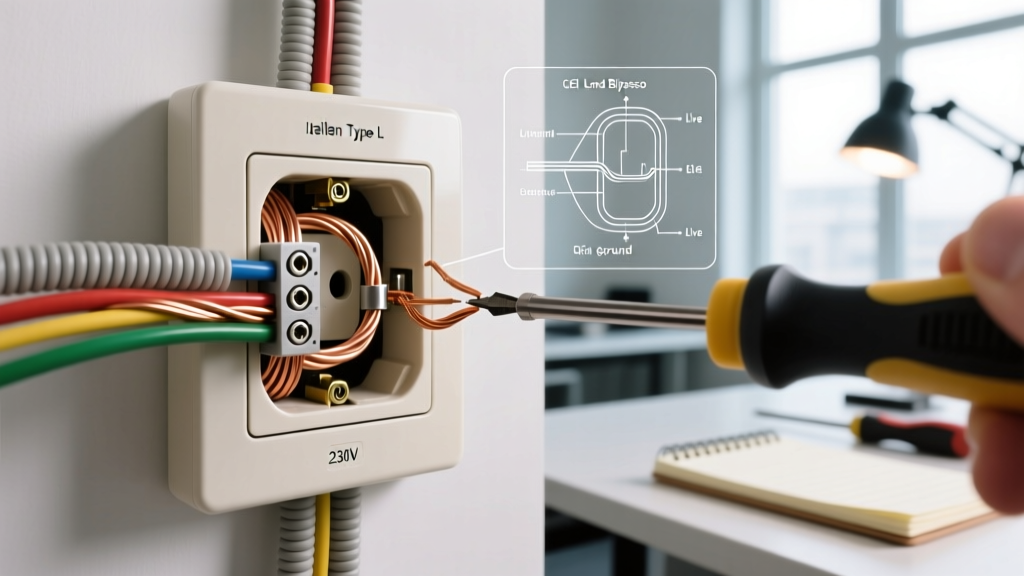
- Strip 3/4 inch of insulation from your incoming hot (black), neutral (white), and ground (bare/green) wires.
- Cut three 6-inch pigtails of the same gauge wire (12 AWG for 20A, 14 AWG for 15A).
- Join the incoming hot wire, the outgoing hot wire (if feeding downstream), and the hot pigtail using a Wago 221 lever nut or a properly sized wire nut.
- Repeat for the neutral and ground wires.
Step 3: Terminate with Calibrated Torque
Modern NEC standards (specifically 110.14(D)) mandate that terminations be tightened to the manufacturer's specified torque. While most DIYers just 'tighten until snug,' an over-tightened screw can strip the brass threads or snap the wire, while an under-tightened screw will arc under a 1500W load.
- Use a torque screwdriver (like the Klein Tools 610-4).
- Set it to the manufacturer's specification (usually between 12 to 16 inch-pounds for standard 15A/20A receptacles).
- Hook the stripped wire clockwise around the terminal screw so that tightening the screw pulls the wire loop closed, not open.
Step 4: Fold and Seat
For a single-gang quad, fold the wires in a strict 'Z' pattern. Push the ground wires to the very back of the box, followed by the neutrals, and finally the hots. Gently seat the heavy quad yoke into the box, ensuring no wires are pinched against the sharp metal edges of the box or the drywall.
Common Failure Modes and Troubleshooting
Even with perfect installation, high-density outlets experience unique stressors. Here is how to troubleshoot edge cases specific to 4-plug configurations:
Troubleshooting 1: The 'Shared Neutral' Trip (MWBC)
If your 4-plug outlet is wired on a Multi-Wire Branch Circuit (two hots sharing one neutral) and you plug in two high-draw devices (like a space heater and a laser printer) on the same phase, the neutral wire will carry the sum of the current, not the difference. This causes the neutral to overheat and melt inside the wall. Fix: Ensure MWBCs are wired on a 2-pole breaker with a handle tie, ensuring the two hot legs are on opposite phases (240V across them).
Troubleshooting 2: GFCI Nuisance Tripping
If your 4-plug outlet is in a garage or kitchen, code requires GFCI protection. Plugging in four devices with internal EMI filters (like PC power supplies or LED drivers) can cause cumulative leakage current that exceeds the 5mA GFCI trip threshold. Fix: Use a 'Feed-Through' GFCI configuration only for downstream protection, or upgrade to a high-immunity GFCI receptacle designed for commercial/industrial environments if nuisance tripping persists.
Troubleshooting 3: Backstabbing Failures
Many older quad receptacles feature push-in 'backstab' terminals. Under heavy continuous loads (like charging multiple e-bikes simultaneously), the internal spring contacts in backstabs lose tension and arc. Fix: Always use the side-screw terminals or the newer, code-compliant 'push-to-wire' back terminals that utilize a mechanical release lever and heavier gauge spring steel.
2026 Cost and Materials Breakdown
Upgrading to an electrical outlet 4 plugs setup is a high-ROI project. Here is the realistic material cost breakdown for a single-gang quad retrofit (excluding drywall repair):
- Leviton 5241-W (15A TR Quad Receptacle): $13.50
- Carlon Extra-Deep Old-Work Box (22.5 cu in): $8.99
- Wago 221 Lever Nuts (Assorted 3-pack): $4.25
- 12 AWG THHN Pigtails (Scrap): $1.00
- Total Material Cost: ~$27.74
Compared to the $25-$40 spent on a high-quality surge-protecting power strip that will eventually degrade and clutter your floor space, the hardwired quad outlet offers superior safety, permanent reliability, and a cleaner aesthetic.
Final Safety Verdict
Replacing a standard duplex with an electrical outlet 4 plugs configuration is an excellent upgrade for modern power demands, provided you respect the physical limitations of the wall box. Always prioritize box fill volume, use lever-nut pigtails to reduce crowding, and torque your terminals to spec. By following these professional standards, you eliminate the need for dangerous extension cords and ensure your home's electrical infrastructure is ready for the high-density device loads of the future.