
The Hidden Fire Hazards of Outlet Timers
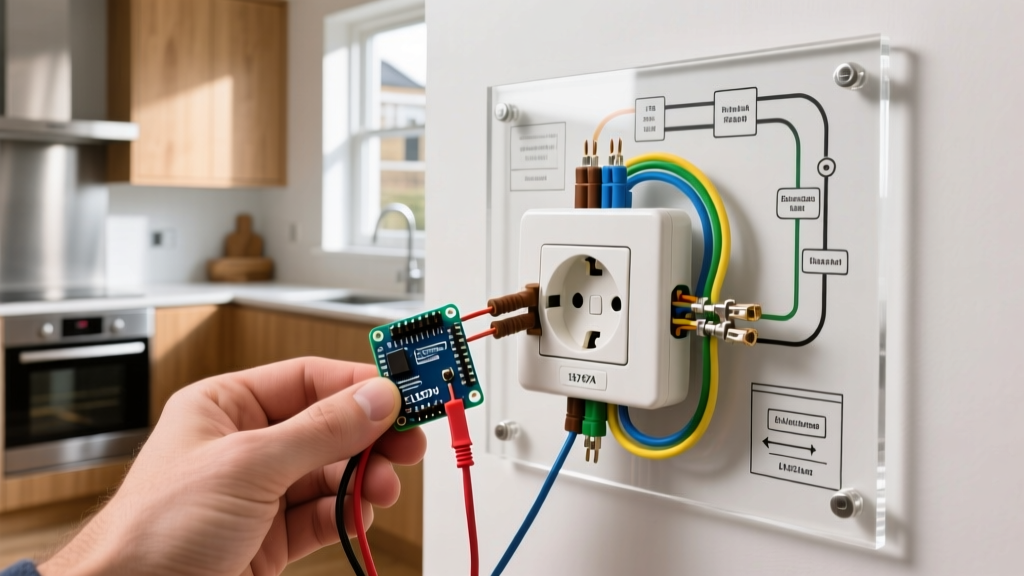
Adding a timer on electrical outlet configurations is a common DIY solution for automating holiday lighting, managing space heaters, or controlling aquarium pumps. While plug-in timers and smart outlets offer immense convenience, they introduce distinct electrical hazards when misapplied. According to the U.S. Consumer Product Safety Commission (CPSC), electrical receptacles and associated plug-in devices are involved in thousands of residential fires annually, often stemming from overloaded circuits and improper use of flexible cords.
The primary danger lies in the disconnect between the timer's internal relay ratings and the actual draw of the connected appliance. A standard 15-amp residential circuit can theoretically handle 1,800 watts. However, if you plug a 1,500-watt space heater into a cheap, unlisted 10-amp plug-in timer, the timer's internal contacts will overheat, melt the plastic housing, and potentially ignite surrounding combustibles long before the circuit breaker trips. In 2026, with the proliferation of high-draw smart home devices, understanding the intersection of automation and electrical safety is non-negotiable.
NEC Code Compliance: What the Rulebook Dictates
The National Electrical Code (NEC) does not explicitly ban plug-in timers, but it heavily regulates how branch circuits and flexible cords are utilized. Ignoring these articles is a primary reason DIY automation setups fail home inspections or cause fires.
Article 210: Branch Circuit and Receptacle Ratings
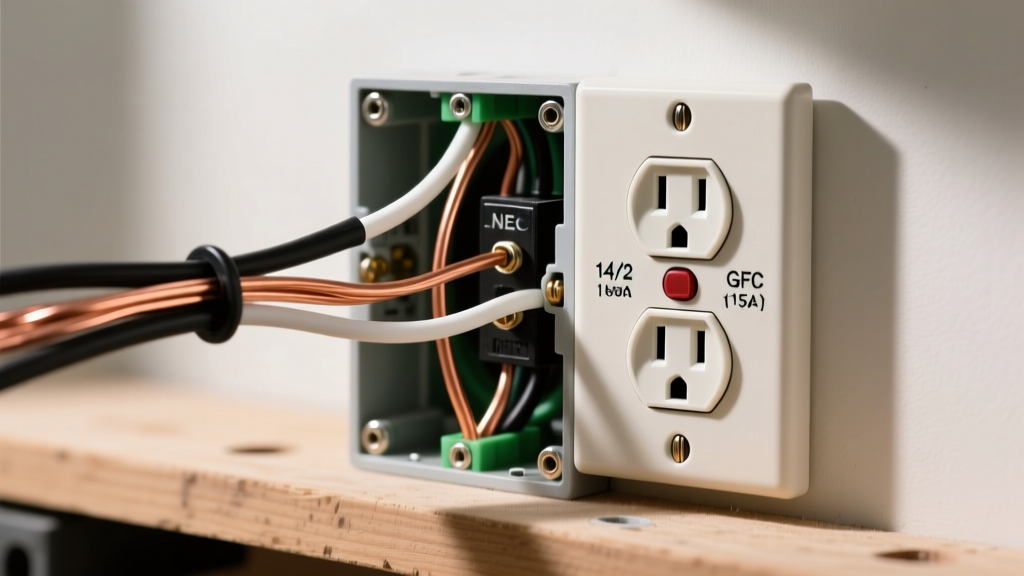
NEC Article 210.21(B) outlines receptacle ratings. When you insert a plug-in timer into a standard 15A or 20A duplex receptacle, the timer becomes the bottleneck. If you are using a timer to control a continuous load (defined by the NEC as any load expected to run for 3 hours or more, such as an aquarium heater or a slow-draw EV charger), you must derate the circuit capacity by 20%. Therefore, on a standard 15-amp circuit, your continuous load cannot exceed 12 amps (1,440 watts). The timer you select must be rated to handle this continuous draw without thermal degradation.
Article 400: Flexible Cords and Plug-In Timers
One of the most common code violations involves using a plug-in timer to control hardwired-style appliances or routing cords through walls. NEC Article 400.8(1) strictly prohibits using flexible cords and cables (which includes the plug and cord attached to many heavy-duty outdoor timers) as a substitute for the fixed wiring of a structure. You cannot plug a timer into an outlet, run the cord up through a ceiling, and wire it directly into a hardwired exhaust fan. If the appliance requires fixed wiring, you must install a hardwired in-wall timer switch.
Inspector's Note: Daisy-chaining a plug-in timer into an extension cord, and then into another power strip, violates NEC 400.8 and OSHA workplace safety standards. The timer must plug directly into the wall receptacle.
Load Calculation Matrix: Matching Timers to Appliances
Selecting the correct timer requires reading the specification sheet, not just the front-of-box marketing. Below is a 2026 compliance matrix for matching common appliances to the correct timer specifications.
| Appliance Type | Typical Wattage / Amperage | Continuous Load? | Required Timer Rating | NEC Compliant on 15A Circuit? |
|---|---|---|---|---|
| LED Holiday Lighting | 50W - 200W / < 2A | No | Standard 15A / 1875W (Resistive) | Yes |
| Ceramic Space Heater | 1,500W / 12.5A | Yes (if >3 hrs) | Heavy Duty 15A / 1875W (Resistive) | No (Exceeds 12A continuous limit) |
| Window AC Unit (5,000 BTU) | 500W / 4.5A (Running) | No | 15A / 1/2 HP Motor Rating Required | Yes (If motor-rated) |
| Sump Pump (1/3 HP) | 6A Running / 18A Inrush | No | 20A / 1 HP Motor Rating Required | No (Requires dedicated 20A circuit) |
| Aquarium Heater & UV Filter | 300W / 2.5A | Yes | Standard 15A / 1875W (Resistive) | Yes |
Hardwired vs. Plug-In Timers: Safety Showdown
When designing an automation setup, you must choose between plug-in modules and hardwired in-wall replacements. Each has distinct safety profiles and code implications.
Plug-In Timers & Smart Plugs
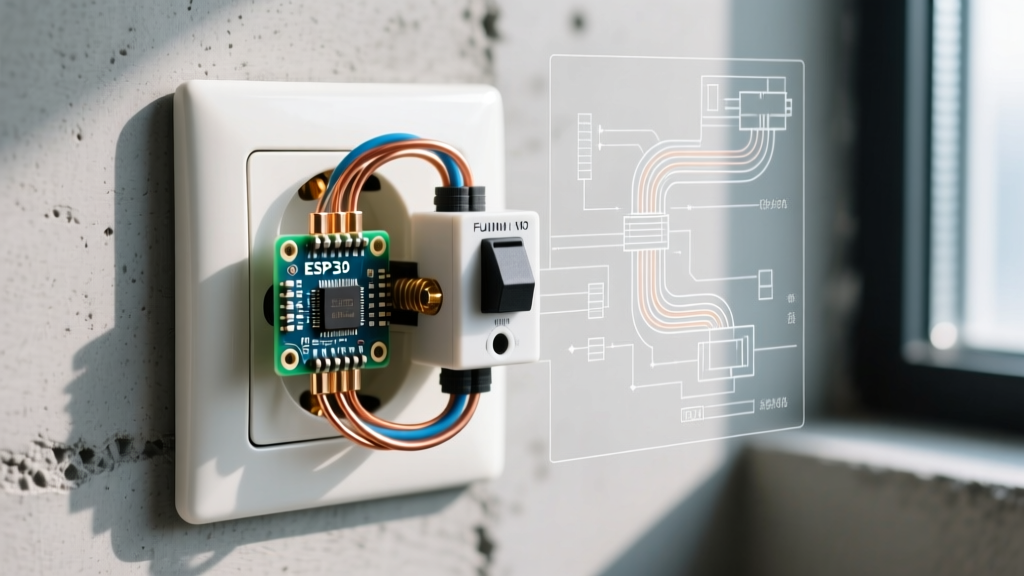
- Pros: No electrical panel work required; portable; ideal for temporary seasonal loads; modern models like the Kasa EP25 (approx. $18) support Matter-over-Thread for seamless 2026 smart home integration.
- Cons: Prone to being pulled out of alignment, exposing live prongs; internal relays are often undersized for motor loads; easily overloaded by users ignoring wattage limits.
- Best For: Lamps, fans, holiday lights, and low-draw electronics.
Hardwired In-Wall Timers
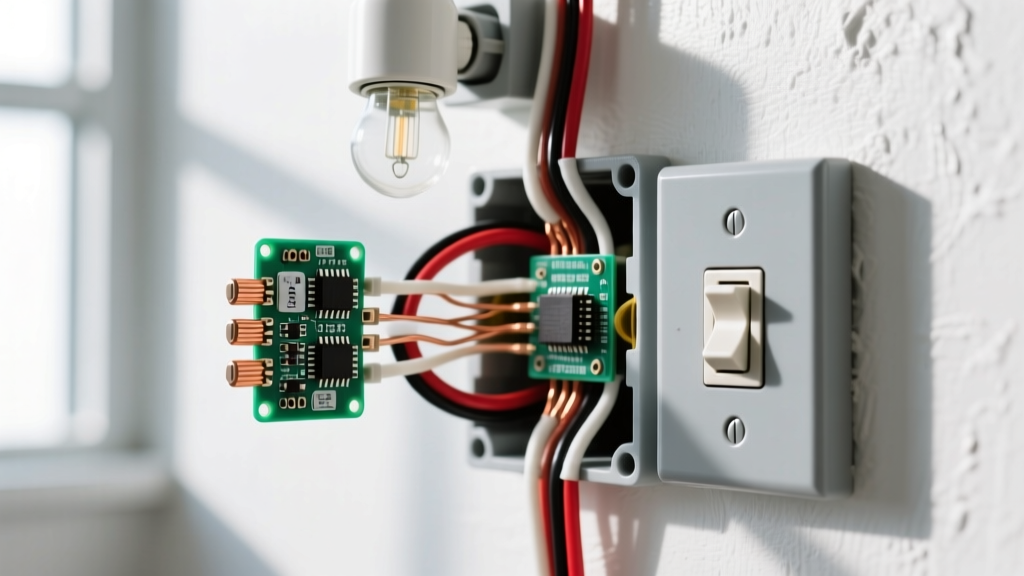
- Pros: Eliminates the plug connection point (a common source of arc faults); handles higher continuous loads safely; models like the Intermatic EI500WC (approx. $55) feature robust internal heat sinks and require a neutral wire, ensuring stable digital operation without leaking current through the load.
- Cons: Requires turning off the breaker and verifying dead wires; requires a neutral wire in the switch box (mandated by NEC 404.2 for most digital/smart switches); permanent installation.
- Best For: Bathroom exhaust fans, hardwired outdoor security lights, attic ventilation, and pool pumps.
Edge Cases: Relay Welding and Inrush Currents
A critical failure mode that DIYers rarely anticipate is relay welding. When a timer switches on an appliance with an electric motor (like an air compressor, window AC, or sump pump), the motor draws a massive spike of current—known as inrush current—for a fraction of a second. This inrush can be 5 to 7 times higher than the running amperage.
If you use a standard resistive-rated plug-in timer for a motor load, the intense heat from the inrush current can literally weld the timer's internal metal contacts together. When this happens, the timer will fail in the 'ON' position. If the appliance is a heater or a pump that runs dry, this failure will lead to catastrophic overheating or mechanical destruction. Always check the timer's spec sheet for a Motor Rating (e.g., 1/2 HP) or a Tungsten Rating (for incandescent lighting inrush) before connecting inductive loads.
Expert FAQ: Code Inspectors Weigh In
Will a plug-in timer cause my AFCI breaker to trip?
It can. Arc Fault Circuit Interrupters (AFCIs) monitor for electrical signatures that resemble arcing. Cheap mechanical timers with physical metal contacts can create micro-arcs during the exact moment of switching. Modern 2026 AFCI algorithms are better at distinguishing between normal switching arcs and dangerous parallel arcs, but older AFCI breakers may still experience nuisance tripping. If this occurs, upgrade to a solid-state smart plug or a zero-crossing switch timer.
Can I use an indoor mechanical timer for outdoor patio lights?
No. NEC Article 400.4 and general UL listing requirements dictate that outdoor electrical equipment must be rated for damp or wet locations. Indoor timers lack the UV-resistant plastics and weather-sealed gaskets required to prevent moisture ingress. Using an indoor timer outside voids its UL Certification and creates a severe shock hazard. Always use a NEMA 3R rated outdoor timer enclosure or a weatherproof smart plug rated for wet locations.
Is it safe to plug a space heater into a smart plug timer?
Generally, no. Most smart plugs are rated for 15 amps (1,800 watts), but their internal solid-state relays or mechanical contacts can overheat under continuous 12.5-amp loads (1,500W space heaters) due to poor thermal dissipation in compact plastic housings. If you must automate a space heater, use a heavy-duty, industrial-grade mechanical timer (like the Intermatic TN311, approx. $22) with a massive metal heat sink inside, and ensure the heater is set to a lower wattage setting (e.g., 900W) to maintain a safe thermal margin.
Final Safety Audit Checklist
Before leaving your automated setup unattended, run through this 4-point safety audit:
- Verify the UL Mark: Ensure the timer has a legitimate UL or ETL listing mark molded into the plastic, not just printed on a sticker.
- Calculate the Continuous Load: If the device runs for 3+ hours, ensure the total wattage does not exceed 1,440W on a 15A circuit.
- Check the Prong Fit: The timer's plug should fit snugly into the receptacle. Loose connections increase electrical resistance and generate excessive heat.
- Monitor Initial Heat: After 30 minutes of operation under load, carefully touch the timer's plastic housing. If it is too hot to hold your hand against, the internal relay is undersized and must be replaced immediately.