
The "Quad Outlet" Misconception: What Are You Actually Troubleshooting?
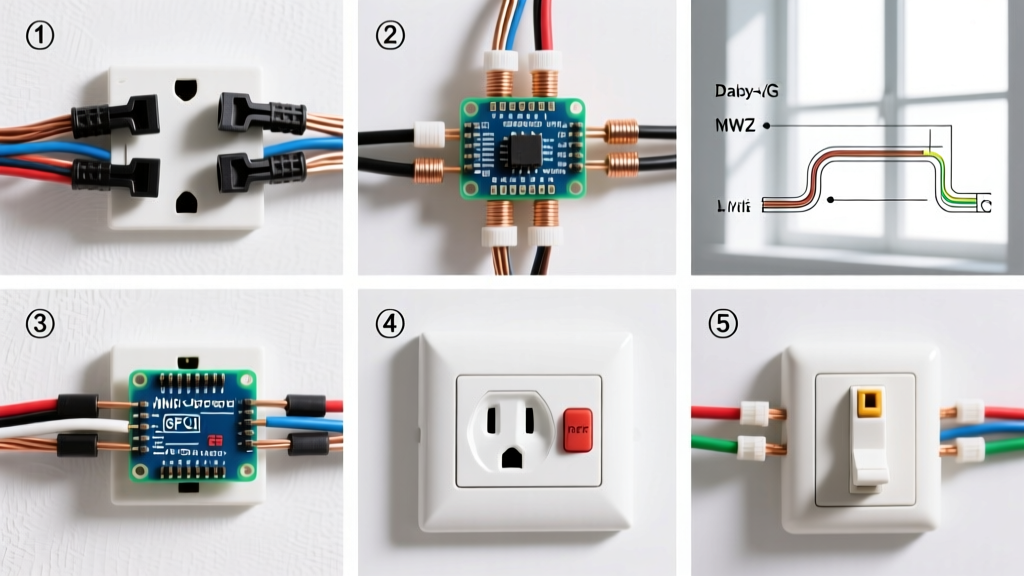
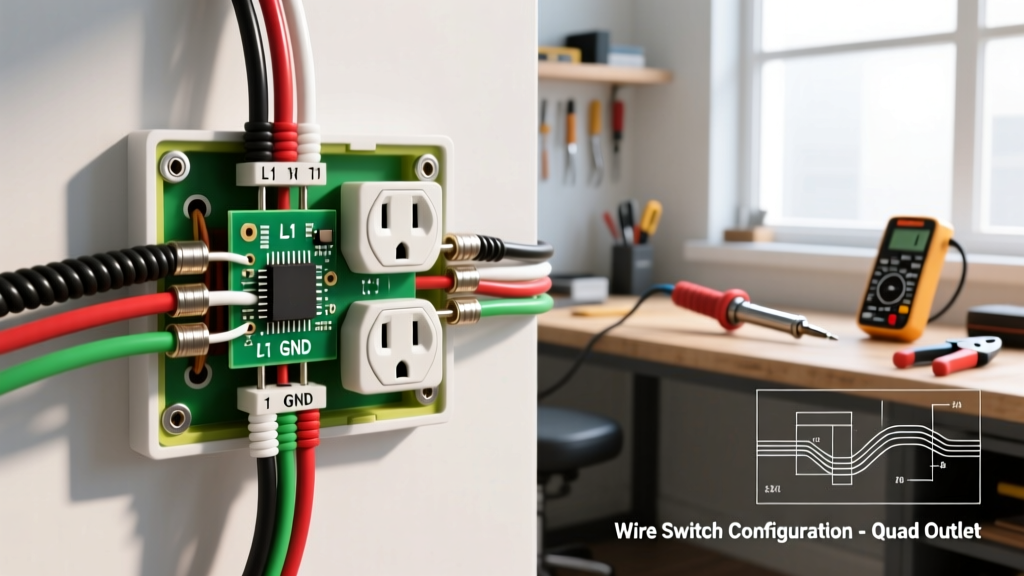
When homeowners and DIYers search for a "quad electrical outlet," they are typically referring to a 2-gang wall box housing two duplex receptacles (yielding four total plug-in points) or a specialized surface-mount 4-plex box like the Wiremold 4-Outlet Surface Raceway. True single-yoke quadruplex receptacles do not exist in standard NEMA 5-15R residential configurations. Understanding this physical layout is the first step in accurate diagnosis. If you are experiencing dead plugs, nuisance tripping, or voltage drops across your quad setup, the root cause almost always lies in improper tab-breaking, daisy-chain overloading, or thermal degradation of push-in wire connections.
In 2026, with the proliferation of high-draw smart home hubs, Li-Fi routers, and localized EV charging accessories, the cumulative load on a single 2-gang quad configuration is higher than ever. Diagnosing these failures requires moving beyond simple receptacle testers and utilizing a digital multimeter (DMM) to trace voltage anomalies across the line, neutral, and ground paths.
Top 3 Failure Modes in Quad Outlet Configurations
1. The Split-Wired (Half-Hot) Tab Disaster
In living rooms and workshops, it is common to wire a quad setup so that the top duplex is always hot, while the bottom duplex is controlled by a wall switch. This requires breaking the brass "hot" fin tab on the side of the receptacle. A frequent diagnostic nightmare occurs when a previous installer accidentally breaks the silver "neutral" tab instead, or fails to break the brass tab entirely. If the brass tab remains intact while two different circuits (or a switch leg and a constant hot) are connected to the top and bottom brass screws, you will create a dead short or backfeed voltage into your switch loop, instantly tripping the breaker.
2. Thermal Failure from Push-In (Backstab) Wiring
A quad electrical outlet naturally invites users to plug in four separate devices. If the receptacles were wired using the push-in "backstab" terminals rather than side-wiring (screw terminals), the internal spring clips will suffer from thermal cycling. As the load increases, the wire heats up, expands, and eventually loses tension against the spring clip. This creates a high-resistance connection, leading to localized melting, arcing, and ultimately, a dead plug. According to the U.S. Consumer Product Safety Commission (CPSC), high-resistance connections are a leading precursor to residential electrical fires.
3. Nuisance Tripping on 20-Amp Kitchen/Workshop Circuits
If your quad outlet is located in a kitchen or workshop, it is likely on a 20-amp circuit utilizing 12 AWG wire. Nuisance tripping here is rarely a breaker failure; it is usually an overload or a Multi-Wire Branch Circuit (MWBC) fault. The National Electrical Code (NEC) strictly requires simultaneous disconnect for MWBCs. If your quad outlet is fed by an MWBC (two hot wires sharing a single neutral) and the handle tie is missing or the neutral pigtail is loose, the neutral bus can become overloaded, causing voltage fluctuations that trip sensitive AFCI/GFCI breakers.
Step-by-Step Diagnostic Workflow
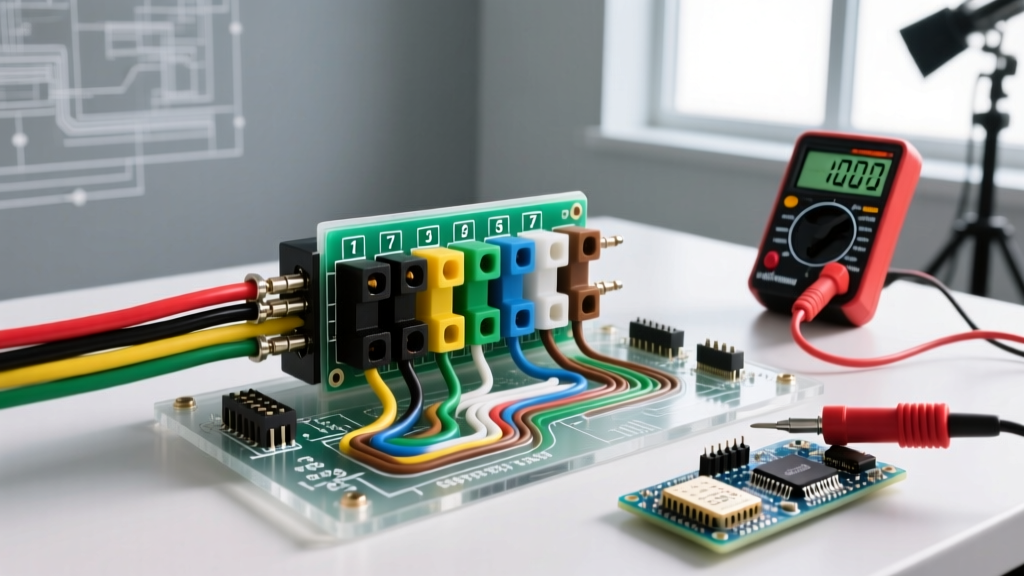
Before opening the 2-gang box, ensure you have a reliable Non-Contact Voltage Tester (NCVT) and a True-RMS Digital Multimeter (such as the Fluke 117 or Klein MM400). Follow this exact sequence to isolate the fault:
- Kill and Verify: Turn off the breaker. Test all four plug-in points with the NCVT. Remove the faceplate and test the terminal screws directly to rule out a tripped upstream GFCI.
- Inspect the Fin Tabs: Pull the receptacles out of the 2-gang box. Visually inspect the brass and silver sides. If you have a split-wired setup, ensure only the brass fin is severed. The silver neutral tab must remain 100% intact.
- Check for Backstabbing: Look at the back of the yoke. If wires are inserted into the quick-wire holes, note this as a primary suspect for intermittent dead plugs. Plan to migrate these to the side terminal screws.
- Perform the "Wiggle Test" (Live): If the wiring looks sound, restore power. With a lamp plugged into the "dead" socket, gently wiggle the wires at the back of the receptacle using an insulated tool. If the lamp flickers, you have a loose terminal or a broken wire nut upstream.
- Measure Voltage Drop: Set your DMM to AC Voltage. Measure Line-to-Neutral (L-N), Line-to-Ground (L-G), and Neutral-to-Ground (N-G). A healthy N-G reading should be under 1.5V. If N-G reads 3V or higher, you have an overloaded neutral or a loose neutral connection somewhere in the daisy chain.
Load Capacity & Wire Gauge Matrix
When troubleshooting a tripping quad electrical outlet, you must verify that the installed hardware matches the circuit breaker and wire gauge. Mismatched components are a severe fire hazard.
| Circuit Breaker | Wire Gauge Required | Receptacle Rating (NEMA 5-15R/20R) | Max Continuous Load (80% Rule) | Common Quad Failure Cause |
|---|---|---|---|---|
| 15 Amp | 14 AWG Copper | 15A (NEMA 5-15R) | 12 Amps (1440W) | Overloading with 4x high-draw devices |
| 20 Amp | 12 AWG Copper | 15A or 20A (NEMA 5-20R) | 16 Amps (1920W) | Using 14 AWG pigtails inside the box |
| 20 Amp (MWBC) | 12 AWG (x2 Hot, x1 Neutral) | 15A or 20A (Split-wired) | 16 Amps per leg | Missing handle-tie; overloaded shared neutral |
Expert Repair: Upgrading to Commercial-Grade Hardware
If your diagnostic workflow reveals melted yokes, loose terminal screws, or degraded backstab connections, do not simply replace the receptacle with another $1.50 builder-grade residential unit. A quad electrical outlet serves as a high-density power distribution node. Upgrade to commercial or industrial-grade receptacles.
For standard 15A circuits, the Leviton 5362-W (20A Commercial Grade, 15A face) costs approximately $4.50 to $6.00 per unit and features massive brass terminal screws that accept up to 12 AWG wire securely. For 20A workshop circuits, use the Hubbell 5262 (20A Heavy Duty), which utilizes internal steel yokes and high-tension contact blades to prevent plug sag and arcing. When terminating side-wired connections, use a torque screwdriver (like the Klein Tools 32500) set to the manufacturer's specification—typically 14 to 16 inch-pounds for 12 AWG wire—to ensure UL-compliant termination and prevent thermal loosening over time.
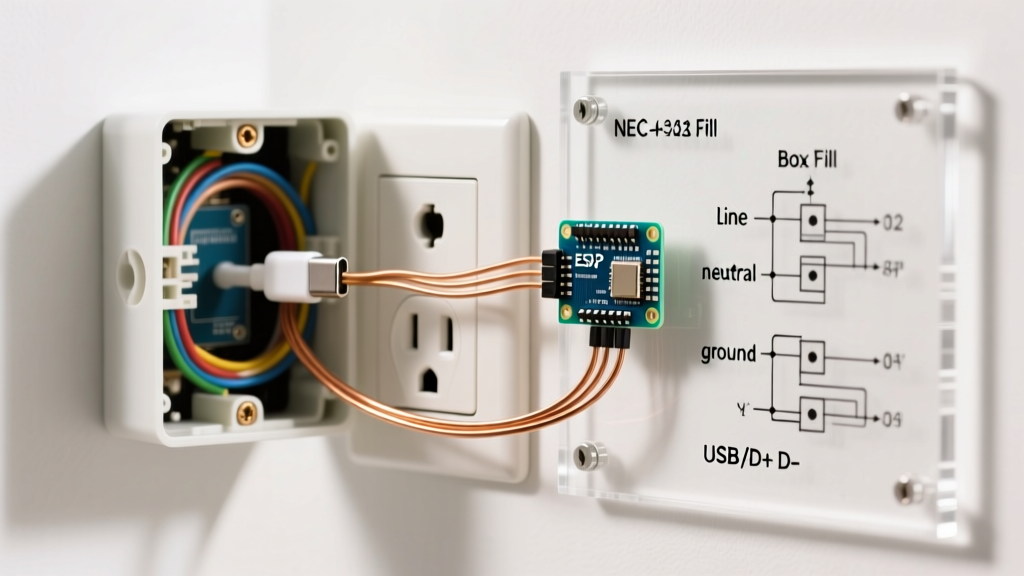
Pro-Tip for 2-Gang Box Heat Dissipation: When installing two high-grade receptacles in a single 2-gang steel or PVC box, the heat generated by four simultaneous loads can be significant. Ensure the box fill calculations (NEC Article 314.16) are respected. If you have more than 8 current-carrying conductors in the box, you must apply a derating factor to your wire ampacity, or upsize to a deeper 2-gang masonry box or surface raceway to allow for thermal dissipation.
Frequently Asked Questions
Can I replace one half of my quad outlet with a GFCI?
Technically, you can install a GFCI receptacle in one gang of a 2-gang box and a standard receptacle in the other, wiring the standard one to the GFCI's "LOAD" terminals. However, GFCIs are bulky. Fitting a GFCI and a standard duplex into a standard 2-gang box often results in severe wire crowding, which violates NEC box fill rules and can crush the grounding conductors against the metal box. If GFCI protection is required (e.g., in a kitchen or garage), it is vastly superior to install a GFCI breaker in the main panel or use a 2-gang extra-deep box.
Why does my quad outlet buzz when I plug in my PC and monitor?
A buzzing sound from a quad electrical outlet is typically caused by harmonic distortion from Switched-Mode Power Supplies (SMPS) found in modern PCs and monitors interacting with loose internal laminations in cheap receptacles. The magnetic fields generated by the alternating current cause the brass contacts to vibrate if they lack sufficient spring tension. Upgrading to a commercial-grade receptacle with thicker, high-tension beryllium-copper contacts will almost always eliminate this acoustic vibration.
My quad outlet has power, but my laptop charger keeps dropping connection. Why?
This is a classic symptom of "neutral-to-ground" voltage rise caused by a long daisy-chain of receptacles. When you plug a sensitive SMPS charger into the last outlet in a chain of 10+ receptacles, the cumulative voltage drop on the neutral wire can confuse the charger's internal protection circuit, causing it to reset. Check the N-G voltage with your multimeter; if it exceeds 1.5V, you need to run a dedicated home run circuit back to the panel for your sensitive electronics.