
Understanding the Portugal Electric Outlet Standard
Troubleshooting electrical faults in Portugal requires a solid grasp of the national grid standards and the specific physical receptacles used in residential and commercial buildings. The standard Portugal electric outlet is the Type F, commonly known as the "Schuko" (from the German Schutzkontakt). Harmonized across the European Union, the Portuguese grid delivers a nominal 230V at 50Hz. However, as of 2026, aging infrastructure in historic city centers like Lisbon and Porto, combined with modern high-draw appliances, creates unique diagnostic challenges for electricians and advanced DIYers.
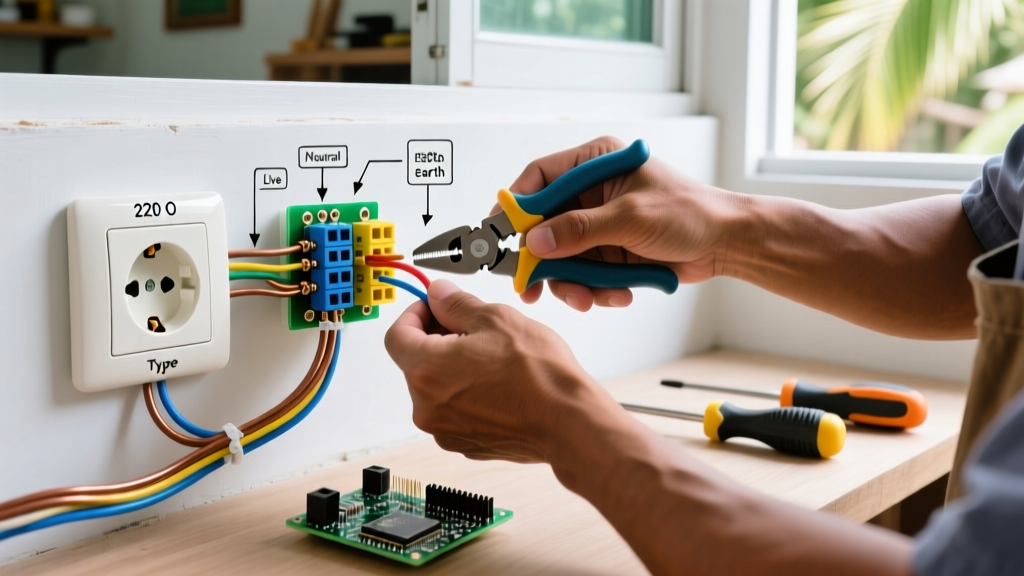
Before opening a wall plate or testing a breaker, you must understand the baseline technical specifications of the Portuguese system. Unlike the UK (Type G) or France (Type E), Portugal relies exclusively on the CEE 7/3 standard for its sockets, which features side-grounding clips rather than a protruding earth pin.
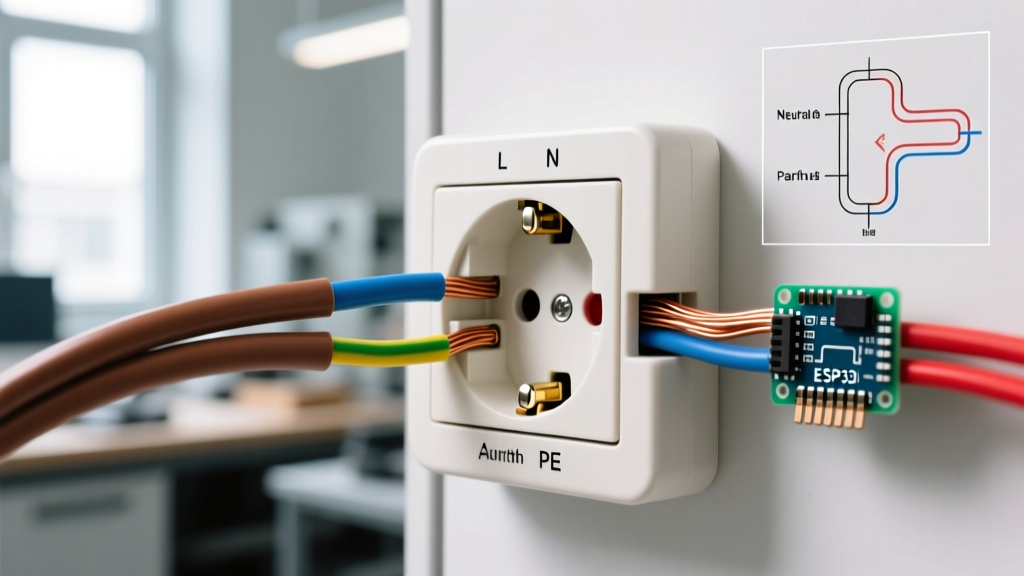
The Anatomy of a Type F Receptacle
A proper diagnosis begins at the physical interface. The Type F socket is defined by a recessed cavity (typically 15mm deep) designed to prevent accidental contact with live pins while a plug is being inserted or removed. According to the World Standards Type F guide, the socket accepts plugs with 4.8mm diameter pins. Attempting to force 4.0mm Europlugs (CEE 7/16) into high-wattage applications often leads to poor contact, arcing, and eventual thermal failure of the receptacle.
| Parameter | Specification | Troubleshooting Relevance |
|---|---|---|
| Nominal Voltage | 230V AC | Multimeter readings outside 216V–253V indicate grid or transformer faults. |
| Frequency | 50Hz | Critical for timing relays and motor-driven appliance diagnostics. |
| Pin Diameter | 4.8 mm | Worn 4.0mm pins cause high-resistance connections and heat buildup. |
| Grounding Method | Side metal clips | Clips lose tension over time; a primary cause of intermittent grounding. |
| Standard Amperage | 16A (Max 3680W) | Exceeding this trips the 16A/20A disjuntor magnetotérmico (MCB). |
Step-by-Step Diagnosis: Why Your Outlet Isn't Working
When a Portugal electric outlet fails to deliver power, or causes the main panel to trip, follow this systematic diagnostic sequence to isolate the fault.
1. The "Loose Schuko" Mechanical Failure
The most common non-electrical failure in Portuguese homes is mechanical wear. Premium local brands like Efapel (e.g., the Logus 90 or Apolo 5000 series) and Legrand (Valena Life) use high-grade thermoplastics, but the internal brass side-clips eventually lose their spring tension after years of heavy plug insertion.
Diagnostic Test: Insert a standard plug and apply gentle downward pressure. If the plug sags or feels loose, the internal contacts are not gripping the 4.8mm pins tightly. This creates a high-resistance junction. Under a 10A+ load (like a space heater or hair dryer), this resistance generates localized heat, often melting the rear PVC housing of the outlet.
The Fix: Replace the mechanism. As of 2026, a genuine Efapel or Simon mechanism costs between €6 and €14 at local distributors like Leroy Merlin or specialized electrical wholesalers. Never attempt to bend the internal brass clips back into shape; the metal fatigue will cause them to snap or fail again within weeks.
2. Voltage Drop and Phase Imbalance
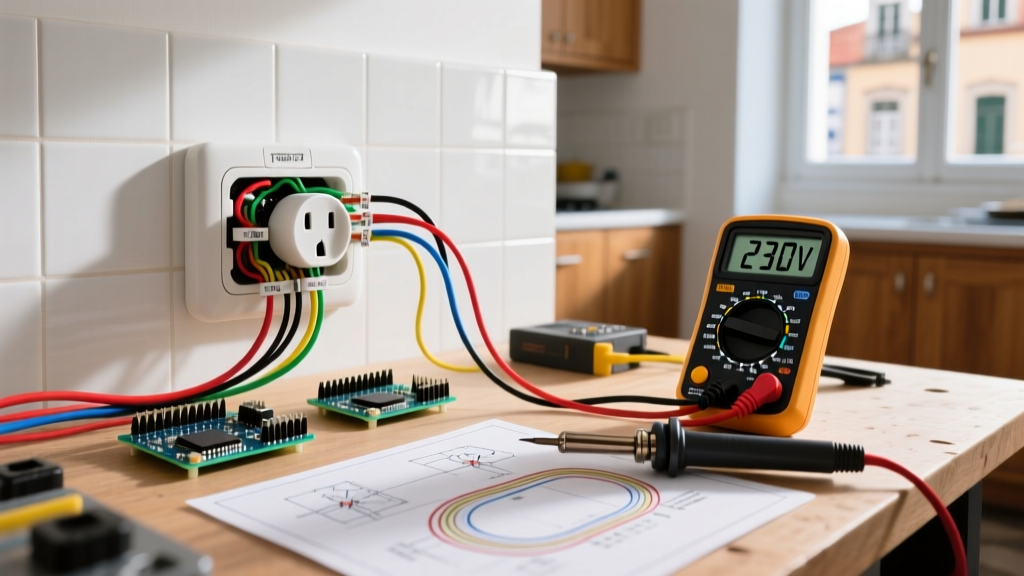
Portugal's grid, managed by E-Redes, is highly stable, but localized voltage drops occur in rural areas or at the end of long distribution runs in older apartment blocks. The EU harmonized voltage tolerance is +10% / -6%, meaning your multimeter should read between 216.2V and 253V.
- Line to Neutral: Should read ~230V. If it reads significantly lower (e.g., 190V), you have a loose neutral connection at the distribution board or a shared-neutral overload.
- Line to Earth: Should read ~230V. If it reads 0V, your earth wire is severed or disconnected at the main busbar.
- Neutral to Earth: Should read < 2V. A reading of 5V or higher indicates a "floating neutral" or severe overloading on the neutral busbar in the quadro elétrico (breaker panel).
3. Nuisance Tripping of the Interruptor Diferencial (RCD)
In Portugal, the Residual Current Device (RCD) is called the Interruptor Diferencial (ID). By national code (RSIEE), residential socket circuits must be protected by a 30mA ID. If plugging an appliance into your Portugal electric outlet instantly kills power to the room, the ID has detected an earth leakage exceeding 30mA.
Diagnosing the Leak: Modern appliances with switching power supplies (laptops, LED drivers, smart home hubs) contain EMI filter capacitors that route a tiny amount of current (1-2mA) to the earth wire. If you have 15 such devices plugged in across the house, their cumulative "normal" leakage might reach 25mA. Plugging in a slightly damp toaster adds 6mA, pushing the total to 31mA and tripping the 30mA ID.
The Fix: Use an earth leakage clamp meter to measure the baseline leakage on the circuit. If cumulative leakage is the culprit, an electrician must split the socket circuits and install a secondary 30mA ID, or upgrade to a modern smart panel with selective/time-delayed RCDs (Type F or Type B for EV chargers).
Troubleshooting Matrix: Symptoms to Solutions
| Symptom | Probable Root Cause | Diagnostic Tool | Actionable Solution |
|---|---|---|---|
| Outlet dead, breaker not tripped | Loose wire nut (Wago connector) or daisy-chain failure upstream. | Non-contact voltage tester & multimeter. | Trace circuit back to the previous working outlet; reseat Wago 2273 connectors. |
| Buzzing sound from wall plate | Loose terminal screw or arcing due to stripped wire insulation. | Thermal camera or infrared thermometer. | Cut power, strip 12mm of fresh copper, and torque terminal screws to 1.2Nm. |
| RCD trips only when it rains | Moisture ingress in an exterior IP44/IP55 balcony outlet. | Insulation resistance tester (Megger) at 500V. | Replace degraded silicone gaskets; apply dielectric grease to terminal blocks. |
| Appliance chassis gives mild shock | Missing earth wire (common in pre-1990s renovations). | Receptacle tester or multimeter (Line-to-Earth). | Halt use immediately. Pull a new 2.5mm² green/yellow earth wire to the panel. |
The Danger of Legacy Wiring and "Fake Grounds"
A massive troubleshooting trap in Portugal involves properties built before the 1990s. Many older apartments in Lisbon were wired with only two wires (Line and Neutral) inside the conduit. When these properties are "renovated" for the short-term rental market, unethical contractors often swap the old flat-face sockets for modern recessed Type F Schuko outlets to make them look updated for foreign tourists.
Expert Warning: Installing a Portugal electric outlet with side grounding clips without actually connecting a dedicated earth wire to the main distribution board is a severe violation of the Regulamento de Segurança de Instalações Elétricas (RSIEE). It creates a lethal hazard. If a live wire frays and touches the metal chassis of a washing machine, the chassis becomes energized at 230V. Because there is no earth wire to trigger a short circuit, the breaker will not trip, and the RCD will not detect a fault until a human touches the machine and completes the circuit to ground.
As documented in the Schuko technical history, the entire safety premise of the CEE 7/3 standard relies on the earth connection making contact before the live pins engage. If you are troubleshooting a property and suspect a fake ground, remove the faceplate. If you only see brown (or black) and blue wires, and no green/yellow wire, the outlet is ungrounded. You must either pull a new earth wire through the existing corrugated conduits or replace the outlet with a specialized RCD-integrated socket (SRCD) to provide localized shock protection.
2026 Smart Panel Integrations
Troubleshooting is evolving. As of 2026, Portuguese homes are increasingly adopting smart electrical panels featuring Wi-Fi-enabled disjuntores (breakers) and digital IDs. These systems, offered by brands like Schneider Electric (Wiser) and Efapel, allow you to view real-time voltage, amperage, and leakage data via a smartphone app. If a specific Portugal electric outlet circuit is experiencing micro-trips or voltage sags when the HVAC kicks in, the app will log the exact millisecond and amplitude, eliminating the guesswork of traditional multimeter probing.
Summary and Safety Protocols
Diagnosing a Portugal electric outlet requires respecting the 230V Type F standard, understanding the mechanical limits of Schuko side-clips, and rigorously testing the integrity of the earth ground. Always verify the status of the Interruptor Diferencial and ensure your multimeter is rated for CAT III 600V minimum when probing Portuguese distribution boards. For comprehensive global plug standards and safety tolerances, refer to the IEC World Plugs database before adapting foreign appliances to the local grid. When in doubt, consult a certified technician registered with the Portuguese DGEG (Direção-Geral de Energia e Geologia) to ensure full code compliance.