
The Hidden Complexities of Enclosed Receptacles
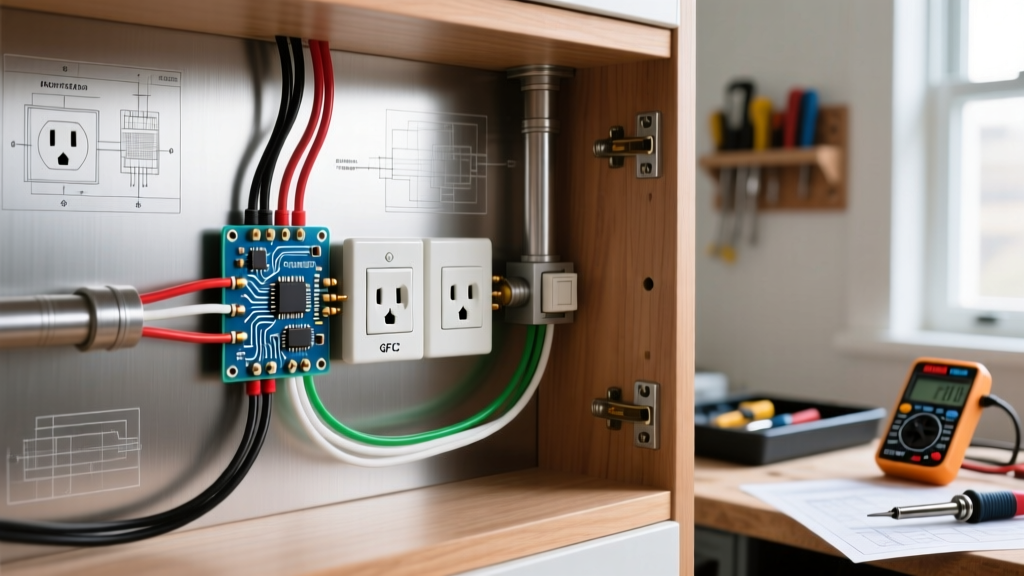
When an electrical outlet inside cabinet spaces—such as kitchen appliance garages, bathroom vanity drawers, or pantry charging stations—suddenly stops working, the diagnosis is rarely as simple as a tripped breaker. Enclosed environments create unique micro-climates and physical stressors that standard wall-mounted receptacles never face. From trapped humidity causing Ground Fault Circuit Interrupter (GFCI) nuisance tripping to physical cable crushing from closing cabinet doors, the failure modes are highly specific.
In this comprehensive 2026 diagnostic guide, we will bypass generic troubleshooting advice and dive deep into the exact electrical, environmental, and National Electrical Code (NEC) factors that cause enclosed receptacles to fail. Whether you are dealing with a dead under-sink disposal outlet or a kitchen island drawer receptacle that refuses to hold a charge, this guide provides actionable, expert-level diagnostics.
Diagnostic Matrix: Symptom to Root Cause
Before opening the electrical box, match your specific symptom to the failure modes below. This matrix is based on field data from residential electricians troubleshooting enclosed cabinetry circuits.
| Symptom | Probable Root Cause | Targeted Fix |
|---|---|---|
| GFCI trips immediately upon plugging in an appliance. | Cumulative leakage current or trapped humidity inside the cabinet box. | Replace standard GFCI with a humidity-resistant smart model (e.g., Leviton GFNT2-W). |
| Outlet is completely dead; breaker has NOT tripped. | Backstabbed wire connection vibrated loose, or a daisy-chained load-side wire failed. | Move all wires from push-in backstabs to screw terminals; check upstream junction boxes. |
| Appliance works, but outlet feels hot to the touch. | High-resistance fault caused by cable crushing from cabinet door hinges or heavy items. | Inspect cable jacket for pinch marks; reroute Romex using nail plates and staple standoffs. |
| Breaker trips only when a motorized appliance (blender/mixer) is turned on. | AFCI/GFCI dual-function breaker misinterpreting motor brush arcing as a ground fault. | Upgrade to a 2025+ AI-enhanced AFCI breaker (e.g., Eaton BR230DF) or isolate the circuit. |
Deep Dive: GFCI Nuisance Tripping in Enclosed Spaces
The most frequent complaint regarding an electrical outlet inside cabinet spaces—particularly under kitchen sinks and inside bathroom vanities—is nuisance tripping. According to the U.S. Consumer Product Safety Commission (CPSC), GFCIs are designed to trip when they detect a ground-fault current leakage of 4 to 6 milliamps. However, enclosed cabinets trap ambient moisture, which can create micro-condensation on the internal brass contacts of the receptacle.
The "Capacitive Leakage" Effect
When you plug multiple low-leakage appliances into an enclosed cabinet circuit (e.g., a water filter, a nightlight, and an electric toothbrush charger in a vanity drawer), their individual capacitive leakage currents compound. While a single device might leak 1.5mA, three devices combined push the circuit to 4.5mA, hovering dangerously close to the 5mA trip threshold. When the cabinet door is closed, humidity spikes, dropping the resistance of the air gap inside the outlet and triggering a false ground-fault trip.
Expert Tip: If your vanity cabinet outlet trips randomly, do not bypass the GFCI. Instead, upgrade to a Leviton GFNT2-W (SmartlockPro). Priced around $32, this model features an auto-diagnostic LED that flashes specific amber/red codes to tell you if the trip was caused by a ground fault, a line/load reversal, or an end-of-life failure, eliminating the guesswork in enclosed spaces.
NEC Code Compliance for Cabinet Receptacles
Troubleshooting must also account for code violations. An outlet that continually fails may have been installed in direct violation of the National Electrical Code (NEC). The 2023 NEC (which carries over into the 2026 adoption cycles for most municipalities) introduced strict rules for enclosed receptacles.
Appliance Garages (NEC 210.52(C)(5))
If your electrical outlet inside cabinet space is classified as an "appliance garage" (a dedicated cabinet space on the countertop for storing small appliances), the NEC mandates that at least one receptacle must be installed specifically for that space. Furthermore, this receptacle cannot be part of the small-appliance branch circuit that serves the main countertop if it is located more than 12 inches above the countertop surface.
Drawer and Cabinet Face-Up Restrictions (NEC 406.5(E))
If you are troubleshooting a pop-up outlet or a drawer-mounted USB charging receptacle, verify its orientation. The NEC strictly prohibits receptacles from being installed in a face-up position on countertops. While inside a closed drawer, face-up is permissible, the moment the drawer is designed to be used while open (like a vanity makeup drawer), it must be angled or positioned so that spilled liquids cannot pool directly into the contact slots.
Step-by-Step Multimeter Diagnosis
To accurately diagnose a dead electrical outlet inside cabinet spaces, you must use a True-RMS multimeter with a Low Impedance (LoZ) mode, such as the Fluke 117 (~$210) or the Klein Tools MM400 (~$45). Standard meters can read "ghost voltage" induced by parallel wires running through the tight confines of cabinet walls.
Phase 1: Verify Line vs. Load Power
- Shut off the breaker and remove the cabinet receptacle cover plate.
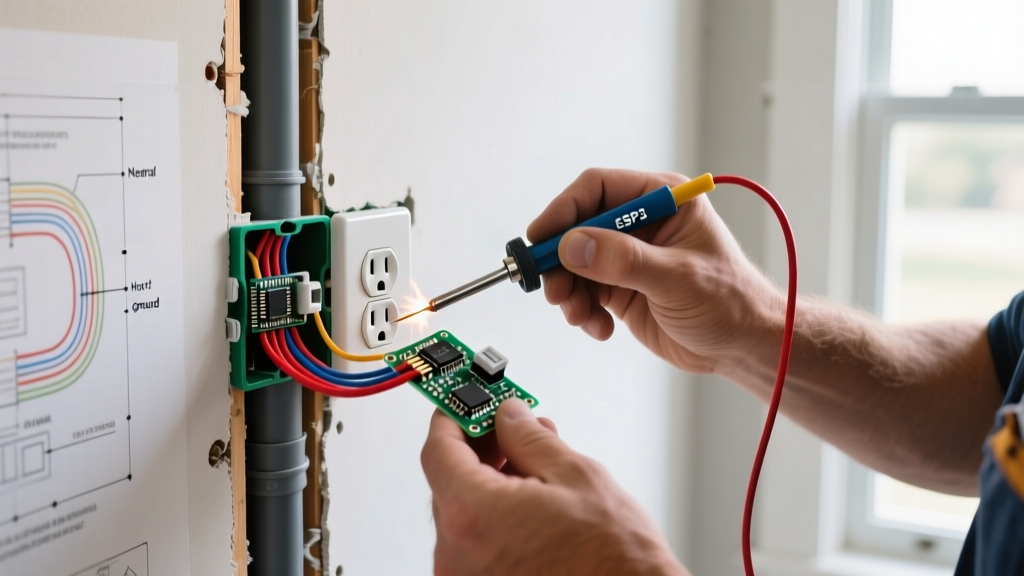
- Pull the receptacle out of the box carefully. In cabinet spaces, boxes are often shallow (1.5-inch deep pancake boxes), making wires prone to crimping.
- Turn the breaker back on. Set your multimeter to V AC (LoZ mode).
- Test the Line terminals (usually the black and white wires connected to the top screws). You should read 118V–122V. If you read 0V, the fault is upstream (a tripped GFCI elsewhere in the kitchen or a failed wire nut in a hidden junction box).
- Test the Load terminals (bottom screws). If Line has power but Load does not, and the GFCI is not tripped, the internal contacts of the receptacle have failed due to heat degradation. Replace the unit.
Phase 2: Ground Impedance Testing
If the outlet has power but appliances aren't functioning correctly, test the ground path. Set your meter to Ohms (Ω). Measure between the Ground screw and a known bare metal pipe (like a copper water line under a sink cabinet). The reading should be less than 1.0Ω. A higher reading indicates a broken ground wire, which is incredibly common in older cabinet retrofits where installers failed to pigtail the ground to the metal cabinet box.
Physical Cable Crushing: The Silent Failure
Because cabinet spaces are highly dynamic—doors slamming, drawers sliding, and heavy items being shoved into the back—Romex (NM-B) cables are frequently crushed. A crushed cable doesn't always trip a breaker immediately. Instead, it compresses the insulation, bringing the hot and neutral conductors closer together. This creates a high-resistance fault that generates localized heat.
According to the Electrical Safety Foundation International (ESFI), high-resistance connections are a leading cause of residential electrical fires. If you pull the outlet from the cabinet box and see deep indentations on the yellow or white Romex jacket, or if the copper wire is visibly kinked, you must cut the damaged section back and splice in a new pigtail using a Wago 221 lever nut. Never attempt to "tape over" a crushed cable jacket inside a confined cabinet space.
Estimated Repair Costs (2026 Data)
If your troubleshooting reveals a complex fault that requires professional intervention, here is what you can expect to pay in the current market:
- Standard GFCI Replacement: $125 – $175 (Includes Leviton GFNT2-W part and 1 hour labor).
- Upstream Junction Box Repair: $250 – $400 (Requires cutting drywall or accessing from below the cabinet to find the failed daisy-chain).
- Shallow Box Upgrade: $300 – $450 (Replacing a 1.5-inch pancake box with a 2.25-inch deep box to allow proper wire bending radius per NEC 314.16).
Final Diagnosis Checklist
Before closing up your cabinet, ensure you have completed the following:
- [ ] Verified no wires are pinched between the metal box and the wooden cabinet frame.
- [ ] Confirmed all connections are on screw terminals, not push-in backstabs.
- [ ] Tested the GFCI trip function using the physical "TEST" button, not just a plug-in tester.
- [ ] Ensured the cabinet door does not press against the face of the receptacle when closed.
Troubleshooting an electrical outlet inside cabinet spaces requires looking beyond the electrical current and examining the physical environment. By addressing humidity, physical stress, and strict NEC code requirements, you can ensure your enclosed receptacles remain safe, functional, and code-compliant for years to come.