
The Anatomy of a Dead Receptacle: Where Electric Outlet Wiring Fails
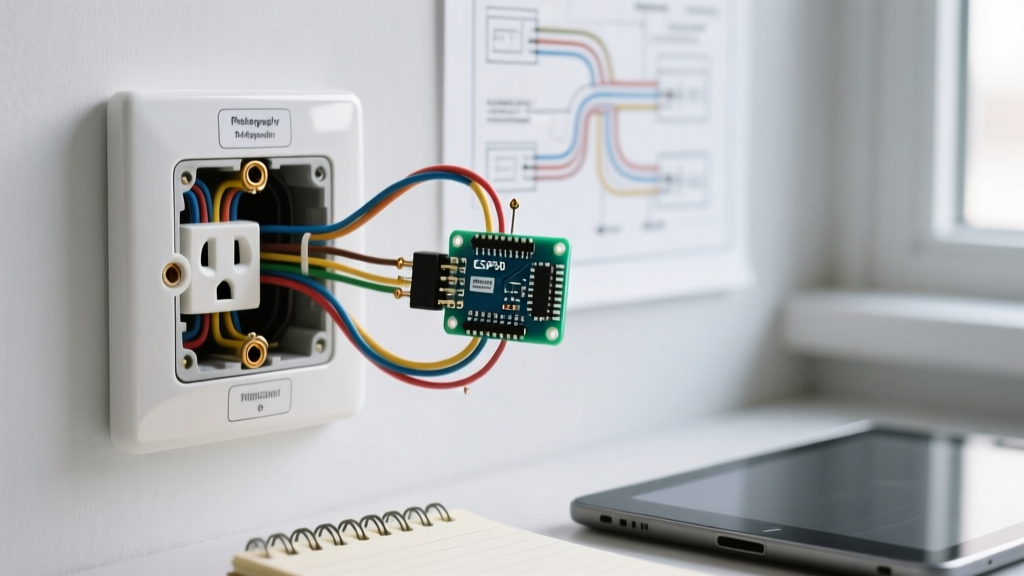
A dead electrical outlet is rarely a mystery; it is almost always a symptom of a specific physical or electrical failure in the circuit. Whether you are dealing with a tripped GFCI upstream, a failed push-in connector, or a severed neutral, systematic electric outlet wiring troubleshooting requires moving beyond simple plug-in testers. In 2026, with the widespread adoption of smart panels and stricter AFCI/GFCI mandates under the latest NEC cycles, understanding the diagnostic flow of a 120V branch circuit is essential for any DIYer or junior electrician.
Before touching a single wire, safety is paramount. According to the Occupational Safety and Health Administration (OSHA), electrical hazards remain a leading cause of workplace and residential injuries. Always isolate the circuit at the breaker panel and verify the absence of voltage before removing the receptacle yoke from the junction box.
Essential Diagnostic Arsenal for Outlet Troubleshooting
Relying solely on a $10 plug-in circuit tester will leave you blind to high-resistance connections and shared neutral issues. To properly diagnose electric outlet wiring, you need professional-grade diagnostic tools.
| Tool Category | Recommended Model | Approx. Price (2026) | Diagnostic Purpose |
|---|---|---|---|
| True-RMS Multimeter | Fluke 117 Electricians True-RMS | $225.00 | Non-contact voltage detection, precise AC voltage measurement, continuity testing. |
| NCVT (Non-Contact Voltage Tester) | Klein Tools NCVT5 | $35.00 | Quick verification of de-energized wires before physical contact. |
| GFCI/AFCI Receptacle Tester | Klein Tools RT250 | $48.00 | Trips GFCI/AFCI circuits to verify protection and reads standard wiring faults. |
| Torque Screwdriver | Wiha 320P (VDE Insulated) | $65.00 | Ensures terminal screws meet NEC 110.14(D) torque specifications. |
Step-by-Step Electric Outlet Wiring Diagnosis
When an outlet fails to deliver power, follow this sequential diagnostic flowchart to isolate the fault without unnecessary demolition.
Step 1: Verify Upstream Protection (The Cascade Effect)
Over 60% of "dead" standard receptacles are actually protected by a tripped GFCI or AFCI device located elsewhere in the home. Under the latest NEC Article 406.4(D), replacements in areas requiring ground-fault protection must be GFCI protected. Check bathrooms, garages, kitchens, and exterior walls. Reset any tripped devices. If the outlet remains dead, proceed to Step 2.
Step 2: The "Hot-Neutral-Ground" Voltage Matrix
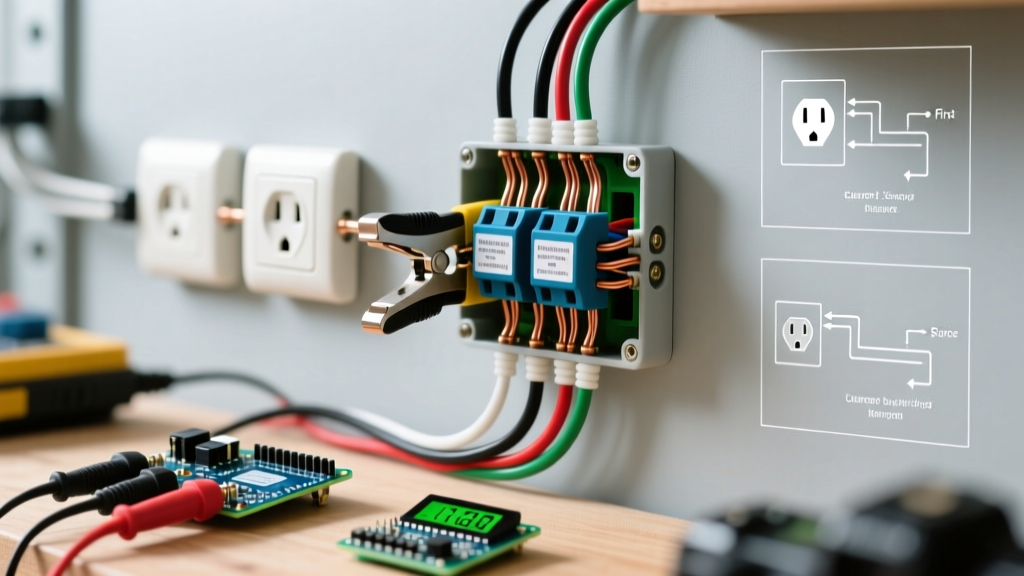
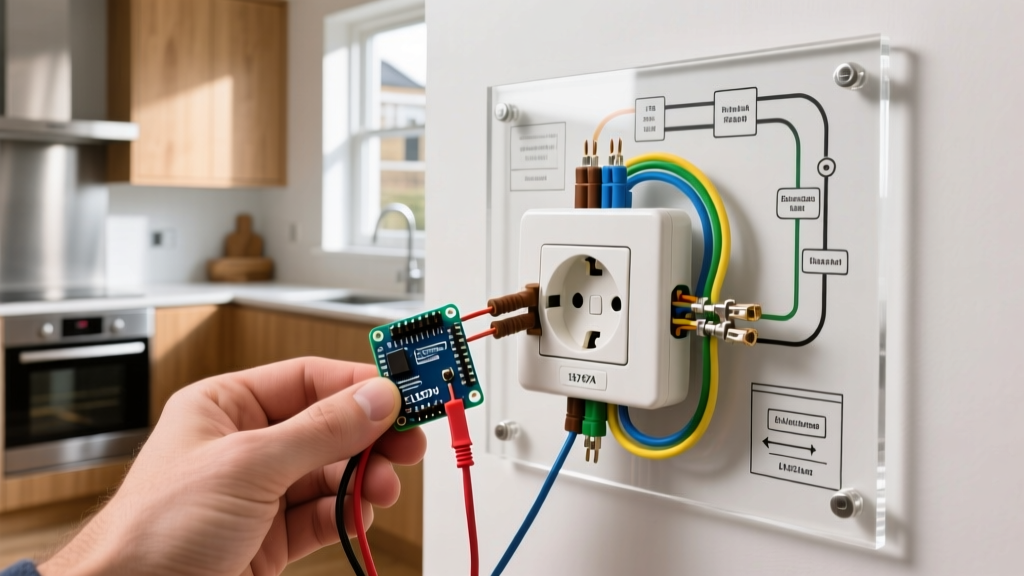
Remove the outlet cover and use your True-RMS multimeter to measure the voltage between the three critical wire pairs. Do not remove the wires from the receptacle yet; probe the exposed terminal screws or the wire insulation gaps.
| Measurement Points | Expected Reading | Anomalous Reading & Diagnosis |
|---|---|---|
| Hot (Brass) to Neutral (Silver) | 120V ± 5% | 0V: Open Hot or Open Neutral. 60V-90V: High-resistance connection or backstab failure. |
| Hot (Brass) to Ground (Green) | 120V ± 5% | 0V: Open Ground (missing equipment grounding conductor) or Hot/Neutral reversed. |
| Neutral (Silver) to Ground (Green) | 0V to 2V | 120V: Reversed Hot/Neutral. 3V-5V: Neutral is carrying heavy load (voltage drop) or shared neutral fault. |
Step 3: Physical Inspection of the Termination
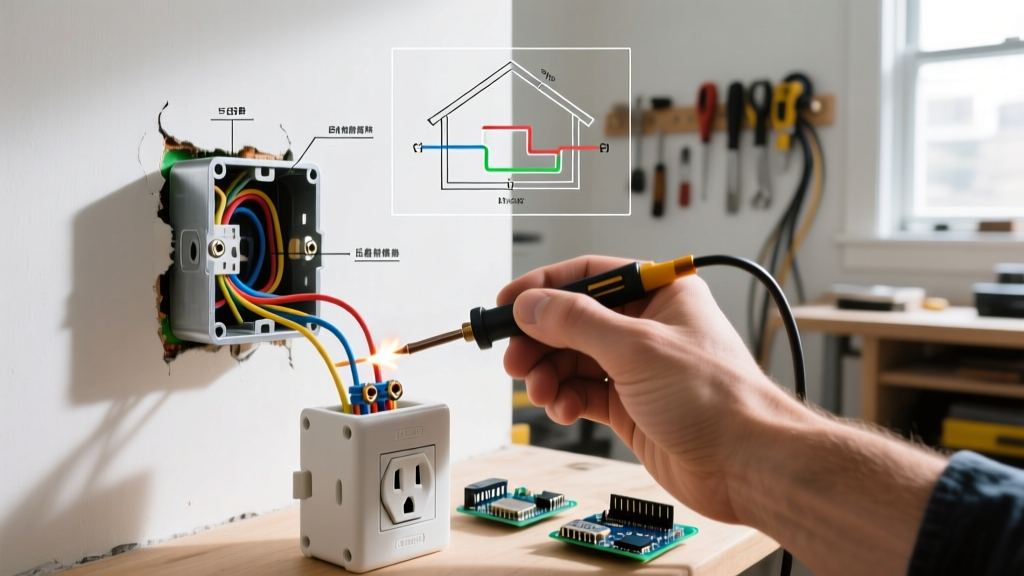
Once the breaker is OFF and the NCVT confirms zero voltage, unscrew the receptacle. Inspect the wire terminations. Look for melted plastic around the yoke, arcing marks on the brass screws, or wires that pull out with minimal force.
Advanced Failure Modes & Edge Cases
Standard troubleshooting guides stop at "tighten the screws." As an expert, you must understand the nuanced failure modes of modern and legacy electric outlet wiring.
The "Backstab" Push-In Connector Failure
Push-in (backstab) connections rely on a small internal spring-metal tang to grip the wire. Under UL 498 standards, these are only rated for 14 AWG solid copper wire. When a 15A continuous load (like a space heater or window AC) is applied, the wire heats up. The thermal expansion and contraction cycles cause the spring tang to fatigue and lose tension. This creates a high-resistance connection, leading to voltage drops, arcing, and eventually a melted receptacle. Actionable Fix: Never use backstab connections. Strip 3/4 inch of insulation and use the side-binding screw terminals, or use a pigtail wire nut connection if the box is overcrowded.
Multi-Wire Branch Circuit (MWBC) Shared Neutral Failures
If you open a junction box and find a 3-wire cable (Black, Red, White, Bare) feeding two separate receptacles, you are dealing with an MWBC. The white wire is a shared neutral. If an upstream neutral wire becomes disconnected, the two hot legs (which should be on opposite phases) will force 240V through your 120V appliances, instantly destroying them. Furthermore, NEC Article 210.4 strictly requires simultaneous disconnecting means (a 2-pole breaker or handle ties) for MWBCs. If you are troubleshooting a dead outlet on an MWBC, verify that the opposite phase breaker is also OFF before touching the neutral bus or pigtail.
GFCI Load/Line Reversal
A common DIY mistake is wiring the downstream protected outlets to the "LINE" terminals of a GFCI, and the incoming power to the "LOAD" terminals. The GFCI will still power its own face, but it will fail to protect downstream outlets, and the internal test button may behave erratically. Use your RT250 tester to verify downstream protection. If the tester fails to trip the GFCI when plugged into a downstream outlet, the Line and Load wires are reversed at the GFCI source.
Expert Insight: When replacing an old two-prong ungrounded receptacle with a modern three-prong version in a home with no equipment grounding conductor, the NEC allows the use of a GFCI receptacle marked "No Equipment Ground" and "GFCI Protected." However, this does not> create a true ground path; it only provides shock protection. Sensitive electronics requiring a clean ground reference will still experience noise.
Code Compliance & When to Upgrade
Troubleshooting often reveals wiring that is "functional" but no longer compliant or safe. The National Fire Protection Association (NFPA) updates the National Electrical Code (NEC) every three years. As of the 2023 and 2026 adoption cycles, AFCI (Arc-Fault Circuit Interrupter) protection is required in almost all living spaces, including kitchens and laundry rooms. If your troubleshooting reveals an older panel with frequent, unexplained nuisance tripping on an AFCI breaker, the issue is rarely the breaker itself; it is usually a loose neutral wire arcing somewhere downstream in the electric outlet wiring.
Furthermore, all 15A and 20A, 125V and 250V receptacles installed in residential dwellings must now be Tamper-Resistant (TR). If you are replacing a faulty outlet, purchasing standard non-TR receptacles is a code violation. A Leviton 001-05366-W TR GFCI costs roughly $22 and ensures compliance while protecting children from inserting foreign objects into the slots.
Frequently Asked Questions (FAQ)
Why does my outlet have power but devices won't work?
This is the classic symptom of an "Open Neutral." Your multimeter will read 120V from Hot to Ground, but 0V from Hot to Neutral. The circuit cannot complete the return path to the panel. Check the silver terminal screws on the receptacle, and then check the neutral bus bar in the main panel for a loose wire.
Can a bad outlet trip the main breaker?
Yes, but usually only if the failure mode creates a direct short circuit (Hot touching Ground or Neutral) or if the internal arcing generates enough heat to melt the insulation, causing a phase-to-phase or phase-to-ground fault. A simple loose connection will typically just cause the outlet to go dead or melt locally without tripping the breaker.
How do I test if my aluminum wiring is causing outlet failures?
Aluminum wiring (common in the 1960s and 70s) expands and contracts more than copper, leading to loose connections and oxidation at standard brass terminals. If your home has aluminum wiring, you must use CO/ALR rated receptacles or pigtail the aluminum to copper using AlumiConn connectors. Never terminate bare aluminum wire directly onto a standard copper-rated receptacle; it is a severe fire hazard documented extensively by the Consumer Product Safety Commission (CPSC).
My GFCI outlet keeps tripping immediately after reset.
Disconnect all LOAD side wires from the GFCI. Reset the device. If it holds, the fault is downstream (a damaged wire, moisture in an exterior box, or a failing appliance). If it still trips immediately with the LOAD wires removed, the GFCI internal mechanism has failed, or there is a ground fault on the LINE side wiring feeding the box.