
Understanding the Hong Kong Electrical Outlet Standard
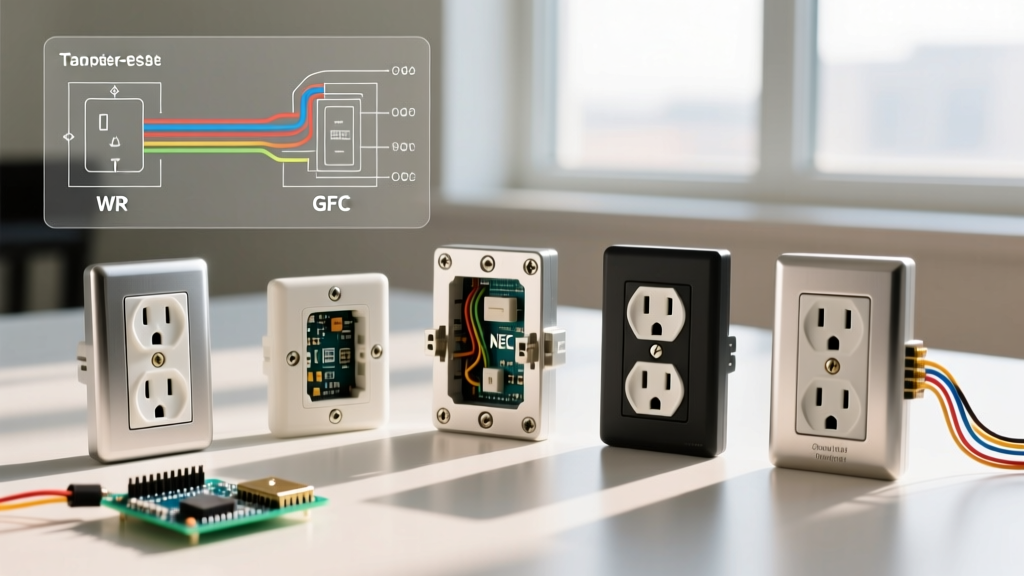
Troubleshooting a dead Hong Kong electrical outlet requires a precise understanding of the local infrastructure. Hong Kong utilizes the British Standard BS 1363 (Type G) for its socket outlets, operating on a 220V / 50Hz alternating current supply. Unlike many North American or European systems, general-purpose wall outlets in Hong Kong are almost exclusively switched socket outlets (SSOs), meaning the faceplate includes a physical isolator switch and a neon indicator light.
Furthermore, Hong Kong's residential wiring predominantly relies on radial circuits protected by Miniature Circuit Breakers (MCBs) or Residual Current Breakers with Overcurrent protection (RCBOs) in the consumer unit, rather than the ring main circuits common in the UK. When an outlet fails, the fault can originate from four distinct zones: the appliance plug fuse, the socket's internal switch mechanism, the branch circuit wiring, or the main consumer unit. This guide provides a systematic, 2026-compliant diagnostic protocol for identifying and resolving these faults safely.
The 4-Stage Diagnostic Protocol for Dead Outlets
Stage 1: Inspect the BS 1363 Plug Fuse
The most frequently overlooked point of failure in a Hong Kong electrical outlet setup is not the wall socket itself, but the plug attached to the appliance. Every BS 1363 plug contains a BS 1362 ceramic sand-filled fuse designed to protect the appliance's flexible cord, not the appliance itself.
- Visual Inspection: Unscrew the single central screw on the plug cover. Check if the fuse is seated correctly in the metal clips.
- Continuity Test: Remove the fuse and test it with a multimeter set to the continuity (diode/buzzer) setting. A good fuse will beep; a blown fuse will show an open line (OL).
- Replacement Rule: Never replace a blown fuse with a higher rating. If a 3A fuse blows repeatedly, the appliance has an internal short or earth fault. According to Electrical Safety First, bypassing or uprating fuses is a leading cause of electrical fires.
Stage 2: Evaluate the Switched Socket Mechanism
If the plug fuse is intact, the next suspect is the physical switch on the outlet faceplate. In Hong Kong, it is common practice to leave high-draw appliances (like 1.5HP window air conditioners or 2kW water heaters) plugged into standard 13A sockets. The constant high inrush current when compressors start can cause carbon tracking and pitting on the internal brass switch contacts.
Diagnostic Step: Toggle the socket switch on and off repeatedly while listening for a crisp 'click'. A mushy feel or a flickering neon indicator light suggests degraded internal contacts. To confirm, plug in a known-working, low-draw device (like a lamp). If the lamp flickers when the socket switch is toggled, the SSO mechanism is failing and must be replaced.
Stage 3: Consumer Unit (MCB/RCBO) Analysis
If the socket switch feels mechanically sound but delivers no power, proceed to the consumer unit (breaker box). Modern Hong Kong apartments (built or rewired post-2010) typically use RCBOs for socket circuits to provide combined overload, short-circuit, and earth-leakage protection.
- Check for Tripped Breakers: Look for an MCB/RCBO where the toggle has dropped to the middle or 'OFF' position.
- Identify the Trip Type: If an RCBO has tripped, look for a small, usually blue or white, square button labeled 'T' or an auxiliary indicator flag. If the flag has popped out, the breaker tripped due to earth leakage (typically >30mA), not an overload.
- Reset Procedure: Unplug all devices from the affected radial circuit. Push the breaker toggle firmly to the full 'OFF' position before snapping it back to 'ON'. If it immediately trips again with nothing plugged in, you have a hard fault in the fixed wall wiring.
Stage 4: Live Multimeter Testing (CAT III)
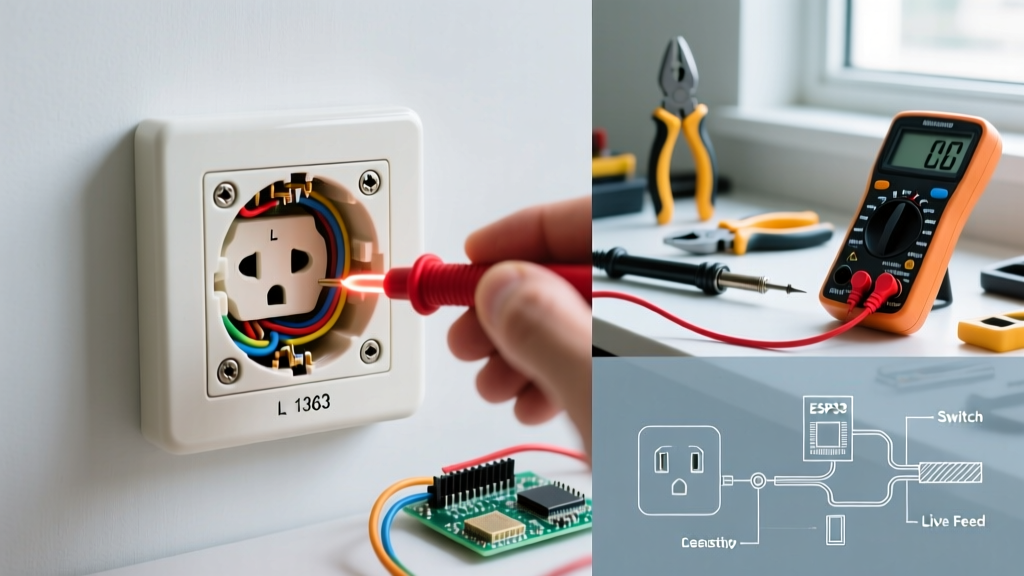
If the breaker is ON but the outlet is dead, you must verify voltage at the socket terminals. Warning: This involves exposed 220V AC. Only proceed if you are trained and using a CAT III 600V rated multimeter, such as the Fluke 117. For a deeper understanding of safety categories, refer to the Fluke CAT rating guide.
Set your multimeter to AC Voltage (V~). Insert the probes into the socket:
- Line to Neutral (Right to Left pins): Should read 220V - 235V. (Hong Kong's grid often runs slightly high, around 225V nominal).
- Line to Earth (Right to Top pin): Should read 220V - 235V.
- Neutral to Earth (Left to Top pin): Should read 0V - 2V. If this reads >5V, you have a loose neutral connection or a shared neutral overload on the radial circuit.
Common Failure Modes in Hong Kong's Humid Climate
Diagnosing electrical faults in Hong Kong requires factoring in the local subtropical climate. During the 'Plum Rain' season (May to June), indoor relative humidity frequently exceeds 85%.
EMSD Safety Notice: Moisture ingress in electrical accessories is a primary cause of insulation breakdown. The Electrical and Mechanical Services Department (EMSD) strongly advises against using standard indoor IP20 sockets in areas prone to condensation, such as unsealed balconies or near kitchen sinks, without appropriate IP44+ splash guards.
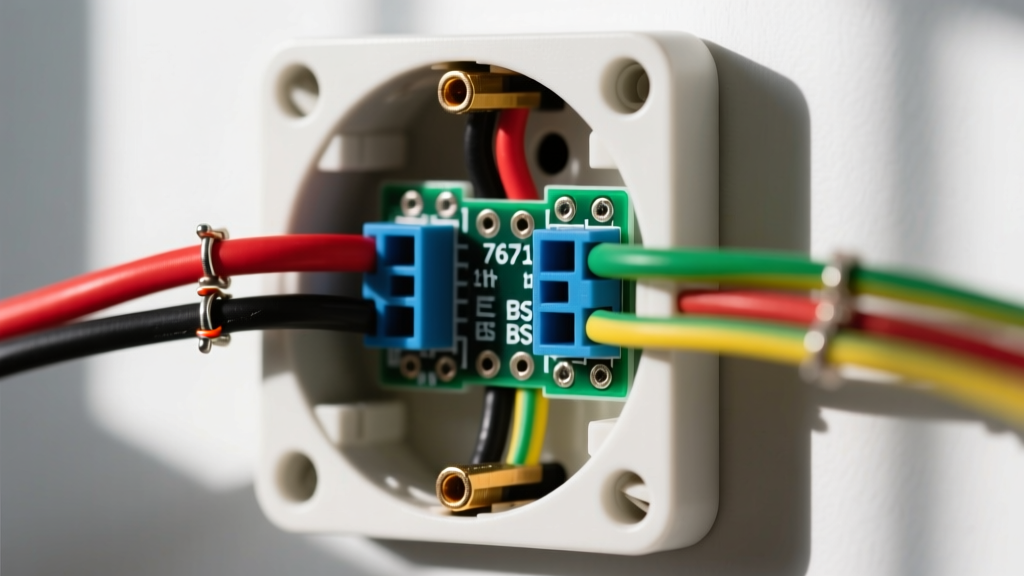
Condensation-Induced Earth Leakage: High humidity causes microscopic condensation to form on the dust accumulation inside the backbox of a wall socket. This creates a high-resistance conductive path between the Line terminal and the Earthed metal backbox. While it won't cause a short circuit, it will generate a 10mA–25mA leakage current. Over time, or during peak humidity, this pushes the total circuit leakage past the 30mA threshold, causing the RCBO to trip seemingly at random.
BS 1362 Fuse Sizing & Cable Matrix
When troubleshooting, ensuring the correct fuse and cable pairing is critical for fire prevention. Use this reference matrix when inspecting appliance plugs connected to your Hong Kong electrical outlets.
| Appliance Type (HK Common) | Typical Wattage | Required BS 1362 Fuse | Min. Flex Cable Size |
|---|---|---|---|
| Lamps, Phone Chargers, Routers | 5W - 700W | 3A | 0.5 mm² |
| Desktop PCs, Small TVs, Blenders | 700W - 1200W | 5A (or 13A) | 0.75 mm² |
| 1.5HP Window AC, Microwave, Iron | 1200W - 2500W | 13A | 1.25 mm² |
When to Call an EMSD-Registered Electrical Worker
Under Hong Kong law, any modification, repair, or replacement of fixed electrical wiring (including swapping out a damaged wall socket faceplate or repairing a burnt backbox) must be performed or supervised by an EMSD-Registered Electrical Worker (REW).
While you are legally permitted to change a plug fuse, replace an appliance flex cord, or reset a tripped breaker, opening the wall socket to test the incoming radial circuit wires crosses into regulated territory. If your Stage 4 multimeter testing reveals 0V at the socket terminals despite the MCB being ON, the fault lies in the fixed wiring (e.g., a burnt-out wire nut in a ceiling junction box or a melted terminal at the breaker). At this point, cease troubleshooting and contact a Grade A (or higher) REW to perform an insulation resistance test (Megger test) and safely terminate the fault.